



According to the Marketing AI Institute’s 2024 State of Marketing AI Report, AI adoption is rapidly growing among marketers. Many say they now use AI-powered tools in their daily work, and even admit they “couldn’t live without” them. And honestly, it makes sense. AI has completely changed how we plan, create, and optimize ads.
A few years ago, it felt like only big brands had access to this kind of tech. Today, everyone’s using it. Small businesses, solo creators, Etsy sellers, local shops, AI is becoming part of every marketing toolkit.
So in this guide, we’ve pulled together 12 real AI in advertising examples. These’re practical, real-world examples from brands of all sizes that we can break down, learn from, and apply.
Key takeaways from our top pick for AI in advertising examples:
- AI makes creativity faster and more accessible. From Coca-Cola’s co-created art to Nutella’s 7 million unique labels, AI helps brands produce visual content at a scale humans can’t match.
- Personalization drives performance. Sephora, Amazon, and Meta show how AI can tailor ads and experiences in real time.
- AI can do things traditional production never could. Nike’s Serena-vs-Serena match and BMW’s AI-generated art demonstrate how AI unlocks new kinds of storytelling.
- Automation saves massive time and reduces errors. Tools like LitCommerce, PMax, and Meta Advantage+ eliminate tedious setup work and help advertisers launch campaigns in minutes.
- Better targeting = better ROI. Lookalike Audiences, predictive modeling, and real-time optimization help brands reach the right people at the right moment, without wasting budget.
Generative AI for Ad Creatives
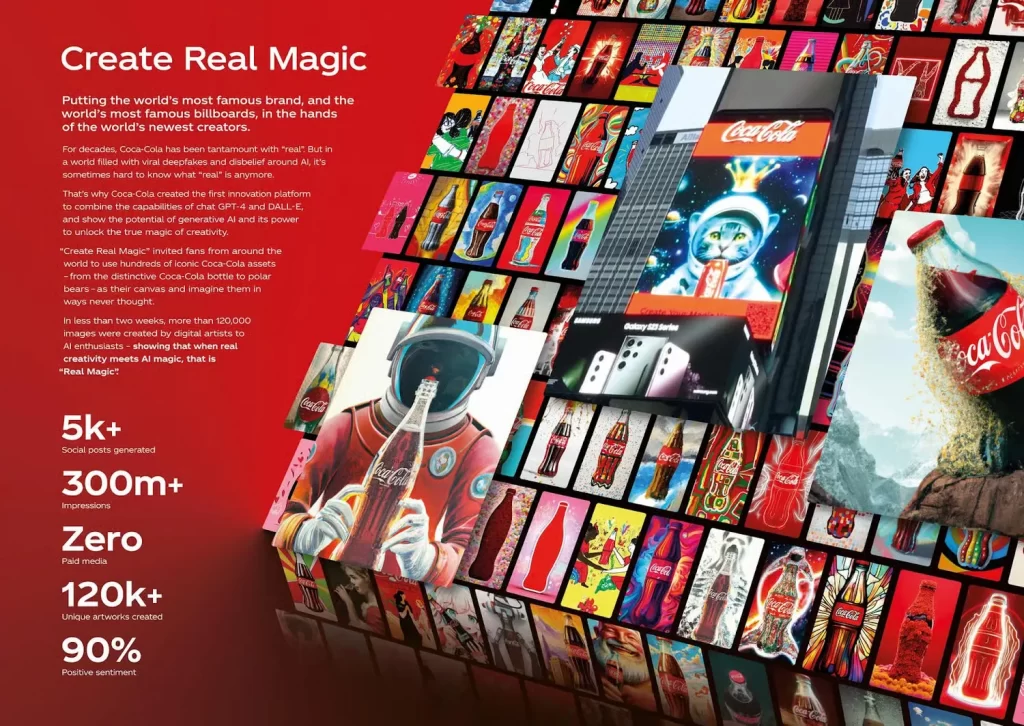
1. Coca-Cola launches “Create Real Magic” with AI-generated surreal visuals
Back in March 2023, Coca-Cola launched “Create Real Magic,” a global platform that invited anyone to create their own Coca-Cola-themed artwork using AI. And honestly, it was one of the coolest brand experiments we’ve seen.
They partnered with OpenAI and Bain & Company to build a special website where anyone could create their own Coke-inspired artwork using GPT-4 and DALL·E 2. You didn’t need design skills. You didn’t need software. You just typed an idea, and the AI transformed it into an artwork featuring Coke’s classic elements, like the contour bottle, vintage Santa, or the famous polar bear.
- DALL·E generated the images based on whatever prompt you gave it
- GPT helped you come up with creative ideas if you weren’t sure what to write
So instead of Coke saying, “Here’s our brand,” they flipped it and said, “What does Coca-Cola look like in your imagination?”
💡What you can learn from Coca-Cola AI in advertising example:
- Keep participation simple: A smooth, easy-to-use platform made it feel accessible to everyone. No complicated steps. No tech knowledge required. Anyone could click, type a prompt, and make something cool.
- Use AI to spark creativity, not replace it: AI didn’t make the art, it helped people imagine new versions of a brand they already love.
2. Heinz “A.I. Ketchup” campaign reinforces brand identity using AI-created imagery
The Heinz “A.I. Ketchup” campaign is one of those moments where you think, Okay… that’s just genius. Heinz has spent decades becoming the ketchup in people’s minds. Not “a” ketchup. The ketchup. And this campaign basically put that idea to the test using AI.
Instead of telling AI to draw Heinz specifically, they gave generative AI models (like DALL·E) a super simple prompt: “Draw ketchup.”
And, over and over again, the AI created images that looked unmistakably Heinz, from the bottle shape, to the iconic red, the keystone label. It was like AI dipped into the human collective brain and said: “Yeah, ketchup = Heinz.”
What made this campaign work so well is how simple and transparent it was. Heinz didn’t dress it up. They didn’t try to manipulate the results. They just showed the AI outputs as-is and let the internet connect the dots. Their tagline summed it up perfectly:
“Even Artificial Intelligence Knows ‘Ketchup’ Looks Like Heinz.”
While many brands use AI to create wild, surreal visuals, Heinz flipped the script. Instead of asking AI to imagine possibilities, they asked AI to define reality. The company trusted that the brand’s identity was so iconic that even AI would recognize it, and they were right.
💡What you can learn from Heinz’s AI in advertising example:
- Show, don’t just tell: Heinz didn’t brag about being iconic, they let AI prove it for them. That transparency made people curious and eager to share.
- Use AI as a truth-teller: AI in marketing can reveal what people already associate with your brand. If your brand is strong, AI can help validate it in surprising ways.
- Embrace the fun: The campaign felt playful, lighthearted, and genuinely enjoyable. That energy made people want to talk about it.
- Design with virality in mind: This idea was instantly shareable. People wanted to show others the AI-generated ketchup images.
3. Nike recreates historic Serena Williams matches using AI-generated video simulations
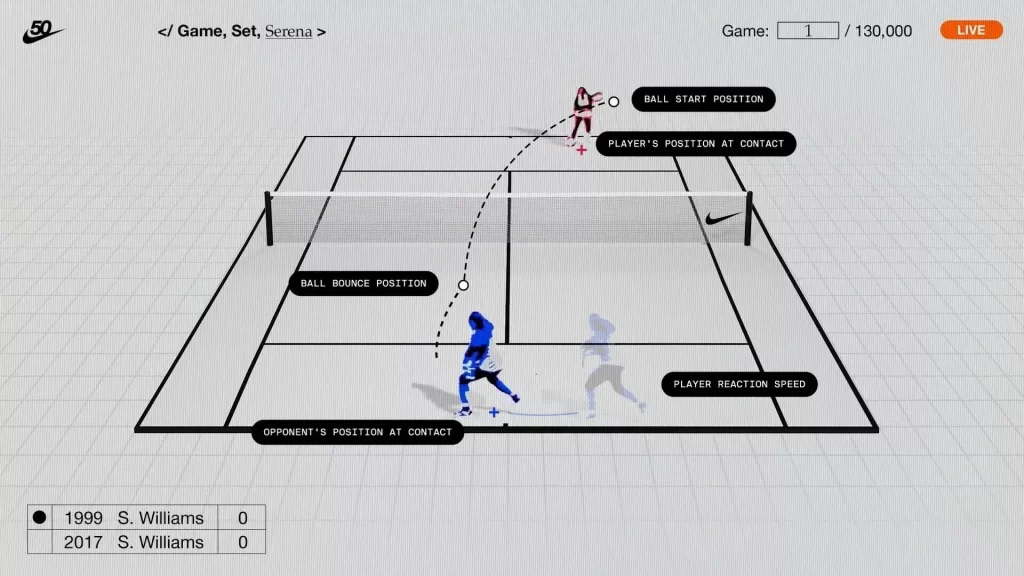
Nike has always been great at storytelling, but their “Never Done Evolving” campaign took things to a whole new level. They teamed up with AKQA to create an AI-generated video where 17-year-old Serena Williams plays against 35-year-old Serena Williams in a virtual tennis match. Yes. Serena vs. Serena.
To pull this off, Nike didn’t just use simple deepfake tools. They trained machine learning models using thousands of hours of Serena’s real match footage. The AI studied everything:
- how she moved
- how she served
- how she positioned herself on the court
- how her style changed over the years
Using computer vision, motion capture, and generative video models, they built two incredibly realistic Serena avatars, each representing a different moment in her career. The result felt less like animation and more like stepping into an alternate reality where two versions of a legend go head-to-head.
Nike streamed the match live on YouTube to 1.69M+ subscribers, and the lead-up included hype posts across Instagram and Twitter. Fans were fascinated, not just because it looked cool, but because it tapped into something emotional: Serena’s evolution, her resilience, and her legacy.
This campaign showed that AI ads isn’t just about flashy visuals. It can help brands tell powerful human stories that would be impossible to produce with traditional techniques.
💡What you can learn from Nike’s AI in advertising example:
- Use AI to do things you physically can’t do in real life: AI unlocks ideas that would be impossible to film like two versions of an athlete facing each other.
- Make it emotional, not just technical: The tech was impressive, but what made people connect was the story.
- Leverage AI for marketing to rethink legacy content: You probably already have old footage, photos, or moments. AI can help you remix it into something fresh.
4. Burger King made a $1 million Whopper using AI
Burger King has always leaned into the whole “Have it your way” identity, but in 2024 they pushed that idea to the absolute limit. To celebrate 50 years of customization, they launched the Million Dollar Whopper Contest, a campaign that lets anyone create their own dream Whopper using AI, and possibly win $1 million.
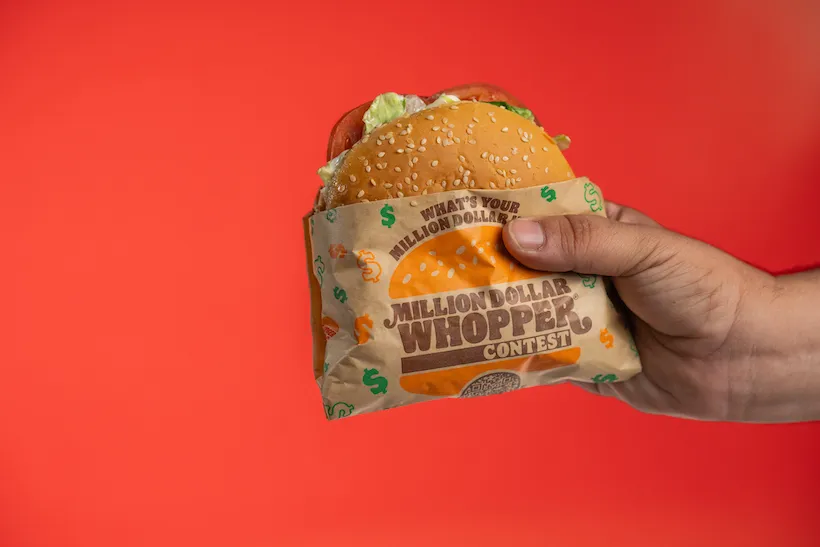
Here’s how it worked: Fans could open the BK app or a special microsite, choose up to eight ingredients, and Burger King’s generative AI would instantly build a realistic image of their custom burger. Then the AI also created a personalized jingle based on the ingredients you picked, inspired by the viral “Whopper Whopper” song.
The contest also made perfect sense for Burger King’s audience. Nearly half of BK customers already customize their Whoppers, so this is tied directly into real customer behavior. Plus, the experience encouraged people to sign in, engage, and share their creations, giving the Royal Perks loyalty program a nice boost.
💡What you can learn from Burger King’s AI in advertising example:
- Lean into what your customers already love doing: BK’s audience already customizes their burgers, AI just made the experience more fun and shareable.
- Make user-generated content effortless: AI created ready-to-share images and videos. When sharing is easy, reach grows fast.
- Use AI to elevate your loyalty program: BK built the contest into their rewards experience, turning a fun idea into recurring engagement.
5. Nutella used AI to generate 7 million unique jar labels
Nutella took personalization to a whole new level with one of the boldest AI packaging experiments we’ve ever seen. Instead of designing a limited-edition label collection the traditional way, they used AI to generate 7 million completely unique Nutella jar designs. Each one is different.
This AI advertising campaign, called Nutella Unica, turned every jar into something collectible. Some jars had colorful swirls, others had geometric shapes, dots, zigzags, bright gradients, each pattern was vibrant, fun, and one-of-a-kind. No two jars were ever the same, which made buying Nutella feel a bit like discovering a surprise.
And of course, this wasn’t done by a team of designers manually creating millions of variations. Instead, Ferrero used a custom-designed AI algorithm that automatically generated the patterns and paired them with matching color schemes. Humans simply supervised; the AI did the heavy lifting.
💡What you can learn from Nutella’s AI in advertising example:
- Personalization doesn’t have to be small-scale: AI makes it possible to create millions of unique variations without extra effort or cost.
- Use AI to enhance existing brand love: People already love Nutella. AI made them love the hunt for the perfect jar, too.
- Let AI do what humans can’t do efficiently: A team of designers could never create 7 million variations. AI makes the impossible doable.
6. BMW turns its Gran Coupé into an AI-powered art canvas
BMW has always positioned itself as a blend of engineering and artistry, and in 2021, they took that idea literally. For Frieze New York, BMW debuted “The Ultimate AI Masterpiece”, a campaign where artificial intelligence transformed a BMW Gran Coupé into a moving, evolving piece of digital art.
They trained an AI model on 50,000 artworks spanning 900 years of art history. Everything from classic Renaissance paintings to modern digital art went into the dataset. The AI then learned different artistic styles, patterns, color palettes, and textures.
Using all that knowledge, the AI generated brand-new visual artworks, which were then projected onto the BMW vehicle, turning the car into a living, glowing art installation.
BMW didn’t keep the experience offline either. They released behind-the-scenes videos, teasers, and clips across Instagram, YouTube, and their website, showing how the AI created the artwork and how the final installation looked.
💡What you can learn from BMW’s AI in advertising example:
- Use AI to reinterpret your brand identity: BMW didn’t redesign the car; they reimagined how it could be experienced through AI-generated visuals.
- Turn your product into a creative platform: Instead of making an ad about the car, they made the car the canvas, which felt fresh and attention-grabbing.
- Document the process: People love behind-the-scenes content. Sharing how AI created the artwork boosted engagement and curiosity.
7. Spotify generative AI creates full audio ads instantly
Spotify’s Generative AI Audio Ad tools let advertisers create complete audio ads from script, voiceover, to background music, right inside the Spotify Ads Manager. No studio. No recording session. No back-and-forth edits. Just type your idea and let the AI handle the rest.
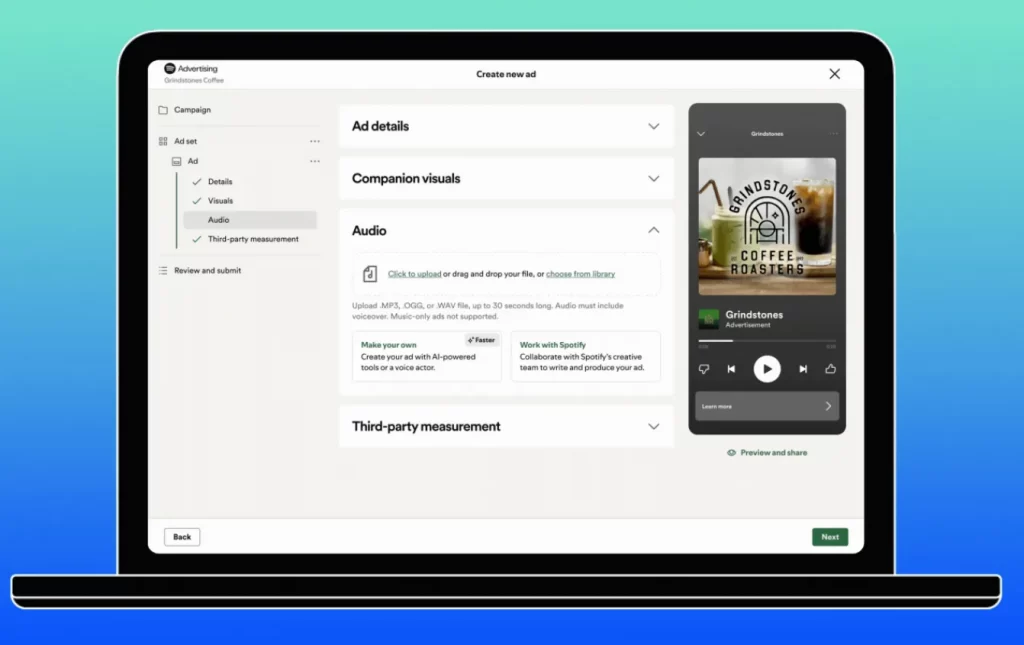
Here’s what makes it powerful:
- AI script generation: You type a short description of what you want, and Spotify instantly writes a polished script (up to 500 words). It also builds in brand-safety checks so you don’t accidentally publish something you shouldn’t.
- AI voiceovers: Spotify offers a range of natural-sounding voices with North American and British accents. You can tweak pronunciation, tone, pacing and generate multiple versions until it sounds just right.
- Built-in background music: Choose from Spotify’s royalty-free library or upload your own soundtrack to give your ad the right vibe.
Everything is made specifically for how people listen on Spotify. so the ad formats, pacing, and sound quality are optimized for the platform from the start.
This is a huge win for small businesses. What used to cost hundreds (or thousands) and take days can now be done in a few minutes, even if you’ve never created an audio ad before.
💡What you can learn from Spotify’s AI in advertising example:
- Use AI to remove production barriers: If you can lower the cost and time needed to create ads, you open the door for more experimentation.
- Repurpose AI for channel-specific creative: Spotify’s AI stands out because it’s specifically designed for audio advertising, not general use. Consider how you can use AI in advertising to suit your target audience.
AI Personalization for Retargeting
8. Amazon uses AI to deliver hyper-personalized product ads
When it comes to AI in advertising examples for personalization, Amazon Personalize, now supercharged with Amazon Bedrock’s generative AI models, is a standout example.
Amazon Personalize looks at your browsing behavior signals in real time, then it uses machine learning to deliver product suggestions, ads.
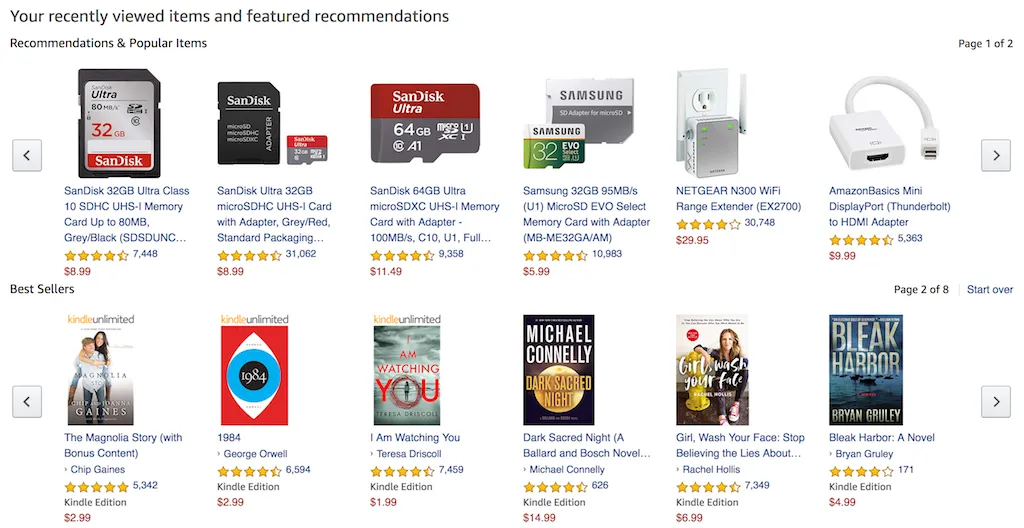
By adding generative AI (via Bedrock), Amazon can now help brands create context-aware recommendations, write product suggestions in the brand’s tone of voice, and even refine search experiences so customers find what they want faster.
It feels closer to a one-on-one shopping experience, the kind you’d have with a really good store associate who somehow knows your taste.
💡What you can learn from Amazon’s AI in advertising example:
- Use AI to tailor your messaging, not just your product picks: Amazon’s system adjusts both content and recommendations for a more human-like experience.
- Meet shoppers where they are in their journey: Whether someone is browsing, searching, or checking out, AI tunes recommendations accordingly.
9. Meta improve targeting through Lookalike Audiences
If you’ve ever wished you could clone your best customers and go find more people just like them, Meta’s Lookalike Audiences is basically the AI version of that.
Unlike interest targeting (which relies on what users say they like) or broad targeting (which just casts a wide net), Lookalike Audiences go deeper. They analyze patterns in your existing customer data like behavior, demographics, engagement signals, to find people who behave similarly.
Meta’s data shows that Advantage+ shopping campaigns (which use Lookalike-style signals + AI optimization) often deliver lower costs per purchase and stronger ROAS compared to older campaign structures.
If you’ve ever wished you could clone your best customers and go find more people just like them, Meta’s Lookalike Audiences is basically the AI version of that.
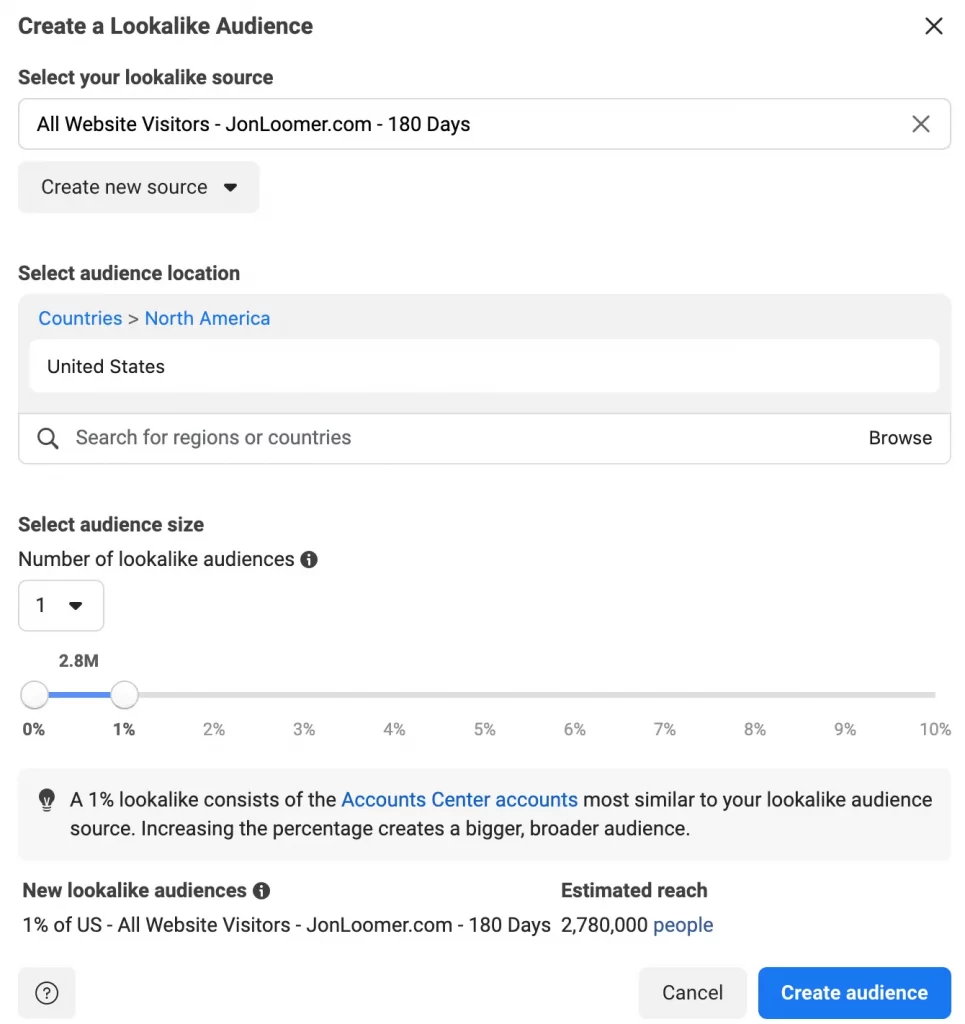
Lookalike targeting is powerful because it:
- improves ROI at the top of the funnel
- scales customer acquisition without losing quality
- speeds up entering new markets without tons of testing
- saves hours of manual targeting work
- works across the entire funnel, not just prospecting
💡What you can learn from Meta’s AI in advertising example:
- Use your existing data to unlock better targeting: The more data you feed Meta, the smarter your targeting becomes.
- Always start with a high-quality source audience: Your Lookalike will only be as strong as the audience it learns from.
- Let AI in digital marketing spot the patterns you can’t see: You don’t need to research 20 different interest groups anymore. AI finds the hidden behaviors that define your ideal customers.
10. Sephora dynamically swaps creative elements (shades, products) based on user data and weather
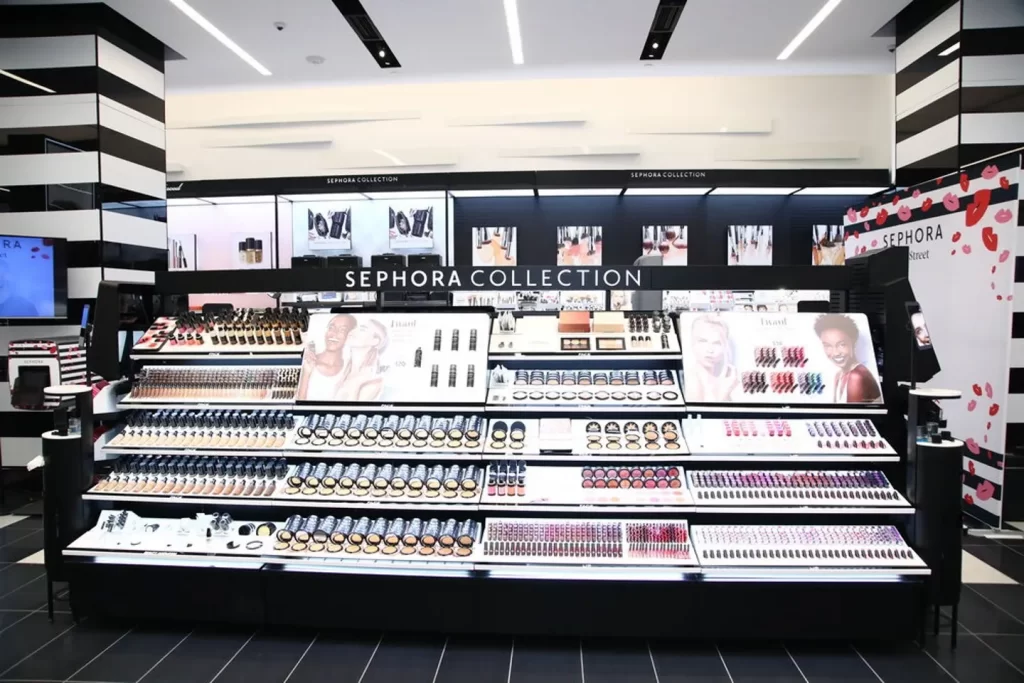
Sephora has always been great at helping people find the “right” shade or product and now they’re using artificial intelligence in marketing to deliver that same experience inside their ads and across the entire customer journey.
In Southeast Asia, Sephora partnered with Dynamic Yield, a machine-learning personalization platform, to tailor what each shopper sees, from homepage banners to product recommendations to email messages. Instead of showing everyone the same generic content, Sephora now serves dynamic, real-time ad and web experiences that change based on:
- the shopper’s country
- past purchases
- browsing behavior
- preferred categories or brands
- and even weather (think: hydrating mists on hot days, richer moisturizers when it’s dry)
This means if it’s humid in Singapore, you might see lightweight foundations or mattifying products. While a shopper in a cooler climate may see richer creams or winter-friendly shades.
Across their site and marketing channels, Sephora now runs over 82 personalized experiences, all powered by Dynamic Yield. And the first test run showed that just the customized suggestions led to a 6X jump in conversions.
💡What you can learn from Sephora’s AI in advertising example:
- Personalization goes beyond “people like you also bought…”: Sephora adjusts creative elements based on real-world context like weather and geography.
- Break away from one-size-fits-all ads: AI can tailor headlines, images, and product picks so each person feels like the ad was made just for them.
- Test small, then scale: Sephora started with a pilot. After proving the uplift, they expanded to 80+ AI-driven experiences.
AI for Automated Campaign Management & Optimization
11. LitCommerce uses AI to automate feed setup for faster advertising campaign setup
If you’ve ever tried running ads on Google Shopping, TikTok, Facebook, or any other ad channel, you already know the hardest part isn’t launching the campaign but is getting your product feed set up correctly. Every platform has its own rules, category trees, data requirements, and attributes. And honestly… it’s a lot.
That’s exactly why LitCommerce built AI into its feed management tool: to take all that manual work off your plate so you can launch ads faster without worrying about errors or rejections.
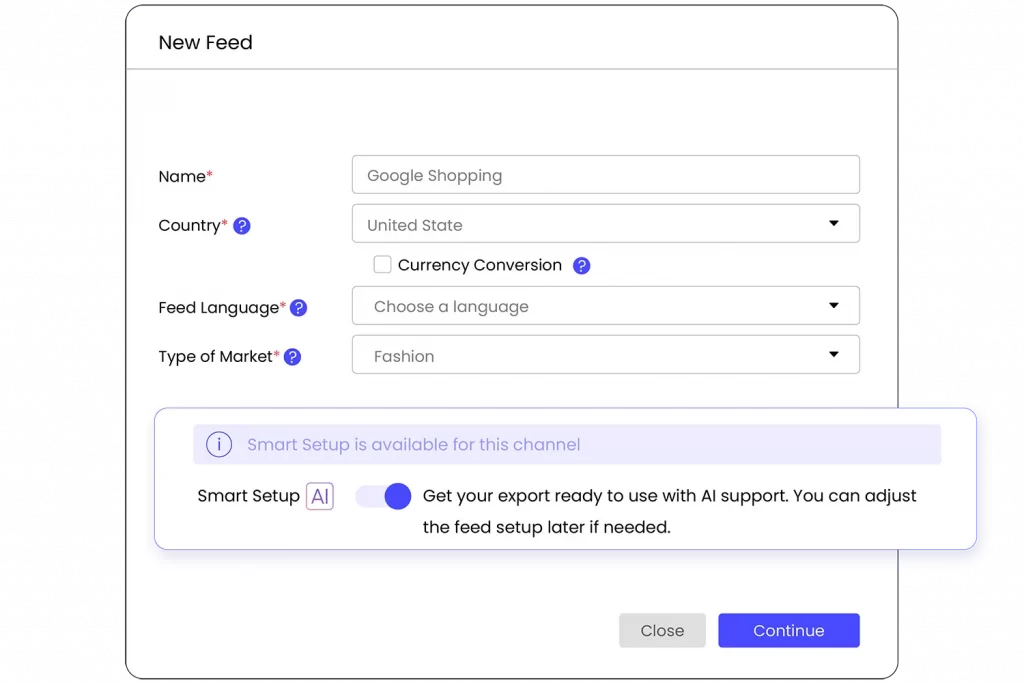
Here’s what LitCommerce’s AI does for you:
- AI auto categorization: No more digging through Google’s thousands of categories or guessing which Facebook taxonomy your product fits into. LitCommerce’s AI reads your title, description, brand, and product data, then automatically places your product in the exact right category for every channel.
- AI auto mapping: Every ad platform has different required attributes like size, color, GTIN, condition, gender, material, and so on. Instead of manually matching these fields one by one, AI maps everything for you automatically.
All you do is connect your online store or upload a product file. Within seconds, LitCommerce’s AI organizes your data, maps every field, assigns the right categories, and prepares a clean, ready-to-upload export feed. You literally don’t have to lift a finger.
For marketers, this means faster campaign launches, cleaner data, and more time spent actually optimizing ads, not fighting spreadsheets.
💡What you can learn from LitCommerce’s AI in advertising example:
- Automate the boring, repetitive work: AI is great at tasks like categorizing and mapping, the stuff humans hate doing.
- Use AI to reduce errors (and frustration): Bad feeds lead to rejected ads. AI cleans your data so campaigns run smoothly from day one.
Get AI-powered feed setup, for $0.
LitCommerce’s AI tools are now available on the free plan, so you can launch Google Shopping, Facebook, and TikTok feeds instantly at no cost.
12. Google Performance Max uses AI bidding to maximize conversion value automatically
If you’ve ever run Google Ads, you know how overwhelming it can be to manage bids, keywords, audiences, placements, and creative all at once. Performance Max, or “PMax”, is Google’s answer to that chaos. And honestly, it’s one of the clearest examples of how AI can take over the heavy lifting in advertising.
With Performance Max, you don’t set bids manually. You don’t pick placements. You don’t even choose audiences the traditional way. Instead, Google’s AI studies your goals, your budget, and your existing conversion data, then automatically decides how to get you the highest conversion value possible.
Performance Max runs across all Google surfaces, including:
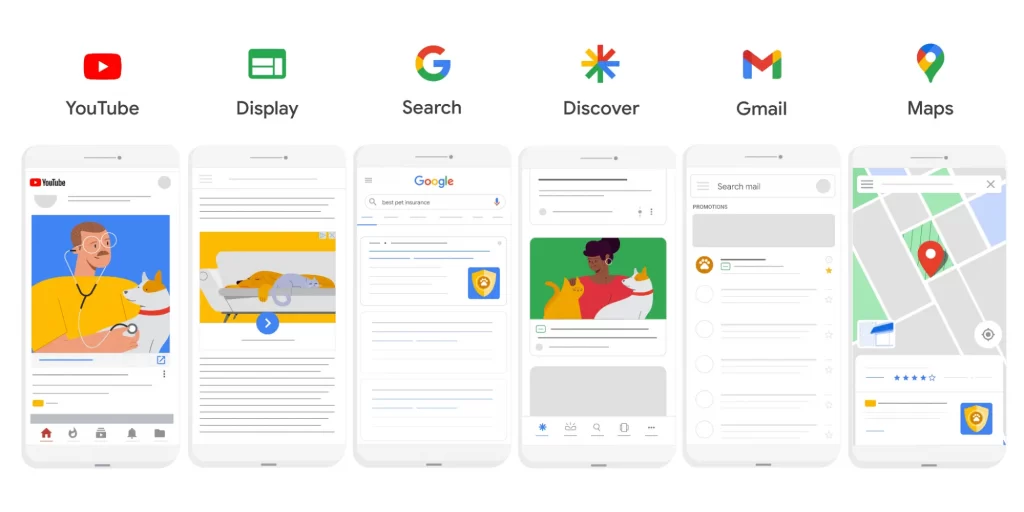
Here’s how it works in simple terms:
- You tell Google what outcomes you care about (sales, leads, ROAS, etc.).
- You upload your assets: images, videos, headlines, descriptions.
- Google’s AI mixes and matches everything, finds the right audiences, chooses the right placement, adjusts bids in real time, and optimizes toward the people most likely to convert.
For eCommerce brands especially, this AI-powered tool means more conversions at lower costs, because the system constantly learns who buys, which creative works, and where your money performs best.
💡 What you can learn from Google Performance Max’s AI in advertising example
- Let AI optimize the details you can’t see: Human marketers can’t monitor millions of auction signals in real time but AI can.
- Give the algorithm clear goals: PMax performs best when you tell it exactly what you want (like “maximize ROAS” or “get more leads under $10”).
- Feed it strong creative assets: The better your images, videos, and copy, the better PMax can test winning combinations.
Benefits of Using AI in Advertising
AI is reshaping how brands plan, create, and optimize ads, and even though the technology is still evolving, the results are already impressive. IBM found that 1 in 4 companies using AI-powered marketing tools are seeing big lifts in engagement, conversions, and even profit.
Based on these AI in advertising examples below, here are the key benefits AI can simplify your advertising campaigns:
- Faster creative production: AI can generate ad copy, images, videos, and variations instantly.
- Smarter audience targeting: AI finds the people most likely to convert — and learns from their behavior.
- Real-time optimization: Your ads update automatically based on performance and user actions.
- Predictive analytics: AI can spot trends, forecast results, and help you invest your budget wisely.
- Automated testing: AI runs split tests at a scale humans simply can’t match.
- Competitive insights: It analyzes market signals to help you stay ahead.
1. Creating better Ad audiences with AI
Reaching the right audience is half the battle in advertising. AI makes this easier by analyzing demographics, browsing behavior, purchase history, and engagement patterns, then building hyper-targeted segments that actually convert.
With this deeper understanding, marketers can craft ads that feel relevant, personal, and perfectly timed. It’s one reason why AI-powered Amazon ads are delivering exceptional ROI for many brands.
2. Real-time Ad optimization
One of the biggest benefits of AI is its ability to optimize campaigns on the fly. Through programmatic advertising, AI automatically adjusts bids, placements, and creatives to avoid wasting money on ads that aren’t performing.
It also ensures your ads appear at the exact moment your audience is most likely to take action, boosting ROAS and overall campaign efficiency.
3. Predictive advertising
AI is surprisingly good at forecasting how users will behave. By analyzing millions of data points, AI can predict:
- whether someone will click your ad
- which content they’ll engage with
- how likely they are to buy
Tools You Can Use to Create AI Ads
Before you jump into creating AI-powered ads, we show you some tools that can actually get the job done. From generating visuals and videos to automating product feeds and optimizing campaigns, here are some of the best tools you can use to bring what you steal from these AI in advertising examples to life.
Tool | What it does | Best for |
Uses AI to auto-categorize products and auto-map attributes for Google, Meta, TikTok, Pinterest, and more. Creates clean, channel-ready product feeds in seconds. | Multichannel ads, Google Shopping feeds, TikTok Shop feeds, quick campaign setup | |
ChatGPT | Generates ad copy, headlines, scripts, emails, and creative concepts instantly. | Writing Facebook/Google ads, brainstorming ideas, video scripts |
Midjourney / DALL·E / Adobe Firefly | Creates AI-generated images, variations, and product visuals from text prompts. | Social ads, display ads, product imagery |
Synthesia / Pika Labs / Runway ML | Creates AI-generated video ads, voiceovers, avatars, and short-form videos. | TikTok ads, YouTube ads, explainer videos |
Meta Advantage+ Tools | Automatically optimizes creative, placements, and audiences using AI. | Facebook & Instagram ads, automated scaling |
Google Performance Max | AI bidding, automated placements, and cross-channel optimization. | eCommerce campaigns, conversion optimization |
Spotify Ad Studio (Gen AI Audio) | Generates complete audio ads (script + voiceover + music) instantly. | Podcast ads, streaming ads, brand awareness |
Dynamic Yield | AI personalization engine for delivering tailored product recommendations and dynamic creative. | Personalizing ad creatives and landing pages |
Madgicx / AdEspresso AI | Predictive analytics, AI testing, ad performance forecasting. | Scaling ads, A/B testing, optimizing ROAS |
Canva AI Tools (Magic Write, Magic Design) | Fast ad creative generation for social media, display ads, and promotional graphics. | Quick visuals, social ad templates |
FAQs about AI in Advertising Examples
How is AI actually used in advertising today?
AI is used to generate ad creatives (images, videos, scripts), target audiences more accurately, personalize messaging, optimize bids in real time, and predict which ads will perform best. Brands like Coca-Cola, Heinz, and Nike already use AI to power large-scale campaigns.
Do I need technical skills to use AI in ads?
No. Most AI advertising tools are built for everyday marketers. Platforms like Google Performance Max, Meta Advantage+, Spotify’s AI Ad Studio, and LitCommerce automate the hard parts so you can focus on strategy and creativity.
Is generative AI safe to use for brand visuals and messaging?
It is, as long as you follow best practices: review all outputs, keep messaging on-brand, and avoid using copyrighted prompts. Many brands successfully use AI-generated visuals and scripts, but human oversight is still essential.
Max Out Your Ad Impact with AI
The brands we explored in these AI in advertising examples are winning because they’re using AI to work smarter and create ads that feel more memorable.
With the right tools, AI can help you:
- launch campaigns in minutes, not days
- understand your audience on a deeper level
- create stunning visuals and videos with zero production costs
- optimize your ad spend automatically
- scale what’s working without guesswork
Whether you’re just starting or ready to level up your ads, AI makes the whole process easier, cheaper, and way more fun.
So experiment, test ideas, play with new tools, and let AI take care of the heavy lifting. Ready to start creating smarter, faster, more impactful ads with AI? Let’s make it happen.