



Starting a subscription box business means selling a recurring “box experience” that customers pay for on a monthly, quarterly, or other schedule.
Instead of chasing one-time orders, you make a steady income by consistently giving customers what you promise, including useful products, convenient service, and on-time delivery.
This how to start a subscription box business guide will walk you step-by-step through everything you need to know, from choosing a profitable niche and defining your ideal customer to setting up pricing, payments, fulfillment, and launch strategy.
What’s a Subscription Box Business?
Subscription box business is a recurring delivery service where customers subscribe to receive themed packages of curated products, such as beauty items, snacks, or hobby supplies, on a regular schedule, typically monthly.
It operates on a model of automatic billing and shipments, providing convenience, surprises, and personalization while generating predictable revenue for the business.
How a subscription box business works
A subscription box business is basically recurring commerce: customers pay on a schedule (monthly/quarterly) to receive a curated package of products. The “business” works because you earn predictable revenue while using bulk purchasing, curation, and convenience to create value.
Here’s the customer journey flow. Customers sign up online via a website or app, often completing a profile quiz for personalization, and then receive surprise shipments without reordering.
Businesses forecast inventory based on subscriber data, source items from suppliers, assemble boxes with quality checks, and outsource fulfillment to pack, label, and ship via partners.
Is the subscription box business profitable in 2026?
The subscription box and subscription eCommerce markets are still growing fast in 2026. According to Grand View Research, the global subscription economy market size was estimated at USD 492.34 billion in 2024 and is projected to reach USD 1,512.14 billion by 2033, growing at a CAGR of 13.3% from 2025 to 2033.
If you’re exploring how to start a subscription box business, understanding the core potential of this model will help you see why it has become so popular among eCommerce sellers.
- Predictable and recurring revenue: With regular subscription payments, you can forecast income more accurately, plan inventory more effectively, and make smarter financial decisions for growth. This stability is one of the core strengths of recurring models compared with one-time purchases.
- Lower customer acquisition cost over time. While attracting a new subscriber still requires marketing, once someone is subscribed, you rely less on constantly finding new customers. 70% of subscription revenue comes from existing subscribers, not new ones. Retaining an existing subscriber is typically much cheaper than acquiring a new one.
- Better inventory and operational planning: Predictable demand from recurring subscriptions allows you to manage inventory more efficiently, reduce waste, and plan fulfillment in advance. This advantage helps streamline logistics and lower costs.
- Valuable customer data and personalization: Subscription models give you ongoing insights into customer preferences, behaviors, and engagement. You can use this data to tailor future boxes, improve marketing effectiveness, and enhance customer satisfaction. 64% of subscribers said they stay because the products feel personalized.
- Increased convenience and value for customers: Regular deliveries remove the need for repeated purchases, making the experience easier and more enjoyable. In fact, 54% of consumers believe subscriptions offer better value than one-time purchases, which strengthens long-term loyalty. 93% of consumers report using at least one subscription.
How to Start a Subscription Box Business Step-by-Step
Let’s move into the step-by-step guide to turn your idea into a profitable subscription box business. You’ll learn how to choose the right niche and model, set up pricing and fulfillment, and prepare for a successful launch.
Step 1: Choose a profitable subscription box niche
You should start by choosing a niche where customers have an ongoing reason to stay subscribed. The best niche is not “what you like.” It’s what a specific group will pay for repeatedly, because the box saves time, solves a problem, or feels like a treat they won’t cancel.
The graph below shows the most popular types of subscription boxes as well as their average pricing:
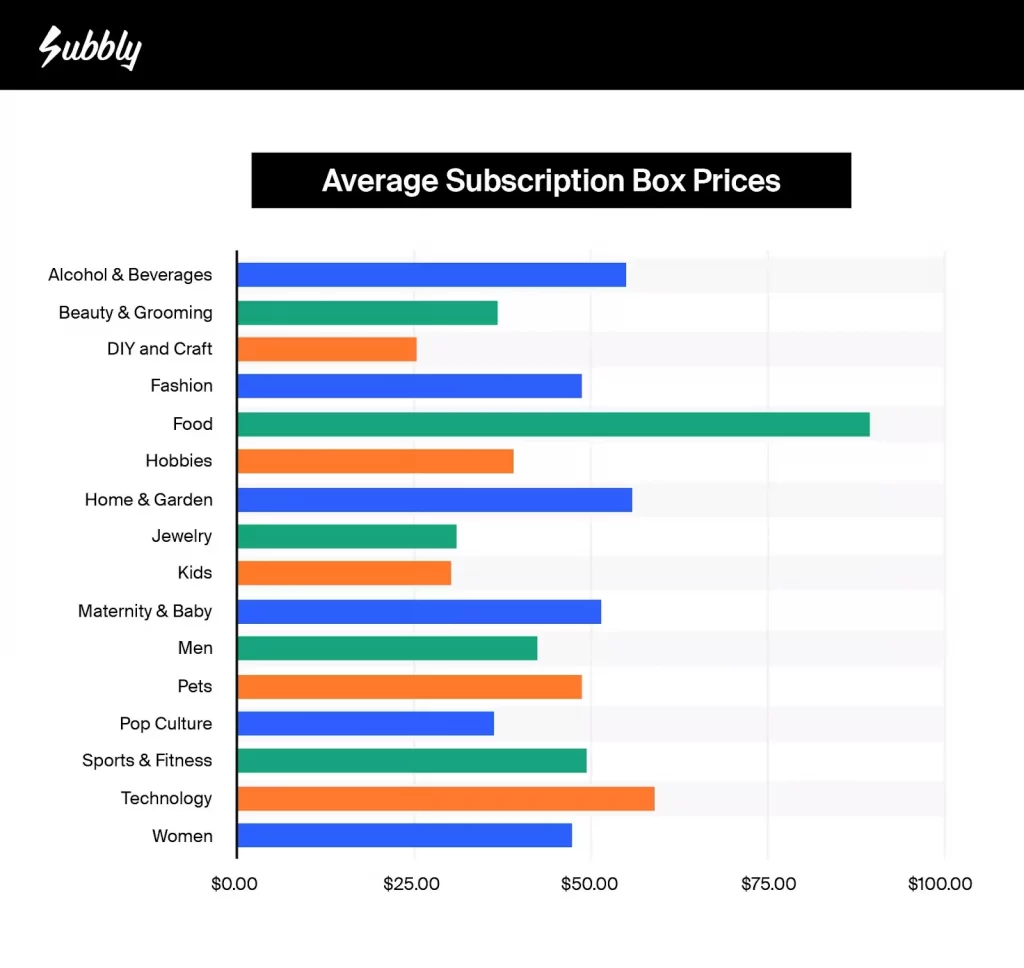
You generally have two strong paths. You can enter a popular category where demand already exists, but you must differentiate hard because competition is high. Or you can niche down and create something unique where fewer direct competitors exist, and customers are willing to pay more because they cannot find the same experience elsewhere.
What to do:
- List 10 niche ideas where customers buy repeatedly. You can use Google Trends to view long-term interest patterns and seasonal trends. Browse TikTok Creative Center and Amazon Best Sellers to spot recurring product categories with strong engagement.
- Validate demand using search and social signals. Check keyword volume with Ubersuggest, Ahrefs, or SEMrush to confirm people actively search for that niche. Scan Reddit communities, Facebook Groups, and TikTok comments to see real pain points and buying intent.
- Do competitor analysis in popular categories, then differentiate clearly. Study existing boxes on Cratejoy, My Subscription Addiction, and direct competitor websites. Use SimilarWeb to estimate traffic sources and marketing channels. Then, identify gaps in positioning, pricing, or audience targeting.
- Check saturation and pricing by scanning existing boxes and their price points
- Pick a niche where you can offer a unique angle in one sentence
Step 2: Define your ideal customer and value proposition
This step in the how to start a subscription box guide is where most sellers accidentally build a “generic box.” The goal is to define exactly who it’s for and what transformation they get. To do that, sellers can frame this as building ideal customer profiles so you can position and differentiate the box properly.
A strong value proposition answers three questions clearly:
- Who is this for?
- What do they get every cycle?
- Why is it worth staying subscribed?
For example, instead of saying “This is a healthy snack box,” you could define it like this:
- Who is this for? Busy office workers aged 25–40 who want healthier snacks at work.
- What do they get every cycle? 8–10 portion-controlled, nutritionist-approved snacks under 200 calories.
- Why stay subscribed? It saves weekly grocery time and supports weight management goals.
When you write your offer, keep it measurable. Your value proposition should be specific, repeatable, and easy to visualize. You are not selling “a box of surprises.” You are selling “a monthly solution.”
What to do:
- Write one customer persona with a real-life context (job, lifestyle, pain point).
- Define the “job to be done” in one line (save time, discover new items, learn a hobby).
- Write your box promise using this formula: For [who], we deliver [what], so you get [result].
- Decide your unboxing hook: discovery, convenience, premium access, or personalization.
A key part of understanding how to start a subscription box business is selecting a model that matches your niche and customer expectations. Let’s move to the next step.
Step 3: Choose your subscription box business model
Before you source products, connect your niche to the right subscription model. There are seven subscription box models: curated boxes, replenishment boxes, access‑based boxes, usage-based boxes, freemium, and community/member clubs.
In this guide, we focus on the three main ones because they are easier to validate, simpler to operate, and clearer to market. Use the table below to see which one fits your products and customers best.
Aspect | Curated boxes | Replenishment boxes | Access‑based boxes |
Main value to customers | Discovery and surprise; trying new or themed items regularly | Convenience, automatic refills so they never run out of essentials | Ongoing access to exclusive products, services, or perks |
What is delivered | Hand‑picked, themed selection of products (often with a surprise element) | The same or similar consumable products on a fixed schedule | Benefits or privileges (exclusive offers, events, content, or member pricing) |
Typical product types | Beauty, snacks, books, lifestyle items, pet toys | Razors, coffee, pet food, supplements, toiletries, household essentials | Limited‑edition items, premium content, VIP experiences, member‑only discounts |
Customer decision effort | Low: they let the brand choose items each cycle | Very low: they choose once, then refills are automatic | Medium: they evaluate if ongoing access and perks are worth the recurring fee |
Primary business benefit | Higher perceived value and differentiation; strong brand storytelling | Predictable recurring revenue and stable demand forecasting | High loyalty and lifetime value through strong membership relationships |
Best fit for | Trend‑driven, gift‑friendly niches where variety matters | Everyday‑use products with regular, predictable consumption. | Brands with strong communities or unique experiences to gate behind membership. |
However, these are not the only ways to build a subscription business. As the market evolves, brands are experimenting with hybrid models such as customizable boxes, seasonal subscriptions, limited-edition drops, prepaid bundles, digital-plus-physical memberships, and loyalty-based subscription programs.
Some businesses even combine replenishment with community access or add educational content to increase perceived value.
What to do:
- If your niche is discovery-driven, start with curated.
- If your niche is routine-driven, start with replenishment.
- If you can offer exclusivity, consider access-based.
- Pick a cadence that matches usage: monthly for habits, quarterly for premium collections.
- Keep customization limited at launch because complexity increases packing time, errors, and support load.
Step 4: Source products and suppliers
After you choose the right subscription model, you need to source products and suppliers you can rely on. Your suppliers must be consistent on lead times, quality, and unit economics.
Here are some suggestions for you to find high-quality suppliers for your subscription products:
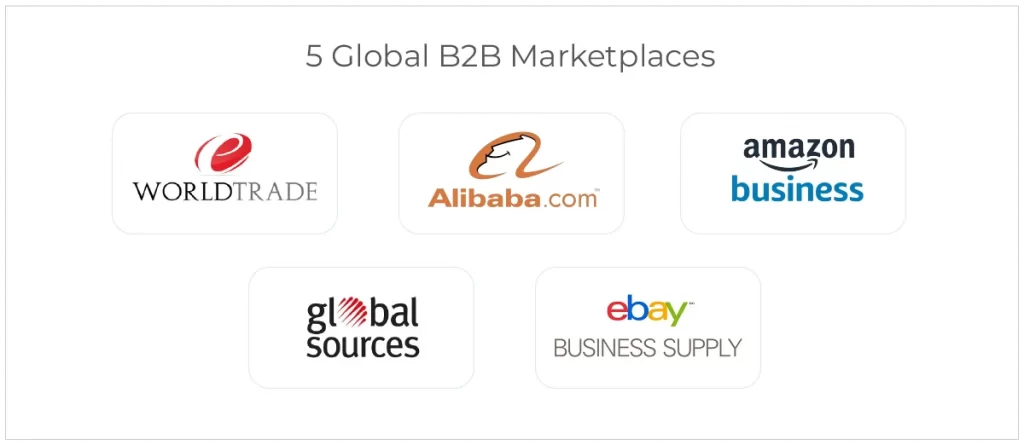
- Alibaba & global B2B marketplaces
Alibaba, Global Sources, and Made-in-China connect you directly with manufacturers, mainly overseas. You can customize products, add private labels, and order in bulk at lower prices. However, you must check supplier reviews, request samples, and confirm MOQs before placing large orders.
- Local manufacturers & wholesalers
If you need consistent inventory and better margins, working directly with manufacturers or wholesale suppliers is a practical option. This approach is especially suitable for essential consumables like coffee, snacks, or toiletries. Building long-term relationships can lead to bulk discounts and customized packaging solutions.
- Trade shows & industry expos
Trade shows help you meet suppliers face-to-face and see product quality firsthand. You can negotiate pricing directly and discover new trends before competitors. Many suppliers also offer exclusive deals to event attendees.

- Etsy & small independent brands
Partnering with small creators allows you to offer unique, handmade, or niche products. Many small brands welcome bulk collaborations for exposure. This approach works well for themed or lifestyle subscription boxes.
- Direct brand partnerships
You can collaborate directly with established brands for product samples or exclusive items. Brands often provide discounted products in exchange for exposure to your subscriber base. This strategy works well once you have a solid audience.
- Local artisans & community businesses
Sourcing from local makers adds authenticity and storytelling to your box. Customers often appreciate supporting small businesses. This approach strengthens your brand identity and community impact.
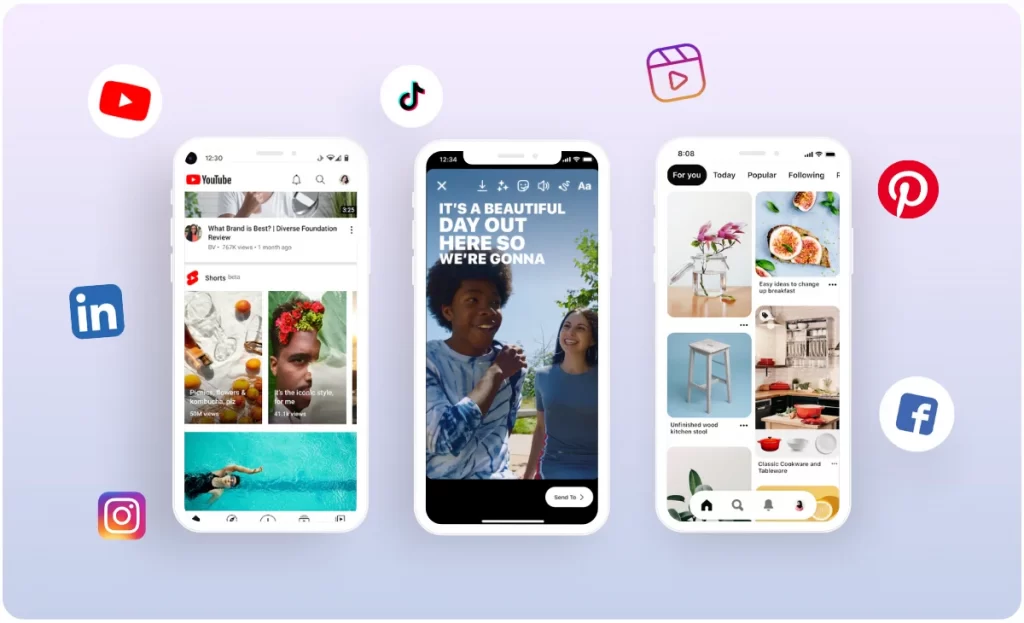
- Social media (Instagram, Pinterest, TikTok)
Many small brands showcase their products on social media. By searching relevant hashtags within your niche, you can discover emerging suppliers and contact them directly. Social platforms also help you assess product popularity, brand identity, and customer engagement before starting a partnership.
When learning how to start a subscription box business, you should choose suppliers that offer products suited for recurring delivery, items that are consumable, refillable, collectible, or part of an ongoing system.
You can often negotiate better terms by explaining your subscription model and projected growth, since recurring bulk orders are valuable to suppliers. Remember, subscription boxes sell experiences, not just products. It’s better to prioritize suppliers with strong brand stories, ethical sourcing, or local roots to increase perceived value and create better marketing content.
Step 5: Price your subscription box
Pricing is not just product cost plus a little extra. Profit comes from pricing that covers all costs, including shipping, packaging, marketing, and churn.
First, you need to know your true cost per box by listing all costs per shipment. For most subscription boxes, these include:
- Products (include inbound shipping from suppliers)
- Packaging (box, filler, tape, inserts, branding)
- Website and tools (platform fees, apps, transaction fees)
- Marketing (ads, influencer fees, email tools)
- Fulfillment labor or 3PL fees
- Admin (registration, taxes, accounting)
Next, set a target margin. Many physical subscription boxes aim for a 40–60% gross margin or around 20–40% net profit. A simple formula is:
Price = Total cost ÷ (1 − target margin).
Some sellers also use a quick rule of pricing at 2–3 times the landed cost as a starting point.
Next, you need to choose a pricing structure that supports growth. You can offer a simple monthly plan to reduce friction, and at the same time, you can introduce prepaid options such as 3-month or 6-month subscriptions to improve cash flow.
Prepaid plans help you forecast better, and they reduce cancellation risk because customers commit upfront.
To maintain competitive pricing, review similar boxes in your niche and compare the value customers receive at each price level. Feedback from potential buyers helps confirm whether the price feels reasonable for the value offered.
Maximize Your Subscription Box Sales with Smart Pricing
Once you’ve set the right price and margin, the next step is keeping it consistent everywhere you sell. LitCommerce helps you sync pricing, manage promotions, and update listings across channels like Amazon, Etsy, TikTok Shop, and more!
If you want to explore real pricing formulas and practical strategies for setting your subscription box prices, check out this: How to Price a Product: Expert Guide!
Step 6: Build your subscription box website
To build a simple, high-converting subscription box website, you should start by choosing a top eCommerce platform that supports recurring subscriptions (such as Shopify, WooCommerce, Wix, or a niche solution). Secure a short, memorable domain name that reflects your brand and clearly hints at your box.
Next, you need to create the core pages:
- Home/landing page: Clear headline, what your box is, who it’s for, and a strong “Subscribe now” button above the fold.
- Product/plan page: Show what’s inside, pricing, billing frequency, and clear photos of past boxes.
- How it works: 3–4 simple steps (choose plan → we curate/pack → we ship → You enjoy).
- About, FAQ, contact, and policy pages
When it comes to design, you should focus on a clean, mobile-first layout, high-quality product photos, benefit-driven copy, and strong calls to action. Make it easy for visitors to understand the value and subscribe quickly.
Step 7: Set up payments and subscriptions
When learning how to start a subscription box business, you need to set up payments and subscriptions in a way that feels simple and trustworthy for your customers.
First, you should choose a payment provider that supports recurring billing, such as Stripe, PayPal, or a subscription app connected to your store. Make sure it works in your country and supports the payment methods your customers actually use.
Next, you need to define clear subscription plans. Decide what each tier includes, how often customers are billed (monthly, quarterly, yearly), and the exact price. Keep your options simple at the beginning so customers don’t feel overwhelmed.
Then, configure automatic recurring billing in your eCommerce system. Set the correct billing frequency and connect each plan directly to your “Subscribe” buttons so renewals happen automatically after the first checkout.
You should also provide a self-service account area. It is a secure part of your website where subscribers can log in and manage their own subscription without contacting your support team. Subscribers can update payment details, change their address, skip a box, pause, upgrade, or cancel on their own. This reduces support requests and helps customers feel in control.
Step 8: Plan fulfillment and shipping
Shipping is where profits quietly disappear. The best subscription boxes treat fulfillment like an operating system: predictable, repeatable, and measured. Here’s what you can do to set up your fulfillment and shipping smoothly:
You can fulfill in‑house (at home or your own small warehouse) or work with a 3PL (third‑party logistics company) that specializes in subscription boxes and handles storage, picking, packing, and shipping for you.
As you grow, a 3PL with multiple fulfillment centers can reduce shipping times and costs by sending boxes from the warehouse closest to each customer.
At this stage, you’ll want to think through your kitting and packing process. Decide which items go in each box, how they’re arranged, and what packaging you’ll use (branded boxes, tissue, inserts, thank‑you cards).
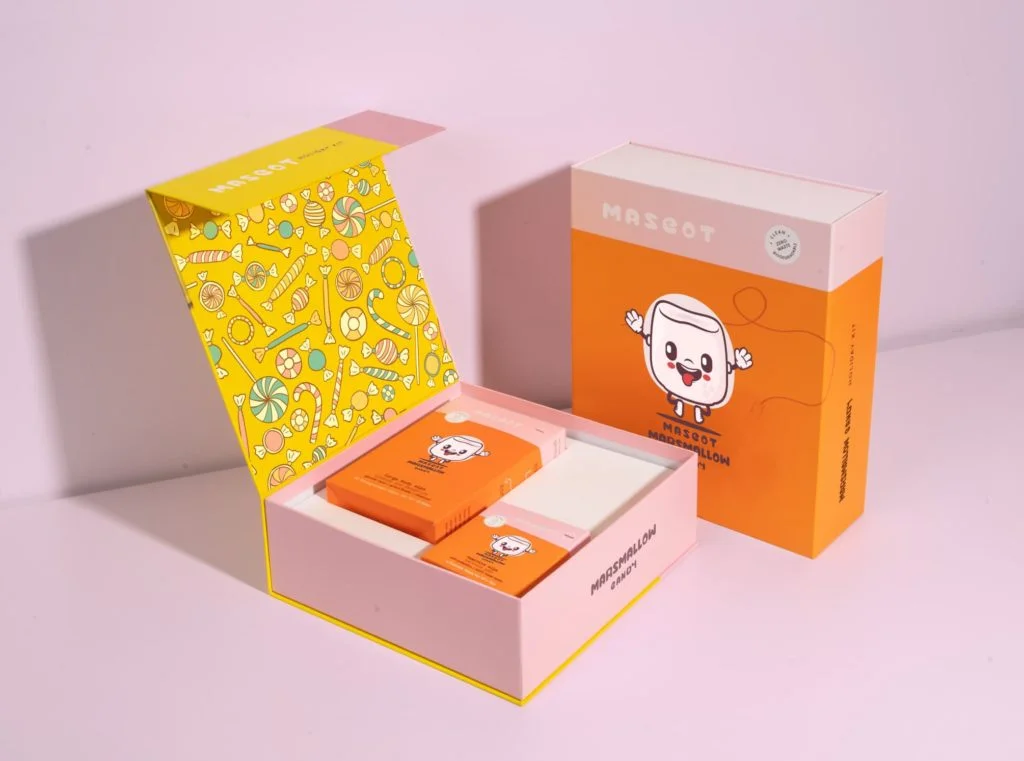
Pre-pack recurring boxes several weeks before the shipping date to avoid last-minute pressure and maintain a consistent monthly shipping schedule.
You should also define a clear shipping schedule and connect it to your fulfillment workflow. For example, you might ship all boxes during the first week of every month. Maintain a predictable schedule so subscribers know exactly when to expect their deliveries and gradually build long-term trust.
After that, you select carriers and shipping options. You have three main places to find them:
- National parcel carriers: USPS, UPS, FedEx, and DHL are the most common starting points; their websites show service types (ground, 2‑day, express, international) and published rates or calculators.
- Multi‑carrier / shipping software and aggregators: Tools like EasyShip, ShipBob, and similar platforms let you compare rates and services from multiple carriers in one dashboard and often give you discounted labels.
- Fulfillment and logistics partners: Subscription‑box 3PLs and fulfillment centers (e.g., ShipBob, specialist subscription box shippers) can choose and manage carriers for you, usually mixing USPS for light boxes with UPS/FedEx for heavier or faster shipments.
Step 9: Launch your subscription box
Congratulations! You’ve reached the final step of the “how to start a subscription box business” guide. Many sellers wait too long because they feel everything must be perfect, but your first shipment doesn’t need to be fully ready before you begin marketing. Waiting too long can slow your prelaunch momentum.
At launch, remember that the goal isn’t to go viral. It’s to build your first stable base of subscribers and learn what keeps them coming back. Early traction and real feedback matter more than big numbers.
To start strong, focus on creating urgency and excitement. Announce the launch to your waitlist first, offer a founding-member deal or limited spots, set a clear cut-off date for the first box, and share updates or unboxing content to maintain momentum.
After the first shipments go out, shift your attention to feedback and retention, not just new sales. Ask subscribers for reviews and photos, track churn and common questions, and use these insights to improve your next box, messaging, and onboarding emails before scaling your marketing.
How to Market a Subscription Box Business
If you’re learning how to start a monthly subscription box business, marketing is the part that decides whether you get subscribers or just compliments. The most profitable subscription box brands also treat marketing like a system, not a launch-week sprint.
Here’s how they build their marketing funnel to promote your subscription box business:
Content marketing and social media
Content is the cheapest way to earn trust, especially early. Your goal is to create “decision content” that answers what people worry about before subscribing: what’s inside, who it’s for, why it’s worth it, and what happens if they want to pause or cancel.
Short-form video works especially well for subscription boxes because you can show the experience in seconds, and then repeat the same format weekly without burning creative energy.
You should think of every post as one step in your customer journey. Instead of trying to sell every piece, guide people gradually from “This looks interesting” to “I want this next month.”
To stay consistent, you can try these four repeatable content pillars:
- Unboxing moments
- Product spotlights
- Behind-the-scenes packing
- Subscriber reactions or results
Break your “How it works” into multiple simple posts. Explain billing dates, shipping windows, what makes each month special, and how subscribers can pause or gift a box. This makes your process feel transparent and safe.
You can also create a monthly theme reveal and use it as your main campaign hook, while sharing social proof every week, such as reviews, UGC clips, repurchase messages, or customer DMs (with permission).
If you’re still figuring out how to start a subscription box business, this kind of consistent, simple content also forces you to clarify your positioning, which makes your ads and website convert better later.
Influencer and UGC strategy
Influencers and UGC work especially well for subscriptions because the format naturally fits “monthly reveal” content. You are not paying only for reach. You are paying for a trust transfer and a reusable creative.
You can start small and still win here. Instead of chasing big creators, you can work with micro-creators who already speak to your niche, because their audience trust is usually stronger.
A practical approach is to send a box with a clear content brief that encourages authentic unboxing and honest feedback, and then reuse the best clips across your site, product pages, and ads.
Real-world founders also report that niche communities can be “goldmines” for finding what people crave, and that early reviews can build trust quickly when you’re bootstrapping.
Paid ads for subscription boxes
Pay-per-click (PPC) advertising is one of the fastest ways for you to get your first subscribers. Platforms like Facebook, Instagram, TikTok, and Google Ads allow you to target specific audiences and track exactly which ads generate sign-ups at a profitable cost per acquisition (CPA).
You can start by choosing one or two main platforms instead of trying to be everywhere. For most beginners, Meta (Facebook and Instagram) and Google Ads are strong starting points because they offer reliable targeting and tracking. If your audience spends a lot of time on TikTok, you can test that as well. But adjust your content style to fit the platform.
- On Facebook/Instagram, use bright images or short videos of the unboxing, close-ups of products, and customer reactions. Keep the text concise with one strong call to action.
- On TikTok, use native‑style vertical videos: quick unboxings, “what I got in my [month] box,” and influencer‑style reviews; keep it casual and authentic, not overly polished.
- Reuse influencer or customer content (UGC/IGC) in your ads; these often get higher click‑through rates and lower costs than studio photos.
You should begin with a small daily budget that you’re comfortable with. Instead of changing ads every few hours, give each ad at least three to four days to collect enough data. Then review performance, pause what isn’t working, and scale what brings subscribers at a sustainable cost.
Email marketing for retention
As you learn how to market a subscription box business, email marketing plays a key role in retaining subscribers and protecting profit. Social media helps people discover your box, and ads bring in trials, but email is what keeps customers engaged between shipments and reduces churn.
Your goal should be to make subscribers feel informed, included, and excited for the next box. Sending the right emails at the right time reassures customers, answers common questions, and strengthens the habit of staying subscribed.
To make this work, set up a few essential email flows:
- Welcome flow: confirm the promise, explain how the subscription works, set expectations for ship dates
- Pre-billing reminder: tell them what’s coming and why it will be worth it
- Post-delivery flow: usage tips, “how to get the best results,” and a simple review request
- Win-back flow: if they cancel, offer a pause option, a lower-frequency plan, or a single curated comeback box.
Common Mistakes When Starting a Subscription Box Business
When learning how to start a subscription box business guide, many sellers run into the same avoidable mistakes, especially around audience focus, pricing, operations, and marketing. Being aware of these early can save you time, money, and frustration.
❌ Ignoring operations and fulfillment planning
Many sellers underestimate the time, coordination, and cash flow required for sourcing, packing, shipping, renewals, and customer support. Without clear processes and inventory planning, fulfillment days can become stressful, shipments may be delayed, and customer churn tends to rise. Planning operations early helps you deliver a consistent experience and keep subscribers satisfied.
Solutions: Plan your fulfillment workflow. Estimate packing time, set realistic shipping schedules, prepare inventory buffers, and test your process with a small batch before scaling.
Simplify Your Subscription Box Operations
LitCommerce helps you centralize orders, sync inventory across sales channels, and manage everything from one dashboard, so your subscription box runs smoothly, shipments stay on schedule, and customers remain satisfied.
❌ Starting without a clear niche or customer
One of the most common issues is building a box around products you like instead of a clearly defined subscriber and problem. When your box tries to appeal to everyone, it becomes harder for you to explain its value, stand out from competitors, and keep customers subscribed long term. A clear niche makes your messaging, branding, and marketing much stronger.
Solutions: Define a specific audience and outcome before choosing products. Describe who the box is for, what problem it solves, and why it’s different. A narrow focus usually makes marketing and positioning much easier.
❌ Launching before building an audience
Another mistake happens when the box goes on sale before anyone is waiting to buy. If you skip building a waitlist, email list, or social proof, your launch depends too much on luck. Warming up an audience in advance gives you early subscribers and momentum on launch day.
Solutions: Start building interest early. Share behind-the-scenes content, collect emails through a waitlist, and talk about your theme or concept before launch so people are ready to subscribe when sales open.
❌ Overcomplicating the offer
It’s easy to think more options will attract more buyers, but too many box types, delivery frequencies, or add-ons often overwhelm customers. A complicated offer also creates more operational work for you and increases abandoned carts.
Solutions: Begin with one clear box and one delivery frequency, or at most two simple tiers. Once you understand customer behavior and demand, you can expand your options gradually.
How to Market a Subscription Box Business: FAQs
How do I get my first subscribers?
Start with a clear target audience and value proposition, then combine organic content (social, blogs, SEO) with a simple launch offer (discount or bonus in the first box) to get your first 50–100 subscribers.
Which marketing channels work best for subscription boxes?
The highest‑impact channels are social media (especially unboxing/UGC), influencer marketing, SEO content, email, and retargeting ads—used together along the customer journey from awareness to retention.
How to start a subscription box at home?
You can start a subscription box at home by choosing a tight niche and target customer, sourcing 3–5 products per box with enough margin, and packing/fulfilling orders from a spare room or garage using simple tools like spreadsheets.
Do I need a big marketing budget to start? o I need a big marketing budget to start?
No. You can begin with organic social content, collaborations with micro‑influencers, and email list‑building, then layer in small paid tests on Meta/TikTok/Google once you see what messaging converts.
Final Thoughts!
Starting a subscription box business in 2026 is absolutely doable when you focus on a clear niche, a strong promise, and repeatable operations. If you are researching how to start a subscription box business, this guide gives you the step-by-step process from choosing products to launching your first box and retaining subscribers long term.
You can continue exploring our Blog to help you refine your offer, optimize pricing, improve customer retention, and scale your subscription box into a predictable, recurring revenue stream, or Contact us for further support.