



TikTok Shop vs Amazon represents two very different ways for sellers to reach customers and drive sales. As both platforms continue to evolve, the real question is no longer whether you should sell online, but where your time and effort will deliver the strongest results in 2026.
This guide compares TikTok Shop and Amazon in different factors to help you understand which platform aligns better with your products, resources, and long-term growth goals.
Let’s dive into it!
TikTok Shop vs Amazon: Marketplace Overview
Choosing between TikTok Shop and Amazon starts with understanding their market position. The following TikTok Shop vs Amazon notable statistics break down how each platform differs in users, sellers, and overall influence in eCommerce:
- Amazon serves over 310 million active customers globally, while TikTok Shop taps into TikTok’s 1.5+ billion monthly active users, converting only a smaller subset into active buyers.
- Amazon has an estimated 10 million sellers worldwide, whereas TikTok Shop hosts around 15 million merchants globally, many of them micro creators and small businesses.
- Amazon controls roughly 37–40% of US ecommerce spend, while TikTok Shop accounts for nearly 20% of US social commerce sales in 2025.
- Amazon counts about 200–250 million Prime members who are highly engaged repeat buyers, while TikTok Shop relies on a younger, engagement-driven audience without a paid membership model.
- Amazon’s growth remains steady at high single to low double digits annually, while TikTok Shop records triple-digit GMV growth in several regions as social commerce scales quickly.
- Amazon’s US app reaches around 98 million monthly active users, while TikTok has far more monthly active users overall, but fewer users actively transacting on TikTok Shop.
In short, Amazon offers unmatched scale, buyer trust, and consistent demand, making it a strong choice for sellers who prioritize stability and high purchase intent. TikTok Shop, while smaller in active buyers, stands out for rapid growth and discovery-driven commerce.
TikTok Shop vs Amazon: Key Comparison Breakdowns
Before choosing between TikTok Shop and Amazon, it’s important to understand how these two platforms differ at a fundamental level. This TikTok Shop vs Amazon comparison breaks down the key differences to help you choose the right channel, starting with user demographics and engagement.
User demographics and engagement
Let’s start with demographics and engagement to understand who you are selling to and how shoppers interact on each platform.
Demographics
TikTok Shop users skew younger and tend to be more impulse-driven. The platform is dominated by Gen Z and younger Millennials, with roughly 60% of global users falling between the ages of 16 and 34. As a result, shopping behavior on TikTok Shop is closely tied to entertainment, trends, and social influence.
Moreover, TikTok Shop buyers usually place smaller, more frequent orders and respond quickly to creator recommendations and live shopping events. Many of these shoppers come from lower- to middle-income groups and are often motivated by discounts, viral appeal, and limited-time offers rather than carefully planned purchases or high-ticket items.
In contrast, Amazon serves a broader and slightly older audience. While the 25–34 and 35–44 age groups form its core user base, there is also strong engagement among shoppers aged 45–54. Additionally, Amazon attracts a significant number of middle- and higher-income households, with a large share of Prime members.
Because of this, Amazon shoppers typically follow a more deliberate buying process. They tend to search with clear intent, compare multiple options, and rely heavily on reviews, ratings, and detailed product information. Instead of being influenced by creators, their decisions are driven by trust, convenience, and value over time.

Engagement
TikTok users spend long sessions consuming content, and over 70% of TikTok users globally have made at least one in‑app purchase, showing how tightly commerce is tied to entertainment. Engagement is discovery-first: people come to watch videos and then buy when something catches their eye.
On the contrary, Amazon users are more task‑oriented, with more than half of US online shoppers starting product searches directly on Amazon instead of search engines. Engagement is intent-first: they arrive with needs in mind, filter options, and complete purchases for convenience and fast delivery.
Verdict:
Fee structures and profit margins
When comparing TikTok Shop vs Amazon, fees are one of the biggest factors affecting seller profitability.
TikTok Shop typically charges a commission per sale, which may vary by product category and promotional period. Its commissions start low at 1.8% for the first 90 days, rising to 5-8% depending on category and region, with added transaction fees of around $0.30 or 2.5%. TikTok has no subscription fee, making it cheaper upfront.
Amazon seller fees use a more layered cost model that impacts margins more predictably but often more heavily. It typically ranges from 8 to 15% referral fees (up to 45% in some categories), plus a $39.99 monthly Professional plan or $0.99 per item for Individual sellers.
Fee Type | TikTok Shop | Amazon |
Commission/Referral | 1.8-8% | 8-15% (avg. 15%) |
Subscription | None | $39.99/mo or $0.99/item |
Transaction/Closing | $0.30 or 2.5% | Up to 2.5% closing |
Fulfillment (per item) | $3.58+ (FBT, invite-only) | FBA varies (~$3-5+) |
Amazon and TikTok Shop profit margins vary significantly based on product price, category, fulfillment method, and sales volume, with examples showing TikTok often yielding higher per-sale profits for impulse items under $50. Amazon’s higher fees are suited for high-volume scaling, while TikTok excels in low-overhead, viral sales.
For a $20 beauty item sold on TikTok Shop, a seller with 3x markup (cost $6.67) pays ~$1 commission (5%), $0.30 transaction, $3 shipping, and $2 affiliate, netting $7 profit (35% margin). On Amazon, the same item incurs 15% referral ($3), FBA fulfillment/shipping (~$4), and storage (~$0.50), leaving ~$3.50 profit (17.5% margin) after $39.99 monthly fee allocation.
Verdict
Product listing and management
The difference between TikTok Shop vs Amazon becomes clear in how products are listed and managed.
Product listing
Amazon relies on a structured, attribute-based listing system. Sellers must provide detailed product data, including titles, bullet points, item specifics, images, and compliance information.
This structure improves search accuracy and buyer trust, but it also means listings must strictly follow category rules and policies.
Product listings on TikTok Shop typically require fewer technical attributes. Instead of relying heavily on structured search data, products are surfaced through videos, livestreams, and creator content. This allows sellers to list products quickly and test new items with less setup effort.
However, product performance depends more on content quality and engagement than on listing optimization alone.
Product management
Amazon sellers often need tools and workflows to manage SKUs, variations, pricing rules, and inventory across large catalogs. Changes to listings may take longer to reflect and often require compliance checks.
TikTok Shop, by contrast, allows faster edits and easier product launches, but managing performance at scale can become complex if sellers rely on multiple videos, creators, or campaigns for the same product.
Verdict
Fulfillment and customer experience
In the Amazon vs TikTok Shop comparison, fulfillment plays a major role in buyer trust. Amazon controls much of the customer experience through its fulfillment and service standards.
With FBA, Amazon handles storage, shipping, returns, and customer service. This creates a highly consistent buyer experience, including fast delivery and trusted return policies.
However, sellers give up some control and must comply with strict performance metrics, which can increase operational pressure and costs.
TikTok Shop gives sellers more flexibility but also more responsibility. Depending on the region, sellers may fulfill orders themselves or utilize logistics partners supported by TikTok. Customer experience is more closely tied to the seller’s operations, including shipping speed and communication.
While this allows more brand control, it also introduces higher variability in delivery times and service quality.
Verdict
Marketing and advertising
Amazon generates traffic primarily through search-based buying behavior. Customers come to Amazon with clear purchase intent, searching for specific products or solutions. As a result, seller visibility depends heavily on keyword optimization, competitive pricing, product reviews, and consistent sales performance.
In many categories, paid advertising, such as sponsored products, is no longer optional. The more competitive the niche, the higher the advertising costs, making ongoing ad investment a key part of selling on Amazon.
TikTok Shop, by contrast, is powered by discovery-driven marketing. Instead of searching, users encounter products organically through short-form videos, livestreams, and creator recommendations. This allows unknown brands to gain exposure quickly if content resonates, but performance can be less predictable.
Advertising on TikTok often blends paid reach with organic content, making creative quality a major factor in success.
Verdict
Best Product Types for TikTok Shop and Amazon
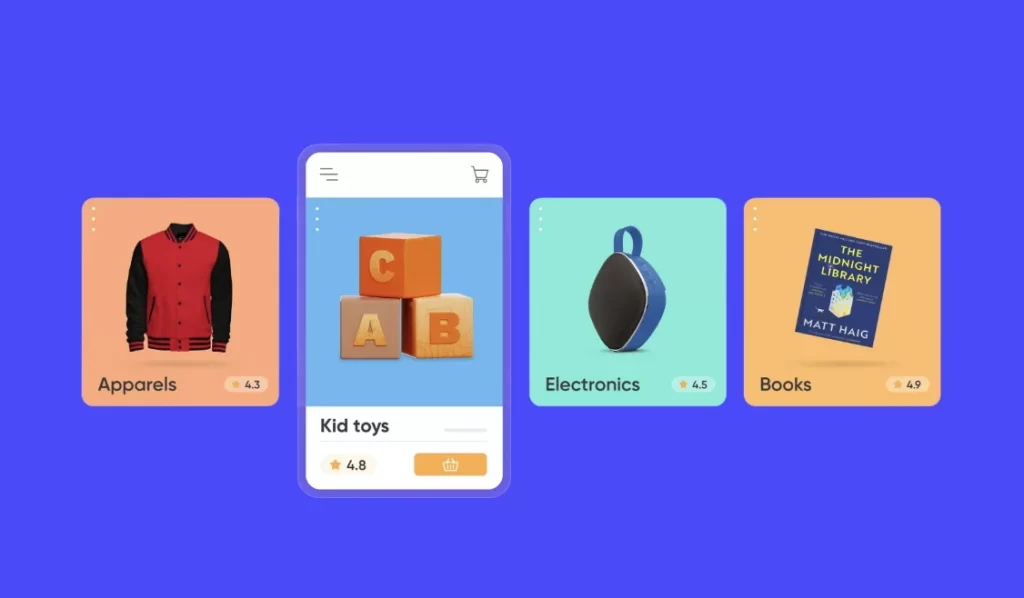
TikTok Shop and Amazon reward very different product behaviors, pricing structures, and buyer mindsets.
TikTok Shop works best for visually appealing, trend-driven products that spark emotional or impulse interest, while Amazon performs better for products that buyers already intend to purchase and want to compare based on price, features, and reviews.
Here is the product list that performs best on each platform:
TikTok Shop | Amazon |
Beauty products such as heated eyelash curlers, facial ice rollers, pore vacuums, and LED face masks Skincare & cosmetics under $30, including lip tints, cushion foundations, acne patches, and serums Fashion accessories like shapewear, seamless bras, phone crossbody straps, hair clips, and caps Home problem-solvers, including lint removers, sink strainers, anti-slip mats, and storage organizers Trend-driven gadgets, such as mini printers, handheld fans, LED lights, or phone accessories | Replenishable goods, such as vitamins, supplements, protein powders, pet food, and household supplies Electronics & accessories, including cables, chargers, headphones, smart plugs, and routers Home appliances, like air fryers, vacuum cleaners, coffee machines, and humidifiers Office & B2B products, including printers, ergonomic chairs, standing desks, and label machines Branded or patented products with clear differentiation |
If you want more details about profit potential, the margins of each kind of product. You can explore our in-depth guide:
TikTok Shop vs Amazon: Which Is Better for Long-Term Growth?
Looking at TikTok Shop vs Amazon from a long-term perspective, Amazon has a mature ecosystem with predictable buyer behavior, strong logistics (FBA), and global reach. Demand is largely search-driven, meaning products can generate consistent sales once they rank well and collect reviews.
For long-term growth, Amazon favors sellers who optimize operations, manage margins carefully, and reinvest in advertising. However, competition is intense, fees tend to increase over time, and sellers remain highly dependent on Amazon’s policies and marketplace control.
TikTok Shop is still evolving, and its growth is fueled by content, creators, and algorithmic discovery. This creates opportunities for rapid brand exposure and fast scaling, especially for trend-driven or visually demonstrable products.
However, long-term performance depends on sustained content output, platform policy changes, and shifts in user behavior. Sales volatility is higher, and demand is less predictable than on Amazon.
Verdict
How to Grow Faster by Selling on TikTok Shop and Amazon
Why settle for just one platform when you can grow faster by using both TikTok Shop and Amazon together?
TikTok Shop helps you reach new audiences through short video creator partnerships and live shopping. Amazon adds long-term stability with strong buyer trust, reliable fulfillment, and consistent demand.
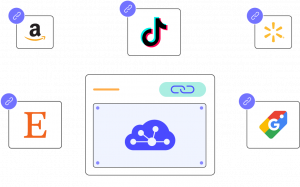
Selling on multiple channels allows you to grow faster by combining TikTok Shop discovery-driven traffic with Amazon high-intent buyers. However, managing products, inventory, and orders across two platforms can quickly become time-consuming and error-prone without the right system.
This is where LitCommerce turns multichannel selling into a manageable and efficient process. Here’s how LitCommerce helps you sell on TikTok Shop and Amazon smoothly:
- Centralize product listings for both platforms in one dashboard
- Edit and publish listings on TikTok and Amazon in bulk
- Sync inventory automatically to prevent overselling and stock errors
- Manage orders from TikTok Shop and Amazon in one place
By connecting TikTok Shop and Amazon using LitCommerce, sellers can focus more on growth and less on daily operations.
Ready to scale smarter across TikTok Shop and Amazon?
LitCommerce helps you centralize listings, sync inventory automatically, and manage orders across both platforms without manual work.
TikTok Shop vs Amazon: FAQs
What is the difference between TikTok Shop and Amazon?
Amazon is a search-based marketplace where customers already know what they want and compare products logically, supported by strong fulfillment and logistics like FBA.
TikTok Shop is a social-commerce platform where products are discovered through videos, livestreams, and trends, focusing on impulse buying and viral reach with lower setup barriers.
Is it better to sell on Amazon or TikTok?
Amazon is better for long-term, stable sales and products with consistent demand. TikTok Shop is better for visually appealing, trend-driven products and sellers who can create engaging content and capitalize on viral traffic.
Why is TikTok Shop so cheap compared to Amazon?
TikTok Shop has lower seller fees, fewer overhead costs, and often offers subsidies like discounts or shipping incentives. Many products are sourced directly from manufacturers, keeping prices low compared to Amazon’s higher fulfillment and platform fees.
Why are sellers leaving Amazon?
Some sellers are leaving Amazon due to rising fees, tighter profit margins, intense competition, and complex policies, and are exploring platforms like TikTok Shop that offer lower costs and easier entry.
Wrap up!
In this guide on TikTok Shop vs Amazon, we explored how each platform serves sellers in different ways. Amazon remains a powerful choice for sellers who want stable demand, search-driven traffic, and reliable fulfillment. TikTok Shop, on the other hand, stands out for trend-driven, visually appealing products that benefit from short videos, livestreams, and influencer marketing.
If you want more useful tips for selling multichannel effectively, check out our Blog or Contact us for further support!