



If you’re wondering how to start a boutique business, you’re not alone. Boutique retail remains one of the most attractive small business ideas in 2026, especially with the growth of ecommerce and social commerce. In fact, the global fashion retail market is projected to reach about 1.7 trillion USD around 2026, continuing steady growth after recent volatility.
Many entrepreneurs search for how to start a small boutique business because they want flexibility, creative freedom, and scalable income. The good news is that modern tools, global suppliers, and online marketplaces make it easier than ever to launch lean and grow strategically. This guide will walk you through every major step, from idea validation to scaling.
Planning to sell across multiple platforms from day one?
With LitCommerce, you can connect your boutique store to top marketplaces, sync inventory in real time, and manage orders from one centralized dashboard
What Is An Online Boutique?

An online boutique is a retail business that sells curated fashion or lifestyle products primarily through digital channels. Instead of relying on foot traffic, it attracts customers.
Unlike large fashion retailers, boutiques focus on niche audiences. You might specialize in minimalist women’s wear, sustainable streetwear, handmade accessories, plus-size fashion, or occasion-based collections. This focused positioning helps you stand out in a competitive market.
Online boutiques typically operate under one of these models:
- Wholesale purchasing and reselling
- Private label manufacturing
- Print-on-demand
- Dropshipping
- Handmade or custom products
If you are researching how to start an online boutique, remember that “boutique” is less about size and more about curation. Customers expect unique pieces, strong branding, and a personalized shopping experience.
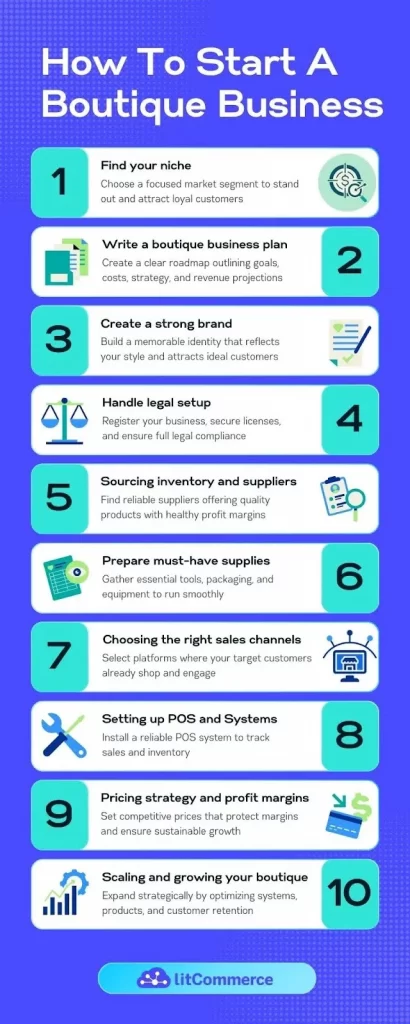
How To Start A Boutique Business In 10 Steps
If you want a clear roadmap for starting a boutique, these 10 steps will help you move from idea to launch without feeling overwhelmed. Whether you plan to sell online, offline, or both, the process follows the same strategic foundation.
Find your niche
Every successful boutique begins with clarity. Instead of trying to sell everything, focus on a specific audience and style.
Ask yourself:
- Who do you want to serve?
- What problem does your boutique solve?
- What makes your products different?
When learning how to start a small boutique business, niche selection reduces competition and marketing costs. A focused boutique attracts loyal customers faster than a general store.

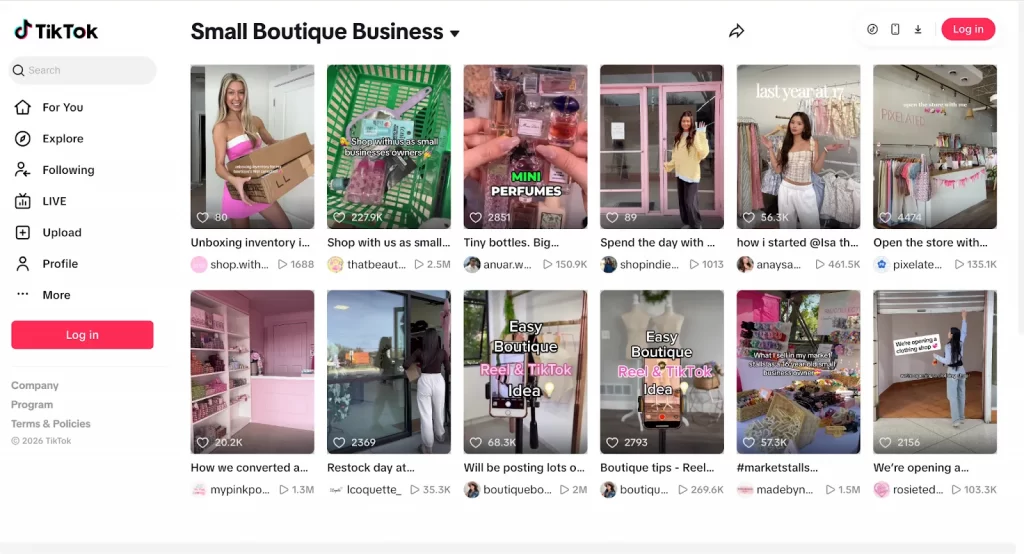
Research trends using TikTok, Instagram, Pinterest, and Google Trends. Analyze competitors to identify gaps in pricing, branding, or product variety. The goal is not to copy but to position differently.
Check our guide on How To Start A 3D Printing Business.
Create a strong boutique brand
Branding is what separates a boutique from a generic clothing store. Your name, logo, colors, and messaging should reflect your niche clearly.
Start by choosing a memorable business name. Then design a visual identity that feels cohesive across your website, packaging, and social media.
Your brand should answer:
- What do you stand for?
- Who is your ideal customer?
- Why should people trust you?
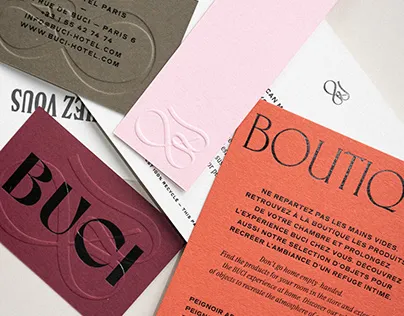
If you plan to scale long-term, invest time in storytelling. Customers connect with purpose-driven brands more than random product catalogs.
Write a boutique business plan
A clear boutique business plan keeps you focused and financially realistic. Even if you are a solo founder, documenting your strategy helps you avoid costly mistakes.
Your plan should include:
- Target market analysis
- Competitor overview
- Product sourcing strategy
- Marketing plan
- Startup cost breakdown
- Revenue projections
When exploring how to open a boutique, many new owners skip this step and underestimate expenses. A simple spreadsheet forecasting inventory costs, marketing spend, and operating expenses can protect your cash flow.
A business plan is not about perfection. It is about clarity and direction.

Handle legal and administrative setup
Before selling, you must formalize your business. This step varies by country and state, but typically includes:
- Choosing a business structure (LLC, sole proprietorship, etc.)
- Registering your business name
- Applying for tax identification numbers
- Securing required permits and licenses
- Opening a business bank account
If you are serious about how to start a boutique business, separating personal and business finances is essential. It simplifies accounting and protects you legally.
Consider business insurance if you hold physical inventory or operate a storefront.
You may also like: How to Start A Candle Business From Scratch in 2026.
Source inventory and suppliers
Your inventory defines your boutique’s reputation, and knowing where to source products can make or break your business. Beyond the basic models (wholesale, designers, manufacturers, dropshipping), here are proven sourcing channels boutique owners commonly use:
These platforms connect you with a broad range of suppliers and products — from trend-forward pieces to basics:
- FashionGo and Faire. Popular marketplaces with thousands of brands and curated collections for boutiques.
- Hubventory. A wholesale marketplace with vetted vendors and diversified fashion inventory.
- Wholesale Fashion Trends. B2B fashion marketplace with trend-aligned inventory and flexible MOQs.
Directories help you find verified manufacturers and apparel wholesalers worldwide:
- SaleHoo. A global wholesale directory with thousands of verified suppliers.
- Maker’s Row. Connects boutique owners with U.S. manufacturers for custom or small-batch production.
- Alibaba & similar B2B sites. Offer massive catalogs from global suppliers, ideal for bulk buying and customization.
Boutique owners often physically source inventory or research trends at fashion districts and wholesale markets. Visiting places like the LA Fashion District (U.S.), London wholesale markets, or other regional garment hubs provides direct access to manufacturers and unique styles.
In India, platforms like XSTOK connect you with the textile and apparel supply chain for boutique-sized orders.
Attending wholesale fashion trade shows (whether virtually or in person) helps you discover new brands, gauge trends, and negotiate better terms with suppliers.
Must-have supplies to start a boutique
Beyond inventory, you will need operational supplies. These may include:
- Shipping materials (boxes, poly mailers, labels)
- Storage racks or inventory bins
- Barcode scanners or labeling tools
- Packaging inserts for branding
- Basic photography setup (lighting, backdrop, tripod)

Professional product images significantly impact conversions. Even a simple home studio setup can produce high-quality visuals.
Choose the right sales channels
Decide where you will sell your products based on where your target customers spend time. Your sales channels directly impact visibility, pricing strategy, and brand positioning.
Common options include:
- Your own ecommerce website. Gives you full control over branding, customer data, and profit margins.
- Marketplaces like Etsy or Amazon. Provide built-in traffic but come with fees and competition.
- Social platforms like Instagram and TikTok. Ideal for visual storytelling and impulse purchases.
- A physical storefront or pop-up shop. Builds local presence and strengthens brand trust.
As your boutique grows, managing multiple platforms manually can quickly become overwhelming. Inventory mismatches, pricing inconsistencies, and overselling can damage your reputation.
Multichannel selling tools like LitCommerce allow you to list products across marketplaces, sync inventory in real time, and manage orders from a centralized dashboard. This reduces operational errors and saves significant time.
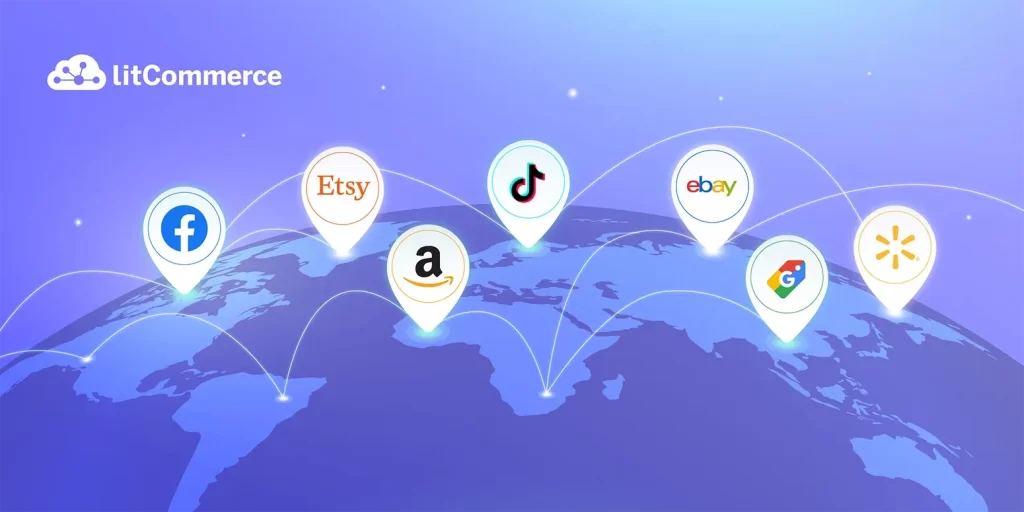
Choosing the right combination of sales channels ensures consistent branding, accurate pricing, and a smoother customer experience across every touchpoint.
Start scaling your boutique the smart way
Use LitCommerce to connect your boutique to multiple marketplaces, sync inventory automatically, and manage orders in one place
Set up POS and technology systems
If you operate in-person sales, choose a reliable point-of-sale system. For online boutiques, ensure your ecommerce platform supports:
- Secure payment processing
- Inventory tracking
- Order management
- Sales analytics
Technology should simplify operations, not complicate them. Automation improves efficiency and reduces human error.
Develop a pricing strategy and profit margins
Pricing determines sustainability. Many boutique owners use keystone pricing, which doubles the wholesale cost. However, your final price should reflect:
- Target market spending power
- Brand positioning
- Competitor pricing
- Operating expenses
Calculate your gross margin carefully. Healthy boutiques typically aim for 50–65% margins on apparel.
Avoid underpricing just to compete. Strong branding justifies premium pricing.
Scale and grow strategically
Once sales begin, focus on growth systems rather than random expansion.
You can scale by:
- Expanding product categories
- Adding new sales channels
- Improving customer retention
- Running paid advertising campaigns
- Launching limited collections
Data should guide decisions. Track best-selling products, repeat purchase rates, and marketing ROI. Growth becomes sustainable when decisions rely on numbers instead of assumptions.
Reselling is also a common approach many boutique owners use to get started, check out guide on How to Start a Reselling Business.
Start scaling your boutique the smart way
Try LitCommerce to automate multichannel selling, prevent overselling, and grow your fashion brand with confidence
How To Start A Boutique Business: Frequently Asked Questions
1. How much does it cost to start a boutique?
Startup costs vary depending on your model. An online boutique can start with as little as $2,000 to $5,000 if you begin with small inventory and home-based operations. A physical store, however, may require $20,000 to $100,000 or more due to rent, renovations, fixtures, and staff.
Your biggest expenses typically include inventory, website setup, branding, marketing, and business registration. Keeping overhead low in the early stages reduces risk and improves your chances of profitability.
2. How profitable is a boutique business?
Boutiques can be highly profitable when managed correctly. Most successful boutiques operate with 50–65% gross margins on clothing. Profitability depends on inventory turnover, pricing strategy, and customer retention.
Strong branding and repeat buyers increase long-term sustainability. Owners who manage expenses carefully and reinvest strategically often see steady growth after the first year.
3. How many items should you start with?
New boutique owners often launch with 20 to 50 carefully selected pieces rather than hundreds of products. A smaller, curated inventory allows you to test demand without overstocking.
Focus on quality and cohesion instead of volume. Early sales data will help you decide which styles deserve restocking or expansion.
4. How long does it take to become profitable?
Most boutiques take 6 to 18 months to reach consistent profitability. The timeline depends on startup capital, marketing effectiveness, and niche demand.
Businesses that control inventory levels and prioritize cash flow management typically stabilize faster.
5. Where do boutique owners find clothing suppliers?
Boutique owners source products from wholesale marketplaces, trade shows, local designers, and overseas manufacturers. Popular online directories connect retailers with verified suppliers.
Building long-term supplier relationships ensures better pricing, consistent quality, and smoother restocking.
6. What licenses do I need to open a boutique?
Licensing requirements depend on your location. Most boutiques need:
– Business registration
– Sales tax permit
– Employer Identification Number (if hiring staff)
– Local operating permits
Check local regulations before launching to ensure compliance. Proper registration protects your business and builds credibility with suppliers and customers.
How To Start A Boutique Business: Conclusion
Learning how to start a boutique business is not about launching with hundreds of products or a massive budget. It is about clarity, positioning, and smart execution. When you choose the right niche, build a strong brand, and manage your finances carefully, you create a foundation that supports long-term growth.As your boutique expands across multiple platforms, operational efficiency becomes just as important as product selection. Using a multichannel solution like LitCommerce can help you sync inventory, manage listings, and streamline orders across marketplaces from one dashboard. This allows you to focus more on strategy and branding instead of manual tasks.