



Every year, thousands of people wonder how to start a gift basket business from home. The idea sounds simple. But is the gift basket market still profitable today? And can you actually build a sustainable business from it?
Yes… but only if you set things up correctly from the beginning. When you choose the right niche, price correctly, and set up your operations smartly from day one, you can cut unnecessary costs and grow much faster than most beginners.
We’ve done in-depth research on the gift basket market, analyzed trends, and studied successful sellers to spot clear patterns. In this guide, we’ll walk you step by step through how to start a gift basket business successfully.
Key takeaway:
- You only need to follow 7 core steps to start making money from your gift basket business: finding your niche, creating a lean plan, registering your business, sourcing and designing your baskets, setting up your store, building your online presence, and promoting your brand.
- Top-selling gift basket ideas include birthday baskets, thank-you baskets, festival and holiday hampers, get-well-soon baskets, and anniversary gifts.
- You’ll need to register your business with your local government, and depending on your location and operations, you may also be required to obtain a business license or permit.
- Start locally if you can—use small stores, markets, or events to validate demand—then expand to marketplaces like Etsy, Amazon, Walmart and eventually your own website on Shopify, Wix, etc. building a multichannel presence so customers can discover and buy from you across different platforms.
Is Starting a Gift Basket Business Still Profitable in 2026?
Yes. The gift basket market is already pretty solid. Globally, it’s projected to be worth around $1.67 billion in 2025 and is expected to reach $1439.8 million by 2034 at a CAGR of 2.2%.
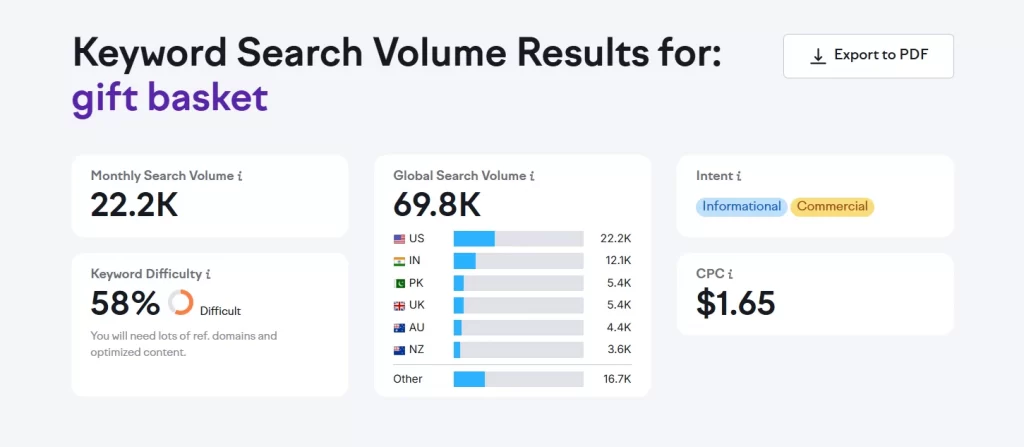
On top of that, people are actively searching for gift baskets. The term “gift basket” gets around 70,000 searches per month worldwide.
Gift baskets are gaining high interest thanks to rising demand for health and wellness boxes, corporate gifts, holiday hampers, and event-based baskets like weddings, baby showers, and thank-you gifts. These categories tend to perform especially well because they solve very specific gifting needs.
Still, profitability doesn’t just happen on its own. You’ll need to understand your audience, choose quality products, and invest real effort into marketing. Timing plays a big role too. Sales often jump during holidays and special occasions, giving you strong revenue spikes. However, during economic slowdowns, gift baskets can feel more like a “nice-to-have,” so some buyers may pause their spending.
With that in mind, let’s dive deeper into how to start a gift basket business the right way, and set it up for long-term success.
How to Start a Gift Basket Business in 7 Steps
6 steps to start a gift basket business:
- Step 1: Find your gift basket niche
- Step 2: Create a lean business plan
- Step 3: Register your business
- Step 4: Source products & design your gift baskets
- Step 5: Set up your store and equipment
- Step 6: Build your online presence
- Step 7: Promote your gift basket business
Let’s dig into the step-by-step process on how to start a gift basket business.
Step 1: Find your gift basket niche
The first step is figuring out which niche you want to start with. When you’re just getting started, trying to serve everyone usually leads to serving no one well. That’s why it’s best to focus on 1-3 clear niches, then expand later once your business grows and you’ve identified your top-selling products.
To help you discover strong gift basket business ideas, we’ve highlighted some of the top-performing niches based on insights from the Gift Baskets Market Size & Industry Report:
Birthday gift baskets
Birthday gift baskets represent more than 120 million annual purchases globally. Birthday baskets sell especially well online, with strong demand for gourmet snacks, chocolates, self-care sets, and themed packages. Many sellers report that birthday orders make up more than 25% of their yearly revenue.
Thank-you gift baskets
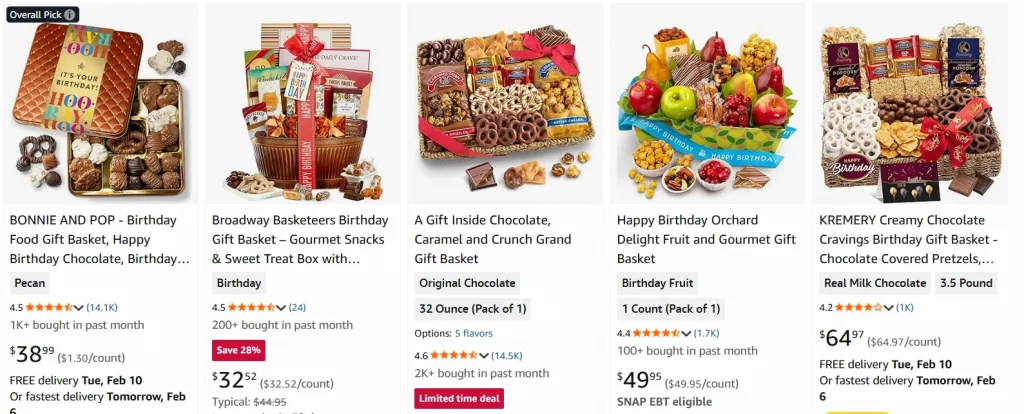
Thank-you gift baskets is a steady, repeat-friendly niche. These are widely used for corporate gifting (with corporate clients contributing more than 42% of total demand), workplace appreciation, and client thank-yous.
Festival & holiday gift baskets
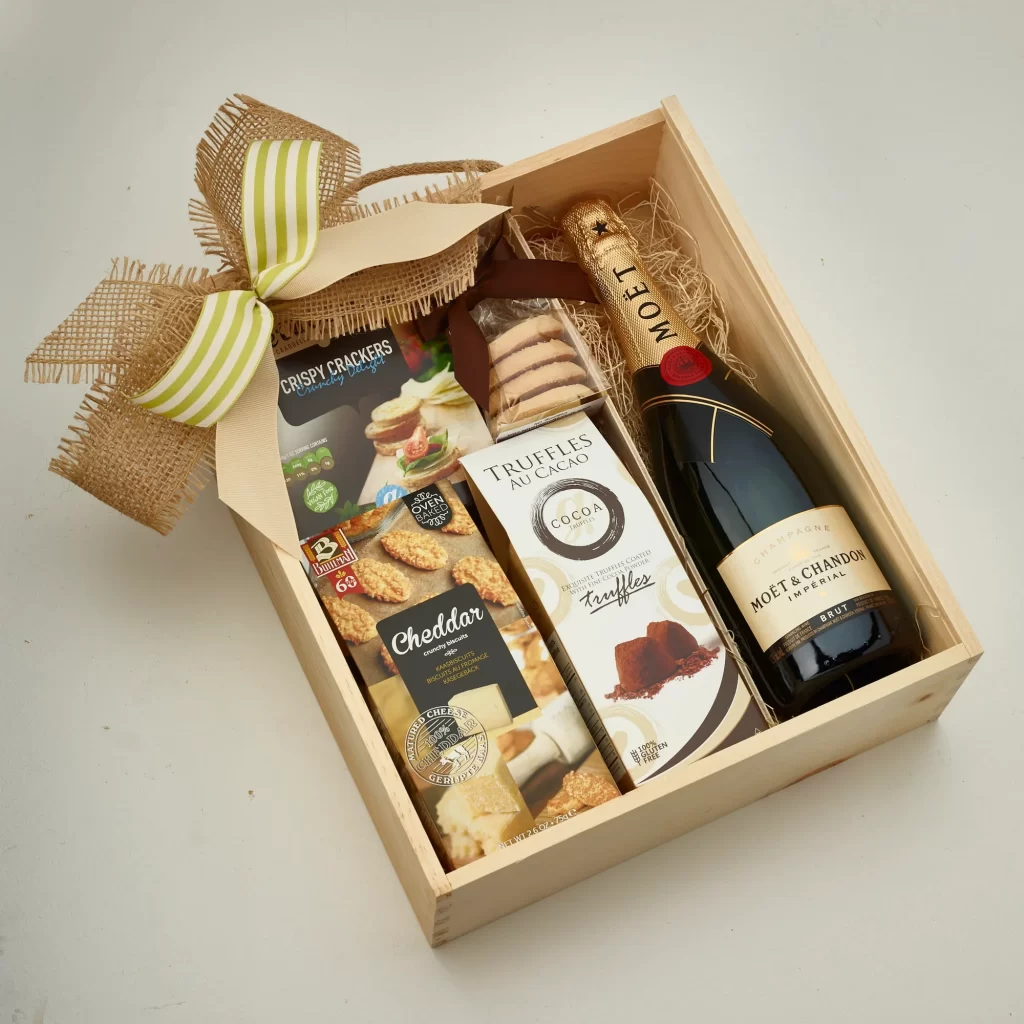
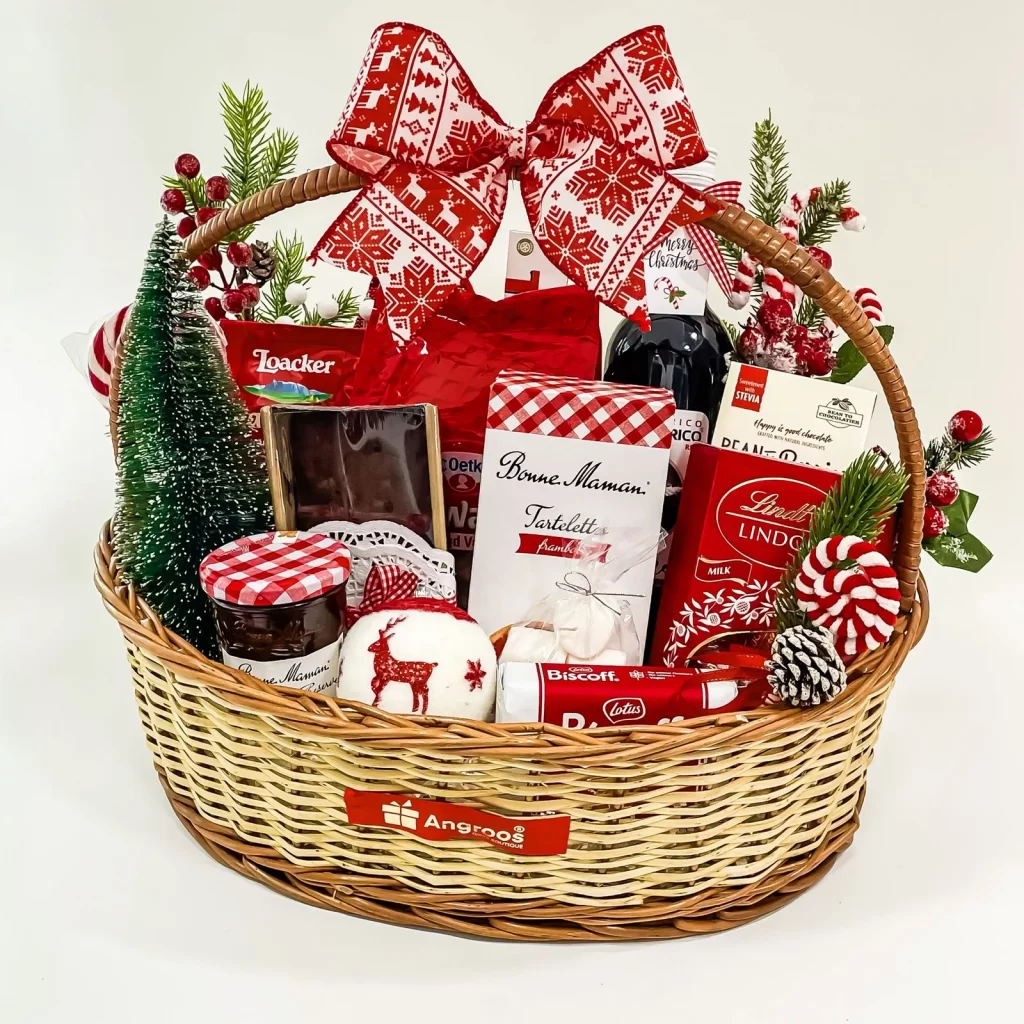
This is one of the biggest revenue drivers for many businesses, with demand surging during major holidays like Christmas, Lunar New Year, Diwali, and Thanksgiving.
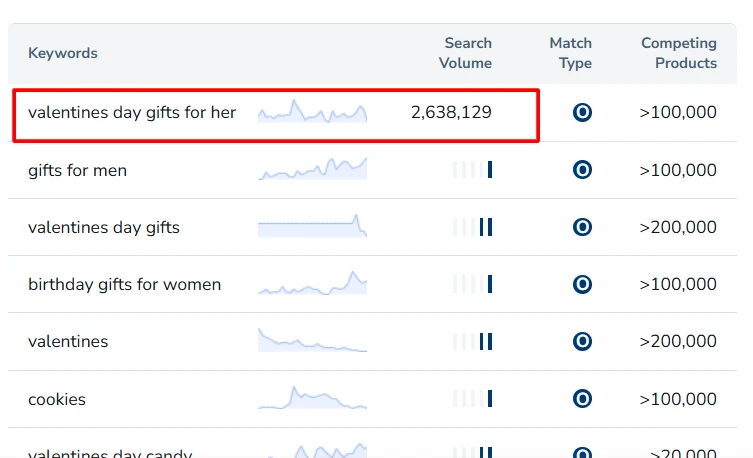
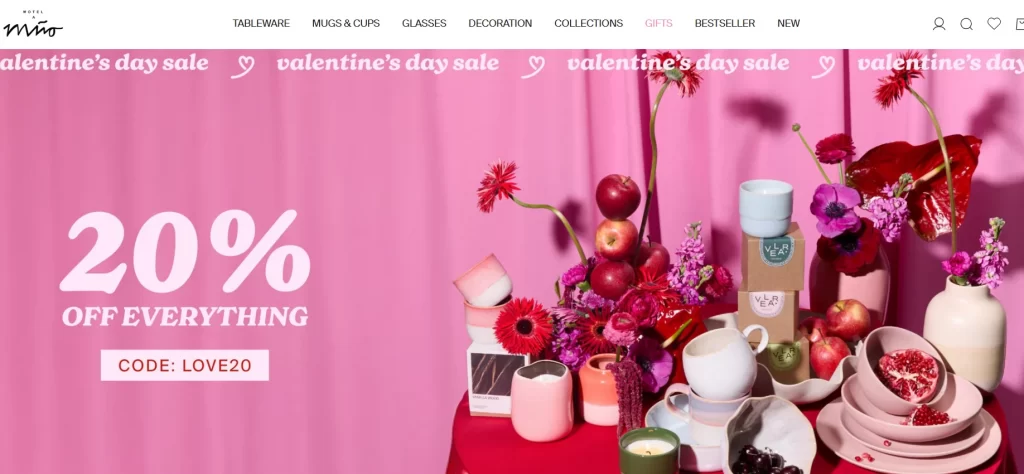
What’s more, we also saw a significant demand for Valentine’s Day gifts on Amazon so this is an excellent choice among gift basket business ideas.
Get well soon gift baskets
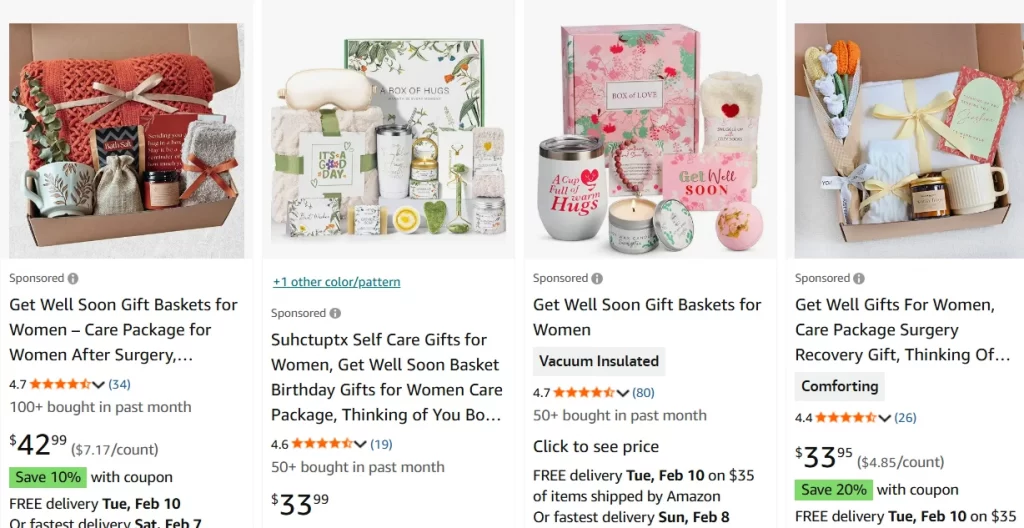
This niche continues to grow alongside wellness trends, exceeding 50 million annual purchases. They’re commonly purchased for friends, family members, and even distributed through healthcare settings.
Anniversary gifts
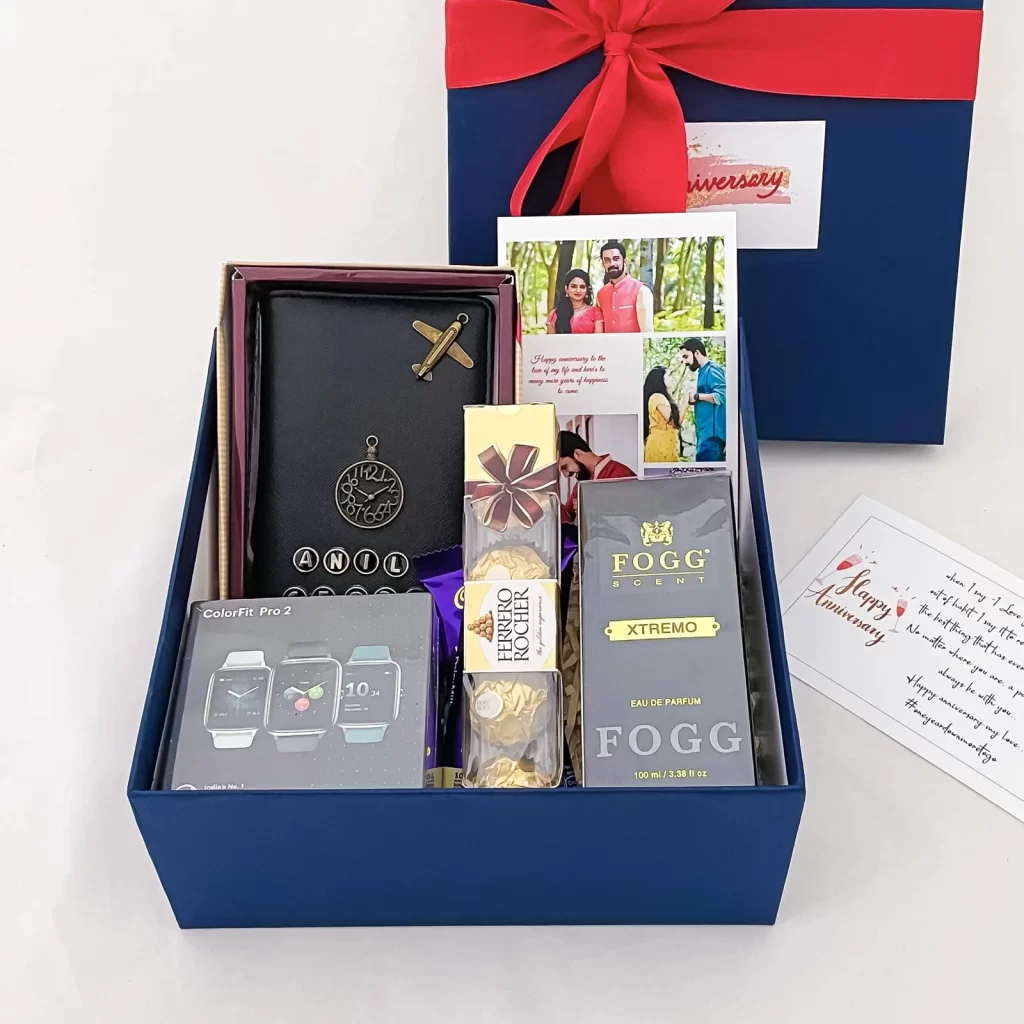
Anniversary gift baskets generate over 60 million sales worldwide each year, with more than 40% featuring premium wine and gourmet assortments. This is a higher-end niche with strong average order values, where personalization plays a key role and often helps increase conversion rates.
Besides, marketplaces like Amazon and Etsy are great places to spot proven demand. Search for “gift basket” or your chosen niche, then pay attention to best sellers, top-rated listings, and products with lots of recent reviews. You can read customer reviews is especially helpful because they tell you exactly what buyers love, complain about, or wish was included.
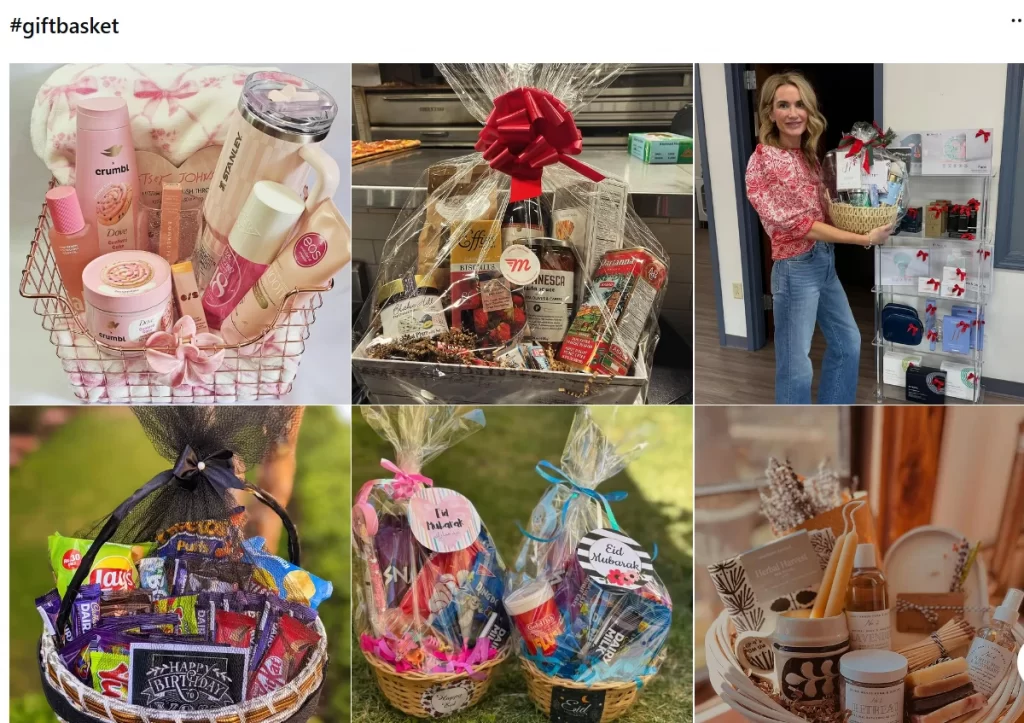
At the same time, keep an eye on trend-driven social media platforms like TikTok and Instagram. These channels often reveal what’s about to take off next. Search hashtags such as #giftbasket, #giftideas, or #smallbusinessfinds and watch which videos get strong engagement. Viral unboxings, aesthetic packaging, and themed baskets can quickly spark demand. If you see the same style or product popping up repeatedly, that’s a strong signal it’s worth testing.
If you want to learn more about other things to make and sell at home to earn more money, read this insightful article.
Step 2: Create a lean business plan
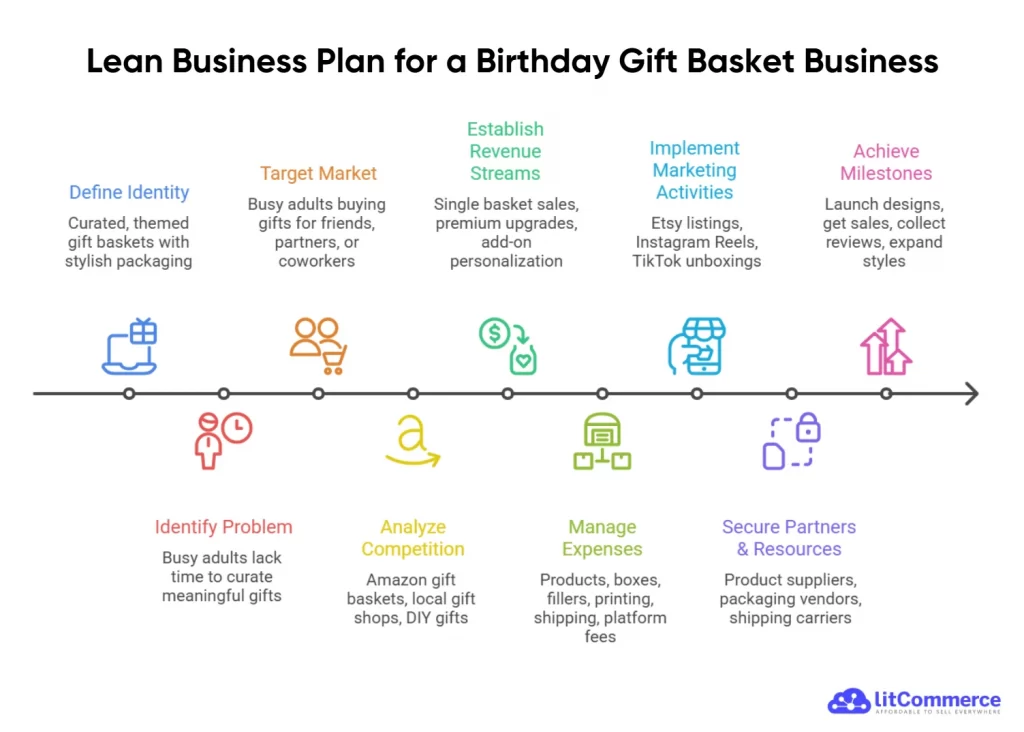
Instead of writing a 30-page business plan, you can begin with a lean business plan that’s simple, flexible, and easy to adjust as you learn. It organizes your ideas into small sections (or boxes) using short, clear notes.
A lean business plan usually includes these key elements:
- Identity: A quick snapshot of your business. What you sell and what makes you different.
- Problem: The problem your customers have and why they need your gift baskets.
- Target market: Who your ideal customers are (age, occasion, budget, behavior).
- Competition: Other gift basket sellers or alternatives customers might choose instead.
- Revenue streams: How you’ll make money (individual orders, bundles, corporate orders, subscriptions).
- Expenses: Your main costs, such as products, packaging, marketing, and shipping.
- Marketing activities: How you’ll reach customers (social media, marketplaces, ads, referrals).
- Partners & key resources: Suppliers, packaging vendors, delivery partners, or platforms you rely on.
- Milestones: Small, clear goals to test and launch your business.
Here is an example of a general lean business plan to start a gift basket business:
Step 3: Register your business
The next step of how to start a gift basket business is registering your business to protect you legally, and make it easier to open bank accounts or work with suppliers later on.
There are several common business structures to choose from. You don’t need to overcomplicate this, many gift basket businesses start simple and adjust as they grow.
- Sole Proprietorship: The easiest option to start. Your personal and business finances are linked, which means you’re personally responsible for any debts. You may not need formal registration, but registering can still help you look more credible.
- Partnership: Best if you’re starting with someone else. In a general partnership, all partners share responsibility. In a limited partnership, one partner takes on more liability while others have limited risk.
- Limited Liability Company (LLC): A popular choice for small businesses. An LLC protects your personal assets while keeping taxes flexible and relatively simple. Many first-time founders choose this structure.
Registering your business with your local government is usually straightforward. In many states, you only need to choose a business structure, pick a business name, and assign a registered agent. The exact steps vary by location, so you need to check your state’s requirements or talk to an accountant or attorney if you’re unsure.
You may also need a business license or permit, depending on your location and how you operate. A good place to check is the U.S. Small Business Administration (SBA) website, where you can search by business type and state.
As for costs, registering a business typically ranges from $20 to $520, depending on your state and legal structure. If you already have a business name in mind but aren’t ready to register yet, many states allow you to reserve the name for a small fee.
Step 4: Source products & design your gift baskets
You can find products and containers from places like:
- Wholesale suppliers. Some top US-based wholesale suppliers for gift basket items are Pioneer Wholesale, SAKSCO, Wald Imports
- Local vendors
- or Online marketplaces such as Amazon, Etsy, or Alibaba.
Some sellers also mention sourcing items from budget-friendly stores such as Dollar Tree or Dollarama. These stores often offer affordable pricing and convenient availability, which can help you keep startup costs low.
Many sellers also mix local products with mass-market items to create something that feels more thoughtful and unique.
Here’s a quick reference table of popular items included by gift basket type you can look at:
Gift basket type | Popular items commonly included |
Birthday gift baskets | Gourmet snacks, chocolates, self-care sets, themed and color-coordinated items |
Thank-you gift baskets | Snack assortments, coffee, tea, cookies, appreciation notes |
Get well soon gift baskets | Herbal teas, comfort snacks, vitamins, wellness and calming products |
Easter gift baskets | Chocolates, candies, Easter eggs, small toys, spring-themed items |
Valentine’s day gift baskets | Chocolates, wine, candles, plush toys, romantic keepsakes |
Christmas gift baskets | Sweets, dry fruits, chocolates, wine, festive decorations |
Halloween gift baskets | Candy assortments, spooky treats, themed snacks, small novelty items |
Engagement party gift baskets | Champagne, gourmet snacks, candles, keepsake gifts |
Wedding gift baskets | Wine, premium snacks, home goods, personalized items |
Groomsmen / bridesmaid gift baskets | Mini bottles, grooming items, candles, personalized accessories |
Baby shower gift baskets | Baby essentials, soft toys, blankets, skincare for parents |
Anniversary gift baskets | Wine, gourmet food, spa products, luxury-themed items |
So how about the container? If you’re not sure what works best, here are some popular and creative container ideas:
- Wicker basket
- Mixing bowl
- Crockpot
- Metal bucket
- Sand bucket
- Cooler
- Cloth or fabric basket
- Glass jar
- Gardening caddy
We also recommend you to add personalization to your gift basket. Simple additions like handwritten cards, custom notes, or name tags make your baskets feel intentional rather than generic.
Step 5: Set up your store and equipment
If you choose to open a physical store, you’ll need to prepare and set it up carefully. Since rental costs can be expensive, it’s important to select only the space and items you truly need.
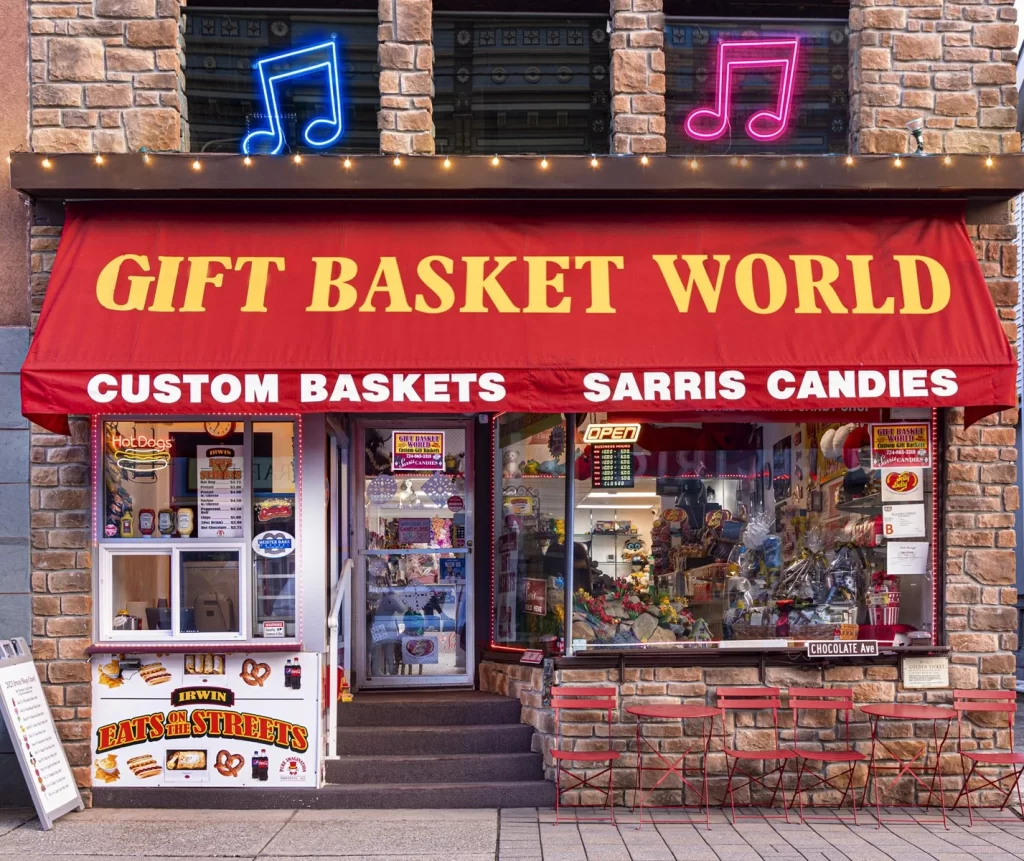
When estimating space, think about:
- Merchandise display areas: Where finished baskets are showcased
- Inventory storage: Extra products, containers, and packaging supplies
- Back-office space: Order prep, admin work, or packing
A smart layout can directly impact sales. A well-designed store encourages customers to stay longer, discover more products, and feel inspired. Thoughtful placement can also guide shoppers toward high-margin or seasonal baskets while reducing clutter and overwhelm.
Good store design helps manage lighting, spacing, and flow so customers naturally move through your products and feel comfortable buying.
Besides, you’ll need some basic equipment to run smoothly:
- Shelving or display racks
- Tables or counters for assembling baskets
- Proper lighting to highlight products
- Storage bins or boxes for inventory
- Packaging tools (scissors, tape, filler, wrapping materials)
- Labels, tags, and pricing signage
If you’re starting small, don’t overinvest. Many successful sellers begin with minimal equipment and upgrade as sales grow. Focus on functionality first, you can always improve aesthetics later.
Expert tip:
Many sellers overlook this, but you can also place your gift baskets on the shelves of small local stores or markets near you. While these shops may charge a small fee or take a commission, it’s a great way to showcase your products and reach offline customers, without the heavy upfront cost of opening your own physical store.
Step 6: Build your online presence
Today, 60% of customers will find you online first, even if they end up buying in person.
In general, you have 2 main options to build your online presence, marketplaces or your own website. Many gift basket businesses start with one and add the other later.
1. Sell on marketplaces (Etsy, Amazon, Walmart)
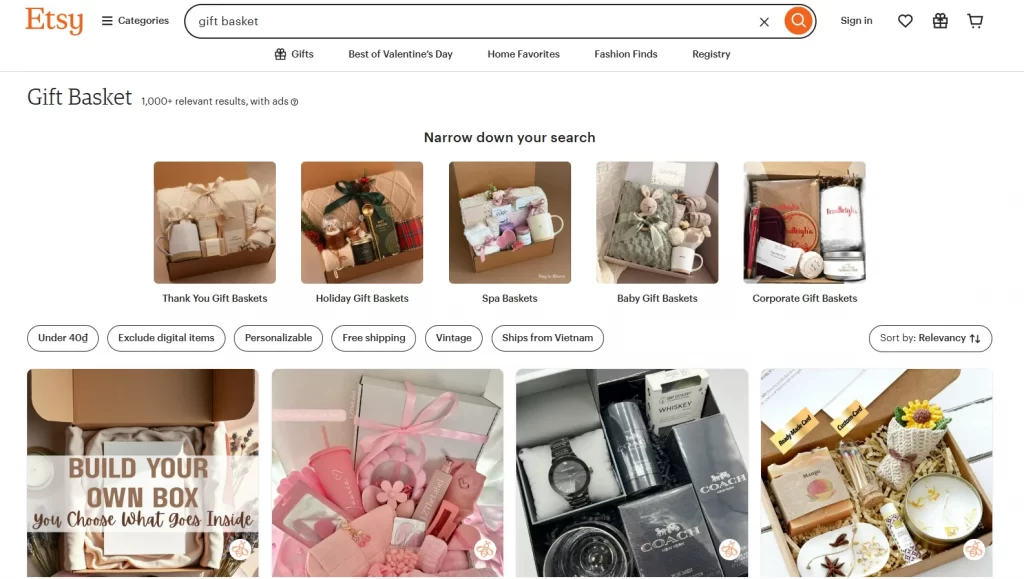
Marketplaces already come with existing traffic, active buyers, and built-in trust, making them a popular starting point, especially for new sellers. They also act as a key source of inspiration and are often the first place people search for products before making a purchase.
Pros:
- Instant access to large, ready-to-buy audiences
- Built-in payment processing and customer trust
- Easier setup with less technical work
- Great for testing product ideas quickly
Cons:
- Platform fees can add up
- Heavy competition from similar sellers
- Limited control over branding and customer data
- Rules and policy changes are out of your control
Marketplaces work best if you want to validate demand fast or don’t want to worry about driving traffic right away.
Some of the top marketplaces with strong search demand for gift baskets include Amazon (with 23,575 monthly search volume for “gift basket”), Etsy and Walmart.
However, with that high traffic also comes intense competition from many other sellers.
Want to learn more about other top marketplaces that are suited for your gift basket business, read our 27 Best Selling Platforms for 2026 article.
2. Sell on your own website (Shopify, Wix, etc.)
Having your own gift basket website gives you full control over your brand and customer experience. Platforms like Shopify, Wix, WooCommerce, etc. make it surprisingly easy, even if you’re not tech-savvy.
What’s more, these website builders come with thousands of integration apps that help you streamline daily operations. You can connect tools for inventory management, order fulfillment, email marketing, customer reviews, upsells, and analytics.
Pros:
- Full control over branding, pricing, and design
- No marketplace competition on your own product pages
- You own your customer data and email list
- Easier to build long-term brand loyalty
Cons:
- You’re responsible for driving traffic
- Requires more setup and ongoing marketing
- Upfront costs for themes, apps, and ads
Your own website is ideal if you’re thinking long-term and want to build a recognizable gift brand, not just individual sales.
💡 Successful tip: Combine multichannel selling to maximize benefits
Marketplaces help you move fast, while your own store gives you full control, and that’s exactly why many successful sellers use both.
From surveys we’ve conducted with LitCommerce multichannel selling tool users, we’ve seen a clear pattern among successful multichannel sellers. Most of them start on one platform, then gradually expand to others to increase sales and avoid relying on a single channel. By selling in more than one place, they reach new audiences, reduce risk, and grow more consistently.
Of course, managing products across multiple platforms can sound overwhelming. Keeping inventory, orders, pricing, and product data in sync can quickly turn into a full-time job if done manually. But multichannel selling is much easier today thanks to automation.
LitCommerce help you x2 your sales without the operational stress
If you’re thinking of launching your gift basket business across multiple channels, we believe that’s a great decision. We’re here to help you make things easier so you can focus on sourcing and marketing.
Step 7: Promote Your Gift Basket Business
As you’re discovering how to start a gift basket business, you need to be clear that promotion requires consistent posting, engaging content, community building, and sometimes paid ads. Organic reach will only take you so far, and retargeting your current followers helps keep your brand visible instead of getting lost in crowded feeds.
1. Focus on quality content first
If you want to promote your business without paying for ads, your biggest asset is quality content.
Social media is one of the most powerful ways to reach your audience, but you need to choose the right platform. The key is to think about where your ideal customers spend time. For example, if you’re selling birthday or aesthetic gift baskets, Instagram, TikTok, and Pinterest are strong options.
You can share posts like:
- Your baskets in real-life settings.
- Unboxing videos
- Behind-the-scenes assembly clips
- Customer reactions
- and seasonal gift ideas, etc.
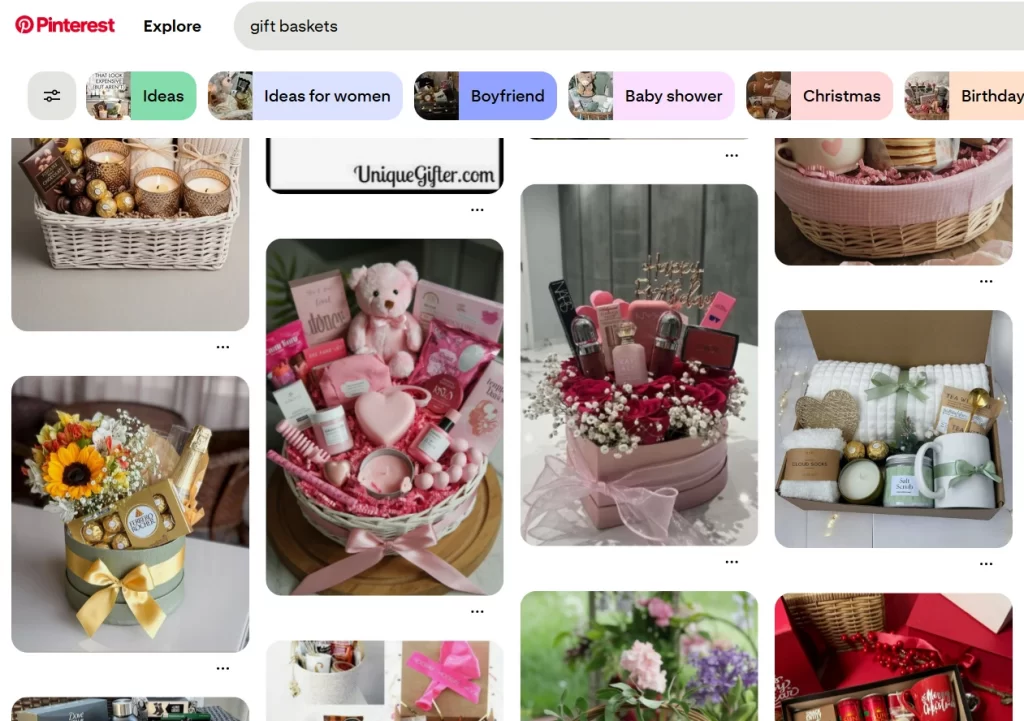
And remember, on social media, people don’t just buy products, they buy presentation and emotion.
If you have your own website, you can publish SEO-optimized blog posts. However, this is a long-term strategy and results won’t happen overnight. It can take weeks or even months for your content to rank on search engines and start bringing in steady traffic. That said, SEO is powerful because it works for you 24/7 once it gains traction.
2. Engage, don’t just post
Engagement matters more than follower count. Use interactive formats like Stories, Reels, polls, Q&A boxes, and live videos.
You can also join online communities and forums related to gifting, small businesses, weddings, baby showers, or corporate events. Participate genuinely. Share tips, answer questions, and position yourself as someone helpful. Over time, this builds trust and authority.
3. Collaborate with micro-influencers
You don’t need a celebrity endorsement to grow. Partnering with micro-influencers, who are creators with smaller but highly engaged audiences, can be incredibly effective.
Their followers often trust their recommendations more, and collaboration costs are usually affordable. A simple unboxing video or honest review can drive targeted traffic to your store.
You can also collaborate with micro-influencers to host live sessions together, and offer exclusive limited-time deals or discount codes during the live session.
4. Use paid ads
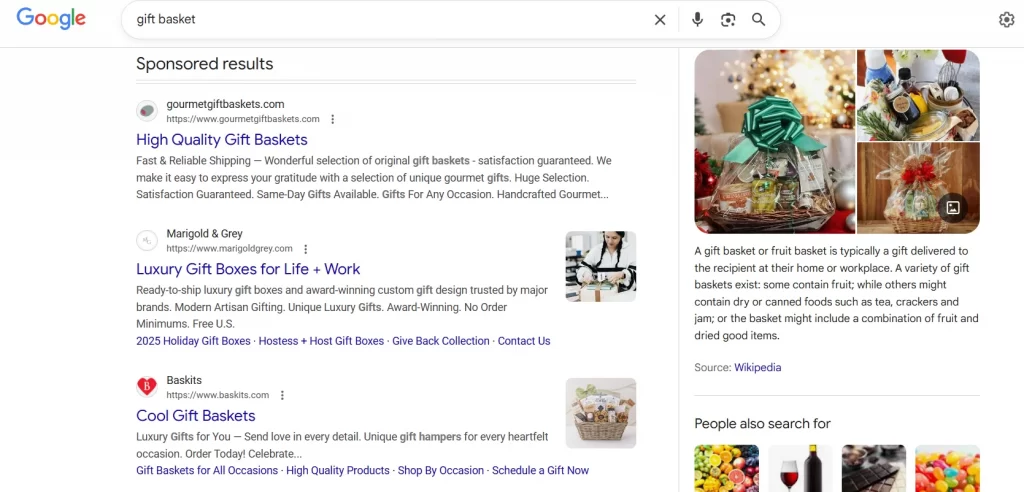
Organic marketing builds your foundation, but paid ads can help you scale faster. Even a small budget for retargeting ads can remind past visitors and followers about your products. This is especially powerful during holiday seasons when buyers are comparing multiple options.
How Much Does it Cost to Start a Gift Basket Business?
One of the biggest benefits of learning how to start a gift basket business is the low barrier to entry. Many founders begin from home with a small budget and expand gradually as sales increase.
You don’t need $20,000 to get started. In many cases, you can launch with as little as $200 – $500, test your idea, validate demand, and then reinvest your profits to grow.
Your total startup cost will depend on whether you’re running it as a side hustle, an online-only store, or a full retail shop.
Here’s a breakdown of the main costs to consider:
Material costs
- Baskets or containers
- Gift items
- Decorations
- Branding materials
Overhead costs
- Utilities like electricity, phone, and internet
- Software tools (eCommerce platforms, POS, etc.)
Marketing costs
- Website setup and maintenance
- Paid ads
- Product photography and graphic design
Shipping & delivery costs
- Shipping boxes and protective packaging
- Courier charges
- Fuel or mileage if you handle local deliveries yourself
Labor costs
- Employee wages (if you hire help)
- Your own time spent assembling, marketing, packing, and managing orders
How to Price Your Gift Baskets to Maximize Sales and Profit
Pricing is one of the hardest decisions you’ll make when learning how to start a gift basket business. As a startup, you’ll probably swing between two worries:
- “If I price it too high, no one will buy.”
- “If I price it too low, I’ll never make real profit.”
And the key is finding a balance between attractive pricing and sustainable margins.
Many people try to search for the perfect formula or calculator. But pricing a product depends on your brand positioning, target audience, perceived value, and competition. Two identical baskets can sell at very different prices depending on presentation and branding.
A simple formula to begin is (especially if you’re pretending to start a gift basket business from home):
Selling Price = Cost of Goods + (Margin % × Cost of Goods)
For example, if your total cost to create one basket is $15, and you want a 60% margin, your calculation would look like this:
Selling Price = $15 + (0.6 × $15)
Selling Price = $15 + $9
Selling Price = $24
Moreover, you can test different price points, especially online. Monitor sales volume, profit per order, and customer feedback.
Important note:
Don’t forget to factor in the time it takes you to create each gift basket. From sourcing products and assembling items to wrapping, decorating, and adding personalized touches, the process can take longer than you expect. Your time is valuable, and if you ignore it when calculating costs, your profit margins may shrink quickly.
If you want a deeper breakdown of pricing strategies, markup methods, and psychological pricing tactics, check out our dedicated article on how to price a product effectively.
Successful Gift Basket Businesses You Can Learn From
One of the smartest ways to learn how to start a gift basket business successfully is to study what top sellers are already doing, and learn from their strategies. We’ve selected 3 standout examples that are worth taking a closer look at.
1. BeyondTheTrope
BeyondTheTrope built its business around a simple but powerful idea: “Blind Date with a Book.”
Instead of showing the book cover and title, they wrap each book in paper and reveal only a few intriguing hints on the outside. Buyers don’t choose based on the cover. They choose based on mood, genre clues, or themes. It turns a simple product into a full experience.
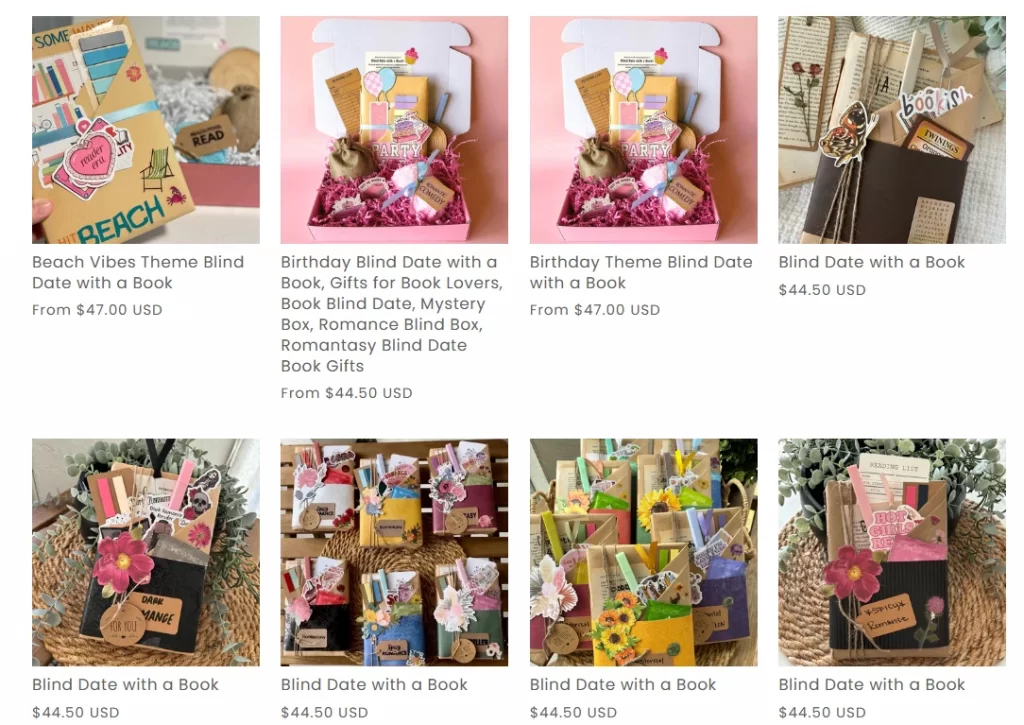
This concept works brilliantly for two reasons.
First, personalization matters, especially among gen Z. Around 71% of consumers expect some level of personalization today. BeyondTheTrope, by offering genre preferences, themes, and curated selections, make it feels tailored, even though the format is simple.
Second, the “keep the gift a secret” formula adds emotional excitement. People love mystery. The surprise element transforms an ordinary purchase into something memorable and highly shareable.
BeyondTheTrope doesn’t rely on just one platform. They sell on:
- Their own website
- Etsy
- TikTok
In just two years, they reached 17,000 sales on Etsy alone.
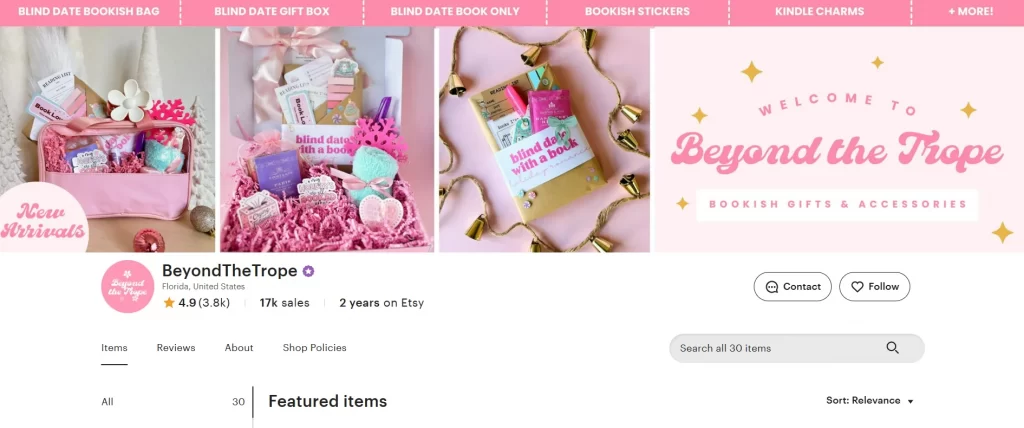
Focusing on Instagram and TikTok is especially smart because both platforms are highly visual and story-driven and exactly where their target audience is.
What you can learn
- Turn a simple product into an experience
- Add mystery or personalization to increase perceived value
- Don’t depend on a single sales channel
Your profits can also climb easily by expanding to multiple channels
With LitCommerce, you can list and manage your gift baskets across different marketplaces and online stores from one central dashboard, while keeping inventory and product data perfectly in sync.
2. Lovery
Lovery takes a broader approach compared to niche-focused brands. Instead of selling just one concept, they offer gift baskets for multiple audiences and occasions, but they segment them clearly. You’ll see categories based on the receiver (mom, wife, friend, coworker) and the occasion (birthday, holiday, thank-you, self-care, etc.). This makes it easy for customers to quickly find the right gift without feeling overwhelmed.
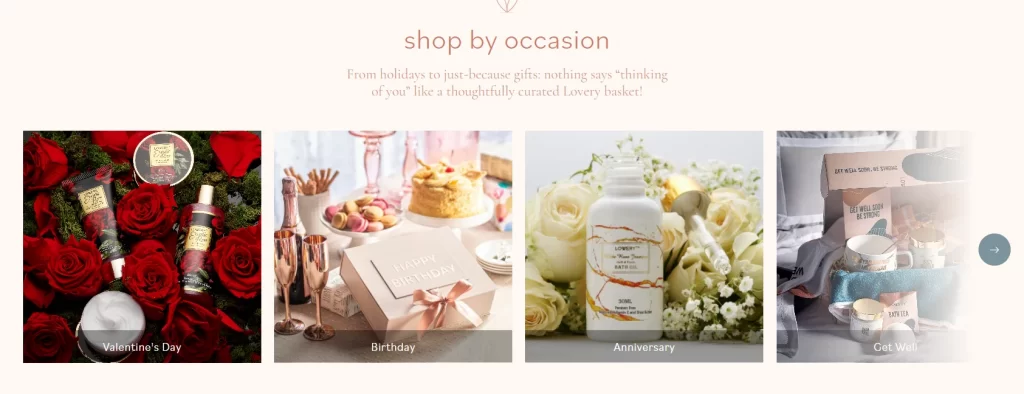
Their positioning is also very clear. Lovery presents itself as a brand offering luxurious home spa gift baskets designed to create relaxing, feel-good experiences. They highlight strong quality standards such as:
- Cruelty-free formulas
- Paraben-free products
- Sustainable packaging made from recycled materials
- Natural fragrances and essential oils
What’s more, each product page clearly lists every single item included in the basket, so buyers know exactly what they’re paying for. That level of detail reduces hesitation and increases confidence.
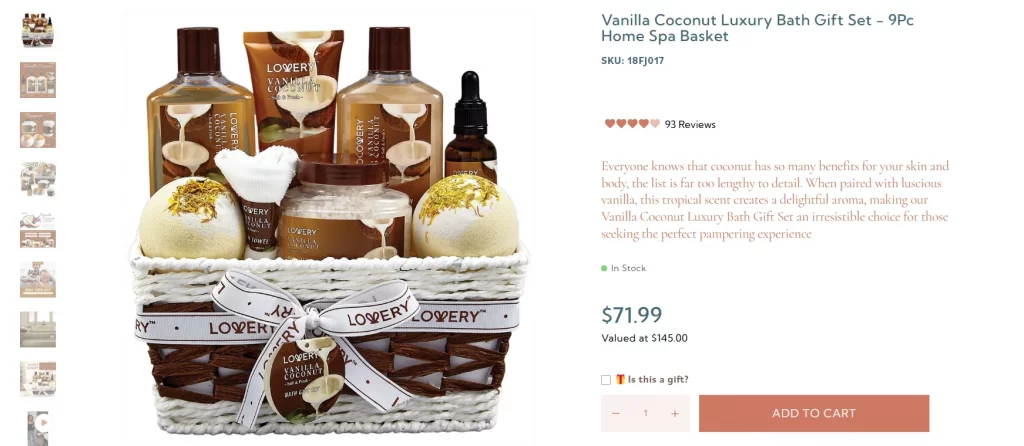
Even more powerful is their use of video. Their product videos don’t just show features. They show emotion, the reactions of gift receivers, the feeling of relaxation, the joy of unboxing. Instead of focusing only on ingredients or benefits, they sell the outcome: comfort, appreciation, and self-care.
What you can learn:
- Segment your products clearly by occasion and recipient
- Highlight quality standards to build trust
- List all included items to remove buyer doubt
- Use emotional storytelling in videos, not just product features
3. GiftTree
GiftTree stands out by focusing heavily on corporate gifting and professional thank-you gifts. They lean strongly into the B2B market, serving companies that need client appreciation gifts, employee recognition packages, and holiday corporate hampers.
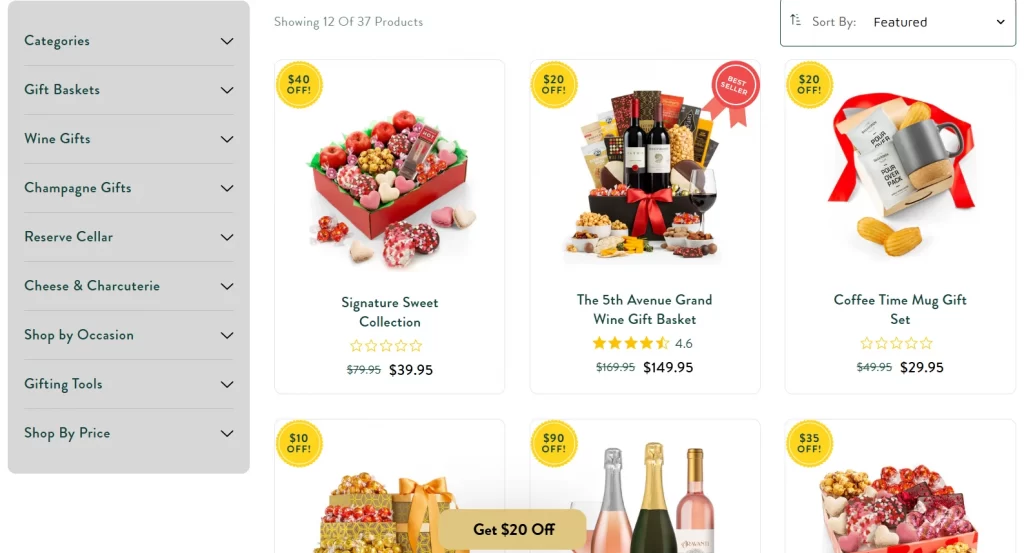
Because they target businesses, their marketing approach looks different.
Instead of relying mainly on trendy social content, they invest in:
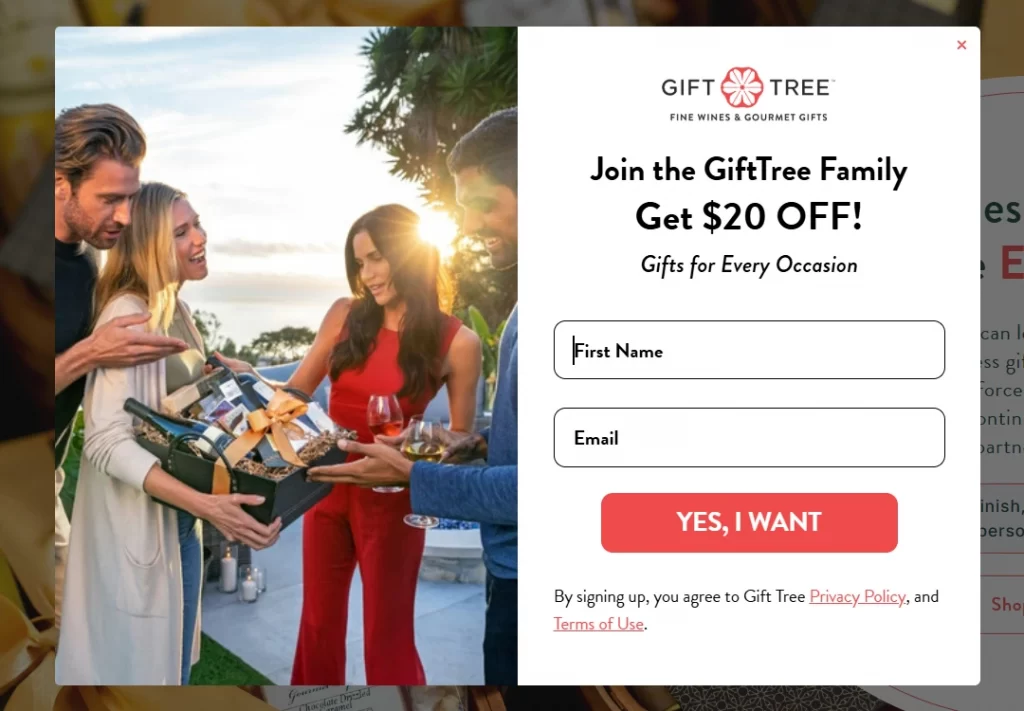
- Email list building and nurturing campaigns
- Retargeting past customers with seasonal offers
- Loyalty-focused promotions for repeat corporate buyers
They are also active on LinkedIn, which aligns perfectly with their audience. On LinkedIn, they showcase professionalism, corporate partnerships, and business-focused gifting solutions. The platform reinforces their credibility and authority in the corporate space.
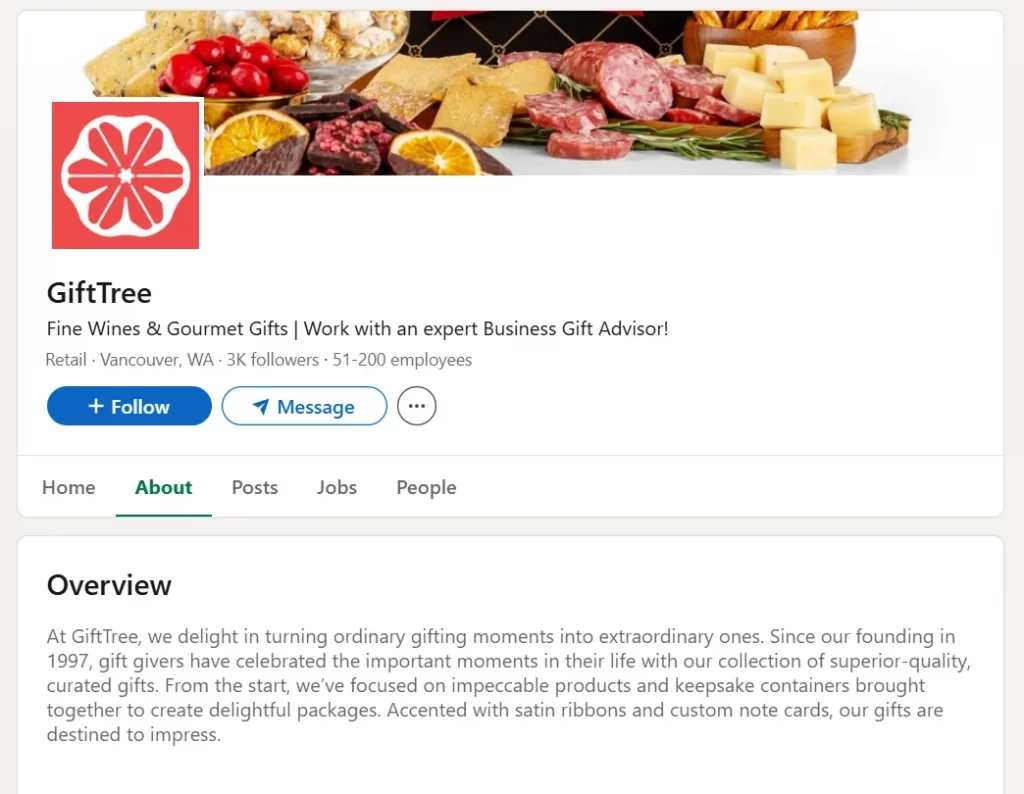
What’s more, if you’re targeting corporate clients like GiftTree, we recommend taking a proactive approach. Reach out directly to companies such as real estate agencies, law firms, HR departments, event planners, and local offices to introduce your gift solutions.
If you position your products as a convenient, professional solution, you can secure repeat and bulk orders.
What you can learn:
- If you target businesses, focus on relationship marketing, not just one-time sales
- Build and nurture an email list early
- Use LinkedIn for B2B visibility and credibility
- Adjust your tone of voice to match your audience
How to Start a Gift Basket Business – FAQs
1. What are the challenges you might face when starting a gift business these days?
Here are some common challenges you might face when starting a gift basket business that you should prepare yourself for:
– High competition on marketplaces
– Rising product and shipping costs
– Standing out in a saturated niche
– Managing inventory and seasonal demand
– Building brand trust as a new seller
– Generating consistent traffic and sales
– Keeping up with social media trends
– Handling packaging and delivery damage risks
2. What makes a gift basket stand out from competitors?
Presentation and positioning make the biggest difference. Focus on:
– A clear niche or target audience
– Attractive, reusable containers
– Personalization options
– High-quality product photography
– Emotional storytelling in your marketing
3. How can I fulfill and ship my gift basket?
First, assemble your baskets carefully and secure all items inside to prevent movement during transit. Use shredded paper, padding, or dividers to protect fragile products like glass jars or bottles. Then place the completed basket inside a sturdy shipping box with extra cushioning around it. Always seal packages tightly and attach clear shipping labels. If you’re shipping food or perishable items, check local regulations and consider insulated packaging when necessary.
For delivery, you can partner with courier services like UPS, FedEx, DHL, or local postal providers, depending on your location and shipping volume. Compare rates to find the most cost-effective option, and consider offering tracked shipping to build customer trust.
If you serve local customers, personal delivery or same-day courier services can be a strong selling point. As your order volume grows, you might negotiate bulk shipping discounts or use fulfillment tools to streamline label printing and order management.
4. How to start a gift basket business with no money
Yes, it’s possible to start with little to no upfront investment. Instead of buying inventory in advance, you can leverage zero-cost platforms and low-risk business models to get started.
Here are two popular options:
Dropshipping: You promote and sell gift baskets, but a supplier handles the packaging and shipping for you. This means no inventory costs upfront. Your focus is on marketing and customer acquisition.
Affiliate Marketing: Instead of creating your own baskets, you promote other brands’ products and earn a commission for each sale. This works well with content platforms like TikTok, Instagram, or blogs.
Both models let you test demand and learn the market without financial risk. Once you start generating sales, you can reinvest profits into building your own branded gift basket business.
Final Thoughts
Learning how to start a gift basket business is exciting, but there’s no such thing as a perfect plan. Even with solid research and preparation, you’ll face unexpected challenges. Hence, stay flexible with your niche, pricing, and marketing strategies. Pay attention to customer feedback and test new ideas, improve your presentation.
The sellers who grow the fastest are the ones who treat their business as a constant learning process, not a one-time setup.
If you’re planning to sell across multiple platforms, make sure your operations stay organized as you scale. Managing listings, inventory, and orders manually can quickly slow you down. Tools like LitCommerce multichannel selling tool can help simplify multichannel selling, so you can focus more on product creativity and marketing instead of backend chaos.