



If you sell on Etsy, you already know the upside. It gives you built-in traffic, a familiar handmade marketplace, and a relatively low barrier to entry. But the trade-off is real too: Etsy charges a $0.20 listing fee and a 6.5% transaction fee on the item price, plus shipping and gift wrap.
For sellers considering alternatives to Etsy, that mix of reach and rising costs is often the point at which “Etsy only” stops feeling like a long-term plan.
This guide focuses on a more practical question: what should you add to Etsy, or switch to next, based on how you actually sell. Instead of naming one “best” platform, the goal is to help you choose the right Etsy alternative for your business model, growth stage, and product mix.
Below are the 10 best Etsy competitors, selected by LitCommerce.
Let’s have a more detailed analysis of each platform and find out why it should be your choice in the following sections.
Maximizing Profit via Multiple Marketplaces
Why limit your selling potential to one marketplace? Try LitCommerce – A multichannel selling tool to integrate with Etsy and multiply your profit now!
Best Etsy Competitors at a Glance
That does not mean Etsy is no longer worth using. Etsy’s latest 2025 results show the marketplace still had 86.5 million active buyers at year-end, even though that figure was down 3.4% year over year.
In other words, Etsy still has meaningful demand, but sellers now have a stronger reason to diversify rather than rely on a single channel. A multichannel listing tool lets you run Etsy and these alternatives side by side instead of migrating away from one. If you are still deciding whether Etsy is worth keeping as part of your mix, read Is Selling on Etsy Worth It?.
Before diving into the full comparison, here is a quick short list for sellers searching for websites like Etsy and trying to narrow down their options fast.
Platform | The “Better Than Etsy” Edge | 2026 Core Fees | Ideal Seller / Product Type |
Amazon Handmade | Bigger built-in marketplace traffic while staying focused on handmade products | Professional plan required; $39.99/month waived after month 1 for approved sellers; no listing fees; referral fees apply | Handmade sellers with giftable, easy-to-ship physical products |
eBay | Better for item-led search, vintage demand, and one-off inventory | $0 insertion fee for up to 250 listings/month; then from $0.35/listing; final value fees apply when sold | Vintage sellers, resellers, collectible shops, and antique businesses |
Bonanza | A lighter second marketplace without Amazon-level complexity | $14.99 setup fee; 11% minimum final value fee; $0.25 transaction fee; listing fees may apply above 50 active listings | Sellers adding a secondary marketplace channel |
Mercari | Fast, low-friction selling for secondhand and stock-clearing items | $0 listing fee; 10% selling fee; $0 ACH payout; $3 Instant Pa | Casual sellers, secondhand shops, and businesses clearing older stock |
Shopify | Full control over branding, customer data, and multichannel selling | From $29/month billed yearly on Basic; third-party transaction fees from 2% if not using Shopify Payments | Established brands ready to scale beyond marketplace selling |
Wix | Easier branded-store setup than Etsy, with more visual flexibility | From about $29.77/month on Core; no extra Wix transaction fee for third-party gateways | Beginners and small businesses that want an easy branded store |
WooCommerce | Full ownership and deep customization through WordPress | WooCommerce core is $0; real costs come from hosting, themes, extensions, and payment fees | WordPress users and sellers who want full site control |
Squarespace | Stronger design and brand presentation | From about $16/month to $99/month depending on plan; payment processing fees apply | Design-focused sellers, service businesses, and small branded shops |
Big Cartel | Cheapest clean step toward an independent storefront | $0/month for up to 5 products; $15/month and $30/month paid plans; 0% Big Cartel transaction fees | Artists, makers, and small shops with limited catalogs |
TikTok | Built-in traffic + content-driven selling | $0 listing fee; commission ~2%–8%+ depending on region/category; additional fees may apply | Creators, dropshippers, and sellers who rely on social content and short-form video to drive sales |
How I Tested and Ranked These Etsy Competitors
I ranked these platforms based on the factors that matter most to actual sellers: pricing clarity, ease of setup, built-in audience access, brand control, product fit, and room to grow.
That matters because people comparing online stores like Etsy are usually not looking for the same outcome. A handmade jewelry seller, a digital-template creator, and a vintage reseller do not need the same type of platform.
I also weighted each option by real use case, not just feature count. A platform can have a long list of tools and still be the wrong fit for your stage.
So in each section below, I focus on the same questions: who the platform is best for, when it is better than Etsy, what you can sell there, what the current pricing looks like, and when I would personally choose it or skip it.
Why Should We Need Etsy Alternatives?

As mentioned, harsh competition is among the motives to discover Etsy competitors and alternatives. Some may claim that a highly competitive level can stimulate business growth. Nonetheless, intense Etsy competition has been proven to result in a downward price spiral.
Apart from that, Etsy has applied new Communication Standards and return policies (for sellers outside of the EU). Not to mention, this marketplace lists several restricted items related to what sellers can’t sell on Etsy.
More reasons why sellers should look for art sites like Etsy refer to the lack of brand awareness and audience control. By limiting customization, this marketplace restricts potential but sets unreachable marketing expectations. As a result, it contributes to the need to find competitors of Etsy these recent years.Given the reasons to search for sites like Etsy, are you ready to explore our list? Now, keep scrolling down for our recommended Etsy alternatives to help you choose the one that meets your business needs!
10 Best Etsy Competitors in 2026
Not all Etsy alternatives solve the same problem. Some help you build a brand. Some help you get more marketplace exposure. Others are simply a better fit for digital sales, vintage inventory, or local fulfillment.
1. Amazon Handmade — Best for handmade sellers who want more marketplace traffic
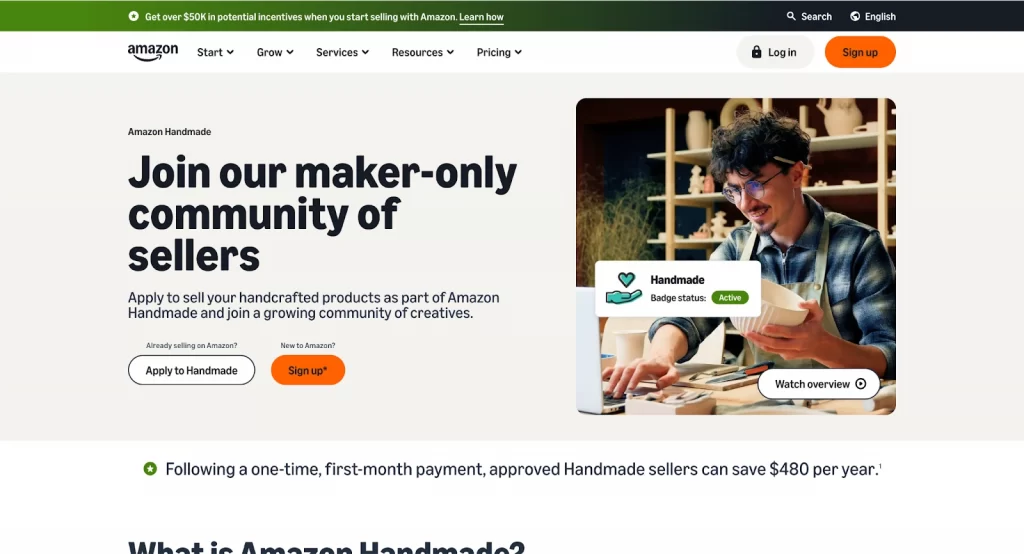
Let’s kick off our list of the 9 best Etsy competitors with Amazon Handmade. Deprived as a microsite from Amazon, this top online marketplace guarantees its sellers and buyers a versatile and feature-full shopping experience.
Considering it as an alternative to Etsy, Amazon Handmade is surely a selling site filled with potential. Particularly, when selling on Amazon Handmade, you still benefit from incredible traffic from Amazon, including 197 million active users and 2+ billion web visits monthly.
Why I picked Amazon Handmade
It is one of the few platforms that can genuinely compete with Etsy on marketplace reach while still keeping the focus on handmade products. Etsy is still a good place for discovery, but Amazon Handmade makes more sense for sellers who want to scale and get in front of a broader audience.
What I like most is that Amazon Handmade does not just give you visibility. It also gives you the kind of infrastructure Etsy cannot fully match. You benefit from Amazon’s trusted payment system, stronger seller verification, and fulfillment support through FBA. That means you can spend less time managing logistics and more time focusing on product growth.
Another reason I included Amazon Handmade is that it feels like a better fit for sellers with giftable, easy-to-ship products that can appeal to mainstream buyers. If your products already have broad appeal, Amazon Handmade can give you a bigger runway than Etsy.
If you want a deeper side-by-side breakdown, read Amazon Handmade vs Etsy.
Best for
- Sellers who want more marketplace traffic
- Handmade brands with scalable physical products
- Shops selling giftable, easy-to-ship items
- Etsy sellers who are ready to grow but not ready to build an independent store yet
Standout features
- Access to Amazon’s massive built-in marketplace traffic
- Trusted checkout and payment system
- Stronger seller protection and verification process
- Fulfillment by Amazon (FBA) for picking, packing, shipping, and delivery
- Better support for scaling order volume
- Wider customer reach beyond Etsy’s handmade niche
What you can sell
- Handmade physical products
- Giftable items
- Products with broad consumer appeal
- Artisan goods that meet Amazon Handmade’s seller requirements
Pricing
- $39.99/month Professional plan
- Waived after month 1 for approved Handmade sellers
- $0 listing fees
- Referral fees vary by category
- FBA and ads cost extra
Pros | Cons |
Huge built-in traffic | More competitive than Etsy |
Trusted Amazon checkout | Less brand-focused than your own store |
FBA makes fulfillment easier | Not ideal for highly niche artisan branding |
Strong growth potential | Handmade sellers must pass Amazon’s approval process |
Better fit for scaling physical products | Less personalized shop experience than Etsy |
2. eBay — Best for vintage, collectibles, and one-off items
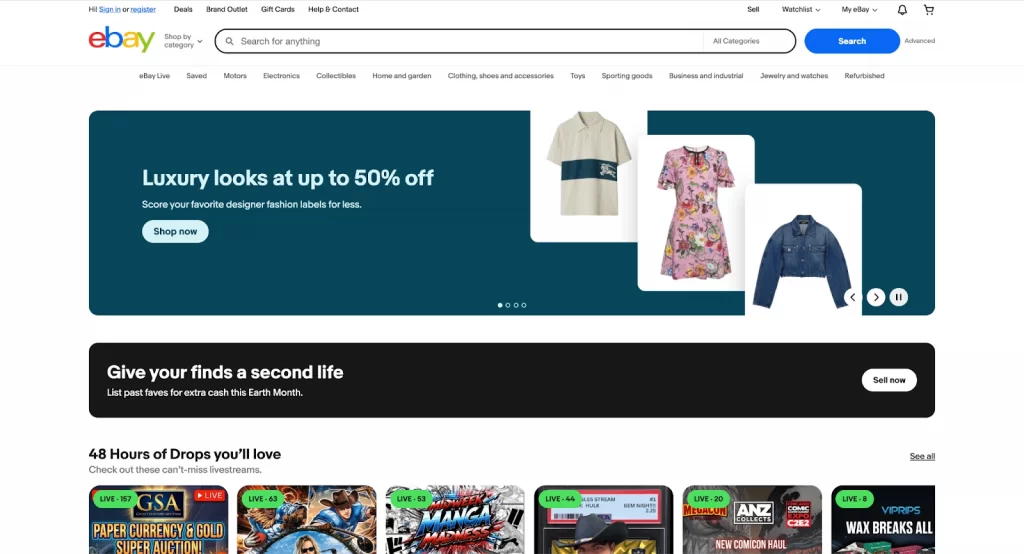
Our list of Etsy alternatives for sellers cannot go without eBay. To begin with, eBay has long empowered thousands of successful businesses since its inception in 1995. Along with that, despite significant changes in the eCommerce industry, eBay retained its proposition as a world-leading marketplace with excessive traffic, diverse product ranges, and flexible selling methods.
On those grounds, we firmly believe artists, creators, and collectors will find this Etsy competitor a potential site for selling stuff online.
Why I picked eBay
The reason is that it solves a different problem from Etsy. Etsy is a better marketplace when your strength is handcrafted positioning, niche branding, and a curated shop experience. eBay is stronger when the item itself is the selling point.
That matters a lot for sellers in categories like vintage, collectibles, antiques, secondhand goods, and limited inventory. If a buyer already knows what they want, they are more likely to search by brand, model, era, condition, or price than browse for a handmade story. In that situation, eBay usually feels more natural than Etsy.
I also like that eBay is easier to test with low upfront risk. eBay says sellers get up to 250 zero insertion fee listings each month, so smaller sellers can start listing without paying an insertion fee on every item right away. If you run both, an eBay Etsy integration keeps stock in sync so the same item can’t sell twice. Final value fees are only charged when an item sells, which makes eBay a practical channel for one-off inventory and lower-volume testing.
Best for
- Sellers with vintage or collectible inventory
- Shops selling one-off, rare, or hard-to-restock items
- Resellers and antique businesses with item-specific demand
- Etsy sellers whose products perform better through search intent than handmade branding
Standout features
- Strong fit for item-led search behavior
- Broad marketplace for vintage, used, collectible, and resale inventory
- Lower-risk way to test one-off products without paying for a standalone store first
What you can sell
- Vintage items
- Collectibles
- Antiques
- Used and resale products
- One-off or limited-stock inventory
- Items that fall outside Etsy’s strongest handmade-focused categories
Pricing
- Store subscriptions are optional if you want more monthly zero-insertion listings and other seller benefits
- $0 insertion fee for up to 250 listings/month on eBay.com for many sellers
- After that, insertion fees can start at $0.35 per listing on eBay.com
- Final value fees are charged only when your item sells and are based on the total amount of the sale and vary by category
Pros | Cons |
Great for vintage, collectibles, and one-off items | Less brand-led than Etsy |
Up to 250 free listings per month | Less curated and less boutique in presentation |
Final value fees only apply when an item sells | Category-based fee structure can feel less simple |
Strong buyer intent for specific items | Not the best fit for handmade storytelling |
Easy to test inventory without building your own store | Can feel more transactional than artisan-focused |
3. Bonanza — Best for a simple second marketplace
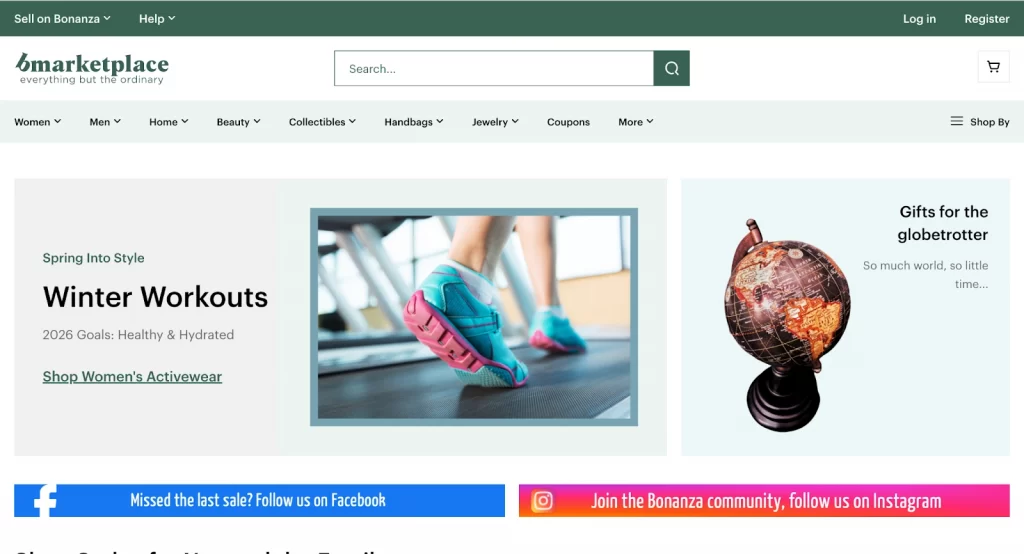
If you look for marketplaces like Etsy, don’t miss Bonanza from your consideration list. Being one of the rising Etsy competitors, Bonanza is exactly where you can run wild with creativity. In the spirit of “Find anything but the ordinary”, Bonanza has been doing a great job at orientating its audience. Furthermore, the marketplace always keeps up its proposition as a potential selling site within the creative niche.
Why I picked Bonanza
Bonanza feels more like a supporting marketplace than a main growth platform. Etsy sellers often reach a point where they want to reduce risk and avoid depending on one channel, but they also do not want the workload of launching a full independent store or learning a more demanding marketplace like Amazon.
Bonanza fits that middle ground. It is broad enough to support many product types, and it gives sellers a relatively straightforward way to list products beyond Etsy. That makes it useful for businesses that want to test another marketplace without completely changing how they operate.
At the same time, I would not position Bonanza as the most powerful long-term option in this list. Its appeal is more about simplicity and lower operational pressure than about scale, branding, or advanced selling tools.
Best for
- Sellers who want a lightweight second marketplace
- Small businesses looking to diversify beyond Etsy
- Shops that want broader marketplace exposure without heavy setup
- Etsy sellers who are not ready to build an independent store yet
Standout features
- Simple way to add another marketplace sales channel
- Broad product support beyond handmade-only categories
- Lower operational complexity than Amazon
- Useful for testing multichannel selling without launching your own website
- Manageable setup for sellers who want diversification without a major rebuild
What you can sell
- General retail products
- Handmade items
- Vintage goods
- Collectibles
- Broad marketplace inventory outside handmade-only categories
Pricing
- $14.99 non-refundable setup fee for new selling accounts
- 11% minimum final value fee effective from May 1, 2025
- $0.25 transaction fee on completed sales for non-members
- $0.03 per item/month for more than 50 active listings
- Listing fee cap of $20/month for active listings above that threshold
Pros | Cons |
Easy way to add a second marketplace | Not the strongest long-term growth platform |
Broader product flexibility than handmade-only sites | Fee structure is not as cheap as some sellers expect |
Less operational complexity than Amazon | Weaker branding potential than your own store |
Good for low-risk channel diversification | Less marketplace traction than bigger platforms |
Simple setup for smaller sellers | Better as a secondary channel than a main one |
4. Mercari — Best for casual sellers and secondhand goods
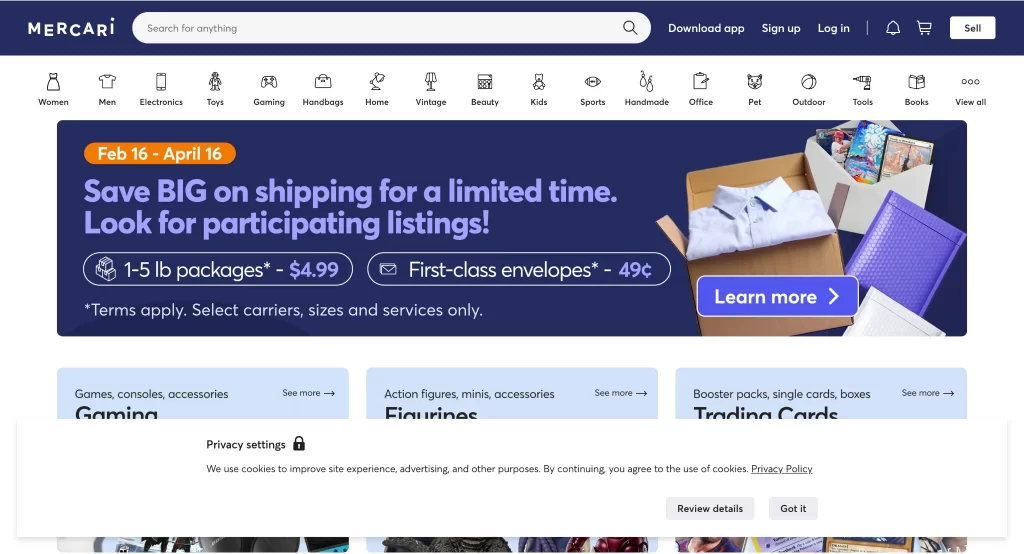
Mercari is one of my recommendations for Etsy competitors and alternatives. Among all similar sites to Etsy, Mercari is by far the best place to resell your pre-owned items and streamline instant cash. As their slogan goes, “Preowned is the new New this year.”
Talking more about this business model, do you know that the apparel resale market is expected to reach $367 billion by 2029? Indeed, such an impressive figure is thrilling news. Also, it is a huge motivator for e-sellers looking for platforms like Etsy to sell their unique secondhand goods and make money.
Why I picked Mercari
Well, the platform solves a different problem from Etsy. Etsy works better when your products rely on handmade positioning, shop identity, and curated presentation. Mercari works better when the main goal is to list fast, price competitively, and turn secondhand, older, or lower-priority inventory into sales.
Mercari’s own help content emphasizes free listings, simple listing creation, and built-in offer flows, which makes it especially practical for casual sellers or businesses trying to clear stock without a lot of setup.
Another reason I included Mercari is that its fee structure is now much easier to read than many marketplace fee systems. Mercari says sellers pay a flat 10% selling fee on the completed item price and buyer-paid shipping for listings under the current fee structure, with no additional payment processing fee for sellers. ACH direct deposit withdrawals are free, while Instant Pay costs $3.
Best for
- Casual sellers clearing out stock or older inventory
- Shops selling used, secondhand, or lower-priced items
- Businesses that want a simple extra marketplace without building a full store
- Etsy sellers whose items sell better through quick offers and price-based shopping than handmade branding
Standout features
- Buyer offer and counteroffer flow built into the marketplace
- Discounted prepaid shipping labels with USPS, FedEx, and UPS
- Shipping Protection up to $200, if eligible
- Up to 12 photos per listing
- Simple, fast listing workflow for everyday sellers
What you can sell
- Used and secondhand items
- Clothing, books, kitchenware, collectibles, and other shippable goods
- Older inventory you want to clear quickly
- General marketplace products that do not depend on a handmade-first brand story
Pricing
- $0 listing fee
- 10% selling fee on the completed item price and buyer-paid shipping
- 0% additional payment processing fee for sellers under the new fee structure
- $0 ACH direct deposit withdrawal fee; $2 only for rejected withdrawals
- $3 Instant Pay fee
- Seller cancellation fee can be 5% of item price, capped at $25, for frequent cancellations
Pros | Cons |
Free listing and simple setup | Less brand-led than Etsy |
Flat 10% seller fee is easier to understand | Better for transactional selling than premium brand building |
Built-in offer flow can help move inventory faster | Not the best fit for handmade storytelling or boutique positioning |
Good fit for secondhand and stock-clearing sales | Frequent cancellations can trigger seller fees |
Free ACH payouts and optional fast payout route | Marketplace rules still limit what you can list and ship |
5. Shopify — Best for long-term brand growth

In experts’ opinion, Shopify is optimized for all sizes of businesses, from newbies to SMBs. Until now, Shopify has been trusted by 5.5+ million customers worldwide.
Thanks to its ease of use, Shopify takes the hassles out of creating a website. It’s not even an exaggeration to say you can get your store up and running in minutes. If you are new to the platform, check out our latest Shopify tutorial for beginners now!
Why I picked Shopify
I can say that Shopify because it addresses Etsy’s biggest long-term weakness: you do not truly own the storefront experience there. On Etsy, you get access to built-in traffic, but you also depend on Etsy’s search system, policies, and customer journey. Shopify flips that model. You control the brand, the site, and the way customers buy from you.
I also like that Shopify is not just an online store builder anymore. It is built for multichannel selling. Shopify says merchants can sell through their website, POS, social media, and marketplaces, with product syncing across channels. That makes it a much better fit for sellers who want to grow beyond one platform instead of staying tied to a single marketplace.
Another reason Shopify stands out is flexibility by growth stage. Shopify’s own help documentation says the Basic plan is meant for new businesses ready to launch, the Grow plan is for businesses with consistent sales, and the Advanced plan is for higher-volume businesses that want lower transaction fees and more advanced capabilities.
If you want the deeper side-by-side breakdown, read Shopify vs Etsy Comparison.
Best for
- Sellers who want full control over branding and storefront design
- Businesses ready to build their own customer base beyond Etsy
- Shops that want to sell on a website, social media, marketplaces, and in person
- Etsy sellers who are ready to grow but no longer want to depend on marketplace algorithms alone
Standout features
- Sell on your own website, in person, and across multiple channels.
- Multichannel integrations for social platforms and marketplaces.
- Shopify POS for syncing offline and online sales.
- Checkout and store design control that Etsy cannot match.
- Different plans built for different stages of growth.
What you can sell
- Products through your own online store
- Products in person through Shopify POS
- Products across social and marketplace channels
- A branded ecommerce experience that is not limited to one marketplace model
Pricing
- Basic: $29/month billed yearly, or $39/month billed monthly.
- Grow: $79/month billed yearly, or $105/month billed monthly.
- Advanced: $299/month billed yearly, or $399/month billed monthly.
- Third-party payment provider fee: 2% on Basic, 1% on Grow, and 0.6% on Advanced if you do not use Shopify Payments.
- Shopify also lists online card rates starting at 2.9% + 30 cents for Basic, 2.7% + 30 cents for Grow, and 2.5% + 30 cents for Advanced in the U.S. pricing view.
Pros | Cons |
Full control over branding, storefront, and checkout. | No built-in Etsy-style marketplace traffic. |
Supports selling online, in person, and across channels. | Monthly subscription cost is higher than simply opening an Etsy shop. |
Strong fit for long-term brand building. | You need to generate or capture your own demand. |
Flexible plan structure for different business stages. | Extra transaction fees apply if you use third-party payment providers. |
Sell Across Etsy & Shopify!
With LitCommerce, you can import all your Etsy listings to Shopify in just a few clicks. Save time, sync products, and sell across multiple channels effortlessly.
6. Wix — Best for beginners building a branded store
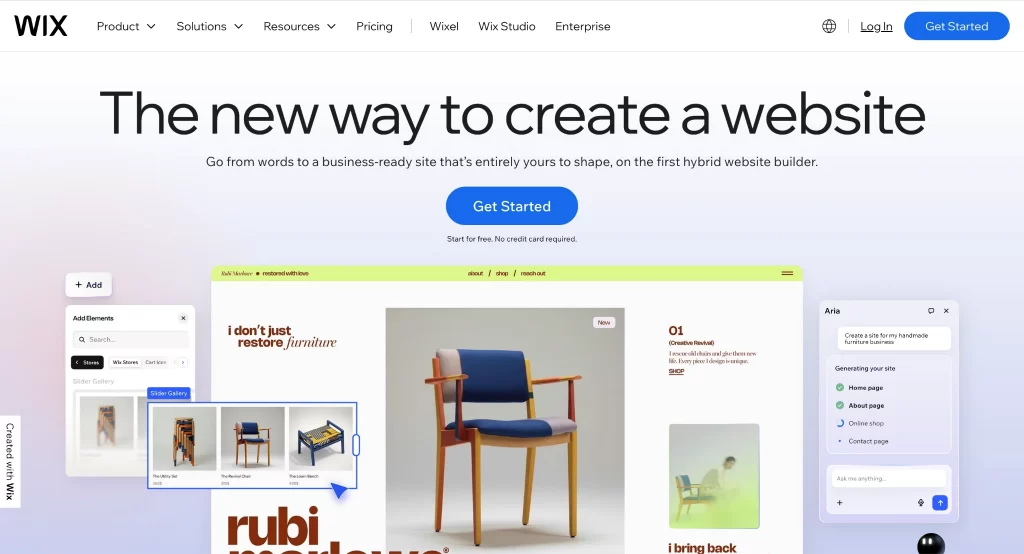
Considered among the most popular Etsy competitors, Wix lets users create professional, visually appealing websites without coding. With its drag-and-drop editor and customizable templates, this Etsy alternative offers a user-friendly interface for designing and publishing websites.
Want to learn more about why Wix would be a strong Etsy competitor? Let’s get into its eCommerce highlights!
Read details: Etsy vs Wix comparison
Why I picked Wix
Generally speaking, Wix sits in a useful middle ground between Etsy and Shopify. Etsy is easier for marketplace discovery, while Shopify is often the stronger long-term brand play. Wix works well for sellers who want more ownership than Etsy offers, but still want a simpler setup and a highly visual website builder.
Another reason Wix stands out is how much it includes natively. Its eCommerce feature set covers product catalogs, digital products, subscriptions, payments, shipping, analytics, mobile management, and multichannel selling. Wix also says you can offer up to 50,000 products in your online store, which is more than enough for many small and mid-sized sellers.
I also like that Wix does not add extra platform transaction fees when you use a third-party payment gateway. Wix’s payments page says you can choose providers like PayPal, Stripe, Square, and Wix Payments, and that Wix does not charge additional transaction fees for using third-party gateways on the platform.
Best for
- Sellers who want their own branded store without building on Shopify yet
- Small businesses that care about design flexibility and ease of setup
- Shops selling across a website, social channels, and marketplaces
- Etsy sellers who want more control but still need an easier learning curve than a heavier ecommerce stack
Standout features
- Drag-and-drop website builder with 900+ templates.
- Sell on Amazon, eBay, Instagram, and Facebook through Wix’s commerce setup.
- Built-in tools for shipping, inventory, orders, payments, analytics, CRM, and email marketing.
- Support for up to 50,000 products in Wix Stores.
- Support for digital products, subscriptions, gift cards, and dropshipping.
- No extra Wix transaction fees when using third-party payment gateways.
What you can sell
- Physical products
- Digital products
- Product subscriptions
- Gift cards
- Dropshipping and print-on-demand products
- Products sold through your website, social channels, and connected marketplaces
Pricing
- Selling plans on Wix currently start at about $29.77/month for Core, $39.77/month for Business, and $159.77/month for Business Elite on annual billing in the pricing example shown by Wix. Wix also notes that prices and currency vary by location.
- Wix says you can build for free, but you need a paid plan to accept payments and unlock business features.
- Wix does not charge additional transaction fees for third-party payment gateways; payment processing fees depend on the provider you use.
Pros | Cons |
Easier website setup than a heavier ecommerce platform. | No built-in marketplace traffic like Etsy. |
Strong visual design flexibility with drag-and-drop editing. | Still requires you to drive your own traffic more than Etsy does. |
Supports multichannel selling across web, social, and marketplaces. | Business-selling plans can get pricey as you move up tiers. |
No extra Wix transaction fees for third-party gateways. | Less ecommerce ecosystem depth than Shopify for more advanced scaling. This is an inference based on Wix positioning itself around ease and all-in-one simplicity, while Shopify is more specialized in commerce. |
7. WooCommerce — Best for full control on WordPress
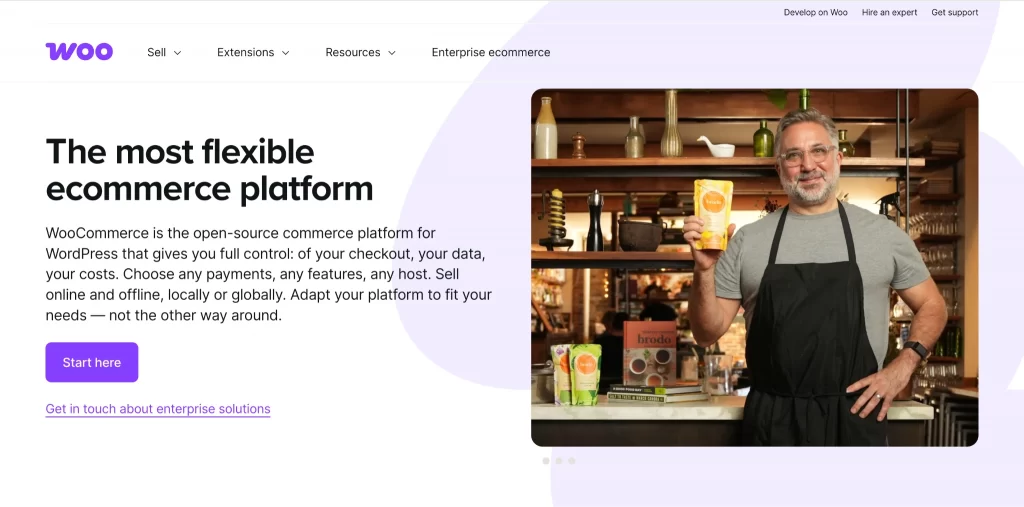
When you compare WooCommerce vs Etsy, WooCommerce is a powerful open-source eCommerce platform that helps create an online store with ease.
Its customizable features and seamless WordPress integration offer a compelling alternative to Etsy for all creative merchants and artists. Without a doubt, this has been empowering businesses to sell products, manage inventory, and process payments effectively.
Why I picked WooCommerce
To be honest, WooCommerce is one of the best options for sellers who care about ownership and flexibility more than convenience. Etsy is easier for immediate marketplace exposure, but WooCommerce is better when you want your store to live on your own site and evolve around your business instead of a marketplace template. WooCommerce explicitly says merchants fully own their site, code, and data, which is a major advantage for brands that want long-term control.
Another reason WooCommerce stands out is its modular setup. Woo says merchants can choose the exact features, themes, and extensions they want instead of paying for bundled plans they may not need. It also highlights a marketplace of more than 1,000 extensions, which gives sellers much more room to customize subscriptions, B2B features, multichannel selling, advanced shipping, and other workflows than Etsy can support.
The trade-off is that WooCommerce is not a simple flat-fee platform. The plugin itself is free, but your real cost comes from hosting, themes, extensions, and payment processing. WooCommerce’s own pricing guide says quality hosting plans start at around $250/year, payment costs are often around 3% per transaction, premium themes are often around $100/year, and shipping integrations can start around $100/year depending on setup.
Best for
- Sellers who already use WordPress or want full site ownership
- Businesses that need more customization than Etsy or Wix can offer
- Shops planning to grow with subscriptions, B2B features, or advanced workflows
- Etsy sellers who want to move off marketplace dependency but do not mind a more hands-on setup
Standout features
- $0 monthly platform fee for WooCommerce itself.
- Full ownership of your site, code, and customer data.
- Works on WordPress, which Woo says powers over 43% of the internet.
- More than 1,000 extensions and partner tools in the Woo ecosystem.
- Supports subscriptions, B2B selling, multi-currency, multi-language, and tailored checkout flows.
- WooPayments has no setup fees and no monthly fees.
What you can sell
- Physical products
- Digital products and downloadable goods
- Subscription products and recurring revenue offers
- B2B and wholesale-style catalogs
- Highly customized ecommerce setups that go beyond a standard handmade marketplace
Pricing
- WooCommerce core: $0/month platform fee.
- Hosting: quality managed hosting often starts around $250/year.
- Premium themes: often around $100/year.
- Shipping integrations: often start around $100/year.
- Payment processing: roughly 3% per transaction as a planning estimate; Woo says WooPayments starts at 2.9% + $0.30 for U.S.-issued cards, plus 1% for international cards.
- WooPayments: $0 setup fee and $0 monthly fee.
- Paid extensions: many official add-ons are sold annually, such as Product Add-Ons at $79/year and WooCommerce Bookings at $249/year.
Pros | Cons |
Full ownership of your store and data | More hands-on setup than Etsy |
No monthly platform fee for WooCommerce itself | Real costs come from hosting, themes, and extensions |
Deep customization for advanced business models | Can become more technical as you scale |
Strong fit for WordPress users | No built-in marketplace traffic like Etsy |
Large extension ecosystem | Cost structure is less predictable than flat-plan platforms |
8. Squarespace — Best for design-focused stores

We are reaching one of the ideal recommendations for Etsy competitors, and one of those is Squarespace. Given that you are a non-tech-savvy merchant or owner of a small business, Squarespace is actually ideal for you.
Moreover, regarding creative and unique product niches, Squarespace is rising among the most promising platforms like Etsy, thanks to its stunning visuals. Nevertheless, compelling looks aren’t the only thing this selling site provides you.
Why I picked Squarespace
Squarespace sits in a useful middle ground. Etsy is easier for marketplace discovery, but you give up store ownership.
Shopify is stronger for serious multichannel scaling, but Squarespace is often the easier choice for sellers who care most about design, simplicity, and an all-in-one setup.
Squarespace’s own commerce pages emphasize built-in tools for checkout, shipping, local delivery, pickup, inventory, customer reviews, analytics, and payment options, which makes it more complete than a basic site builder. You can also connect Squarespace with Etsy and run both.
Best for
- Sellers who want a design-first branded website
- Small businesses that want an easier setup than WooCommerce
- Shops selling products, services, subscriptions, or digital offers from one site
- Etsy sellers who want more control without moving to a more complex ecommerce stack
Standout features
- Built-in store tools for shipping, local delivery, pickup, inventory, reviews, and order management
- Support for physical products, digital downloads, services, subscriptions, and gift cards
- Customizable checkout options, including custom forms and newsletter opt-ins
- Support for Squarespace Payments plus third-party processors like Stripe, PayPal, and Square
- 14-day free trial to test the store before subscribing
What you can sell
- Physical products
- Digital products and downloads
- Services
- Subscriptions and memberships
- Gift cards and gated content
Pricing
- Plans start at around $16/month and go up to about $99/month depending on features.
- Annual plans can include a free custom domain for 1 year.
- Payment processing fees apply on every sale.
- Higher plans usually come with lower transaction/payment rates.
Pros | Cons |
Strong visual design and polished templates | No built-in marketplace traffic like Etsy |
Easier setup than a more technical platform | Monthly plan costs are higher than opening an Etsy shop |
Can sell products, services, subscriptions, and digital offers from one site | Fee structure varies by plan and payment setup |
Built-in commerce tools reduce the need for many add-ons | Less commerce-focused than Shopify for bigger scaling needs |
Good fit for sellers who want brand control without a steep learning curve | You still need to drive your own traffic |
9. Big Cartel — Best for small, low-cost stores
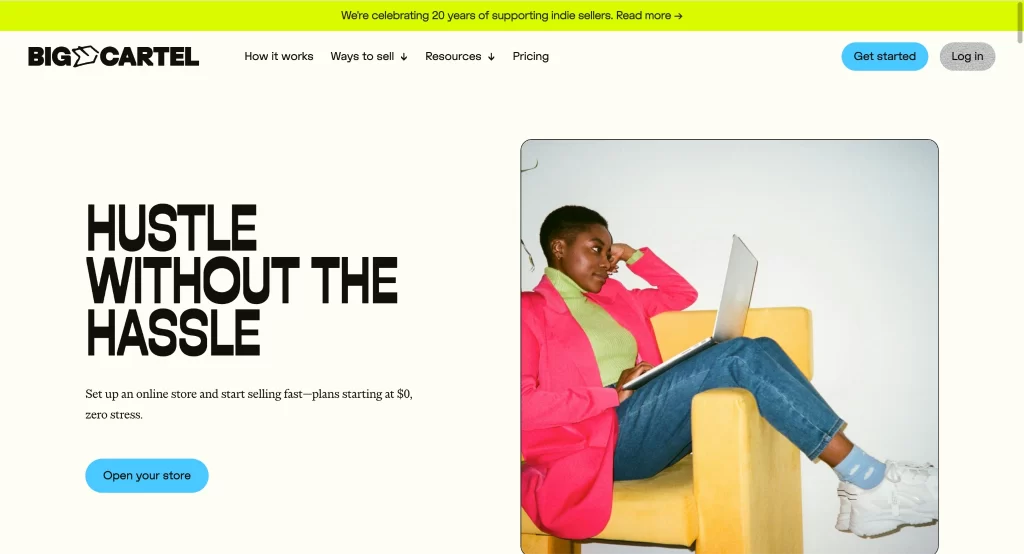
The last name on our list of Etsy competitors is Big Cartel. Comparing Big Cartel and Etsy, the former one is a hosted eCommerce platform that has impressed us with its dedication to artists and makers all around the world.
Explaining in other words, Big Cartel propositions itself as a selling site for only artisans, crafts, and creative products. This is exactly why Big Cartel would be a perfect Etsy alternative.
Why I picked Big Cartel
Big Cartel solves one of the most common Etsy seller problems: wanting a more independent storefront without taking on too much cost or complexity. Etsy is easier for marketplace exposure, but Big Cartel is better when you want a simple branded shop that feels more like your own business.
Another reason Big Cartel stands out is that the pricing is easy to understand. The platform says it offers a flat monthly rate and no Big Cartel transaction fees, which is a big advantage for smaller sellers watching margins closely. For artists, makers, and side-hustle brands, that simplicity can matter more than having a long list of advanced features.
At the same time, Big Cartel is clearly not trying to be the best option for large catalogs or complicated multichannel operations. Its strength is that it gives smaller shops a clean, affordable step away from Etsy without overbuilding their setup.
Best for
- Artists and makers with small product catalogs
- Shops that want a branded storefront at very low cost
- Small creative businesses selling a limited number of physical products
- Etsy sellers who want more independence without moving to a more complex platform
Standout features
- Free Gold plan to start selling with no monthly cost.
- No Big Cartel transaction fees on its plans.
- Support for digital goods and services on paid plans.
- Inventory tracking, discounts, shipping-label tools, and bulk editing on higher tiers.
- Abandoned cart recovery and priority support on Diamond.
- Product import from Etsy, Squarespace, and Shopify.
What you can sell
- Physical products
- Digital goods
- Services
- Small creative catalogs that do not need advanced enterprise-style features
Pricing
- Gold: $0/month for up to 5 physical products.
- Platinum: $15/month for up to 50 physical products.
- Diamond: $30/month for up to 500 physical products.
- Transaction fees: 0% from Big Cartel itself.
Pros | Cons |
Very low-cost entry point with a free plan | Not built for large catalogs or complex operations |
No Big Cartel transaction fees | Fewer advanced features than larger ecommerce platforms |
Clean fit for artists and small creative shops | Less suitable if you already know you need aggressive multichannel scaling |
Paid plans add digital selling and stronger selling tools | No built-in marketplace traffic like Etsy |
10. TikTok Shop – Best for social-first sellers
TikTok Shop is a strong Etsy alternative for sellers who want discovery and checkout to happen in the same place. Instead of relying mainly on marketplace search, TikTok Shop lets shoppers find products through the For You feed, LIVE, search, and the Shop Tab, then buy directly in the app.
That makes it a much better fit than Etsy when your sales are driven by short-form content, creator partnerships, or live selling rather than a traditional storefront alone.
Why I picked TikTok Shop
TikTok Shop stands out as it solves a problem Etsy does not: turning content into commerce without sending people off-platform first. Etsy is still stronger for traditional handmade search intent, but TikTok Shop is better when your products sell through video, trends, creator influence, or impulse buying.
Another reason it stands out is that TikTok has built multiple discovery surfaces into the shopping experience. Buyers can discover products from feeds, LIVE, search, and the Shop Tab, while sellers can manage products through Seller Center and work with creators through TikTok Shop tools. That gives social-first sellers a much more native selling environment than Etsy.
I also like that TikTok Shop gives sellers room to scale listings and promotions without forcing a monthly website plan first. TikTok Shop supports single-product and batch-product uploads and can display up to 1,000 products online in a shop. For sellers who want to test products fast and lean into viral discovery, that is a strong advantage.
Best for
- Sellers who rely on short-form video, creators, or live selling to drive demand
- Brands with visual, impulse-friendly, or trend-driven products
- Shops that want built-in social discovery instead of depending only on search
- Etsy sellers who want more traffic without building a standalone store first
Standout features
- Products can be discovered and purchased through For You, LIVE, search, and Shop Tab inside TikTok.
- Seller performance and product engagement signals help influence visibility in TikTok Shop recommendations.
- Sellers can upload products individually or in bulk, and shops can display up to 1,000 products online.
- TikTok Shop supports creator collaboration, and seller terms state that sellers choose the commission rate paid to creators they work with.
- Products fulfilled by TikToks can qualify for default free shipping and may get stronger visibility and campaign access under TikTok’s FBT program.
What you can sell
- Physical products listed through TikTok Shop, as long as they comply with TikTok Shop policies.
- Products in restricted categories only if you meet TikTok Shop’s qualification requirements for those categories or products.
- Products that work well with social discovery, creator promotion, and live shopping formats. This is an inference from how TikTok Shop discovery works across feeds, LIVE, search, and Shop Tab.
Pricing
- No flat monthly plan
- Referral fees vary by category and program
- New U.S. sellers may get a 3% referral fee promo for 30 days
- Refunded or canceled orders may still incur a refund admin fee
- Creator commissions and Fulfilled by TikTok fees are extra costs
Pros | Cons |
Built-in discovery through feeds, LIVE, search, and Shop Tab. | Fee structure is less simple than a flat monthly storefront plan because referral, creator, and fulfillment costs can stack. |
Better fit than Etsy for trend-driven and content-led selling. This is an inference from TikTok Shop’s recommendation and discovery model. | Visibility depends heavily on platform signals like engagement, conversion, and seller performance. |
Supports creator partnerships and live commerce natively. | Some categories require qualification, and listings can be restricted or removed for policy violations. |
Can be a fast way to test products without launching a separate website first. This is an inference from TikTok Shop’s in-app selling and bulk listing workflow. | Less suitable if your business depends more on boutique storefront presentation than social discovery. This is an inference from the platform’s design. |
Best Platform Combos Based on What You Need
You do not have to leave Etsy completely. In many cases, the smarter move is to pair Etsy with another platform based on how you sell, what you sell, and how much control you want over your business.
Here are the best platform combos based on different seller needs.
Need | Best Platform / Combo | Why it works |
Build a long-term brand | Shopify + Etsy | Etsy brings discovery, while Shopify gives you full control over branding, customer data, and multichannel growth |
Get more handmade marketplace traffic | Amazon Handmade + Etsy | Etsy keeps you visible in a familiar handmade marketplace, while Amazon Handmade expands your reach to a much larger buyer base |
Keep costs low with a simple branded store | Big Cartel + Etsy | Etsy helps with traffic, while Big Cartel gives you a low-cost storefront without extra complexity |
Sell social-first products | TikTok Shop + Etsy | TikTok Shop helps you turn short-form content into sales, while Etsy supports more traditional handmade search intent |
Sell vintage, collectibles, or one-off items | eBay + Etsy | eBay is better for item-led search and rare inventory, while Etsy still works for vintage and niche discovery |
Move secondhand or lower-priority stock fast | Mercari + Etsy | Mercari is ideal for quick, transactional selling, while Etsy remains better for curated or handmade-style listings |
Build an easy branded website | Wix + Etsy | Etsy gives you marketplace visibility, while Wix gives you a beginner-friendly store with more control |
Create a design-first branded store | Squarespace + Etsy | Etsy helps with discovery, while Squarespace gives you a more polished branded website |
Get full control with WordPress flexibility | WooCommerce + Etsy | Etsy helps you keep marketplace traffic, while WooCommerce gives you full ownership and customization on your own site |
Add a simple second marketplace | Bonanza + Etsy | Bonanza gives you another sales channel without the heavier setup of Amazon or a standalone store |
Sell social-first products | TikTok Shop + Etsy | TikTok Shop helps you turn short-form content into sales, while Etsy supports more traditional handmade search intent |
Looking to expand your sales beyond Etsy?
Try LitCommerce – A multichannel selling tool to integrate your store with 20+ selling platforms no matter it’s eCommerce platforms, online marketplaces, or social media channels.
Etsy Competitors – FAQs
- 1. Who is Etsy's biggest competitor?
9 biggest Etsy competitors:
- Amazon Handmade
- eBay
- Bonanza
- Mercari
- Shopify
- WIX
- WooCommerce
- Squarespace
- Big Cartel
- 2. Is Etsy still popular?
Yes, Etsy remains one of the most popular marketplaces worldwide. This online selling channel now facilitates roughly 94 million active users in 2023 and propositions as the world leader in creative product niches.
- 3. Is Etsy competitive?
Yes, Etsy is very competitive with 5.90 million active sellers in Q1 2023, which has increased by 7% compared to 2022. Adding to that, Etsy currently has over 60 million products listed. Provided these figures, you can surely consider that Etsy is a highly competitive marketplace.
- 4. Can you make money selling crafts?
Yes, you can actually earn a lot of money from selling crafts. The best places to sell crafts, artisans, collectibles, and creative items are Etsy, Amazon Handmade, eBay, Bonanza, Mercari, Shopify, WIX, WooCommerce, Squarespace, and Big Cartel.
- 5. Is Etsy reliable?
Yes, Etsy is reliable and legitimate. In fact, it has established itself as one of the leading marketplaces in the eCommerce industry. Apart from that, Etsy is considered the most trusted online marketplace for creative product niches.
Finding The Best Etsy Alternatives to Sell Crafts
In a highly competitive market like Etsy, the price contest and conventional one-channel retailing no longer set you apart from other runners. Hence, businesses of all sectors are encouraged to spread their brand coverage and increase the chances of purchase via multichannel selling.
But you have to do more than get used to the concept of multichannel. Check out LitCommerce solutions for eCommerce management for the latest updates. We also offer a 24/7 live chat so that you can get help in real time from real people in case you have any related concerns.