


If you’re selling across multiple channels like Amazon, eBay, Etsy, Shopify, and TikTok, and you’re wondering: Nembol vs LitCommerce, which one is actually better for your business? Both promise the same thing: list everywhere from one place and keep your stock in sync. But what are the key differences between these tools?
You have landed in the right place. In this guide, we’ll break down 7 key factors comparing Nembol to LitCommerce so you can look closer and pick the right tool with confidence:
- 1. Pricing
- 2. Supported channels
- 3. Ease of use
- 4. Listing features
- 5. Inventory, price & order sync,
- 6. Support
- 7. Security & policy.
Let’s get into it.
LitCommerce vs Nembol – Overview
First, let’s take an overall look at both tools.
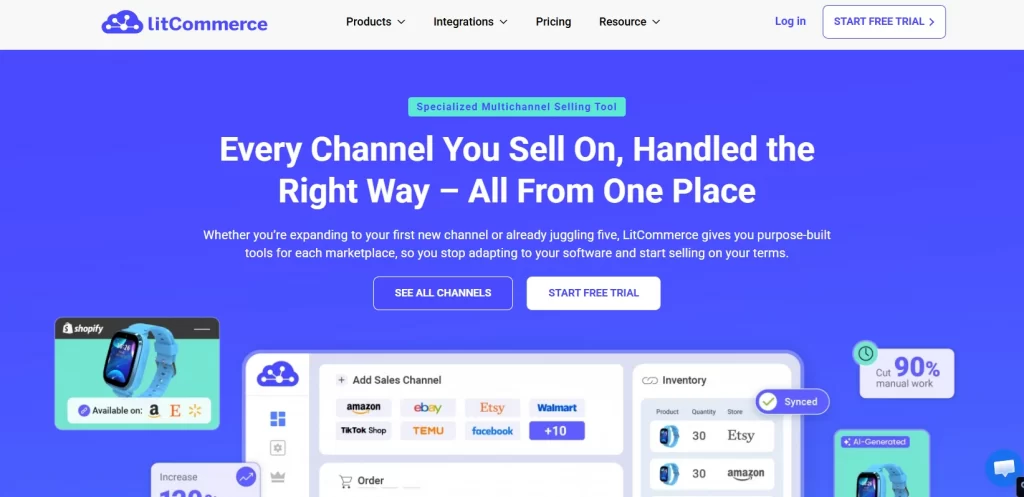
LitCommerce, as one of the best multichannel selling tools, is built for small and mid-sized sellers who want to grow across many channels at once.
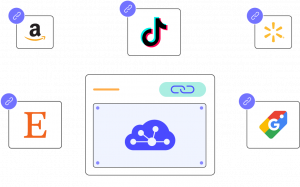
It lets you connect multiple platforms together – like Shopify, Etsy, Amazon, eBay, and TikTok Shop – and manage them from one dashboard. The main job of this tool is to help you list products from one store to another without copying them over one by one.
What makes LitCommerce stand out is how well it’s built for each channel. Instead of one generic form for every marketplace, it follows the rules of each marketplace – so your listings come out accurate and complete. For example, you get an eBay template designer to optimize your eBay descriptions, and support for selling digital products on Etsy.
And once your products are listed, LitCommerce keeps inventory, pricing, and orders in sync across all connected channels.
Nembol, meanwhile, describes itself as a multichannel inventory management and listing solution. It offers features similar to LitCommerce: listing and syncing products across multiple online channels, keeping inventory aligned, applying pricing rules, and more.
So at first glance, the two tools look pretty similar. Let’s dig into the details to see where they actually differ.
LitCommerce vs Nembol: Quick Comparison
Now that you know what each tool is built for, let’s put them side by side and compare the key numbers before we dig into each factor in detail.
To keep this fair, we tried both tools hands-on, we tested listing products, syncing inventory and prices, and managing orders. Then, we scored them against the seven factors in this article.
We also read real user reviews on Trustpilot and the Shopify App Store to balance our own experience, and we’ve honestly flagged each tool’s strengths and weaknesses.
Criteria | LitCommerce | Nembol |
Overall rating | 4.7 stars – 448 reviews (Truspilot) | 2.6 stars – 47 reviews (Trustpilot) |
Supported platforms | – Online marketplaces: Amazon, eBay, Etsy, Walmart, Google, Facebook, Temu, Faire, Reverb, Shopee. – Social channels: TikTok Shop, Facebook Shops. – eCommerce platforms: Shopify, WooCommerce, Wix, BigCommerce, Squarespace, Square, PrestaShop. – File: CSV file, Google Sheets | – Online marketplaces: Amazon, eBay, Etsy, Google Merchant. – Social channels: TikTok Shop, Meta Commerce, Instagram, Pinterest, Tumblr. – eCommerce platforms: Shopify, WooCommerce, PrestaShop. – File: CSV file |
Pricing model | Per marketplace + per listing – From $29/month | Per products – From $39/month |
Free trial | 7 days | 14 days |
Listing features | – Easy bulk editing & listing across multiple channels. – 3 flexible listing routes: eCommerce platform to marketplace, marketplace to marketplace, file to marketplace. – Channel-specific customization, like eBay Listing Designer, Etsy digital products, AI optimization. | – Easy bulk editing & listing across multiple channels. – Central editing, AI title/description generators, attribute support, CSV import. – Easy Website builder. |
Inventory, price & order sync | Inventory & price sync, rules, order centralized management, 2 order-management options. | Syncs in seconds, flexible pricing rules, but reported sync issues; order sync locked to Pro plan |
Ease of use | Clean dashboard, fast setup, Draft tab for review, 4.7 rating | Simple central editor, smooth Shopify integration, but 2.6 rating with reliability friction |
Customer support | Near 24/7 live chat + email, Help Center, Academy, blog; praised by reviewers | Help Center, tutorials, blog, book-a-demo; more self-serve, less consistent |
Security & policy | Detailed public policies (Privacy, GDPR, Data Security), DMCA protection, cancel anytime. | Privacy Policy & Terms, cancel anytime, paid idle backup. |
The review gap is the first thing that jumps out. LitCommerce – a significant Nembol alternative holds a 4.7 rating across 448 reviews, while Nembol sits at 2.6 across 47 reviews. That’s a big difference in both volume and satisfaction, and it lines up with what we found in the detailed factors below.
On the surface numbers – ratings, channel count, and starting price – LitCommerce comes out ahead. Nembol’s longer free trial is a nice perk, but the satisfaction gap is hard to ignore.
Nembol vs LitCommerce Comparison: 7 Key Factors to Consider
#1. Pricing
Price is usually the first thing I check, as a seller, so let’s see how much each tool actually costs and what you get for it.
Product/listing scale | LitCommerce (priced by listings) | Nembol (priced by products) |
~500 products | From $29/mo (Up to 1,000 listings, 3 channels) | $39/mo (Basic – 500 products, 1 account/channel) |
~2,000 products | $44/ mo ( (Up to 2,000 listings, 3 channels) | $49/mo (Pro – 2,000 products, 2 accounts/channel) |
~5,000 products | $59/mo (Up to 5,000 listings, 3 channels) | $79/mo (Enterprise – 5,000 products, 4 accounts/channel) |
~15,000 products | $99/mo (Up to 15,000 listings, 3 channels) | $129/mo (Enterprise+ – 15,000 products, 10 accounts/channel) |
Starting price | $29/month | $39/month |
Free trial | 7 days, full features | 14 days, no card needed |
Annual discount | 20% off | 25% off |
Extra add-on fees | None (price shown is final) | Yes (channel reset $20, cleanup $40, +5,000 slots $40, idle backup $9.99/mo) |
LitCommerce pricing
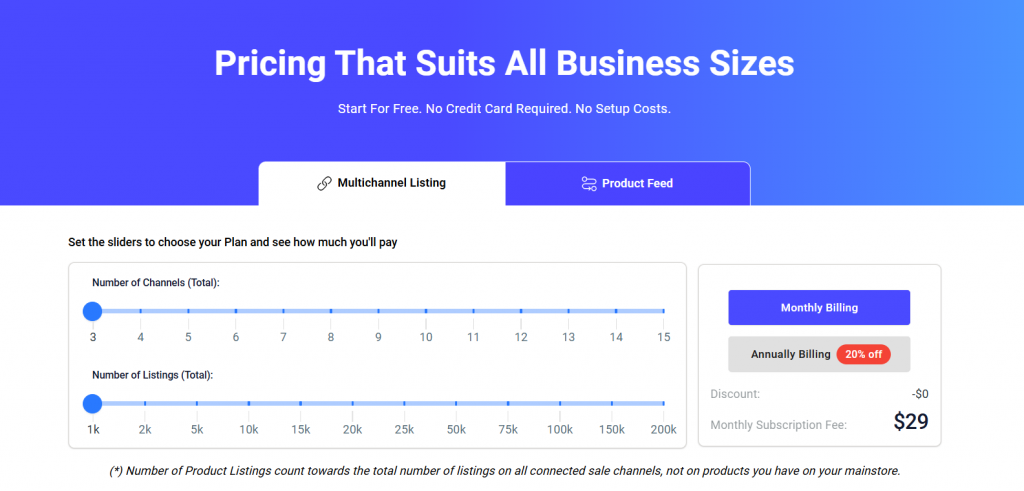
LitCommerce offers a “Pay As You Go” model that starts at $29/month. This plan gives you around 1,000 product listings, 3 connected channels, and unlimited orders with no commission fees, with sync running on a 15-minute cycle. As your listing count or channel count grows, the price scales up with it.
There’s a 7-day free trial with full feature access and no setup fees, and you can pay annually for a discount of 20%.
Nembol pricing
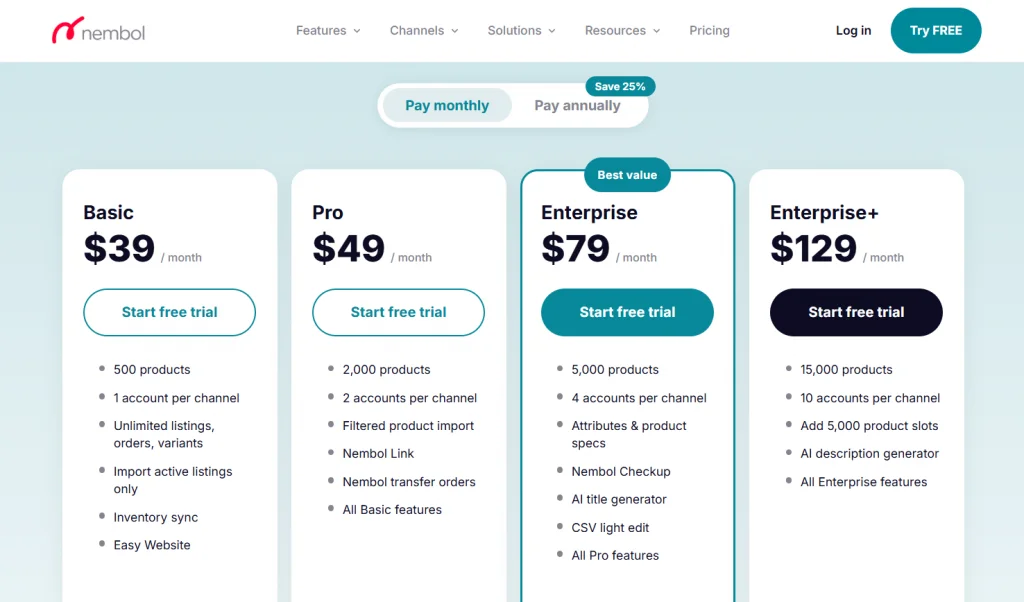
Nembol has four fixed tiers:
- Basic: $39/mo, up to 500 products, 1 account per channel
- Pro: $49/mo, up to 2,000 products, 2 accounts per channel
- Enterprise: $79/mo, up to 5,000 products, 4 accounts per channel
- Enterprise+: $129/mo, up to 15,000 products, 10 accounts per channel
All plans get unlimited listings, orders, and variants, plus 0% commissions. The free trial runs 14 days with no credit card needed, and annual billing saves 25%. However, there are some add-on costs, though – things like a channel reset ($20), account cleanup ($40), or extra product slots ($40 per 5,000) cost more on top.
Verdict: LitCommerce wins on pricing vs Nembol. It starts cheaper at $29 vs $39, scales based on what you actually use. Nembol’s fixed tiers are simple to understand, and its longer trial is generous, but the higher entry price and extra add-on fees add up.
#2. Channels supported
Next, let’s see which channels LitCommerce vs Nembol support.
LitCommerce
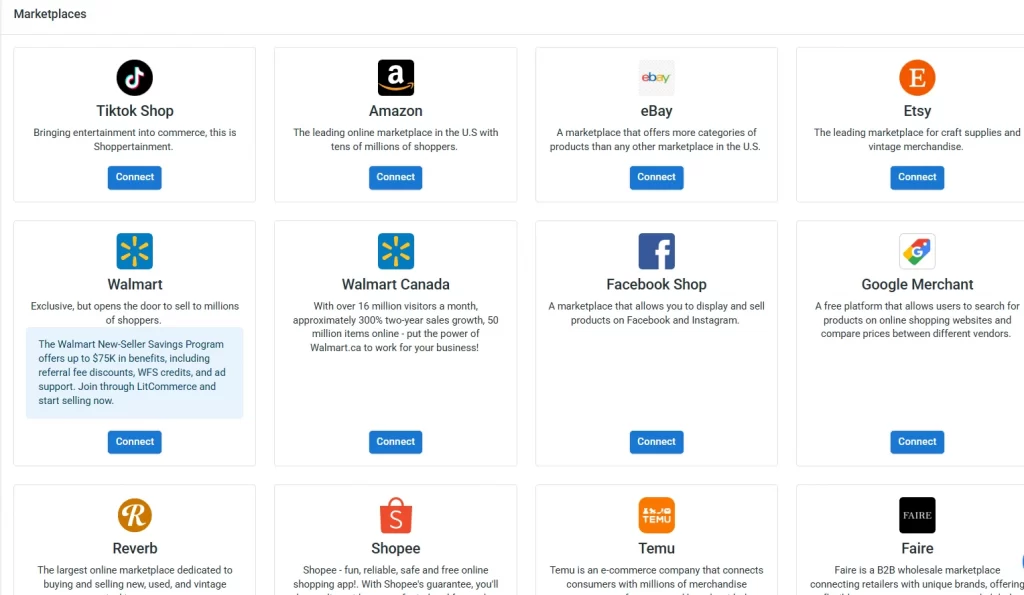
LitCommerce supports 15+ channels across four categories, and you can connect them in flexible ways:
- eCommerce platforms: Shopify, WooCommerce, BigCommerce, Wix, Squarespace, Square, and PrestaShop.
- Online marketplaces: eBay, Amazon, Etsy, Walmart, Temu, Reverb, Faire, Shopee, Google Merchant.
- Social channels: TikTok Shop, Facebook Shops.
- File-based: CSV, Google Sheets.
The best part is how flexible it is when it comes to getting started. You can list from a store to a marketplace, from one marketplace to another, or straight from a file, which fits almost any kind of seller. For example, if you sell on Shopify, you can link it to eBay, Etsy, and TikTok Shop and list your products on all three at once.
Nembol
Nembol supports around 13 channels:
- Marketplaces: eBay, Amazon, Amazon MCF, Etsy, TikTok Shop, Google Merchant, Subito.it (Italy).
- eCommerce platforms: Shopify, WooCommerce, PrestaShop.
- Social channels: Facebook, Instagram, Pinterest, Tumblr.
- File: CSV.
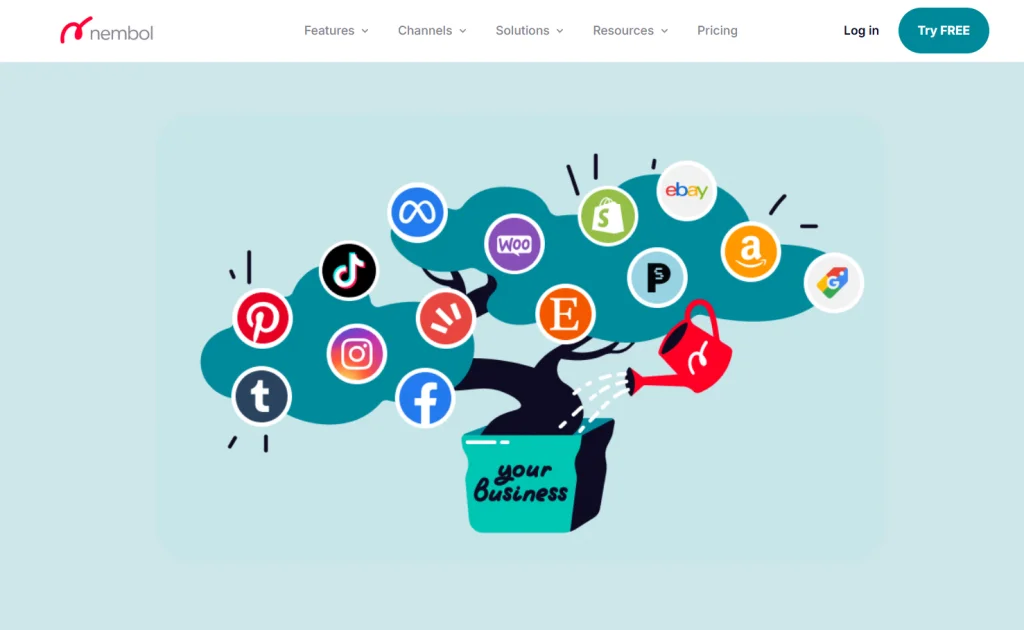
Nembol’s standout is its social selling reach – Pinterest and Tumblr aren’t common on competing tools. But it lacks larger marketplaces like Walmart, as well as platforms like BigCommerce and Squarespace.
Verdict: Both LitCommerce and Nembol support the basic selling channels. However, LitCommerce wins on channel coverage with more eCommerce platforms like BigCommerce and Squarespace, and more marketplaces like Walmart.
Nembol wins if social selling on Pinterest and Tumblr is central to your business.
#3. Listing features
Listing is one of the most important things to look at when choosing a multichannel selling tool – after all, it’s the core job these tools do. Here’s how each one handles it.
LitCommerce
With LitCommerce, you can start wherever you already sell. LitCommerce gives you three flexible ways to list products:
- Store to marketplace (or the other way around) – for example, you want to integrate Shopify to eBay, list your Shopify products to eBay, or import your eBay products into Shopify.
- Marketplace to marketplace – for example, list products from eBay to Etsy, or Etsy to eBay.
- File to marketplace – start straight from a product file
On top of that, LitCommerce offers customized features for each marketplace that go beyond what most tools offer. These features make optimizing your listing for each channel much easier and more efficient. A few standouts are:
- Templates and rules: You can create custom templates & rules to bulk-edit product details for each marketplace you list to, including an eBay Listing Designer with templates and an HTML editor for polished, branded listings.
- Digital product support for Etsy, which many tools skip.
- Full eBay item specifics per category, auto-relist, and a scheduled publisher.
- AI-powered listing optimization for Etsy and eBay.
As each channel plays its own rules, these features allow you to customize your listings to meet the requirements of each channel and get rejected less often.
Nembol
Nembol covers the listing basics well and adds some genuinely useful tools:
- Central editing – change titles, images, descriptions, and prices once, and sync everywhere
- AI title and description generators (on the Enterprises+ plan)
- Support for eBay Item Specifics, TikTok Shop attributes, and Etsy attributes
- CSV import and full bulk editing
- The “Easy Website” builder, which LitCommerce doesn’t offer. This helps you easily generate a basic storefront from your marketplace listings, especially helpful if you don’t have a website.
Verdict: LitCommerce wins on listing features. Its channel-specific customization, eBay Listing Designer, and Etsy digital product support give sellers more control and fewer listing errors. Nembol’s Easy Website is a nice bonus if you want to spin up a basic storefront.
#4. Inventory, price & order features
Now let’s compare how LitCommerce and Nembol handle day-to-day syncing to keep your stores running smoothly.
LitCommerce
Here are 3 main features that LitCommerce offers to help you run your business across multiple channels more smoothly:
- Inventory sync: LitCommerce uses your Main Store as the single source of truth. Any stock change there syncs to all your connected channels — and back — on a 15-minute cycle, which helps you avoid overselling across stores. You can also set inventory rules, like a maximum or minimum stock level, or have a channel hold only a percentage of your main stock.
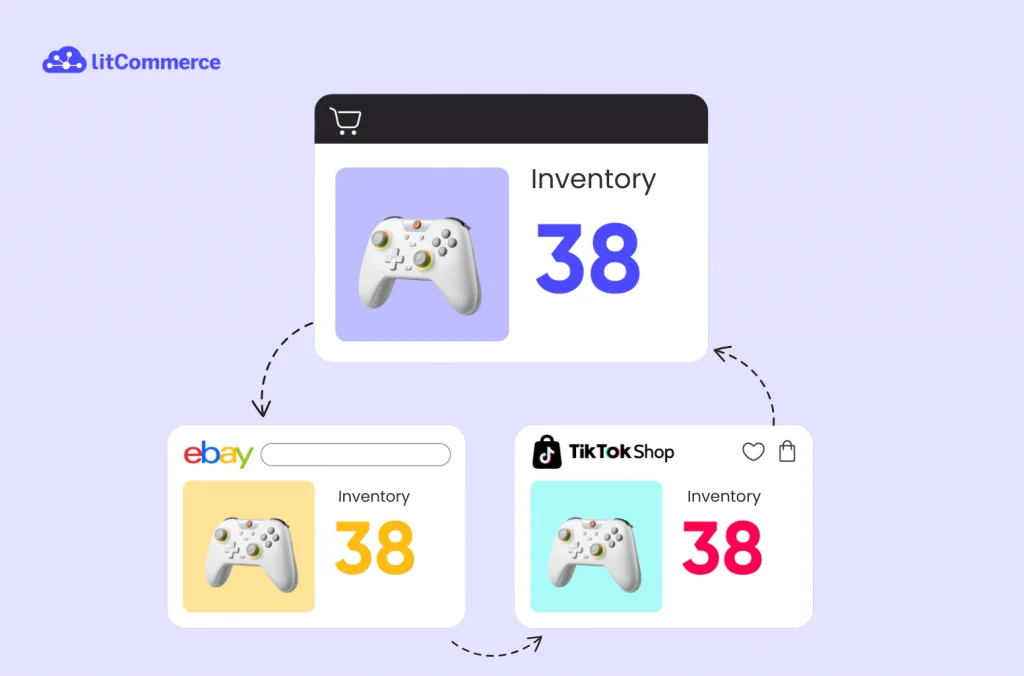
- Price sync: Once you change a price in your Main Store, it updates automatically across all your channels. You can also set price rules – for example, increasing a channel’s price by a set percentage to cover its selling fees. On top of that, LitCommerce includes currency conversion and sell-through pricing, so you can fine-tune prices for each channel.
- Order sync: You have 2 ways to manage your orders.
- If your Main Store is Shopify or WooCommerce, orders from eBay and TikTok Shop can land straight in your store’s order page, so you can track and fulfill them right there.
- If you use LitCommerce as your Main Store, you can manage all orders from different places inside LitCommerce, so you have an overview of which channel works well, and you can build a better selling strategy. LitCommerce now also supports connecting with your shipping service, like ShipStation, sending orders from every channel straight to your account – making fulfillment more centralized and easier to manage.
Note: due to API limits, some channels like Amazon and Walmart can’t pull orders into the dashboard for fulfillment.
Nembol
Nembol covers the same three areas, and here’s how it handles each one.
- Inventory sync: Nembol syncs your stock count across all connected channels at every sale, and whenever you update quantities manually in Nembol or selected channels. Stock updates happen in just seconds. However, some users on Trustpilot and the Shopify App store have reported listings being duplicated or unlisted unexpectedly, which causes stock confusion, which you might consider when choosing Nembol.
- Price sync: Nembol offers pricing rules similar to LitCommerce. You can increase or decrease prices by a percentage or a fixed amount, set prices identically across channels, run seasonal sales, and auto-round prices to .99. It’s a flexible system for sellers who like to experiment with pricing.
- Order sync: Nembol’s “transfer orders” feature creates an order in your Shopify backend for each order you receive on eBay, Amazon, Etsy, or WooCommerce. It works, but it’s built mainly around Shopify as the destination and needs your products to be active there. This feature is also only available on the Pro plan and up (starting at $49/month).
Verdict: LitCommerce and Nembol offer fairly similar features for price, inventory, and order sync. But LitCommerce still wins overall – its sync is more flexible and reliable, it doesn’t lock order syncing behind a higher tier.
#5. Ease of use
A tool only saves you time if it’s easy to work with. So during testing, we timed how long it took to go from signing up to publishing our first live listing, and paid attention to how easy each dashboard was to navigate. Here’s what we found.
LitCommerce
When we tested LitCommerce, we found the dashboard clean and easy to follow, with a logical flow: connect your first store, which can run as a Main Store, connect other stores, then list, edit, and publish your products. We liked that new products land in a Draft tab first, so we could review and tweak everything before pushing it live.
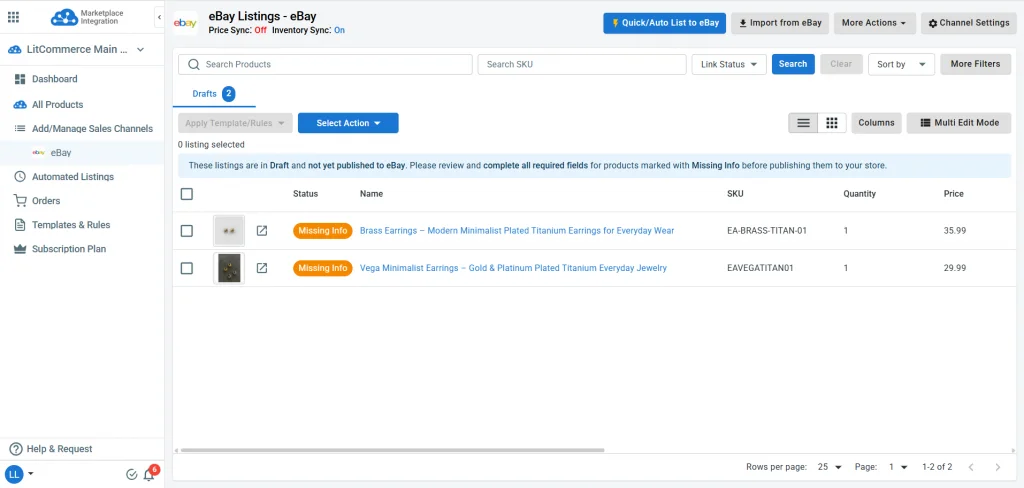
Moreover, reviewers frequently call it intuitive and point to fast setup, and the high 4.7 rating across hundreds of reviews backs that up. There’s a learning curve like any tool, but onboarding support helps shorten it.
Nembol
When we signed up for Nembol, our first impression was that it’s really easy to get started. Connecting our stores, importing products, and listing them on another channel all felt straightforward.
It uses a central editor, where you change a product once and it updates across every channel, and we found its Shopify integration in particular felt native and smooth.
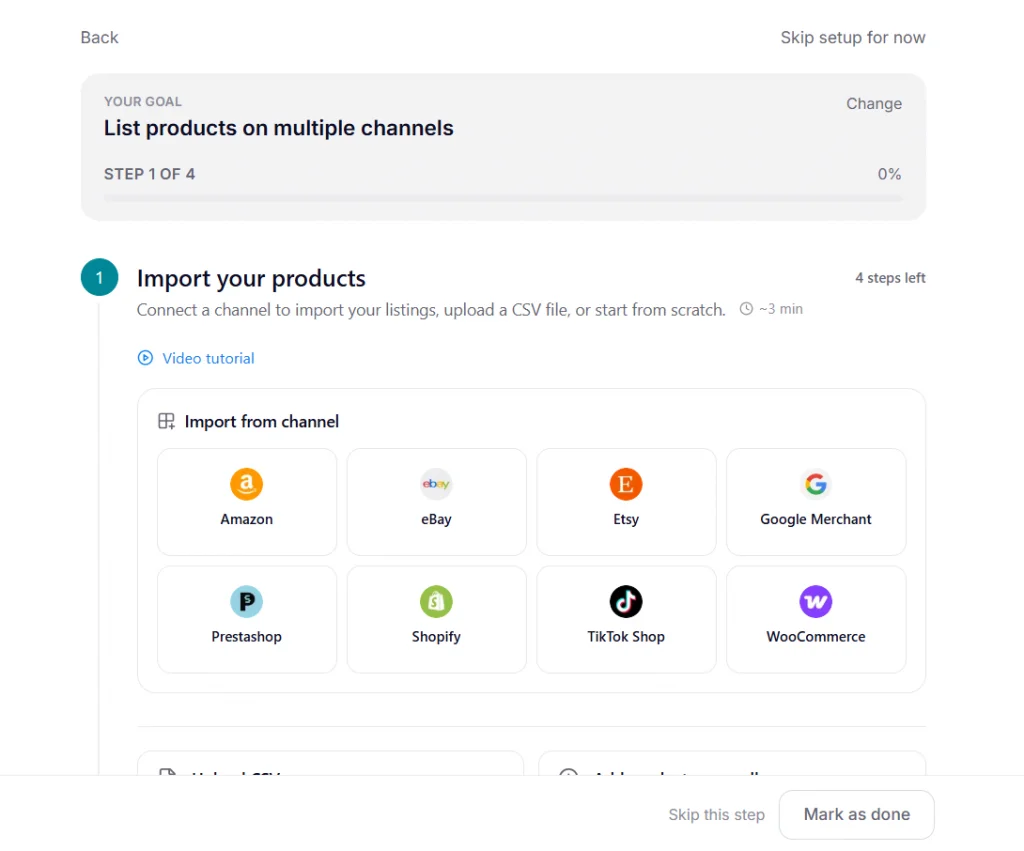
However, the lower 2.6 rating reflects friction for some users – and the most serious complaints aren’t about the interface but about reliability, which we’ll get to in the listing and support sections.
Verdict: LitCommerce wins on ease of use. Both tools are designed to be simple, but LitCommerce’s much higher satisfaction score and consistent praise for its dashboard give it the edge.
#6. Customer support
LitCommerce customer support
LitCommerce offers live chat and email support 7 days a week, including weekends and holidays, with fast response times. Reviewers repeatedly single out the support team as a highlight – quick to respond, knowledgeable, and willing to send screenshots or screen recordings to solve problems. This shows up even during free trials.
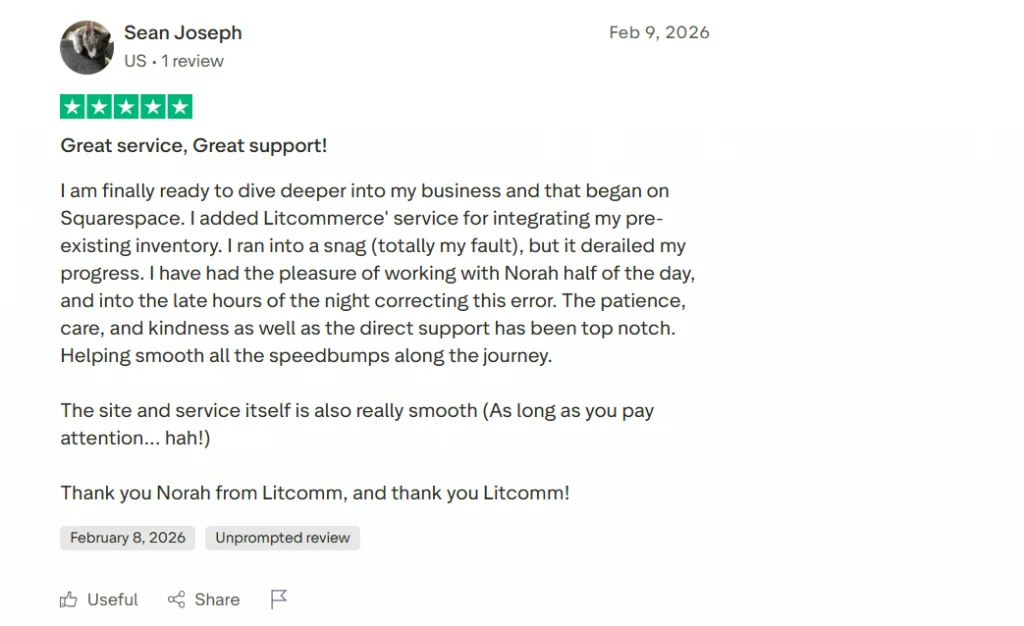
It also provides a Help Center, LitCommerce academy series, and a blog with hundreds of multichannel selling guides, which help new sellers onboard much quicker and easier.
Nembol customer support
Nembol provides a Help Center, video tutorials, a blog, and the option to book a demo with its team. Support exists, and the resources are decent, but it’s more self-serve. Combined with the lower overall rating, the support experience appears less consistent.
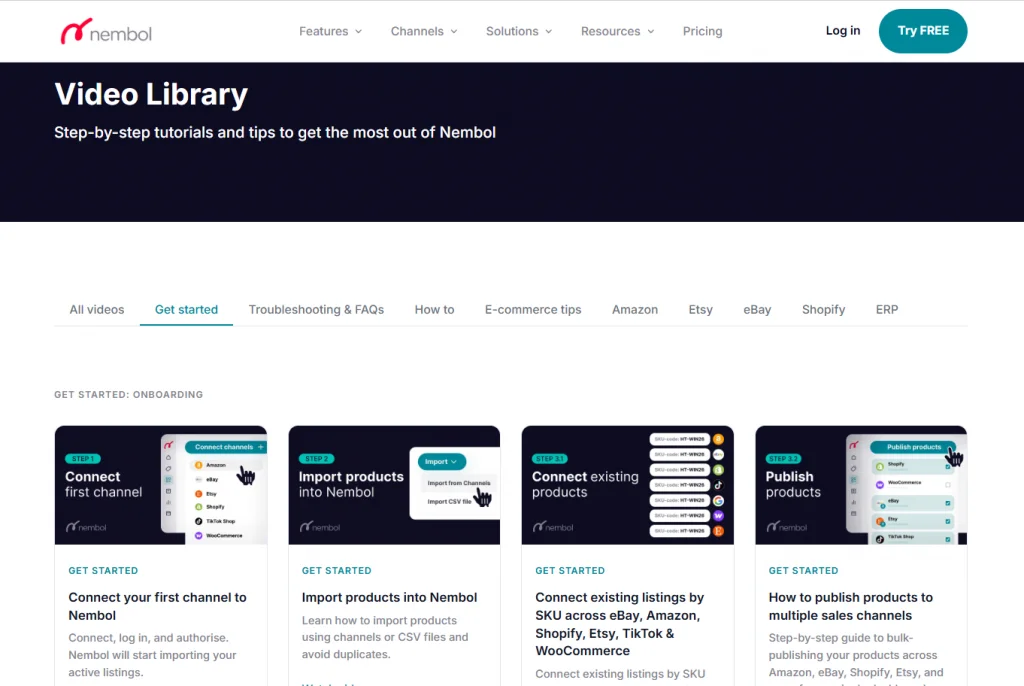
Verdict: LitCommerce wins on support. Round-the-clock live chat with responsive, hands-on help is a clear advantage, and it’s one of the most praised parts of the product.
#7. Security and policy
Both tools take security and compliance seriously, but LitCommerce is more transparent about it. LitCommerce publishes a clear set of policies – Privacy Policy, GDPR Compliance, Data Security Policy, and a refund policy – and carries DMCA protection. It also offers month-to-month plans with cancel-anytime, plus a 7-day trial so you can test before paying.
Nembol publishes a Privacy Policy and Terms of Use, offers cancel-anytime billing, and provides a paid “Idle backup” option ($9.99/mo) to freeze and preserve your account during a break. It’s solid, but the public documentation around data security is lighter than LitCommerce’s.
Verdict: LitCommerce wins on security and policy transparency, thanks to its detailed, publicly available policies and clearer data-security documentation.
Nembol vs LitCommerce – FAQs
Nembol vs LitCommerce: Which is better?
For most sellers, LitCommerce is the stronger choice. It supports more channels, has a much higher user rating (4.7 vs 2.6), offers more flexible ways to start selling, and gets consistent praise for support and reliability.
Nembol can be the better fit if social selling on Pinterest and Tumblr is core to your business, or if you specifically want its Easy Website feature.
LitCommerce vs Nembol: Which is cheaper to start?
LitCommerce is generally cheaper to start, with plans from $29/month versus Nembol’s $39/month, and it scales based on your actual usage. Nembol’s fixed tiers are more predictable, and its annual discount is larger – 25% off, compared to 20% off on LitCommerce.
What are the key differences between Nembol and LitCommerce?
The main differences come down to three things:
– Channels: LitCommerce supports 15+ across stores, marketplaces, social, and files, while Nembol focuses on a smaller set with strong social-selling options.
– Listing features: LitCommerce offers more in-depth & customized features for each channel than Nembol.
– Reliability and support: LitCommerce rates far higher and offers 7-day live chat, while Nembol has documented sync complaints.
Nembol vs LitCommerce: An Honest Assessment
So, where does the Nembol vs LitCommerce comparison leave you? Both tools list and sync products across channels, but they suit different sellers.
Nembol is a solid pick if social selling on Instagram, Facebook, Pinterest, and Tumblr is central to your business. For everyone else, LitCommerce comes out ahead – wider channel coverage, a much higher user rating (4.7 vs 2.6), cheaper plans to start, and consistently praised support and reliability.
Want to learn more tips on selling across multiple channels? Check out our multichannel selling learning hub to get the latest guide, reviews, and tips for multichannel sellers.
Or, if you’re ready to sell across multiple channels and scale your business, LitCommerce multichannel listing tool is here to help. As a leading multichannel selling tool, it makes it easy to list, sync, and sell across platforms like Amazon, eBay, TikTok Shop, Shopify, WooCommerce, Wix, and more. Start your free trial today, or reach out to our team if you have any questions!