



If you are comparing LitCommerce vs CedCommerce, you are likely looking for more than just another integration tool. Most sellers at this stage want to know which platform is easier to use, which one fits their workflow better, and which solution can actually support growth across marketplaces without creating extra manual work.
In this article, we will compare two popular multichannel selling solutions – LitCommerce and CedCommerce. We also provide insights to help you determine which one is better for your business needs.
Key takeaway:
Let’s find which tool fits your needs best!
______________________________
How We Compared LitCommerce and CedCommerce
To make this LitCommerce vs CedCommerce comparison genuinely useful for sellers, we did not rely on feature lists or marketing pages. Instead, we spent two weeks hands-on with both platforms, setting up real accounts and running the same multichannel selling tasks through each one so we could report what actually happens in daily use, not what the landing page promises.
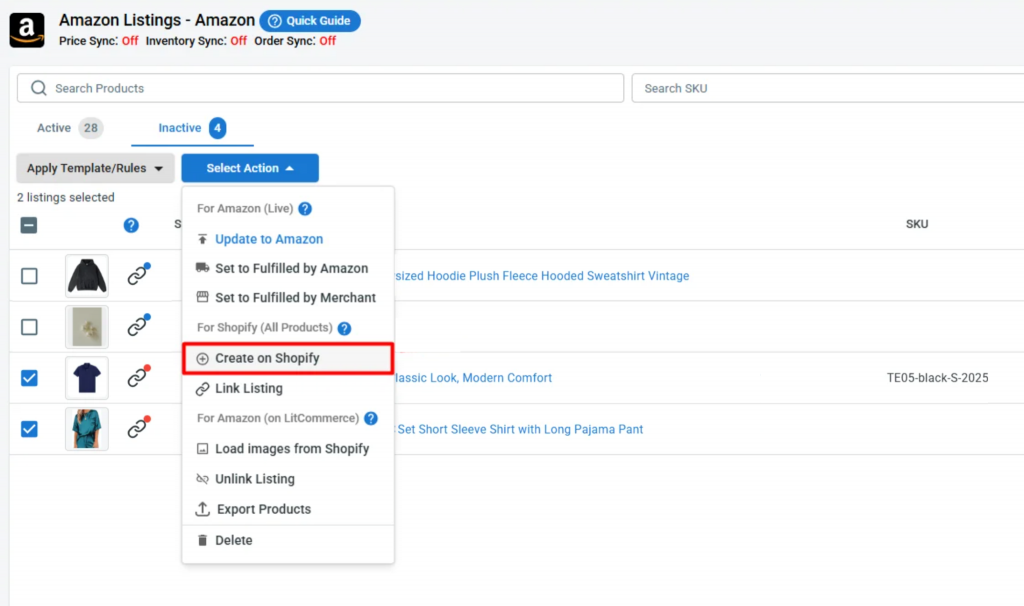
As a consistent test case, we connected the same Shopify store to Amazon on both tools, then pushed a mixed batch of products.
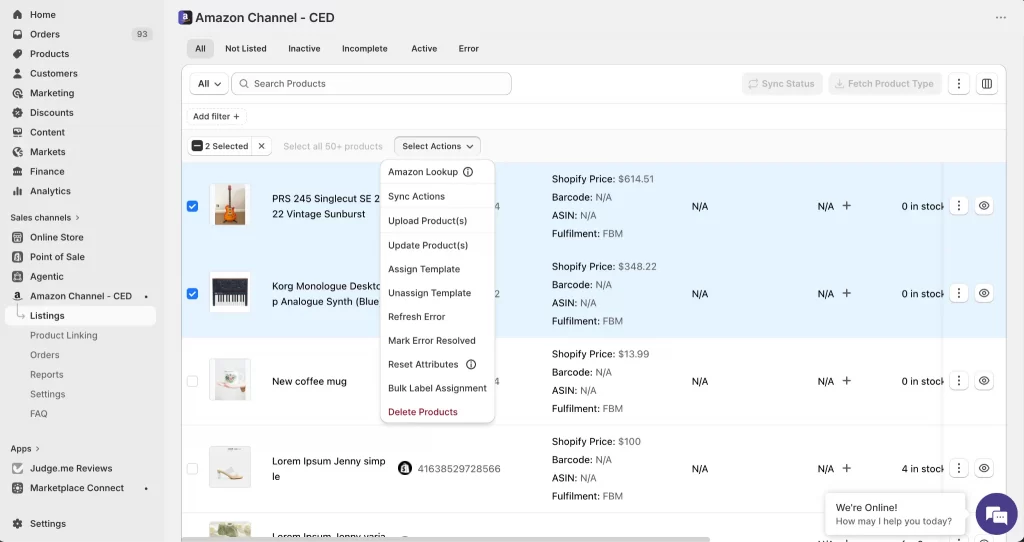
Running an identical setup on both platforms lets us compare them on equal footing rather than on isolated features.
We evaluated each platform against the following criteria:
- Pricing and cost control
- Ease of use
- Listing management
- Inventory and price sync
- Order flow
- Learning resources and support
We began with pricing because sellers need to understand both entry cost and long-term cost control. For LitCommerce, we reviewed its current pricing page, including the 7-day free trial, starting price, listing and channel limits, sync frequency, and support availability.
For CedCommerce, we examined its connector-led product structure and knowledge base to understand how pricing and functionality are often tied to specific marketplace integrations rather than to a single central multichannel setup.
As we tested both tools, we noted where each one saved time and where sellers might run into extra work or confusion. Our goal was simple: find out which platform gives sellers clearer pricing, easier day-to-day use, and better support for growth based on their needs.
Learning the Basics: LitCommerce and CedCommerce
Before we get into the detailed comparison of LitCommerce vs CedCommerce, let’s take a quick look at what LitCommerce and CedCommerce actually offer. Both help merchants sell across multiple channels, but they approach multichannel selling differently.
What is LitCommerce?
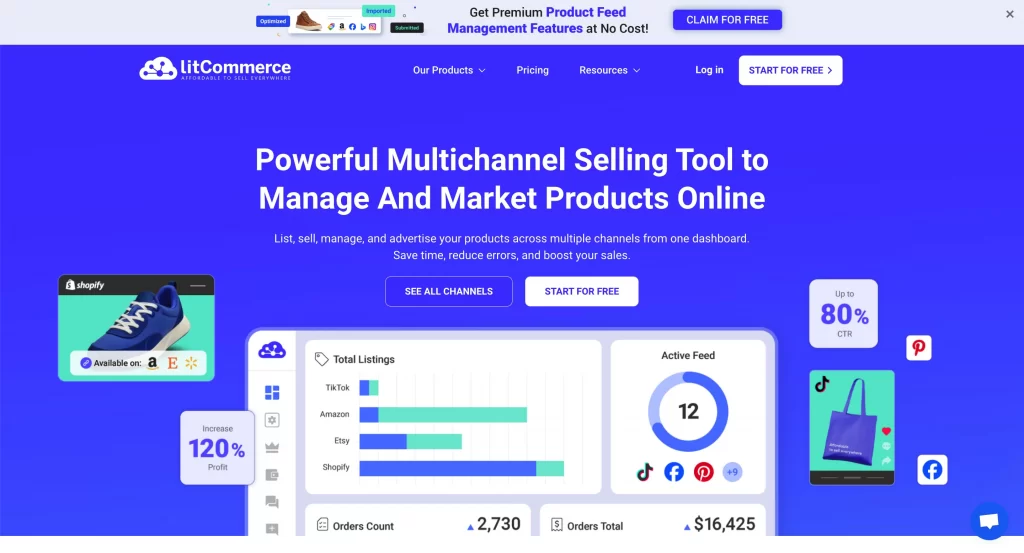
- Rating on Trustpilot: 4.9/5
- Pricing: From $29/mo (20% off annual plan) (7-day FREE trial is available)
LitCommerce was launched in 2021 with a clear mission: to help online sellers list and sell products across multiple eCommerce platforms, including Shopify, WooCommerce, Wix, BigCommerce, and Square, as well as marketplaces like Amazon, Etsy, eBay, Walmart, and more. It’s designed to simplify multichannel selling by allowing you to manage listings, inventory, and orders from a single central dashboard—no technical skills required.
However, LitCommerce is not just a generic tool for pushing products to multiple channels. What makes it more practical for sellers is that it supports marketplace-specific workflows instead of treating every channel the same way. This is important because each marketplace has its own listing requirements, selling logic, and operational needs.
That means sellers get the convenience of a single central system while still having tools that match the real requirements of the marketplaces they sell on. If you want to grow across channels without bouncing between separate apps and disconnected workflows, LitCommerce is built for that kind of setup.
What is CedCommerce?
CedCommerce is an eCommerce solution provider that offers a variety of tools and services to help businesses manage their online operations. Its core products include multichannel integration tools that connect online stores with global marketplaces such as Amazon, Walmart, and eBay. These tools are designed to support inventory sync, centralized order management, and bulk product listing, helping sellers streamline their operations across platforms.
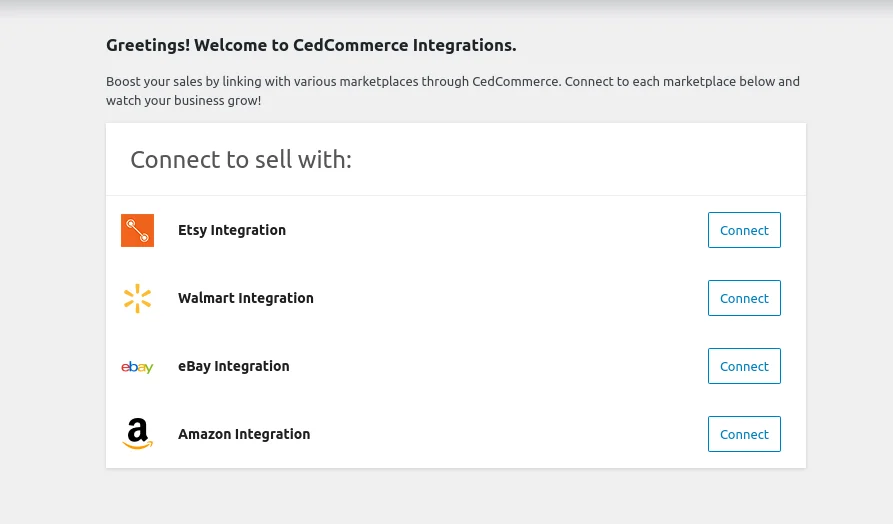
Instead of presenting a single unified marketplace management system, CedCommerce surfaces separate knowledge base sections and app guides for specific integrations, such as Etsy Integration, eBay Integration, TikTok Shop Integration, Amazon Integration, and Walmart connectors.
The platform emphasizes scalability, international selling, and compatibility with major ecommerce systems like Shopify, WooCommerce, BigCommerce, and Magento. CedCommerce aims to support both small businesses and larger enterprises by offering customizable solutions that adapt to different selling needs.
LitCommerce vs CedCommerce: Pros and Cons
Before jumping into the extensive comparison between LitCommerce vs CedCommerce, let’s have a closer look at their advantages and disadvantages.
Pros and cons of LitCommerce
Pros | Cons |
- Diverse eCommerce platforms and marketplaces connect. - Centralized dashboard for managing listings, inventory, and orders in one place. - Specific features built for each integration - Easy to use, without a complicated setup. - Suitable pricing plan, including a free plan. - Excellent customer support. | - No hands-on services such as SEO, Shopify services, growth services, etc. - May not fully meet the needs of large enterprises due to constraints in scalability and customization. |
Pros and cons of CedCommerce
Pros | Cons |
- Very broad platform/channel ecosystem with 6 eCommerce platforms & 50+ marketplaces - Easy integration - Strong for marketplace-specific workflows - Integration for shipping, accounting, email marketing, EPOS, and marketing solutions, etc. - Deep marketplace expertise in customer support | - Complex steps and different app management for integrations. - Cost stacks up across channels - Inconsistent experience across apps. |
Comparing LitCommerce and CedCommerce? Try before you decide.
Test LitCommerce free for 7 days, connect your store, sync your channels, and see how it handles daily selling tasks in your own catalog.
LitCommerce vs CedCommerce: An Extensive Comparison
Criteria | LitCommerce | CedCommerce |
Pricing | Starts from $29/month with 1,000 listings, 3 channels, unlimited orders, 15-minute sync, and a 7-day free trial | Pricing varies by integration; some plans start lower, such as $9/month for Etsy |
Ease of use | Easier for beginners with a clean dashboard and simpler multichannel workflow | Easy for basic setups, but more complex for advanced configurations |
Sync features | 15-minute inventory and price sync, plus 15-minute order import | Sync features vary by plan and marketplace; higher plans may offer faster sync |
Listing management | Supports eCommerce store to marketplace, marketplace to marketplace, and file to marketplace integration; includes QuickList and Template & Rules to bulk list products | Strong listing customization, including advanced features like metafield mapping or multilingual listings in some plans |
Order management | Pulls marketplace orders into the main store for easier handling | Supports order syncing, with deeper workflows depending on the plan and integration |
Sales reports | Built-in reports with charts, filters, and channel-level insights | More advanced analytics and customization for larger operations |
Scalability | Better for scaling across multiple marketplaces with a simpler workflow | Better for businesses that need custom integrations for each marketplace |
Help and support | Strong onboarding, live chat, email, and self-help resources | Strong technical support, especially for complex setups |
#1. Pricing
LitCommerce
LitCommerce has a more straightforward pricing story for sellers who want a multichannel listing tool.
Its pricing is easier to understand because LitCommerce presents multichannel selling as a single centralized product, rather than splitting the experience into many separate marketplace apps.
On the current pricing page, plans start from $29/month, with 1,000 listings, unlimited orders, 3 integrated channels, 15-minute inventory and price sync, 15-minute order import, and a 7-day free trial.
Also, there are many advanced features to use, such as AI-powered listing optimization for Etsy and eBay, quick publish, scheduled auto-publish, bulk export, sales reports, and more.
For sellers, this simplifies budgeting. You can estimate your monthly cost more quickly and see what you are paying for without comparing several connectors one by one.
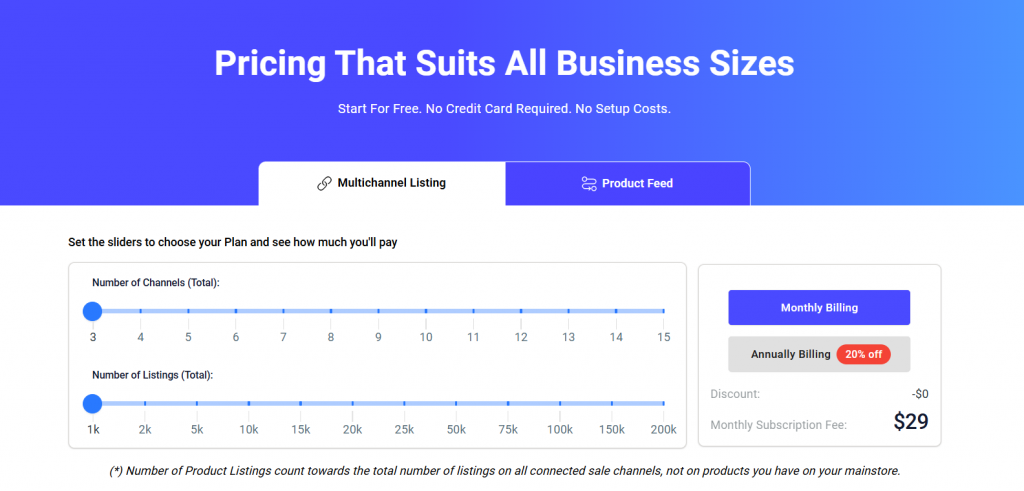
TIPS: Save 20% by subscribing to the annual plan when choosing LitCommerce as your multichannel listing solution.
CedCommerce
CedCommerce can be affordable at the entry level, especially if you only need one marketplace connector.
Its pricing is often structured by integration rather than as one multichannel product. For example, CedCommerce publishes separate plan tiers for tools like Etsy Integration, with different limits based on synced orders, product counts, and advanced features.
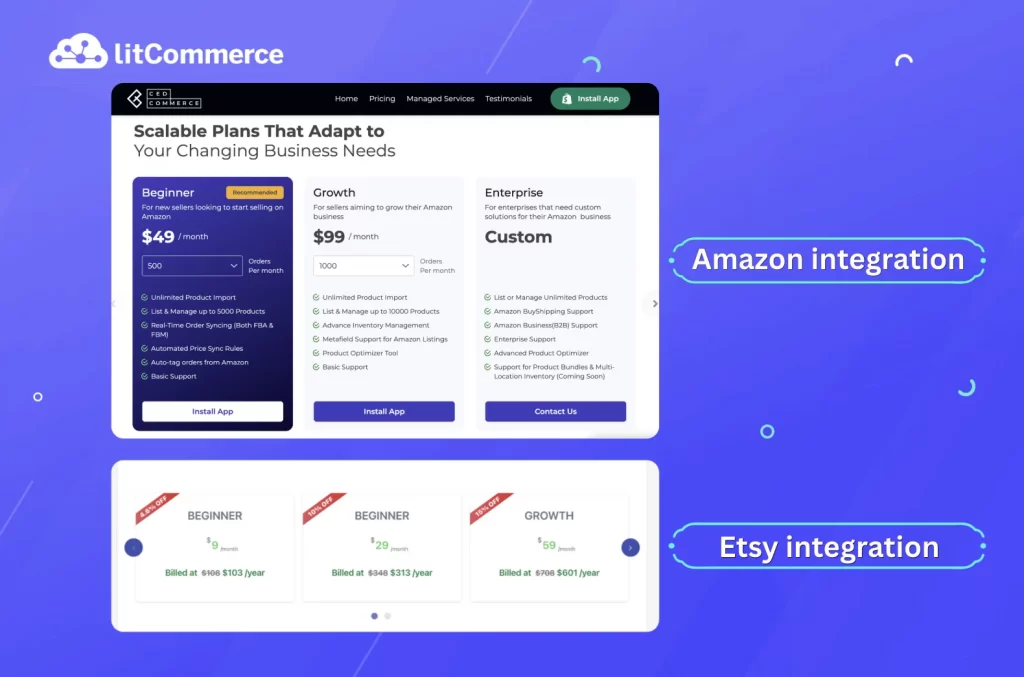
This setup may work well for sellers with a narrow use case. However, if you plan to expand across multiple channels, the total cost can become harder to estimate because you may need to compare pricing app by app instead of reviewing one unified plan.
1. Free Plan: offers some integration plugins for free, including Etsy Marketplace Integration, Walmart Marketplace Integration, and more. These plugins typically offer basic features and limited functionality.
2. Paid Plans: One important thing to note about CedCommerce’s pricing is that it varies depending on the platform you want to integrate with. Each marketplace—such as Amazon, Walmart, or Etsy—has its own dedicated pricing structure, which means sellers must evaluate plans individually based on where they sell.
When looking at LitCommerce vs CedCommerce, CedCommerce may look affordable for a single connector at the entry level, but the total cost picture can get less clear when you compare multiple integrations or need advanced features across several channels.
For example, CedCommerce’s Etsy integration offers multiple pricing tiers tailored to different business sizes and syncing needs:
- Beginner – $9/month or $108/year: Best suited for hobby sellers. You can list up to 10 products, with basic support and Shopify to Etsy inventory sync. Order syncing and advanced features are not included.
- Beginner Plus – $29/month or $313/year (10% off): Designed for growing sellers. It supports up to 200 product listings and 100 Etsy orders/month. You also get price syncing, multi-location support, and bulk editing.
- Growth – $59/month or $601/year (15% off): For scaling businesses, this plan includes 1,000 product listings and 500 orders/month. Additional features include Etsy-to-Shopify sync, review exports, and more.
- Growth Plus – $99/month or $950/year (20% off): Aimed at advanced sellers. You can list up to 10,000 products, sync 1,000 orders/month, and access real-time syncing, multi-lingual support, and metafield mapping.
- Enterprise – Custom Pricing: For high-growth brands managing 1,000+ orders/month. This plan offers custom listing limits, tailored onboarding, and priority support.
Important note: CedCommerce generally does not offer refunds, returns, or exchanges after purchase. Refunds may only be considered if CedCommerce cannot deliver promised features or fix issues with its own extension. Customers are advised to review demos, manuals, and product details before buying.
Verdict: CedCommerce may offer broader enterprise-level customization, but LitCommerce provides better value and flexibility for small to mid-sized sellers, especially those just starting with multichannel selling.
#2. Ease of use
Ease of use matters more than many sellers expect. After all, this is the system you will work in every day to manage listings, inventory, and orders across channels. A tool may offer many features, but if the workflow feels clunky, it can slow your team down instead of helping you grow.
So, when comparing LitCommerce vs CedCommerce, the real question is simple: which platform makes multichannel selling easier to manage in practice?
LitCommerce
LitCommerce is generally easier to use for sellers who want to manage multiple channels from one place.
Its intuitive front design helps beginners easily use the app professionally. Once you have successfully connected the sales channels, you will be directed to the main dashboard. From here, all the information you need to control will appear on the same page.
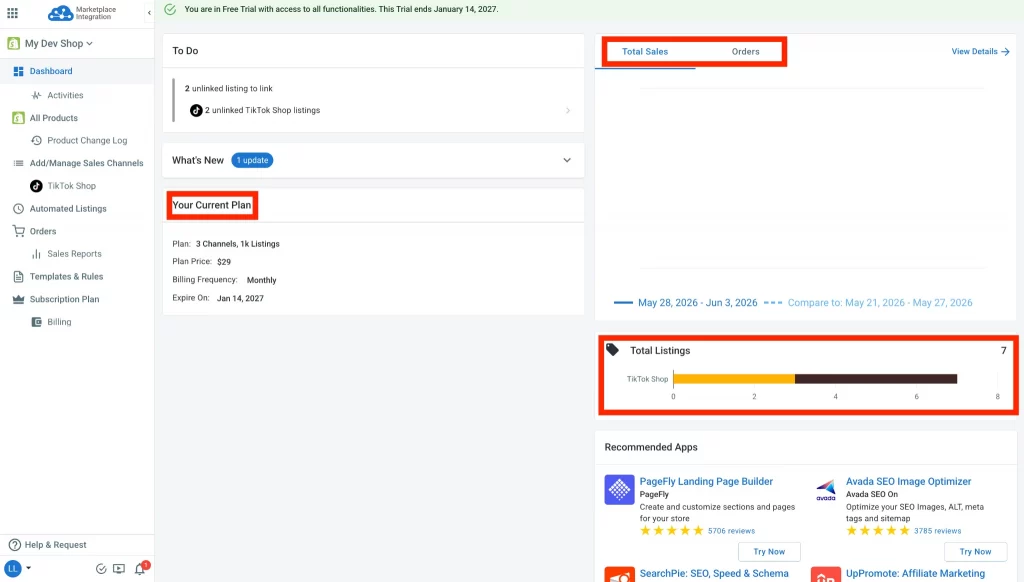
From the moment we signed up, the platform guided us through connecting our Shopify store step by step. We connected our Shopify store to eBay and Etsy within about 15 minutes, including time to import products from the eCommerce store.
Getting started is also fairly straightforward. LitCommerce provides onboarding resources through its Helpdesk, videos, and blog, which makes it easier for new sellers to understand the setup process and learn how to use the tool with less trial and error. Or you can contact customer support in its dashboard.
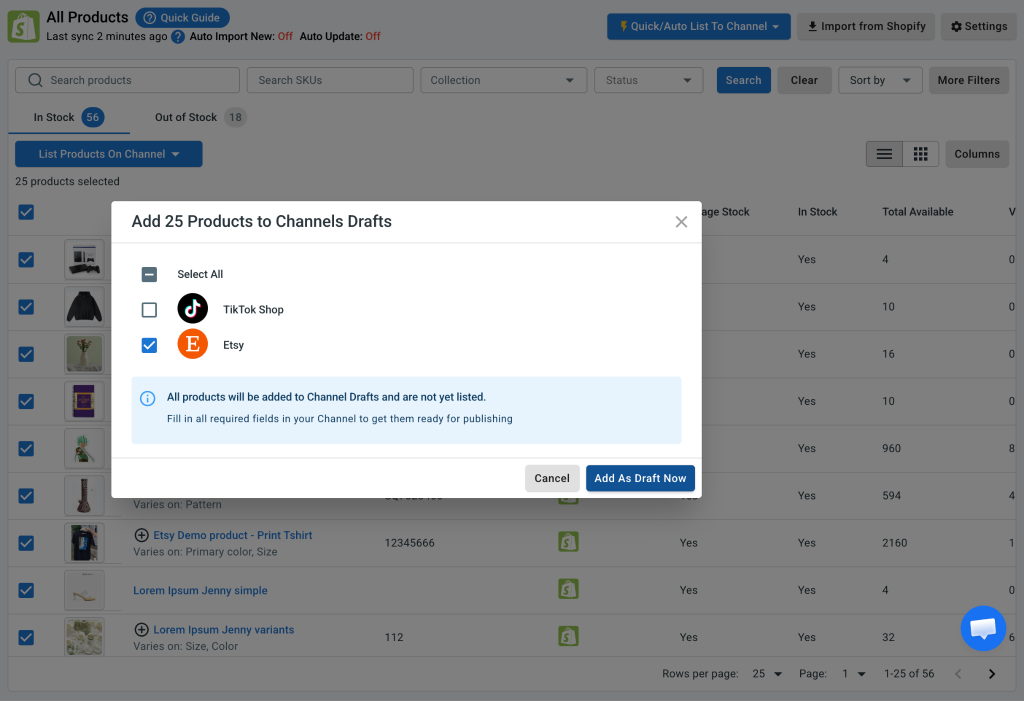
Listing products was also smooth. We used the bulk listing tool to push around 50 SKUs from Shopify to Etsy, and the process involved selecting products, choosing a target channel, filling in missing information, and hitting publish. The whole batch went through in one operation.
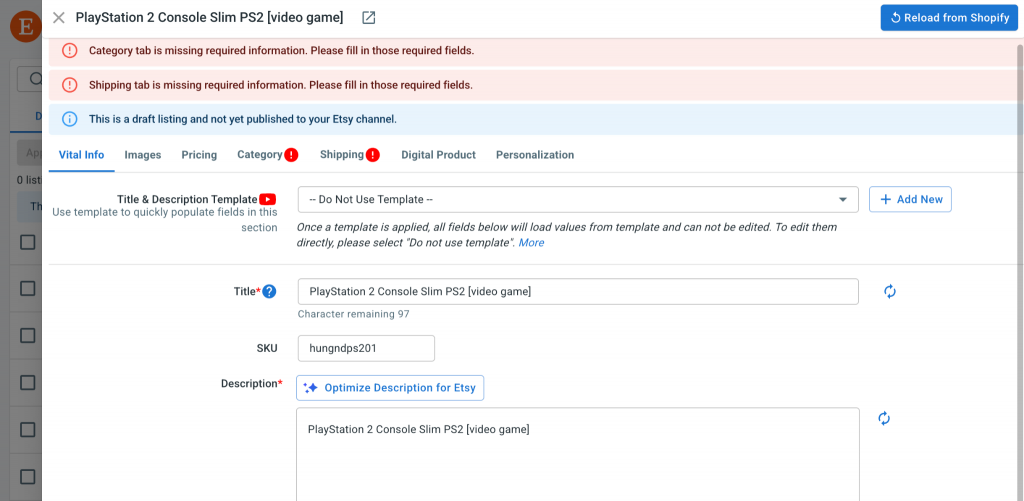
Additionally, when we needed to edit titles or prices for a specific channel, we could do it in-line without navigating to a different module.
CedCommerce
In LitCommerce vs CedCommerce comparison. CedCommerce is generally easy to use, especially for connecting platforms like Shopify, Etsy, and Amazon. However, this platform takes a different approach. Instead of one unified app, you install a separate app for each marketplace, one for Amazon, one for eBay, one for Etsy, and so on.
For a single-channel connection, the experience is genuinely good. We installed the CedCommerce Amazon Channel app first, and the setup wizard walked us through connecting our Amazon Seller Central account, mapping product categories, and configuring sync settings. The interface was clean, and the steps were logical.
Most users find the setup quick and the dashboard intuitive, with automated syncing and helpful listing templates that simplify multichannel management.
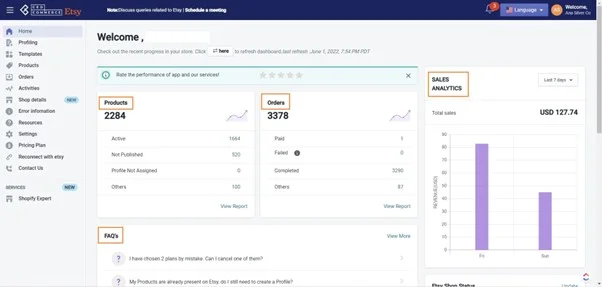
Where things got complicated was when we added more channels. After connecting to Amazon, we installed the Etsy app separately. This meant going through a second onboarding flow, learning a slightly different interface layout, and configuring sync settings again from scratch. The eBay app was a third round of the same process. Each individual app worked well on its own, but managing three separate dashboards
Since the platform often relies on separate integrations, the overall learning curve may feel steeper as your business grows beyond one or two marketplaces.
We noticed one practical problem during testing: there was no single screen where we could see our inventory across all three channels at once. To check whether a product was correctly listed on Amazon, Etsy, and eBay, we had to open each app individually. For a seller managing two marketplaces, this is manageable. For someone running five or six channels, it would become a daily time sink.
On the positive side, CedCommerce’s marketplace-specific depth impressed us. The platform offers a centralized dashboard for handling products, orders, and inventory across channels, reducing manual work. Attribute mapping and custom templates are useful for bulk editing and listing updates.
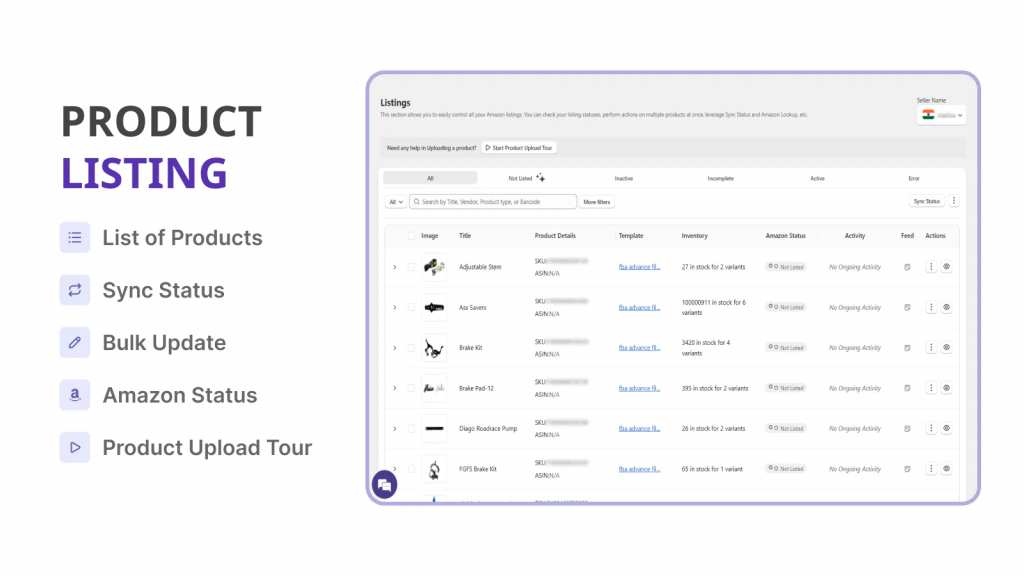
Overall, LitCommerce offers a clean, intuitive interface that’s easy for beginners to navigate, with guided setup and marketplace-friendly terminology. CedCommerce is user-friendly for basic setups but can feel complex for advanced configurations or technical users.
Verdict: Overall, LitCommerce is easier to use, while CedCommerce provides more flexibility at the cost of a steeper learning curve.
#3. Sync Features
Both LitCommerce and CedCommerce offer automatic syncing for product listings, inventory, and orders across your connected sales channels. This helps sellers maintain consistency across platforms, reduce manual errors, and avoid overselling. However, as with any third-party integration, real-time syncing depends not only on the tool but also on how quickly each marketplace processes updates.
LitCommerce
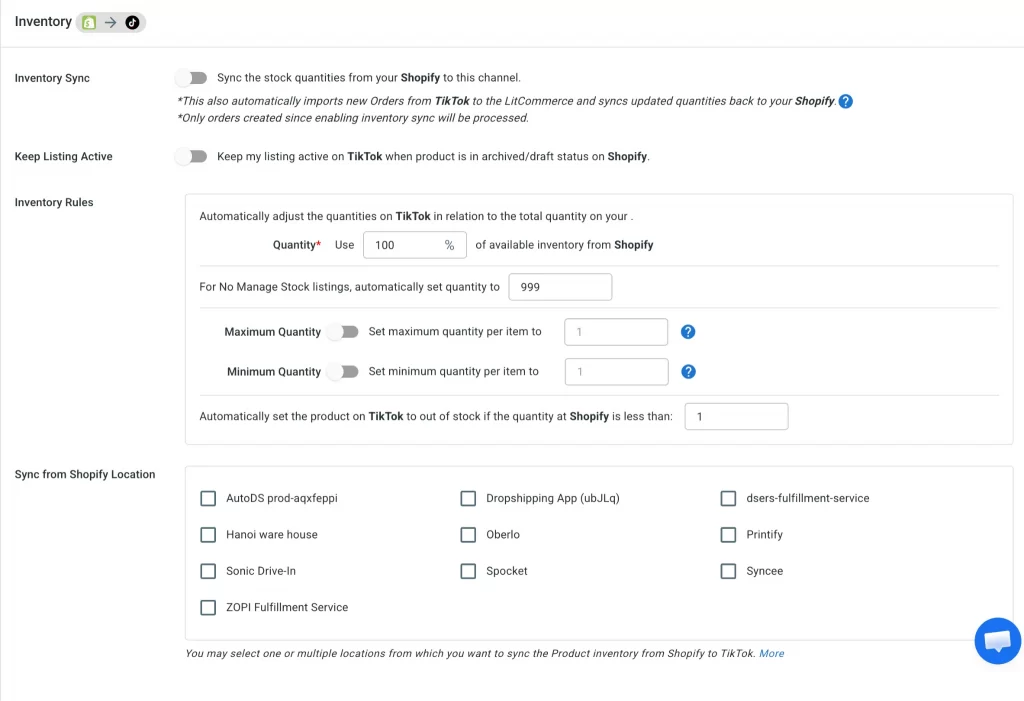
LitCommerce provides many near-real-time (15 min) sync features, including inventory sync, price sync, order sync, and product information sync, helping sellers keep every channel updated from one central dashboard. While not instant, this update cycle is frequent enough for most small to mid-sized sellers.
LitCommerce also offers stock rules, allowing you to set minimum and maximum stock thresholds per channel to prevent stockouts or overselling. This is especially helpful when selling the same product across multiple platforms.
CedCommerce
CedCommerce also supports near real-time sync, within 5 to 20 minutes, but the exact sync features depend on the specific CedCommerce app or integration you use, such as Shopify–Amazon, Shopify–Etsy, WooCommerce–Amazon, Walmart, eBay, etc.
For example, CedCommerce’s Amazon Channel app on Shopify lists inventory, orders, shipments, prices, products, variants, SKUs, barcode, tracking, and real-time sync features. Its Etsy integration mentions inventory, price, order, product, two-way, real-time, and scheduled sync.
Higher-tier plans like Growth and Growth Plus offer more frequent syncing (e.g., real-time or hourly), but the full sync frequency details are not always clearly listed for every marketplace. Some users may experience delays depending on their plan and marketplace APIs.
Furthermore, support quality varied across apps. The Amazon team was responsive and knowledgeable during our test.
Verdict: For predictable, straightforward syncing, LitCommerce is more transparent, while CedCommerce offers more flexibility at higher tiers.
#4. Listing management
Whether you are a small business owner or a large enterprise, scalability is a crucial factor in its growth and success. Luckily, both tools offer solutions that can help businesses of all sizes develop and expand. Depending on the size of your business, each multi-channel listing solution can support appropriate growth strategies for its clients.
LitCommerce
LitCommerce offers a clean and beginner-friendly listing editor that lets you edit product titles, descriptions, prices, images, and more—all from a centralized dashboard.
We tested all three listing workflows and they worked as described. We listed from our store to a marketplace, pushed products from one marketplace to another, and imported a batch from a CSV file. The file-to-marketplace import was genuinely useful when we had product data sitting in a spreadsheet rather than in a connected store. Each path led to the same editor, so we did not have to relearn the interface for each method.
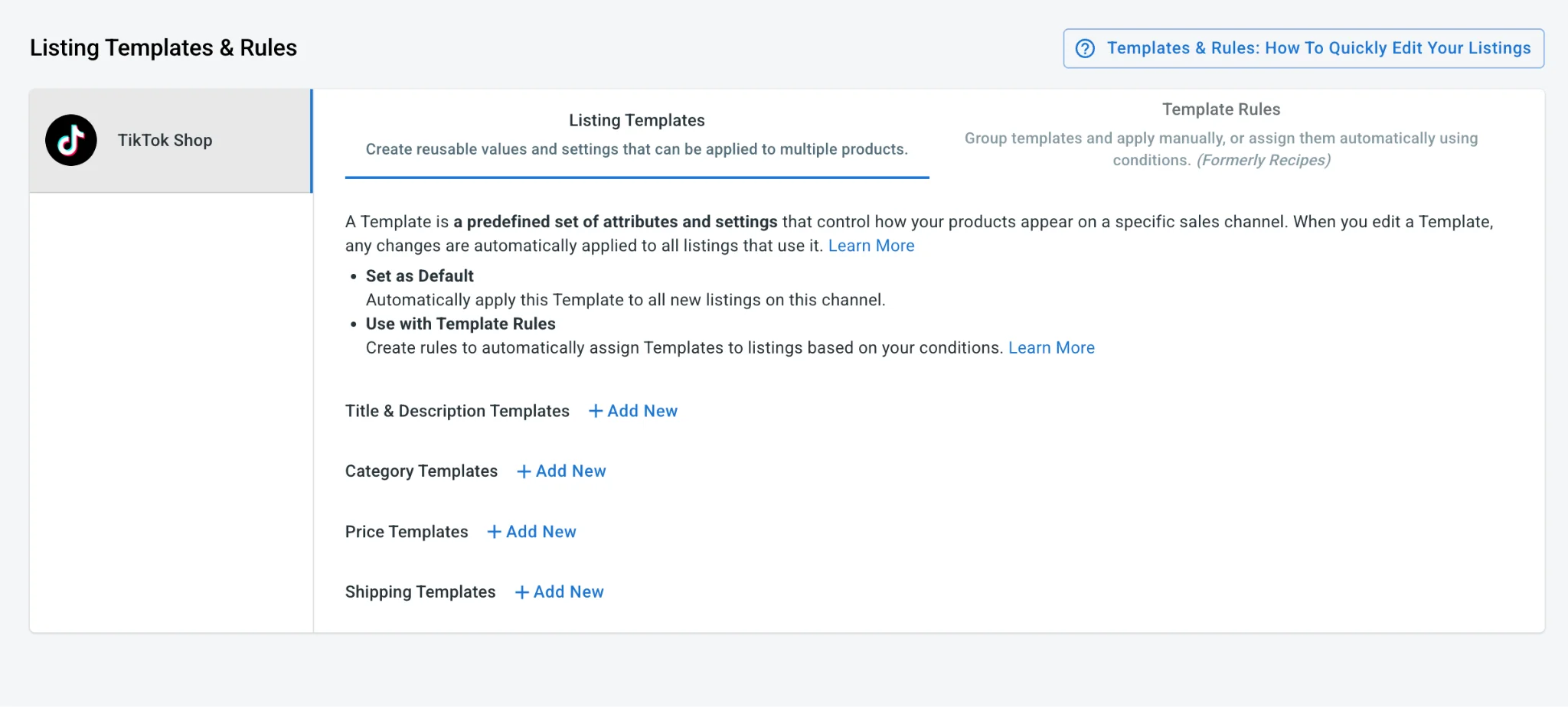
The two features that saved us the most time were QuickList and Template & Rules. QuickList let us prepare and publish listings quickly without configuring every field manually each time. Template & Rules was the bigger win for bulk work, we set a rule to automatically append a shipping note and apply a price markup for eBay, then applied it across roughly 50 products in one operation. nt
LitCommerce also supports category mapping, listing templates, and marketplace-specific settings. It’s especially useful for sellers who want to maintain consistency but still tailor listings to each platform’s standards.
CedCommerce
CedCommerce takes its usual modular approach to listing as well. You create and manage listings inside each marketplace’s dedicated app rather than from one shared editor. We tested the Amazon, Etsy, and eBay apps separately.
Within a single app, the listing experience is capable and detailed. In the Amazon app, we found granular control over item titles, Amazon SKU, barcode/GTIN Exemption, etc. The automated syncing kept inventory and order data updated without manual intervention once it was configured.
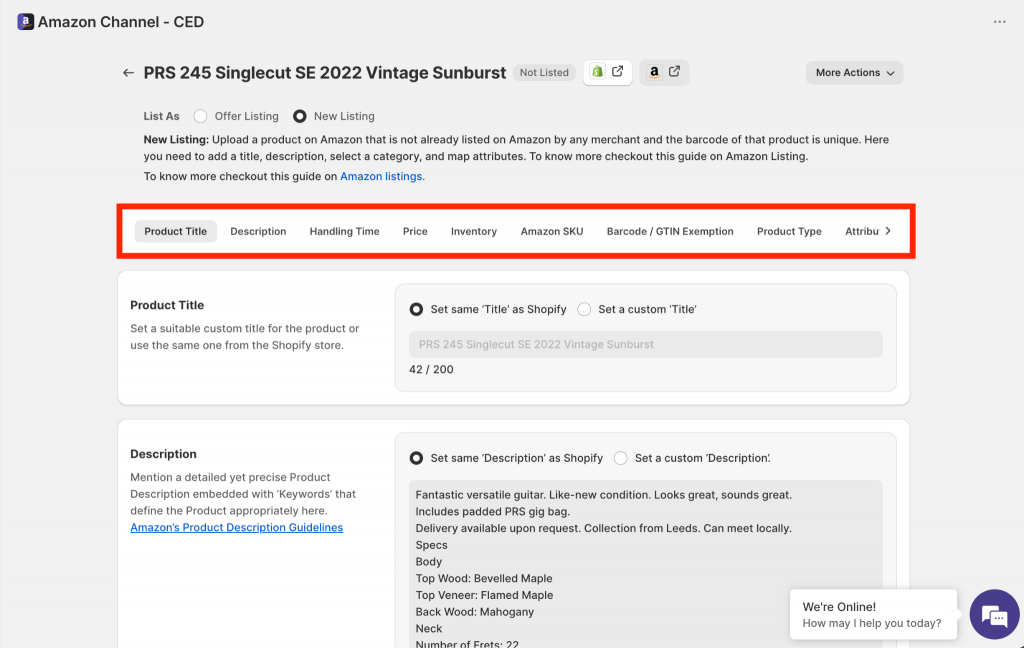
For instance, advanced features such as multilingual listings, metafield mapping, and real-time content sync are available only on higher-tier plans or on certain marketplaces like Etsy or Amazon.
CedCommerce supports multichannel selling, but its marketplace-specific app structure can create extra setup work when selling across Amazon, Etsy, and eBay. Sellers using separate CedCommerce apps may need to manage mapping and listing updates per channel, while CedCommerce’s newer UniCon solution is positioned as a more centralized alternative.
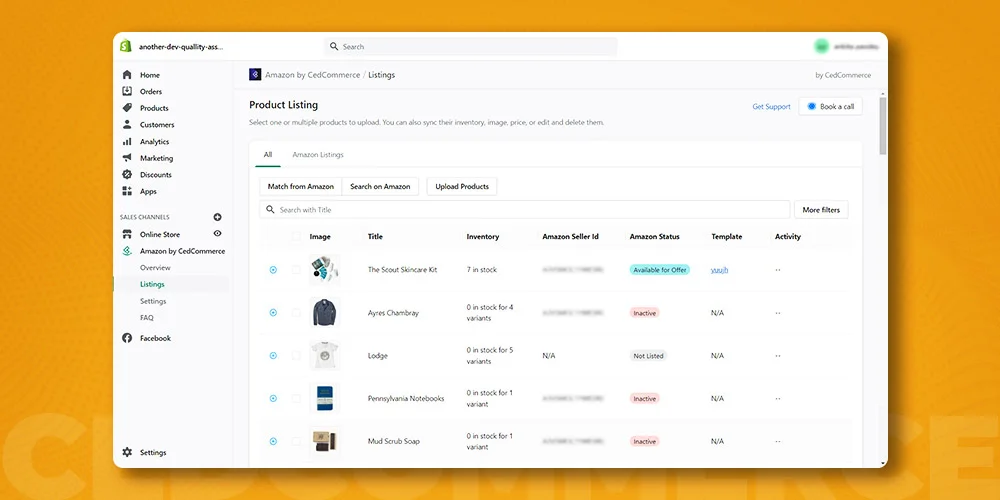
Verdict: For simplicity and ease, LitCommerce has the edge. While CedCommerce offers powerful listing customization and support for large catalogs, some features feel fragmented across modules or require separate setup steps, especially for first-time user.
List Products Faster Across Multiple Channels
Stop recreating listings one by one for every marketplace. With LitCommerce, you can bulk list products, apply templates and rules, and optimize listings for each channel from one centralized dashboard.
#5. Order management
Efficient order management is key to running a successful multichannel operation. Both LitCommerce and CedCommerce offer order syncing across connected marketplaces and ecommerce platforms, but they differ in how deeply they handle fulfillment workflows and shipping.
LitCommerce
LitCommerce allows you to sync orders from marketplaces like Etsy, eBay, Amazon, and more directly into your ecommerce platform (such as Shopify or WooCommerce).
From there, you can manage, fulfill, and update order statuses all in one place. Inventory levels are automatically adjusted based on fulfilled orders, helping you avoid overselling.
Even better, if you use LitCommerce as your main store, you can connect your existing shipping carriers, such as Ship Station, Shippo, etc, and keep marketplace order fulfillment more organized and efficient.
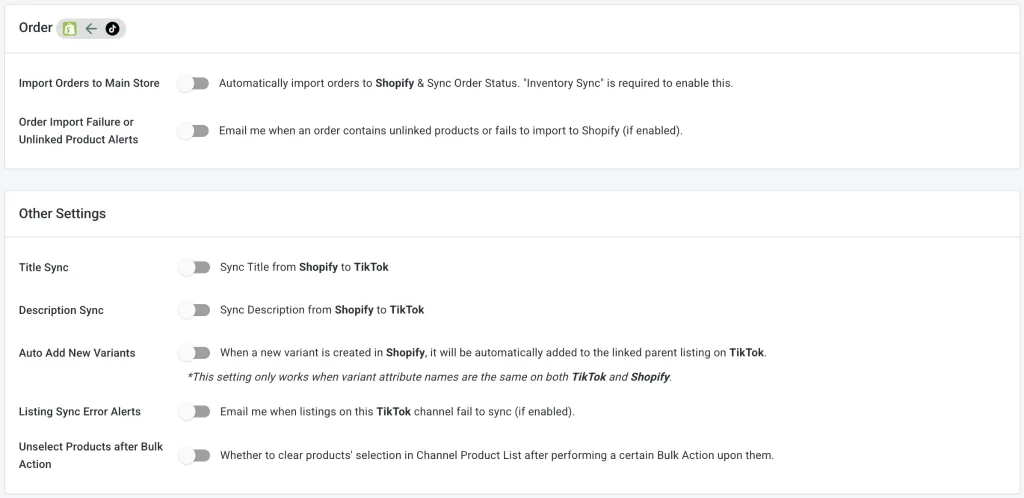
However, LitCommerce does not integrate directly with shipping carriers. This means you’ll need to use your ecommerce platform or a third-party shipping app to handle shipping labels, tracking numbers, and carrier selection. For most sellers, this setup works smoothly—especially if you already fulfill orders through your main store—but it’s something to consider if you’re looking for an all-in-one solution with built-in shipping tools.
CedCommerce
CedCommerce also offers centralized order syncing, but the depth of functionality depends on your integration and pricing tier. Lower plans include basic sync limits (e.g., 100–500 orders/month), while real-time syncing, order auto-acknowledgement, and advanced fulfillment workflows are often available only in higher-tier or enterprise packages.
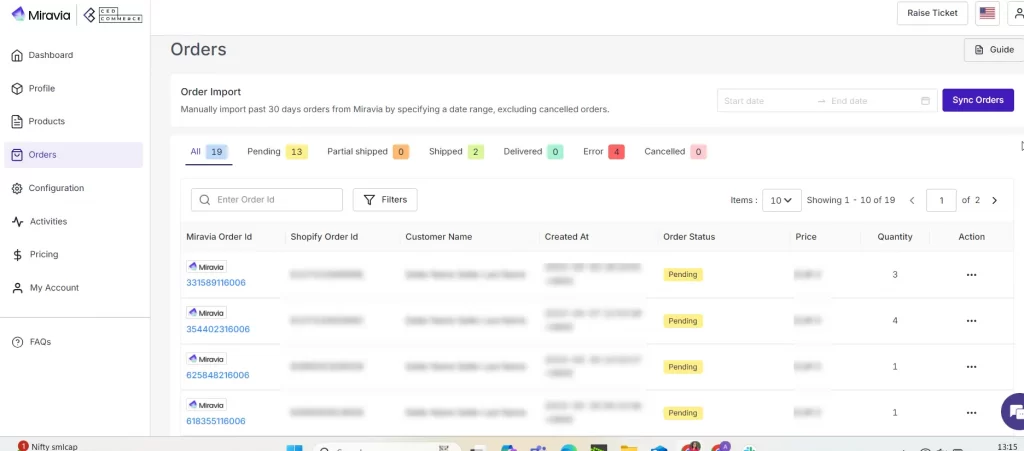
One advantage of CedCommerce is that it can integrate with some shipping solutions, depending on the platform. Features like bulk fulfillment, shipping updates, and custom rules per marketplace are supported—especially in advanced plans or when connecting to marketplaces like Amazon or Walmart.
Verdict: For basic order management, LitCommerce is simpler, and more centralize while CedCommerce is better suited for complex workflows and built-in shipping needs.
#6. Sales report
Both LitCommerce and CedCommerce provide valuable sales reporting features for multichannel sellers, but they differ in terms of depth, customization, and usability. While LitCommerce has recently improved its reporting for easier visualization, CedCommerce offers more advanced analytics geared toward larger operations.
LitCommerce
LitCommerce gives sellers a clearer built-in reporting view across their multichannel operations.
Its Help Center documents a Sales Report feature that shows synchronized sales data through charts, filters, and order-versus-sales comparisons. This supports LitCommerce’s positioning as a central management hub, not just a syncing tool.
You can now view channel-specific performance, product-level insights, and order summaries across selected timeframes. Reports can be filtered by marketplace, product type, or sales period, making them useful for multi-store analysis.
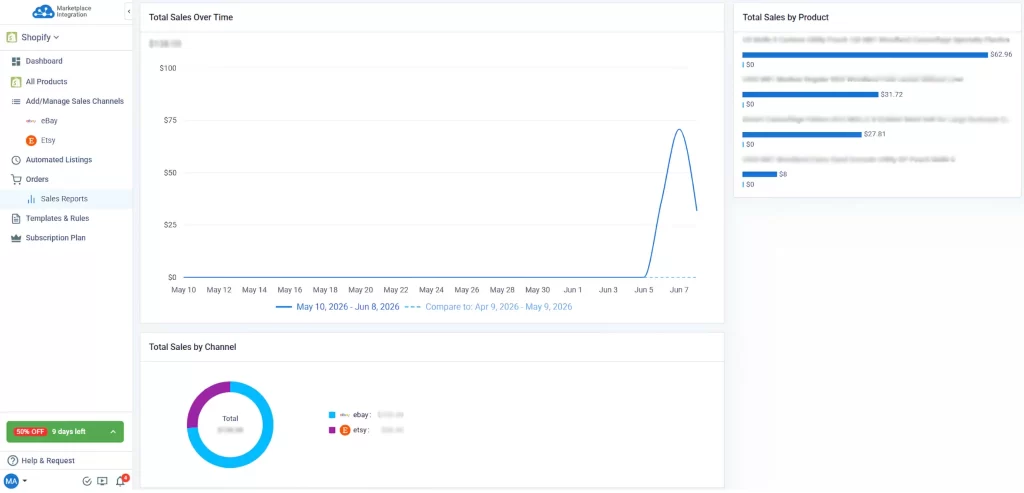
The reports are accessible via a centralized, easy-to-use dashboard, designed to offer actionable insights without overwhelming the user. CSV export and external feed integration are also supported, making it easy to pair LitCommerce with external tools for deeper reporting if needed.
CedCommerce
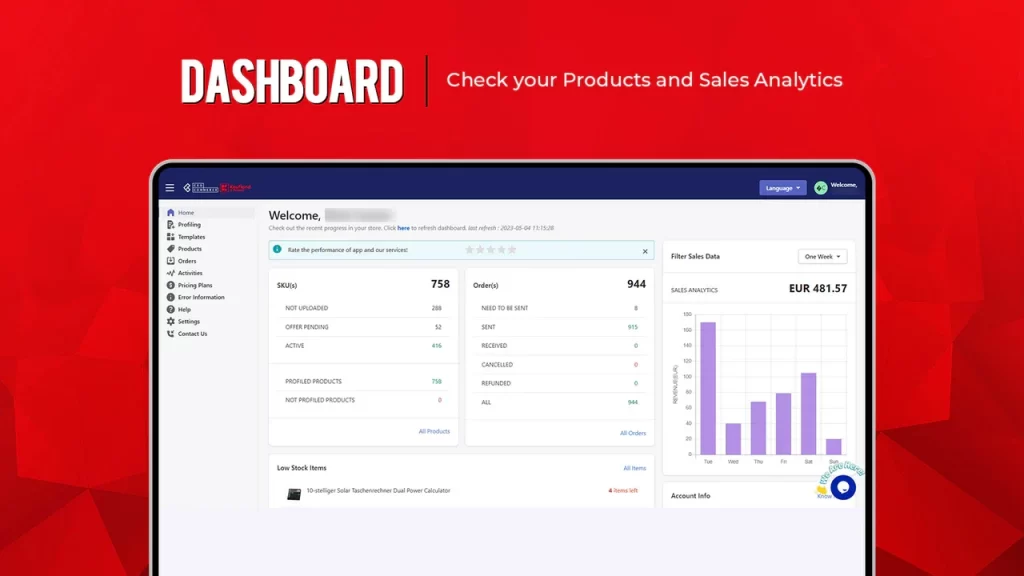
CedCommerce provides a real-time analytics dashboard with deeper data visibility across all connected sales channels. You can track revenue trends, order sync history, inventory performance, and top-performing products in a more detailed and customizable format.
Reports can be tailored with custom metrics, filters, and regional breakdowns, and they integrate well with automation tools and inventory workflows. CedCommerce also supports full data export, API access, and ERP/CRM integrations—making it a solid choice for sellers with complex analytics needs.
Verdict: For straightforward insights, LitCommerce is more user-friendly, while CedCommerce wins on analytics depth and flexibility.
#7. Scalability
Scalability is a key part of the LitCommerce vs CedCommerce discussion, especially for sellers planning long-term growth. While both platforms can support expansion, the way they help businesses scale will depend on your size, workflow, and multichannel strategy.
LitCommerce
LitCommerce scales better for sellers who want to add more marketplaces without having to rebuild their workflow. It supports more listings, 10+ major platforms, file integration, automation features, and marketplace-specific listing workflows inside one product.
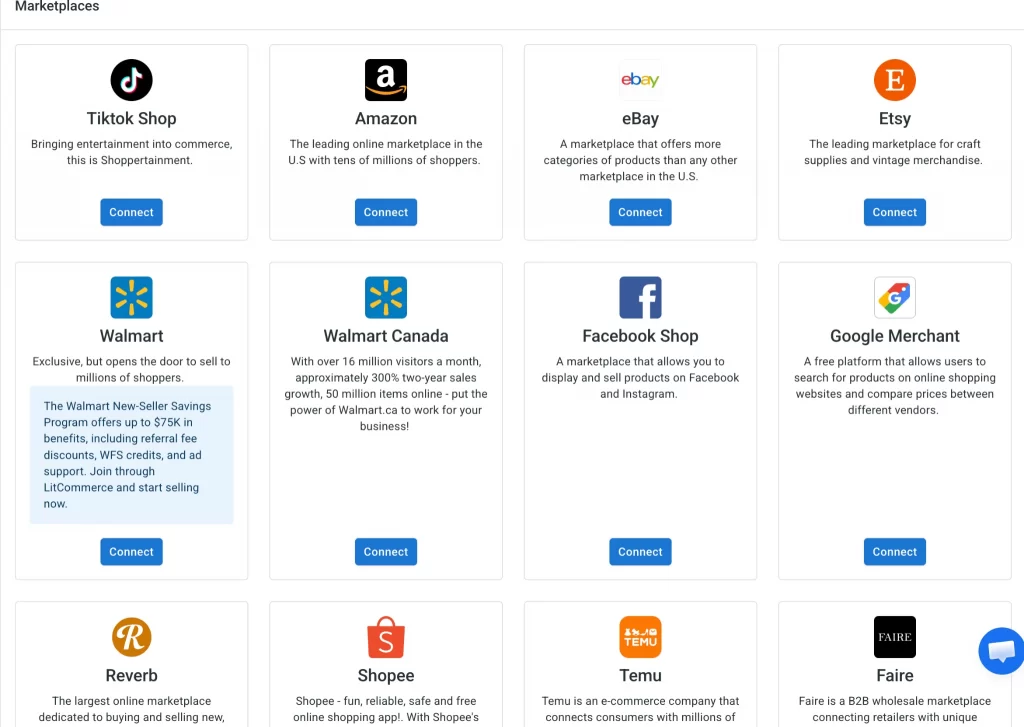
With LitCommerce, businesses can easily expand their sales to new channels and markets without having to worry about the operational complexities of managing multiple channels separately. The platform’s centralized dashboard provides sellers with real-time data on inventory levels, orders, and customer information across all their channels, enabling them to make informed decisions and manage their business efficiently.
In addition, this multichannel selling tool offers features such as bulk product listing and order management, which allow sellers to easily scale their business and save time. By automating routine tasks and providing a seamless user experience, LitCommerce can help businesses to scale up their multichannel sales while reducing the risk of errors and operational inefficiencies.
CedCommerce
CedCommerce scales well for sellers who want more connector options as they grow. Its ecosystem covers many marketplace and platform combinations, giving sellers more flexibility when they need marketplace-specific apps and connector-led expansion paths.
This is helpful when a business has unusual channel requirements or prefers selecting integrations one by one. In that sense, CedCommerce can scale by breadth.
The trade-off is that operational scaling may feel less smooth if the seller wants a repeated workflow across channels. More marketplaces can also mean more integration logic to manage.
Verdict: LitCommerce is ideal for small to mid-sized businesses looking to scale quickly across 10+ sales channels with minimal setup. In contrast, CedCommerce is better suited for high-volume sellers or businesses needing deep integrations with platforms like Magento or Shopify.
#9. Help and support
Both LitCommerce and CedCommerce provide responsive, multi-channel customer support with solid reputations among users.
LitCommerce
LitCommerce offers a wide range of support options, including 24/7 live chat (Monday–Saturday), email, ticketing, phone or video calls, and step-by-step onboarding materials. Live chat support is available during nearly all hours of the week—including holidays—and is known for its fast response time and helpful walkthroughs.
Support hours (GMT+7):
- Monday: 04:00 – 24:00
- Tuesday to Saturday: Available all day except from 02:00 – 04:00
- Sunday: 08:00 – 24:00
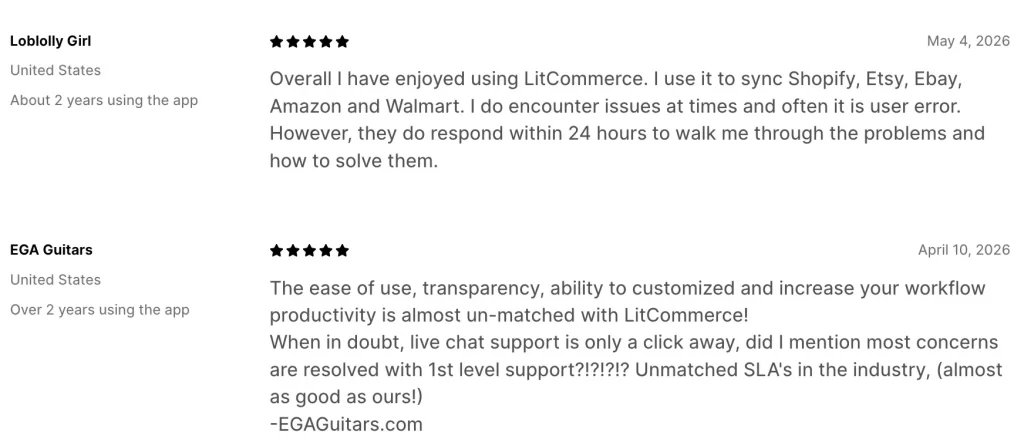
Customers regularly praise LitCommerce for being quick, professional, and proactive—especially during the setup phase or when resolving sync-related issues.
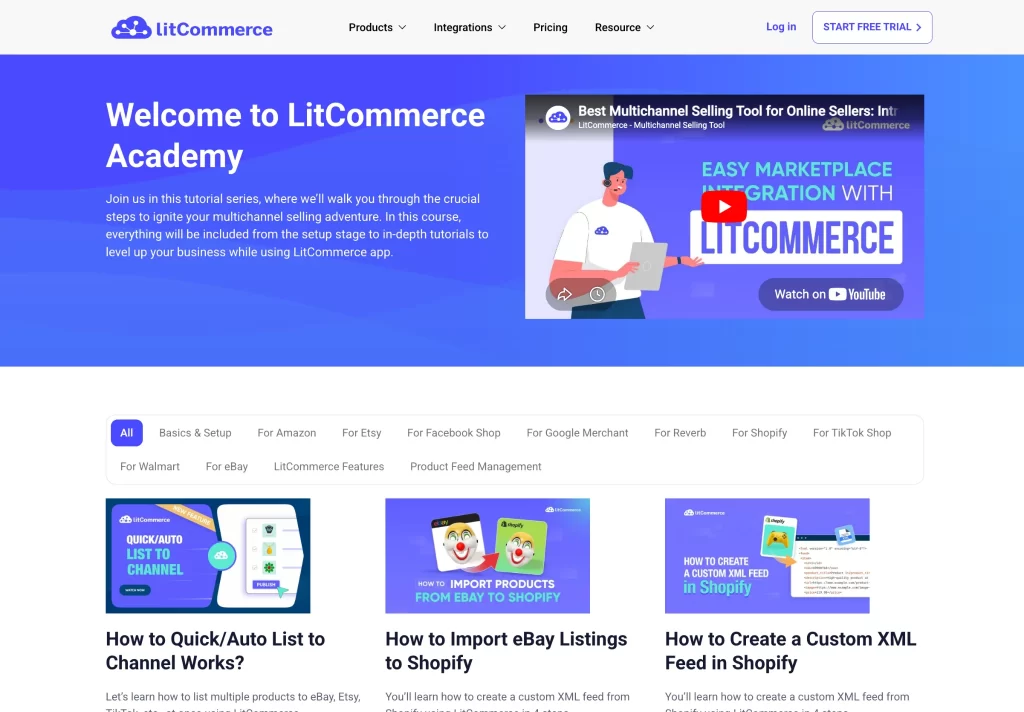
In addition, the LitCommerce Academy, video tutorials, and rich documentation make self-service support easily accessible.
CedCommerce
CedCommerce also provides a full suite of support channels, including live chat, email, phone support, and ticket-based help. For paid extensions, 24/7 support is available for the first three months, with extended support available for an additional fee. Where CedCommerce truly shines is in technical support for complex integrations, such as multi-channel plugins or tailored marketplace solutions.
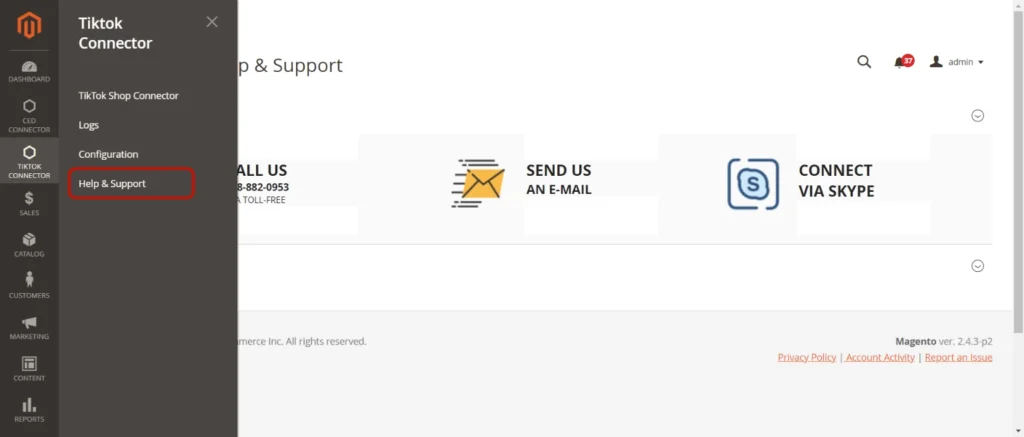
The difference is that the support journey may feel less unified when the business operates across multiple marketplaces. Sellers may need to move between connector-specific resources rather than remain within a single learning path.
→ Verdict: LitCommerce stands out with broader live chat availability, fast response times, and helpful onboarding—ideal for sellers who need quick, accessible support. In contrast, CedCommerce excels in technical support for complex setups, but full 24/7 access often requires a paid extension or higher-tier plan.
LitCommerce vs CedCommerce: Final Comparison
After comparing LitCommerce vs CedCommerce across pricing, ease of use, sync features, listing management, and more, the better choice depends on how your business sells across channels.
Case 1: You want one centralized multichannel dashboard
LitCommerce is the stronger fit if you want to manage listings, inventory, pricing, and orders from one place. Instead of moving between separate marketplace apps, you can connect your store and sales channels in one dashboard, then handle daily selling tasks with a more unified workflow.
This is especially useful for sellers who manage the same catalog across eBay, Etsy, Amazon, Walmart, TikTok Shop, and other marketplaces. With the LitCommerce multichannel selling tool, you can bulk list products, apply templates and rules, sync key product data, and manage orders without adding unnecessary complexity
Case 2: Manual listing work is slowing you down
If you spend too much time creating, editing, or updating listings across marketplaces, LitCommerce is the stronger choice. Its bulk listing features, QuickList, Template & Rules, and marketplace-specific workflows help you prepare listings faster while still adjusting product data for each channel.
This makes LitCommerce useful for sellers who want to scale without rewriting titles, descriptions, prices, attributes, or category details manually for every marketplace. You can also review the LitCommerce pricing plans to see which plan matches your listing volume, channel count, and sync needs.
Case 3: You need deep connector customization
If your business needs highly specific marketplace logic, custom integration setups, or advanced connector-level control, CedCommerce may be the better option. Its marketplace-specific app structure can be useful for sellers who need detailed configurations for one particular channel, such as Amazon, Etsy, Walmart, or eBay.
However, this flexibility can also add complexity as you expand across multiple marketplaces. Sellers may need to manage separate apps, setup flows, and configuration rules for each channel. CedCommerce is best suited for businesses that value connector depth more than a simplified all-in-one workflow.
Ready to pick LitCommerce? It starts with a free trial.
7 days, all features, connect your store, push your first listing to a marketplace, and see the dashboard in action before spending anything.
LitCommerce vs CedCommerce: FAQs
- Why is multichannel selling important?
- Reach a wider audience
- Increase sales
- Diversify revenue streams
- Improve customer experiences
- Enhance competitive advantage
- Are there any softwares for multichannel selling?
Besides LitCommerce and CedCommerce, we also introduce other platforms, including:
- ChannelAdvisor
- Sellbrite
- Skubana
- Codisto
- Ecwid
- Sellberry
- How do these integration platforms work?
Multichannel integration platforms work by connecting various sales channels and eCommerce platforms to a central hub or dashboard, which allows businesses to manage their inventory, orders, and listings across multiple channels from one place.
- How do I choose the right integration for my business?
Choosing the right multichannel integration platform for your business can be a significant decision, as it can impact your sales, operations, and overall success. Here are some factors to consider when choosing the right integration platform:
- Channels: Consider which sales channels you want to sell on, and make sure that the integration platform supports those channels. Also, check how many channels you can integrate with each plan.
- Features: Consider what features are important to your business, such as listing management, order management, inventory management, and reporting.
- Pricing: Based on the budget that your business is ready to pay for the software enabler, choose the best options that suit your company at that moment and in the long term.
- Ease of use: Last but not least, the way the administrators use the app also plays a critical vital when choosing a multi-channel eCommerce solution.
Final Thoughts
When it comes to LitCommerce vs CedCommerce, the right choice depends on how you want to grow your business. If you need a simpler, more seller-friendly solution to manage listings, sync inventory, and handle orders across multiple marketplaces, LitCommerce is the better fit. It gives sellers the right balance of ease of use, marketplace-specific listing features, and scalable multichannel workflows.
CedCommerce can still be a good option for businesses that need deeper customization or more advanced setup flexibility. But for most small to mid-sized sellers, LitCommerce offers a more practical way to expand across channels without adding unnecessary complexity.
If you want to explore more tips, comparisons, and marketplace-selling guides, check out our Blog. And if you need help choosing the right multichannel setup for your business, feel free to Contact us for tailored support.