



Multichannel selling is the engine of modern eCommerce growth, but your success depends on having the right tools to manage that complexity. While CedCommerce is a familiar name, many growing sellers eventually hit a wall, whether due to fragmented workflows, escalating costs, or a lack of unified dashboard control.
If you’re looking for a better way to scale, you aren’t alone. In this guide, we’ve analyzed the top 11 CedCommerce alternatives to help you find a solution that prioritizes efficiency, transparency, and seamless integration for your business needs in 2024.
Key Takeaways
If you are wondering, “What are alternatives to CedCommerce?” that truly help you scale, we’ve broken them down below.
Why Should You Need CedCommerce Alternatives for Multichannel Selling
Seeking CedCommerce alternatives for multichannel selling is necessary for many businesses due to limitations related to integration complexity, scalability, pricing structure, platform support, and customer service. Companies often outgrow CedCommerce’s model or find themselves looking for alternatives to CedCommerce software that better impact their efficiency, cost management, and growth potential in diverse marketplaces.

Common drawbacks of CedCommerce
- CedCommerce requires separate marketplace-specific apps, meaning each channel (Amazon, eBay, TikTok, etc.) must be managed individually, resulting in a fragmented workflow compared to platforms that offer unified dashboard management.
- Costs escalate as sellers expand to new channels because each integration is billed separately, making budgeting harder for growing businesses.
- Integration setup can take significantly more time, since every new marketplace often demands customized configuration and individual onboarding.
- According to the Trustpilot review platform, some users report issues with slow support response times, bugs, and non-transparent pricing, posing risks to urgent business operations.
Benefits of considering alternatives
- Modern alternatives, like LitCommerce, Sellbrite, and EasyChannel, offer unified dashboards for managing multiple marketplaces, which streamlines operations and reduces busywork.
- Alternatives often provide more transparent pricing models that scale better as your business expands, with some offering all-in-one plans for multiple channels.
- Many come with integrations for trending platforms (such as TikTok Shop and Facebook Shops), improved AI features, and better inventory and order management capabilities.
- Enhanced customer support and comprehensive onboarding resources ensure smooth migration and everyday operations without hidden fees or delays.
When to switch from CedCommerce
- Your business is expanding to multiple platforms and needs a consolidated workflow.
- You want predictable and lower costs as your marketplace presence grows.
- You’ve experienced slow customer support, technical bugs, or integration difficulties.
- You need better features, automation, or support with platforms that CedCommerce lacks.
Ready for a more seamless way to sell?
Discover why LitCommerce is one of the top CedCommerce alternatives for centralizing your listings, inventory, and order management into one unified dashboard
How We Evaluate These CedCommerce Alternatives
To evaluate these CedCommerce alternatives, we looked at the factors that matter most in real multichannel selling, not just feature checklists.
First, we reviewed each platform’s core multichannel workflow: how it handles product listing, inventory sync, order management, and catalog control across channels. We paid close attention to whether the tool feels centralized and easy to manage day-to-day, or whether sellers still need to jump between systems for routine work.
Second, we considered channel and platform fit. Some tools are best for sellers who use Shopify as the single source of truth. Others are stronger for brands selling across marketplaces, while a few are clearly built for resellers or enterprise operations.
Third, we checked pricing logic and scaling fit. We did not rank tools only by starting price, because the cheapest option is not always the best long-term fit. Instead, we looked at how pricing scales with channels, orders, or feature depth, and whether the product feels reasonable for the type of seller it targets.
Finally, we looked at operational depth. For SMB sellers, that often means speed, usability, and bulk listing. For enterprise teams, it means catalog governance, automation, warehouse workflows, reporting, and marketplace complexity. For resellers, it means crosslisting speed, sale detection, and inventory organization. In short, we judged each tool by how well it solves the real problems of the audience it serves.
You can also check out our list of the best multichannel listing tools to see how they stack up.
Best CedCommerce Alternatives for SMBs and Solo Entrepreneurs
To find your best alternative to CedCommerce, I will compare this tool with others based on crucial factors, including ratings, fees, pros & cons, and especially features, which should help you better solve the daunting tasks of multichannel selling.
Let’s get started with the first one.
LitCommerce
LitCommerce is a top-rated CedCommerce alternative designed for sellers who want to manage multiple sales channels from one centralized dashboard. Instead of using separate tools for different marketplaces, LitCommerce helps sellers list products, sync inventory, and manage orders across major platforms like Amazon, eBay, Etsy, Walmart, TikTok Shop, Shopify, WooCommerce, Wix, and more.
As a competitor of CedCommerce, LitCommerce stands out for its simple setup, beginner-friendly interface, and flexible ways to manage catalogs. You can use your existing store, such as Shopify, WooCommerce, Wix, or BigCommerce, as the main source of truth. They can also use LitCommerce as the central hub if they mainly sell across marketplaces.
For the detailed comparison, check out this LitCommerce vs CedCommerce guide.
- Rating on Trustpilot: 4.9/5
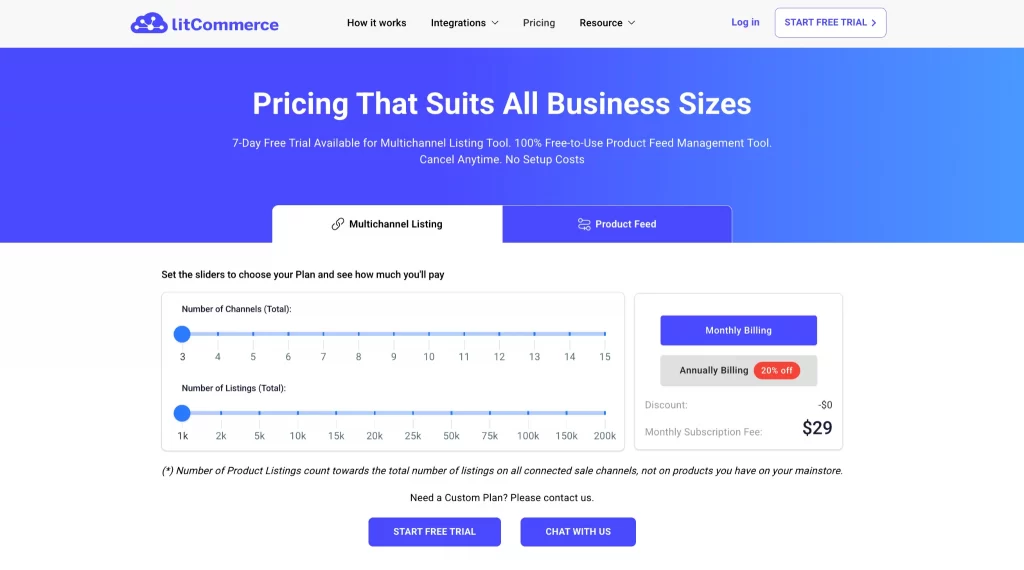
- Pricing: Customized pricing, starting from $29/month (A 7-day free trial is available and 20% off on the annual plan)
Key features
Centralized multichannel dashboard
The first thing I noticed is that LitCommerce keeps listing, inventory, pricing, and order management in one place. From the dashboard, you can view connected channels, manage product listings, and control sync settings without opening multiple tools.
This is a clear advantage for sellers comparing LitCommerce with CedCommerce. Instead of handling different marketplace workflows across separate apps, LitCommerce offers channel-native depth, without the separate apps, providing a more connected workspace for daily multichannel operations.
Flexible ways to import listings
One thing that I’ve noticed about LitCommerce is the import workflow. You can bring product data into LitCommerce from your store, marketplace listings, or product files, depending on how your catalog is currently managed. There are three main ways to set up your catalog:
- Use your eCommerce store as the main catalog. If you already sell on Shopify, WooCommerce, Wix, BigCommerce, or Squarespace, you can import your products into LitCommerce and publish them to other marketplaces from there.
- Upload product data from a file. Sellers can also import products using CSV, Excel, or Google Sheets. This works well when you do not have a webstore yet, or when your catalog comes from suppliers, or wholesale product lists.
- Use LitCommerce as the central hub. If you already have active listings on eBay, Etsy, Amazon, or another marketplace, you can pull those listings into LitCommerce and use them to expand across more channels.
Trending channels support
LitCommerce supports 10+ popular selling channels, including Amazon, eBay, Etsy, Walmart, TikTok Shop, Shopify, WooCommerce, BigCommerce, Wix, Facebook Shops, and Google Shopping.
During setup, this makes expansion feel more flexible. You can start with one main store, then add marketplaces as your business grows, or cross-list products across marketplaces to reach more buyers without recreating listings from scratch.
This is helpful for sellers who want to test trending channels like TikTok Shop, expand from marketplaces to their own website, or manage multiple sales channels from one place.
As for the features, LitCommerce simplifies your multichannel selling process from listing to inventory and order synchronization.
Bulk listing and editing
LitCommerce’s bulk listing feature is one of the most useful parts of the tool. Instead of creating listings one by one, you can select products from your main catalog and use Quick/Auto List to Channel to publish them to marketplaces like Amazon, eBay, Etsy, Walmart, or TikTok Shop.
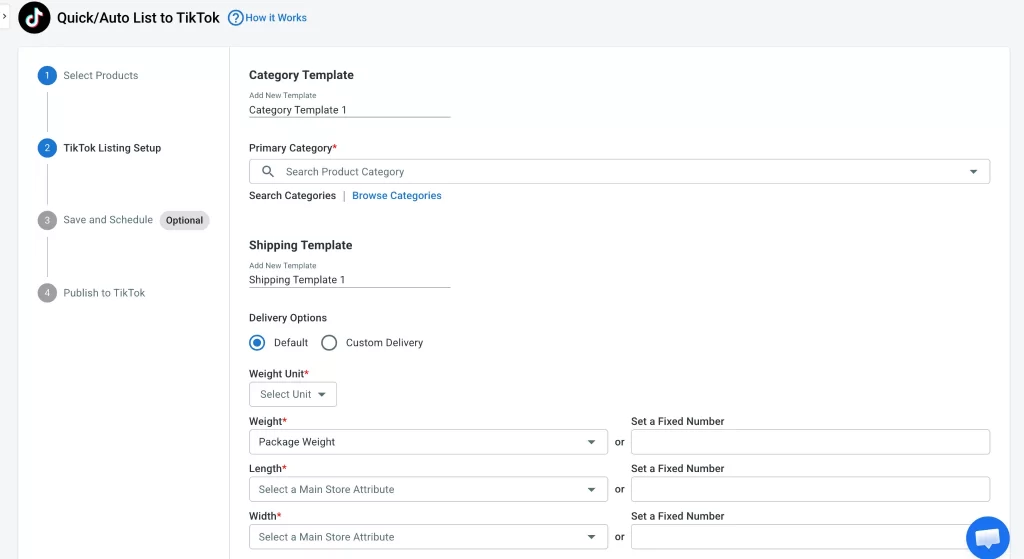
What I found helpful is that LitCommerce lets you prepare listings before publishing. You can review product details, adjust titles, descriptions, images, prices, categories, and other marketplace-specific fields so each listing fits the channel’s requirements.
For faster setup, LitCommerce also provides Templates and Rules. Templates help you apply fixed listing settings, such as shipping, category, or return information, to multiple products at once. Rules let you automatically adjust product data, such as changing prices, modifying titles, or controlling inventory display, based on your selling strategy.
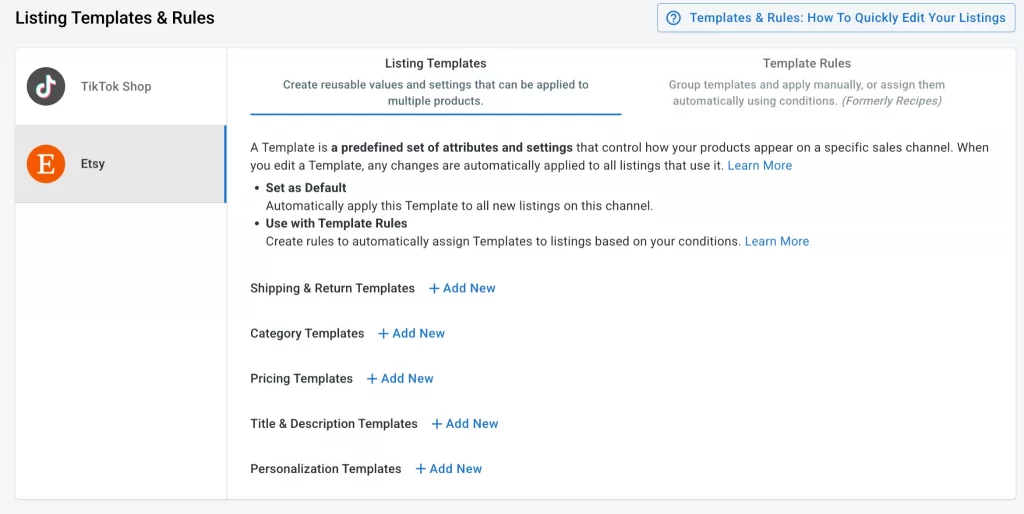
This makes bulk listing easier to manage, especially if you sell many products or list across several marketplaces. You can create listings faster, keep product information consistent, and reduce repetitive manual edits before pushing products live.
15-minute inventory and order sync circle
Another feature of LitCommerce that makes your multichannel eCommerce management easier is near-real-time inventory and order syncing. Synchronizing inventory across all your sales channels can help you avoid both overselling and stockouts. Regarding order sync, all orders from different channels can be pulled into your web store, centralizing them in a single place.
To sum up, compared to CedCommerce, LitCommerce is a more powerful option when managing all your sales channels.
Pros
- Bulk-list products from one channel to another without manually rebuilding listings.
- Offers flexible import options from an online store, marketplace catalog, or product file.
- Provides templates and rules to adjust titles, prices, inventory, and product details faster.
- Smooth syncs inventory, price, and orders in near real time
- Allows sellers to manage multiple marketplaces from one central dashboard.
- Supports marketplace-specific listing workflows, so sellers can meet different channel requirements more easily.
- Offers AI-powered listing support to help generate or optimize product content faster.
Cons
- It may not be the best fit for enterprise teams that need deep custom workflows or highly technical integrations.
- No paid advertising or SEO feature for listing enhancement and optimization.
Best for small to mid-sized sellers, growing online stores, and multichannel businesses that want an easier way to expand across marketplaces, without managing separate apps for every channel.
Stuck managing CedCommerce’s separate marketplace apps?
LitCommerce helps connect Amazon, eBay, Walmart, TikTok Shop, and 10+ trending channels into one dashboard, with bulk listing, templates, and near real-time sync built in.
Sellbrite
Sellbrite is another solid CedCommerce alternative for sellers who want a straightforward way to list products and manage orders across a handful of major marketplaces.
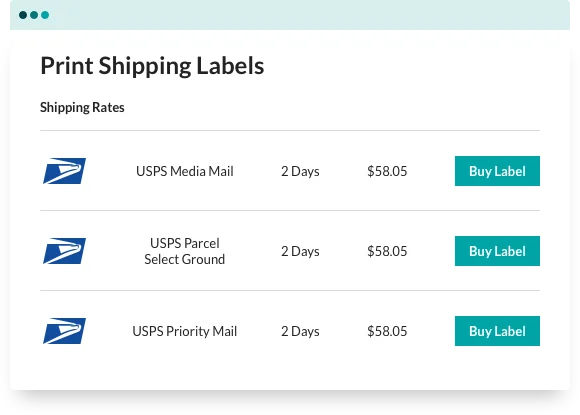
Now part of GoDaddy, one of the standout features of Sellbrite compared to CedCommerce is shipping orders. With this tool, you can easily print shipping labels using the best-discounted rates from USPS. After you’ve shipped an order, Sellbrite will automatically notify the sales channel and give them the tracking number for the shipment.
However, this CedCommerce alternative now supports only 7 marketplaces (Amazon, eBay, Etsy, Walmart, Google, Sears, and NewEgg), and 4 shopping carts (Shopify, BigCommerce, WooCommerce, Wix). So if you are using other shopping cart platforms like Wix and Squarespace, or you want to sell on social media, Sellbrite is probably not for you.
- Rating on Trustpilot: 4.4/5 (only 11 reviews)
- Rating on Shopify: 4.0/5 (120 reviews)
- Pricing: From $29 to $179 per month based on the number of orders, free plan for up to 30 orders/month
Key features
Clean multichannel listing management
The first thing I noticed about Sellbrite is how straightforward the listing workflow feels. You can create and manage listings across 7 marketplaces, like Amazon, eBay, Walmart, Etsy, and 4 eCommerce platforms from one place, instead of updating each channel separately.
This tool also offers the bulk listing feature allow you to create and publish products across many channels, then push updates to dozens of listings at once instead of editing each marketplace separately. For a catalog of any real size, this is where the time savings show up.
Useful order and shipping workflow
Sellbrite also supports order fulfillment from the same workspace. Sellers can process orders, print shipping labels, and route orders to Fulfillment by Amazon when needed.
This makes it helpful for sellers who want basic listing, inventory, and shipping tasks handled in one place.
Print shipping labels from USPS, UPS, and FedEx
On the CedCommerce alternatives list, Sellbrite keeps going into fulfillment. It prints USPS, UPS, and FedEx labels directly inside the platform, and once an order ships automatically alerts the sales channel where the order was placed and provides the tracking number for the shipment. I found this genuinely useful; it’s one less tab to open on every order.
Smart order routing for multi-warehouse sellers
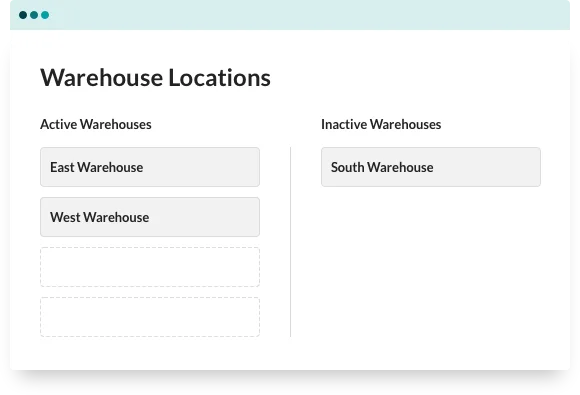
If you fulfill from more than one location, Sellbrite’s order routing earns its keep. You set rules and it directs each order to the channel or warehouse with available stock, which cuts down on the manual decision-making that creeps in as order volume grows. It’s a feature most small tools skip entirely.
Pros
- Backed by GoDaddy, which adds platform stability
- Simple, order-volume-based pricing that’s easy to predict
- Strong shipping/label workflow built directly into the platform
- The Forever Free plan is available for very low order volumes
Cons
- Limited to 7 marketplaces and 4 shopping carts (no Wix, Squarespace, or TikTok Shop support)
- No native social commerce integration
- Higher-volume plans get pricey compared to flatter-rate competitors
Best for those who value Sellbrite’s shipping workflow more than broad channel reach.
For a deeper side-by-side, see our LitCommerce vs Sellbrite comparison.
EasyChannel
EasyChannel is a suitable tool on the CedCommerce alternatives list for sellers who want to integrate marketplace listings, social commerce, and shipping management into one platform. Its positioning focuses on simple multichannel listing plus robust AI-powered support for product data and listing optimization.
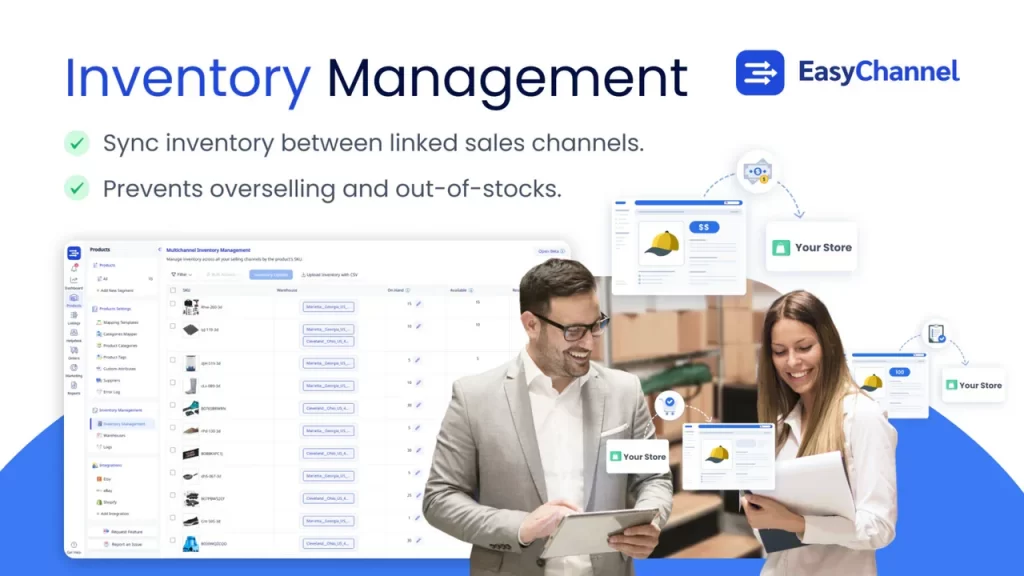
This makes EasyChannel one of the suitable CedCommerce alternatives for sellers who prefer a centralized platform instead of managing separate marketplace-specific apps.
- Rating on Trustpilot: 4.0/5
- Pricing: Starts at $49/month (1,500 listings) with tiered plans (Business $99/mo, Professional $199/mo, and Enterprise Custom).
Key features
Centralizing marketplace & social selling
EasyChannel supports 4 major marketplaces (Amazon, Walmart, Etsy, and eBay), 3 shopping cart platforms (Shopify, Wix, WooCommerce), and 3 social selling platforms (Facebook, Instagram, and TikTok).
Shipping management
Beyond just listing products, this tool handles the heavy lifting of logistics. It integrates with over 120 global shipping carriers. When I used it for order management, it saved me the headache of using third-party shipping software, allowing me to handle fulfillment directly from the system.
Product listing automation
Like many CedCommerce alternatives, it offers bulk editing tools that help me to update product attributes, categories, and tags across every connected channel simultaneously. It saved me hours of manual data entry, especially when I needed to push price changes or category updates to multiple channels at once.
AI-Powered listing & image tools
The platform features AI-powered capabilities to automatically generate product titles and descriptions, as well as remove image backgrounds, which significantly speed up listing creation.
Inventory and pricing sync
When evaluating CedCommerce alternatives, inventory and pricing synchronization is an important feature. EasyChannel continuously syncs stock levels and prices across connected channels, helping reduce overselling and manual updates.
Pros
- Built-in shipping integrations with 120+ carriers.
- Useful AI tools for listing creation and image editing.
- Strong support for both social selling and major marketplaces.
Cons
- Pricing is relatively high, starting at $49/month.
- The interface may be more complex than necessary for very small sellers.
Best for sellers who are tired of juggling separate subscriptions for marketplace management and logistics software, and who want a unified platform that handles the entire fulfillment process alongside your marketplace expansion.
Shopify Marketplace Connect

Next on our list of CedCommerce alternatives eCommerce platform is Codisto. Similar to CedCommerce, the app was previously known as Codisto before Shopify acquired and rebranded it in 2023. Codisto offers a range of pair integration packages that sync your web store with a marketplace, such as Shopify, eBay, or Shopify Etsy.
The key difference from CedCommerce is scope, not just ownership. Marketplace Connect supports only 4 marketplaces, such as Amazon, Walmart (US only), eBay, and Target Plus, and it runs exclusively inside Shopify. If you sell on WooCommerce, BigCommerce, Wix, or Squarespace, it isn’t an option at all, and Shopify treats your store as the single source of truth, so sync only flows one way.
- Rating on Shopify: 4.2/5
- Pricing: First 50 synced orders/month are free; 1% fee per additional synced order, capped at $99/month
Key features
Native Shopify admin experience
The biggest advantage I noticed with Shopify Marketplace Connect is that it operates directly within the Shopify admin. You can connect your Shopify catalog to marketplaces and manage listings, orders, inventory, and fulfillment without leaving Shopify.
This makes it a natural option for Shopify-first sellers who want to expand to marketplaces while keeping Shopify as the main workspace.
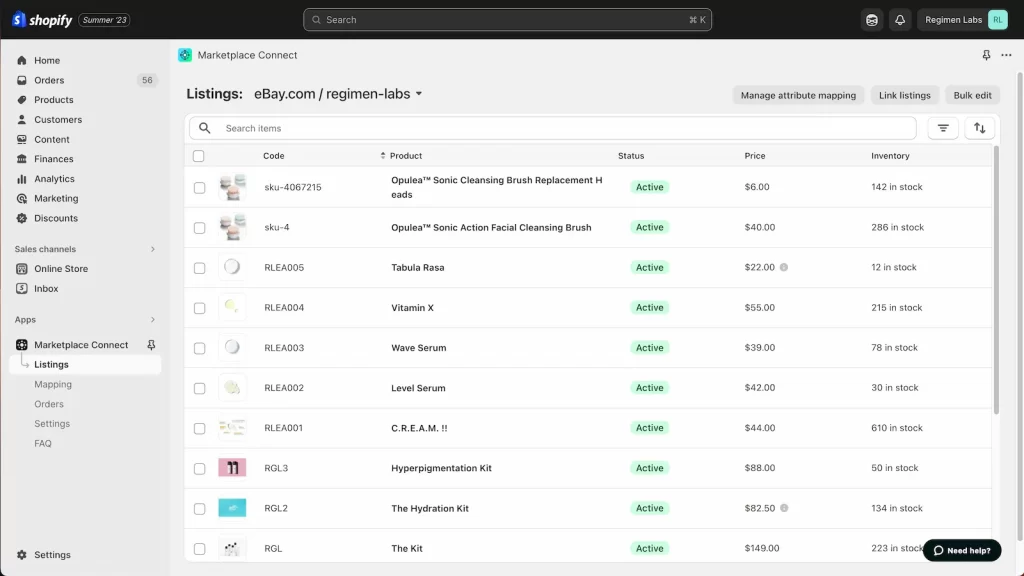
Product listing control from the Shopify catalog
Sellers can connect their Shopify products to marketplaces, list products, and manage marketplace listings from the Marketplace Connect section.
Real-time Inventory and order sync
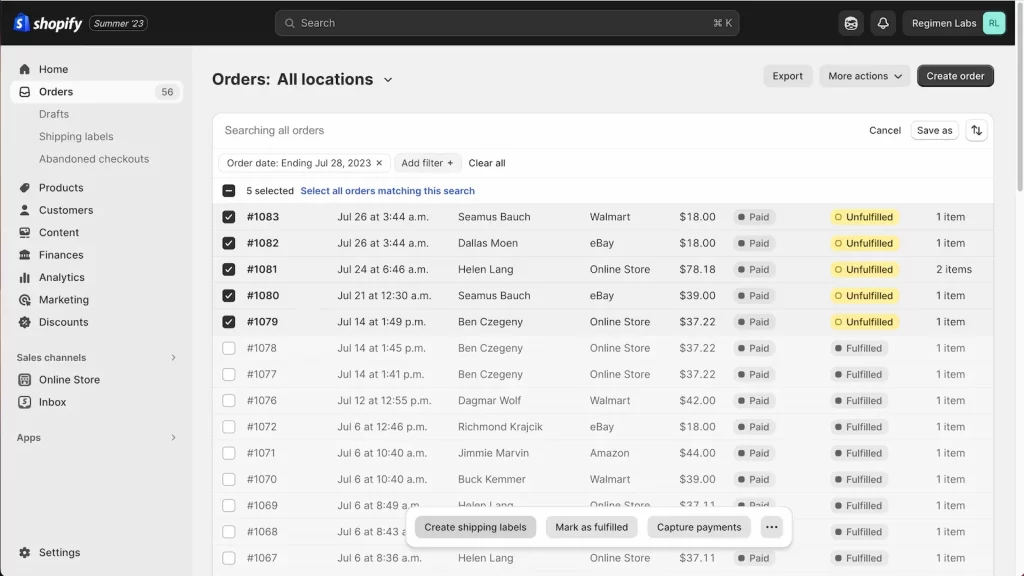
The app also syncs inventory and orders between Shopify and connected marketplaces. When orders come in, sellers can manage fulfillment through Shopify.
This is useful if your team already works inside Shopify every day and wants marketplace activity to stay connected to the same order workflow.
Pros
- Native Shopify integration with no separate login or dashboard
- Transparent, predictable per-order pricing with a generous free tier
- Backed and actively developed by Shopify directly
Cons
- Shopify seller only
- Only 4 marketplaces supported, with eBay and Target Plus (US-only)
- One-way sync model (Shopify → marketplaces) offers less flexibility than two-way tools
Best for: Sellers who run Shopify as their only platform and only need to reach Amazon, Walmart, eBay, or Target Plus, and don’t plan to expand to Etsy, TikTok Shop, or a non-Shopify cart.
Ecwid
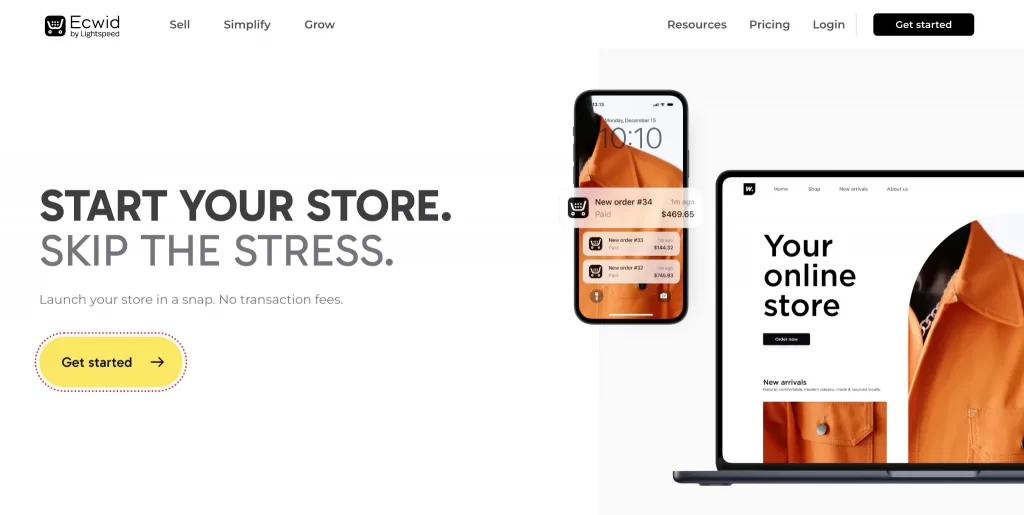
Ecwid stands out among CedCommerce alternatives for multichannel sellers who want a presence on social media as much as on marketplaces. As a multichannel eCommerce platform, Ecwid lets you build a store and sell across social platforms, other websites, and marketplaces from one system.
Ecwid’s strongest differentiator is social reach: it integrates with TikTok, Facebook, Pinterest, and Instagram in a way most marketplace-focused tools don’t prioritize. The trade-off shows up on the marketplace side.
Ecwid’s marketplace support is limited to Amazon, eBay, Walmart, and Google Shopping, which leaves out niche marketplaces like Etsy, Newegg, Bonanza, or Reverb. If your growth plan depends on one of those, this is a real gap rather than a minor one.
- Rating: 4.7/5 on G2
- Pricing: From $0 to $82.50/month (a free plan is available)
Key features
Instant Site creates a simple storefront quickly
Ecwid’s Instant Site lets sellers build a basic online store without creating a full website from scratch. When I tested this tool, I saw that the instant site includes professionally designed layouts and content, and an array of user-friendly tools and features for creating your online presence.
Social selling as a first-class channel
Most CedCommerce alternatives treat social as an afterthought; Ecwid leans into it. It connects natively to TikTok, Facebook, Instagram, Pinterest, and Snapchat, so the same catalog that powers your store also powers your social storefronts. If your growth plan runs through social platforms, this is where Ecwid pulls ahead of marketplace-first tools.
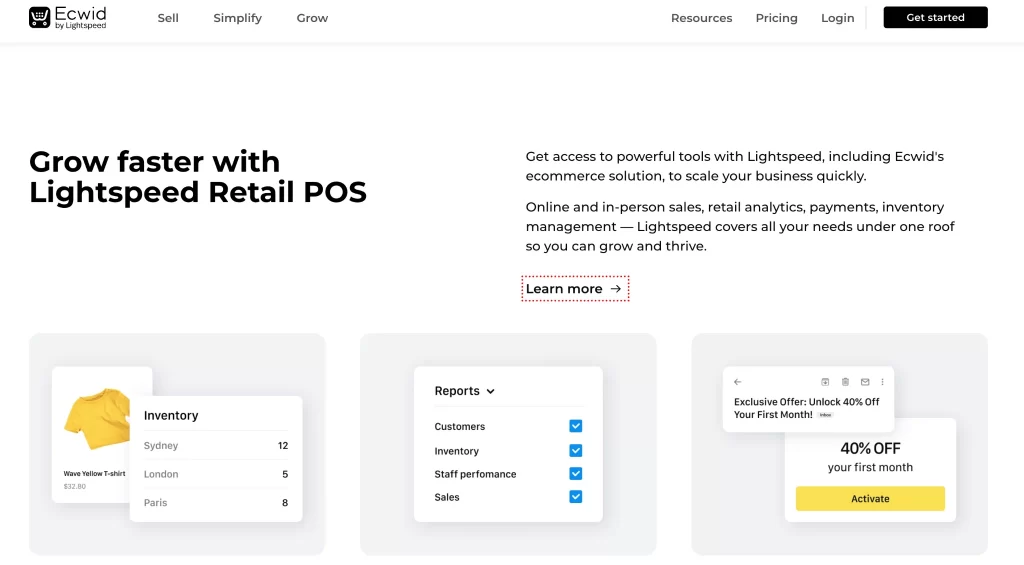
POS integrations sync online and offline selling
Ecwid’s POS integrations are useful for sellers who sell both online and in person.
The benefit is that products, inventory, orders, taxes, and shipping can stay more connected between physical sales and online store activity.
Abandoned cart emails and discounts support marketing
This CedCommerce alternative includes marketing tools such as automated emails, cart abandonment reminders, discounts, and ads. This makes it more useful for sellers who need both store setup and basic growth tools.
Pros
- Strong, genuinely native social commerce support
- Free plan makes it accessible for very small or pre-revenue sellers
- Storefront-plus-channels model in a single tool
Cons
- Marketplace coverage is thin (no Etsy, Newegg, Bonanza, or Reverb)
- Some management workflows rely on third-party add-ons rather than native features
Best for: Sellers whose growth strategy leans heavily on TikTok, Instagram, or Facebook alongside a handful of mainstream marketplaces, rather than niche marketplace expansion.
Best CedCommerce Alternatives for Enterprise Sellers
For larger retailers, identifying the right Cedcommerce competitors is about finding tools that handle high-volume complexity, deep automation, and enterprise-grade reporting across global marketplaces.
Zentail
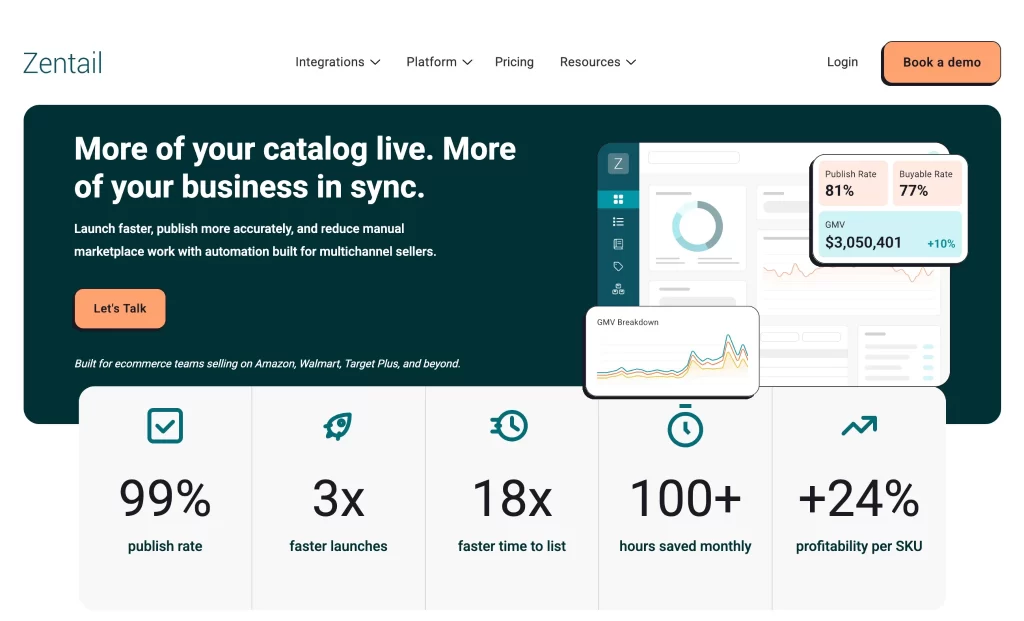
Zentail is a premium, automated multichannel eCommerce operation and Product Information Management (PIM) platform designed for high-growth retail brands, Y Combinator-backed startups, and high-volume online merchants.
Unlike basic cross-listing tools, Zentail functions as an advanced central data repository that eliminates data formatting busywork to dramatically accelerate brand expansion across online marketplaces.
- Rating: 4.2/5 on Capterra (23 reviews)
- Pricing: usage-based pricing starting at $300/month for its Base plan, $2,000/month for the Pro plan, and custom Enterprise pricing
Key features
Centralized catalog management at scale
Zentail is built around a single master catalog, and that’s the first thing I feel when using it. You maintain one source of product data, and Zentail distributes it across channels, which keeps a large, complex catalog consistent without per-marketplace duplication. It’s clearly aimed at sellers who’ve outgrown manual catalog upkeep.
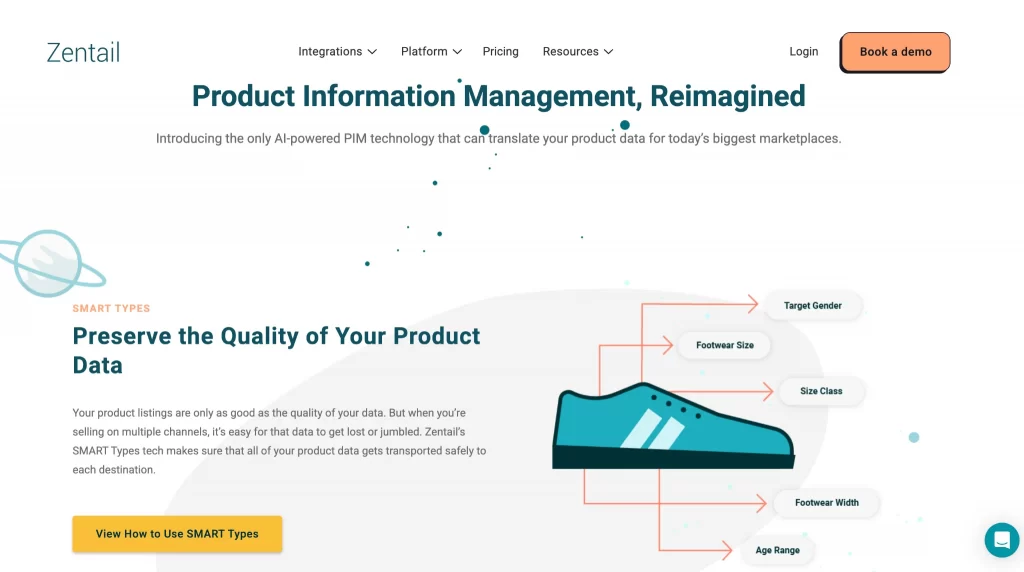
SMART Types for automatic category mapping
The feature that surprised me is Zentail’s “SMART Types”. It is a system that automatically maps your products to the right category and attribute requirements on each marketplace. Instead of researching every channel’s taxonomy by hand, you let Zentail translate your catalog into each marketplace’s format. For high-SKU sellers, that automation is the selling point.
Repricing and business intelligence
Beyond listing, Zentail layers in competitive repricing and analytics, so pricing decisions and performance reporting live alongside your operations rather than in a separate tool. That breadth is what positions it toward the enterprise end rather than the SMB end.
Centralized PIM for storing, editing, and monitoring product information
When identifying the right CedCommerce alternatives for enterprise operations, Zentail stands out for its PIM. The platform gives sellers one place to store, edit, and monitor product information so channels do not suffer from poor-quality or inaccurate listings.
Pros
- Strong automation capabilities that handle large, complex catalogs efficiently.
- Reduces listing errors and formatting issues through intelligent data mapping.
- Provides a centralized workflow for managing operations across multiple sales channels.
- Designed specifically for scaling retail operations and high-volume merchants.
Cons
- Higher cost compared to entry-level multichannel tools (plans start at $750/month).
- Can be too advanced and resource-heavy for small sellers or startups.
- Requires significant onboarding time and configuration to set up properly.
Best for: Established brands, high-volume Walmart sellers, and enterprise-level businesses that need centralized catalog control, deep automation, and PIM capabilities.
The Better Way to Manage Multichannel Selling
While other tools limit your integrations or charge high fees, LitCommerce simplifies everything. It connects your store to top marketplaces like Amazon, eBay, Etsy, and TikTok — all managed effortlessly from one dashboard.
Linnworks
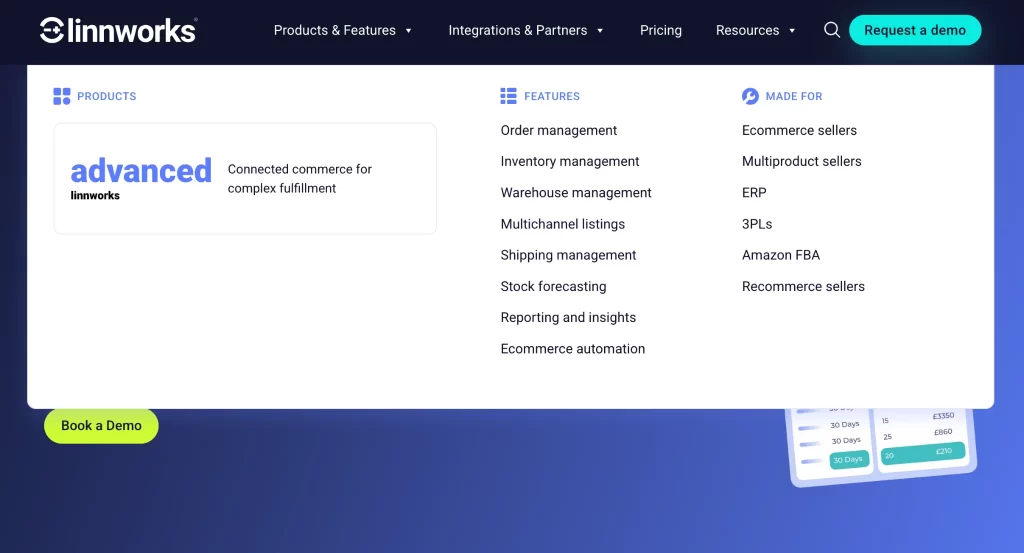
Linnworks powers multichannel eCommerce operations much like CedCommerce, but at a different scale. It offers order management, multichannel listings, and shipping management, plus warehouse management features for working with suppliers, fulfillment partners, and dropshippers in one place.
Compared with many CedCommerce alternatives, Linnworks places a stronger emphasis on back-office operations, with integrations spanning accounting, CRM, marketing, and operations tools.
The trade-off is platform focus: Linnworks is built primarily around BigCommerce and Magento, so it’s a narrower fit if your store runs on Shopify, WooCommerce, or Wix.
- Rating on G2: 4.4/5.
- Pricing: Custom, by business request, typically reported in the range of £6,000–£20,000/year (no free plan)
Key features
Inventory Management syncs stock across channels and warehouses
Linnworks’ inventory management is one of its strongest areas. It centralizes stock across channels and warehouses in real time. This is useful when sellers need deeper stock control, especially if inventory is split across multiple locations.

Order Management automates order routing
The Order Management workflow is helpful for sellers processing high order volumes. Instead of manually deciding what happens to each order, sellers can use automation to route and process orders more efficiently. This is where Linnworks feels more operations-heavy than lightweight listing tools.
Shipping Management finds lower-cost carrier services
Linnworks’ Shipping Management is useful because it connects order processing with carrier selection. Sellers can work with carriers like UPS, DHL, and FedEx, and the system can help choose lower-cost shipping services. I see that this is useful for businesses where shipping cost control matters.
Stock Forecasting supports reorder planning
Stock Forecasting is helpful when sellers need better purchase planning. Instead of guessing when to reorder, sellers can use sales and inventory data to estimate future stock needs. This is especially useful for avoiding both stockouts and excess inventory.
Pros
- Deep operational tooling beyond basic listing and sync
- Strong fit for businesses managing physical warehouse logistics, not just listings
- Broad back-office integration ecosystem
Cons
- Platform focus is narrow (primarily BigCommerce and Magento)
- Long waiting times and slow response speeds from customer supports
- Limited mobile functionality
Best for enterprise sellers managing multi-warehouse logistics and complex fulfillment networks who run BigCommerce or Magento as their core platform.
Rithum
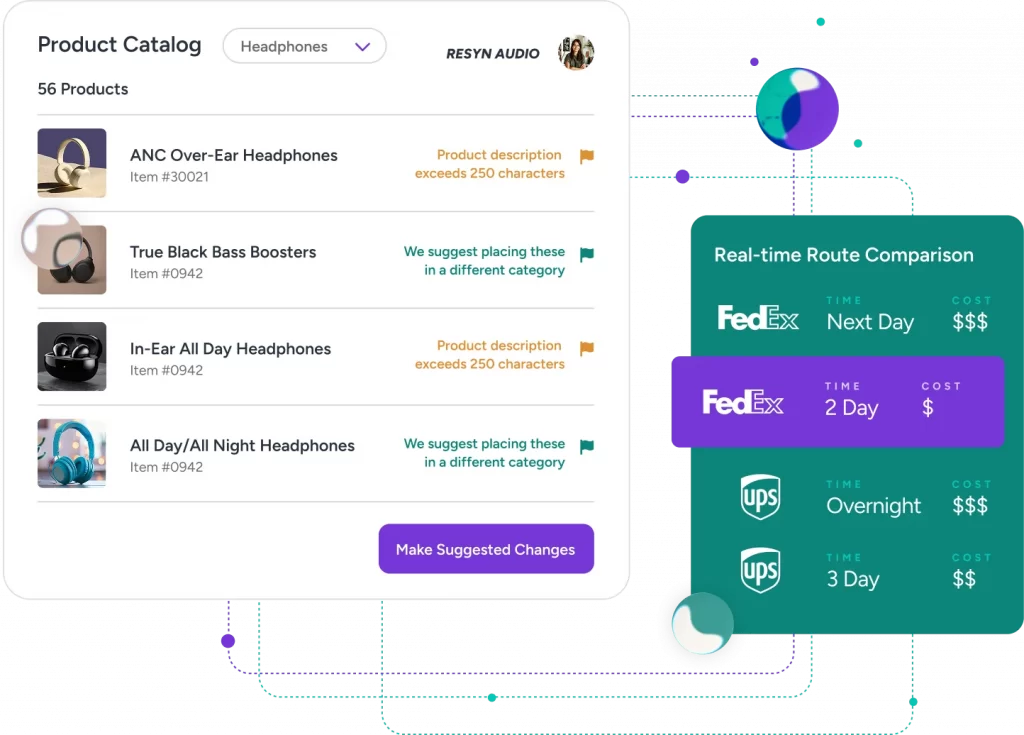
Rithum is a commerce operations platform built for brands, retailers, and suppliers that need to manage complex marketplace, dropship, fulfillment, and product listing workflows at scale. Formerly connected with CommerceHub and ChannelAdvisor, Rithum helps businesses list, market, optimize, and fulfill products across major commerce channels from one platform.
On the list of CedCommerce alternatives, Rithum is best suited for larger businesses that need advanced marketplace access, deeper commerce operations, and stronger support for enterprise-level selling.
However, smaller sellers may find it more complex than lightweight multichannel tools because its platform is designed for high-volume operations, broad retail networks, and large-scale commerce growth.
- Rating on G2: 3.8/5.
- Pricing: Custom pricing
Key features
Centralized product, inventory, and order operations
The biggest value of Rithum is not just listing products. It brings product content, inventory updates, and order workflows into one operational layer. This helps larger teams reduce manual work when they need to keep product data, stock availability, and order processing consistent across many sales channels.
Product feed management for fast-changing catalogs
Rithum’s Product Feeds solution is useful when product data changes often. The platform supports near-real-time updates for price, stock, and new items, helping sellers keep product information accurate across shopping feeds, marketplaces, and advertising channels.
Dropship and retailer marketplace support
Unlike other CedCommerce alternatives that only focus on sellers pushing products to marketplaces, Rithum also supports retailer-side marketplace and dropship operations. Retailers can launch curated third-party marketplaces, manage supplier fulfillment, control seller participation, and keep visibility over how orders are fulfilled.
Retail media and advertising optimization
Rithum also extends into digital marketing and retail media. This gives brands a way to connect marketplace operations with advertising performance, instead of treating listings, feeds, and campaigns as separate workflows.
AI-powered commerce insights with RithumIQ
Rithum promotes RithumIQ as its AI engine for commerce operations. I can see that this feature helps sellers find growth opportunities, improve margins, and simplify decisions across complex workflows.
Pros
- Access to a large marketplace network with 600+ marketplaces
- Combines selling, fulfillment, and marketing automation in one platform
- Wide range of custom reports, dashboards, and modules
- Built for the operational complexity of big retail brands
Cons
- Pricing and setup costs put it out of reach for small or mid-sized sellers
- A long, complex onboarding process
- More platform than most growing sellers actually need
| Need growth, not enterprise complexity?Skip the heavy setup and high costs. LitCommerce helps you scale with bulk listings, real-time inventory sync, and centralized order management in one easy-to-use dashboard.Start scaling with LitCommerce |
Best for larger brands and retailers that need enterprise-level marketplace management, advanced product data control, and access to a wide network of global marketplaces.
Best CedCommerce Alternatives for Resellers
Resellers require specialized tools that prioritize rapid cross-listing and unique inventory management over bulk workflows. These CedCommerce alternatives are tailored to streamline operations for fashion, vintage, and niche marketplace sellers.
Nembol
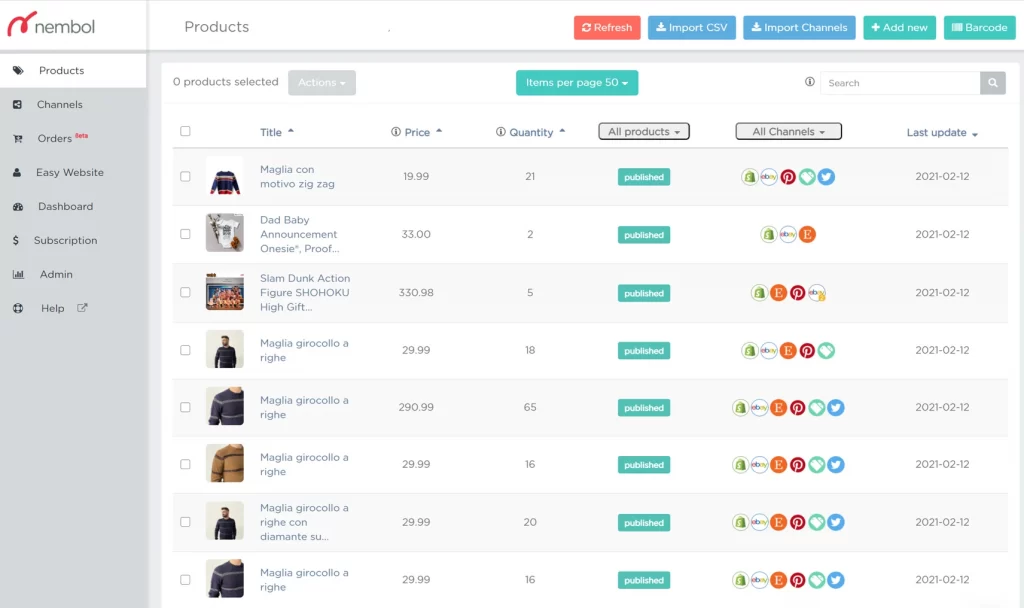
For sellers exploring CedCommerce alternatives, Nembol supports resale-focused workflows with listing templates, inventory tracking, custom labels, analytics, PhotoRoom background remover, and AI Listing Enhancement to help sellers write and improve listings faster.
It works best as a CedCommerce alternative for sellers who care more about resale crosslisting and inventory organization than enterprise-level marketplace integration.
However, Nembol is not built like a heavy enterprise system. It does not try to replace tools for complex warehouse, fulfillment, or advanced marketplace operations
Key features
Resale-focused crosslisting
Vendoo lets sellers create or import listings, then publish them to multiple resale marketplaces from one place. This saves time for resellers who usually copy and paste titles, photos, descriptions, categories, and prices across different platforms.
AI Listing Enhancement
This tool includes AI Listing Enhancement to help sellers improve product descriptions and complete listings faster. This is useful for resellers who list many unique items and do not want to rewrite every description from scratch.
Multi-account support
Nembol supports multiple accounts on the same channel, such as multiple eBay accounts, Etsy shops, Amazon accounts, or Shopify stores. This is useful for sellers who separate stores by region, product category, brand, or business mode.
Pros
- Works well for cross-list items among channels
- Uniquely cross-lists items directly onto non-traditional platforms (Pinterest, Facebook)
- Supports bulk editing and automated pricing rules
- Helpful support, especially during setup
Cons
- Amazon sync may not work as smoothly for every seller
- Limited to advanced sellers who need deeper automation or enterprise-level controls.
- Product data often still needs manual cleanup before publishing
Best for sellers managing a few to a moderate number of sales channels, and stores that need fast cross-listing and inventory sync more than an advanced enterprise workflow
List Perfectly
Among the popular CedCommerce alternatives, List Perfectly is a crosslisting tool made mainly for resellers who sell on marketplaces, like eBay, Poshmark, Mercari, Depop, Etsy, Grailed, Kidizen, Facebook Marketplace, and more. I
It helps sellers create a central catalog, then crosslist products to multiple resale platforms instead of copying and pasting the same product details again and again.
The tool is especially popular with clothing, vintage, thrift, collectible, and handmade resellers who list many one-of-a-kind items. Rather than serving as a full ecommerce operations platform, List Perfectly focuses on streamlining resale workflows with features like bulk crosslisting, automatic delisting of sold items, relisting stale products, inventory management, and AI-generated listing content from photos.

- Rating: 4.3/5 on Truspilot
- Pricing: Quote-based via sales (typically enterprise-tier)
Key features
Unlimited crosslisting and listings
List Perfectly includes unlimited crosslisting and listings in its plans. This is a strong selling point for resellers who list often and do not want to worry about paying per item or running out of monthly crosslisting credits.
Bulk actions
List Perfectly supports bulk import, crosslist, delist, relist, mark sold, and other bulk actions. This is useful when sellers want to move many products to a new marketplace, clean up old inventory, relist stale items, or update a large resale catalog without clicking through each item one by one.
AI Listing Assistant
The AI Listing Assistant can create listing details from product photos, including titles, descriptions, keywords, tags, and item specifics.
Auto sales detection and delisting
List Perfectly can detect sales and remove sold items from other marketplaces, helping sellers avoid double-selling.
Inventory and analytics
The LP Catalog helps sellers manage inventory, images, relisting, sold items, and performance data in one place.
Pros
- Large platform coverage, including niche platforms
- Supports unlimited listings and crosslisting
- Robust analytics dashboards
- Strong educational resources and an established reseller community
Cons
- Manual tab method relying on a browser extension that forces open multiple separate browser tabs to populate marketplace forms.
- Expensive if you only list casually or sell on one or two marketplaces.
Best for large resellers, thrift sellers, fashion sellers, vintage sellers, and small resale teams that manage a large catalog across many marketplaces.
Vendoo
The last name among CedCommere alternatives is Vendoo. It is also a crosslisting and inventory management platform built for online resellers who want to list products across multiple resale marketplaces faster. It helps sellers create listings, crosspost products, track inventory, detect sales, delist sold items, and understand performance from one workspace.

- Rating: 4.3/5 on Truspilot
- Pricing: 14-day free trial and four main pricing tiers: Starter ($14.99/month), Growth ($29.99/month), Pro ($59.99/month), and a custom Enterprise plan for high-volume sellers
Key features
Crossposting to 10+ marketplaces
Vendoo supports crossposting to 10+ marketplaces, helping resellers reach more buyers without recreating listings manually on each platform.
Sale detection and auto delisting
Vendoo can detect when an item sells on supported marketplaces and delist it from other platforms, reducing the risk of double-selling.
Inventory management
Sellers can organize active, sold, and available items in one system, making it easier to track resale inventory across platforms.
Profit tracking and analytics
Vendoo includes business analytics and profit tracking, so sellers can see what is selling, where it sells, and how their business is performing.
AI and listing enhancement
The platform offers AI listing enhancement, image tools, background removals, templates, and default preferences to help sellers create better listings faster.
Pros
- Strong choice for resellers who sell on multiple resale marketplaces.
- Flexible pricing tiers can fit different inventory sizes.
- Mobile app support is helpful for sellers listing on the go.
Cons
- It is not built mainly for enterprise marketplace operations.
- Advanced features are available only on higher plans.
- More suitable for resale workflows than traditional brand or retailer operations
Best for online resellers who manage inventory across platforms like eBay, Poshmark, Mercari, Depop, Etsy, and similar marketplaces. It is a good CedCommerce alternative for resale businesses that need crosslisting, auto delisting, inventory tracking, and profit insights in one tool.
CedCommerce Alternatives – FAQs
Are there free CedCommerce alternatives?
Some CedCommerce alternatives offer free trials or free plans with limited features. LitCommerce, for example, lets sellers start with a free plan or trial options depending on their needs. However, advanced features like bulk listing, real-time sync, and multi-channel automation usually require a paid plan.
Which CedCommerce alternative is best for eBay sellers?
LitCommerce is a strong option for eBay sellers because it supports eBay listing creation, bulk listing alternatives and rules, inventory sync, price sync, and order sync. It is especially useful if you sell on eBay and want to expand to other channels without rebuilding your catalog from scratch.
What are the best multichannel listing software?
Some of the best multichannel listing software are LitCommerce, CedCommerce, Sellbrite, Codisto, and Linnworks.
What is the alternative to CedCommerce?
The best overall alternative to CedCommerce is LitCommerce. According to the analysis in your documents, LitCommerce is favored for the following reasons:
– Unified Dashboard: Unlike CedCommerce, which often requires managing separate apps for each marketplace, LitCommerce centralizes listing, inventory, pricing, and order management into a single dashboard.
– Ease of Use: It is designed to be beginner-friendly with a simpler, more intuitive workflow, whereas CedCommerce can become more complex and fragmented as you add more channels.
– Scalability: LitCommerce supports 10+ major channels and allows for bulk listing, templates, and automated rules, making it highly effective for small to mid-sized businesses looking to grow without the complexity of managing multiple individual connectors.
– Transparent Pricing: It offers a more predictable pricing model compared to the integration-specific costs often associated with CedCommerce.
While CedCommerce may be a strong choice for enterprise-level sellers who require deep, custom integration logic for specific marketplaces, LitCommerce is positioned as the more practical and efficient “all-in-one” solution for most growing businesses.
Choose the CedCommerce Alternative that Fits Your Needs
So, those are all my recommendations for finding the right CedCommerce alternative for your business. Whether you are exploring these CedCommerce competitors to find better pricing, more reliable support, or features you currently lack, remember to review your specific business needs, budget, and priorities.
Should you be looking for a simple and affordable system to accompany you through the process, LitCommerce is worth your consideration. Check out our Blog, or feel free to Contact us for detailed consultancy at any time. We are happy to be by your side in your multichannel selling process. process.