
LitCommerce

LitCommerce
Our Products ▾
Multichannel Listing Tool
Sell products on Amazon, eBay, Etsy, and more — all from one place.
Product Feed Management
Optimize and sync your product feeds across Google, Meta, TikTok, and other channels.
Pricing Free Resources
No Result
View All Result
Start For Free
  • Online Marketplace▾
    Amazon eBay Etsy Walmart Google Merchant Facebook Marketplace Tiktok Shop
  • eCommerce Platform ▾
    Shopify BigCommerce Wix
  • Multichannel Selling
  • Growth Strategies

LitCommerce

  • Online Marketplace▾
    Amazon eBay Etsy Walmart Google Merchant Facebook Marketplace Tiktok Shop
  • eCommerce Platform ▾
    Shopify BigCommerce Wix
  • Multichannel Selling
  • Growth Strategies
Start For Free
LitCommerce Blog
No Result
View All Result

Home » Blog » Multichannel Selling

8 Best Shopify Marketplace Connect Alternatives: Better & More Flexible

Kevin Nguyen by Kevin Nguyen
Jun 2026
in Multichannel Selling
shopify marketplace connect alternatives
⚡ Skip the long read — let AI summarize it for you in 5 seconds.

If you’ve used Shopify Marketplace Connect (the app formerly known as Codisto), you already know it can sync your Shopify catalog to marketplaces like Amazon, eBay quite well, all from your Shopify admin. But it stops at just 4 marketplaces — Amazon, Walmart, Target Plus, and eBay. So the moment you want to sell on Etsy, TikTok Shop, or anywhere else, you’re stuck.

That’s not the only ceiling. The app is Shopify-only, so if you sell on WooCommerce, BigCommerce, Wix, or Squarespace, it isn’t even an option. And even on Shopify, the sync runs one way, with Shopify as the single source of truth.

I ran into these limits firsthand, so I tested the tools sellers actually switch to. In this guide, I’ll walk you through the 8 best Shopify Marketplace Connect alternatives I’d recommend in 2026, who each one is for, and how they compare on platform support, marketplace reach, and price. 

Quick answer

Shopify Marketplace Connect works only inside Shopify and syncs to just 4 marketplaces, which is exactly why many sellers start looking elsewhere. 

The best alternative depends on how you sell, but for most sellers I’d recommend LitCommerce, because it fixes SMC’s two biggest limits at once: it works across platforms (not just Shopify) and connects to 20+ marketplaces instead of four. If shipping is your priority, Sellbrite is strong; for enterprise scale, Linnworks or Rithum; and for resellers, Vendoo.


Why Sellers Look for Shopify Marketplace Connect Alternatives

Shopify Marketplace Connect works fine for what it is. But after using it, I found a few limits that send a lot of sellers, including me, looking for something better. Here are the main ones.

1. It only works if you’re on Shopify. 

This is the dealbreaker for most sellers I talk to. Marketplace Connect is a native Shopify app, so it runs only in the Shopify admin. 

If you sell on WooCommerce, BigCommerce, Wix, or Squarespace, you simply can’t use it. Even if you’re considering switching platforms later, you’re locked into Shopify to keep the app.

2. It only connects to 4 marketplaces. 

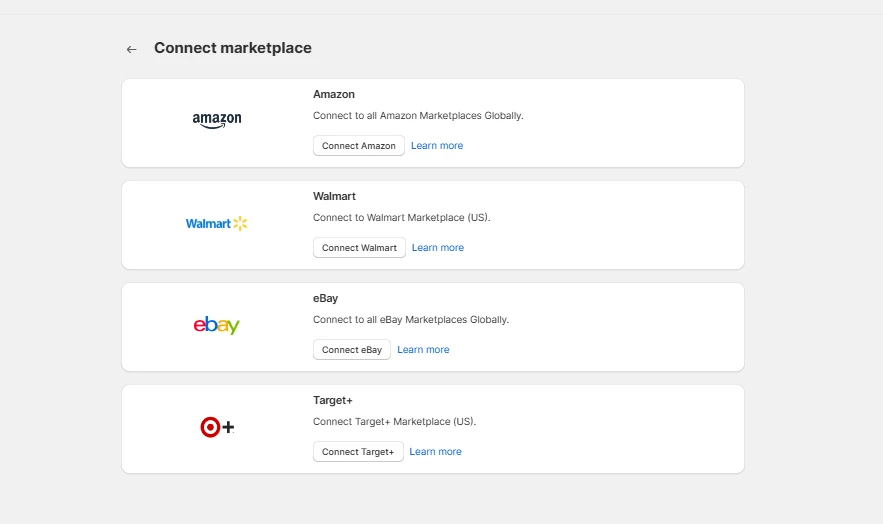
Shopify Marketplace Connect supports Amazon, Walmart, Target Plus, and eBay, with the last two limited to the US. Etsy is no longer an option. So if you sell on Etsy, Facebook, TikTok Shop, or any other channel, you’ll need a different tool to reach them.

smc connected marketplaces

3. The sync only flows one way. 

Marketplace Connect treats your Shopify store as the single source of truth. Product and inventory changes push from Shopify out to your marketplaces, but not the other way around in the same flexible way. If you want a setup where any channel can update the others, this model feels restrictive.

4. Per-order pricing adds up at scale. 

The app is free for your first 50 synced orders each month, then charges a 1% fee per additional synced order, capped at $99/month.

On the surface that looks affordable, and for low-volume sellers it genuinely is. But two things add up. First, if you process high order volume, those per-order fees climb faster than the flat monthly plans some alternatives offer.

Second, and easy to miss: Marketplace Connect only works inside Shopify, so you need an active Shopify subscription just to use it at all. That’s a baseline cost on top of the app:

  • Basic: $39/month
  • Shopify: $105/month
  • Advanced: $399/month

5. Listing and editing tools are fairly basic. 

Marketplace Connect covers the essentials: list, sync, and manage orders. What it doesn’t give you is deeper bulk-editing, template-based listing rules, or a spreadsheet-style view to update hundreds of products at once. If you manage a large or fast-changing catalog, you’ll feel the gap.

6. Support is limited to chat. 

In-app chat is the main support channel. It’s fine for quick questions, but if you run into a complex sync issue, slower or thinner support can cost you sales while you wait.

None of this makes Marketplace Connect a bad app. It just means it’s built for one type of seller: a Shopify store owner who wants simple marketplace sync and nothing more. If that’s not you, the tools below give you more platforms, more control, or better pricing.

Sell Beyond Shopify — Not Just From It

Stuck because Marketplace Connect only works inside Shopify? LitCommerce connects WooCommerce, BigCommerce, Wix, Squarespace, and Shopify to 10+ marketplaces like Amazon, eBay, Etsy, and Walmart — all from one dashboard, with two-way sync.

Try LitCommerce multichannel listing tool for Free
Try LitCommerce for free main@150x

Shopify Marketplace Connect Alternatives Compared at a Glance

Before I break down each Shopify Marketplace Connect alternative in detail, here’s a quick side-by-side look at how the 8 alternatives stack up against Shopify Marketplace Connect.

Tool

Best for

Channels

Starting price

Free option

LitCommerce

Multichannel + webstore sellers

10+ channels (Amazon, eBay, Etsy, Walmart, TikTok Shop + more)

From $29/mo

7-day free trial

Sellbrite

Order & shipping management

Amazon, eBay, Walmart, Google, Etsy

$29/mo (Pro 100)

Free up to 30 orders/mo

CedCommerce

Marketplace-specific app depth

50+ integrations (incl. TikTok Shop, SHEIN, Temu, Walmart, Etsy)

From ~$9/mo (per integration)

7-day trial (varies by app)

Linnworks

Large-scale, complex operations

100+ marketplaces

Quote-based

Demo only

Multiorders

Budget-friendly all-in-one

Amazon, eBay, Etsy + more

$64/mo (up to 500 orders)

14-day free trial

Rithum (ChannelAdvisor)

Enterprise-grade selling

190+ channels

Quote-based

Demo only

M2E Cloud

Retailers and wholesalers with eBay and Amazon-focused

eBay, Amazon, Walmart, TikTok Shop, Temu + more (Etsy planned)

Free Starter ($1,000 GMV/mo); paid scales by GMV

30-day free trial

Vendoo

Cross-listing pre-owned items

10+ resale channels (Poshmark, Mercari, Depop, eBay, Etsy, Vinted + more)

From $14.99/mo

Free plan available


The 8 Best Shopify Marketplace Connect Alternatives 

To help you decide, let’s dive into the specifics of each Shopify Marketplace Connect alternative and see how they actually perform for different types of sellers.

1. LitCommerce — Best for sellers expanding into webstores & marketplaces

litcommerce best shopify marketplace connect alternative
  • Rating: 4.8/5 on the Shopify app store
  • Pricing: From $29/month (7-day free trial, 20% off annual plans)
  • Pros: Works with your existing store, no re-platforming; purpose-built integrations per channel; three flexible hubs (store, app, or file); AI listing tools included; centralized order management; dedicated support.
  • Cons: Not optimized for resale-specific marketplaces like Poshmark or Mercari, and has limited native shipping carrier integrations.
  • Best for: Store owners on any platform who want to sell across far more than four marketplaces

LitCommerce is the Shopify Marketplace Connect alternative I’d reach for first because it fixes the two biggest things that pushed me away from Marketplace Connect. It isn’t locked to Shopify, and it isn’t capped at a handful of marketplaces.

Where Marketplace Connect only runs inside Shopify, LitCommerce lets you run your store as the hub from Shopify, WooCommerce, Wix, BigCommerce, or Squarespace. And instead of 4 marketplaces, you can connect to 15+ marketplaces — Amazon, eBay, Etsy, Walmart, TikTok Shop, plus niche ones like Reverb, Faire, and Temu. 

Here’s what stood out when I actually used it.

It adapts to how you already sell. You can run your catalog from your store, a single file (CSV, Excel, or Google Sheet), or the LitCommerce app itself. 

I tested the store setup with Shopify, and edits flowed to every channel from one dashboard. If you don’t have a webstore at all, the file option still lets you list straight to Amazon, eBay, or Etsy.

litcommerce main store

The bulk editor saved me the most time. This is the gap Shopify Marketplace Connect never fills. You edit listings individually or in groups, then apply templates and rules to auto-fill marketplace-specific fields. 
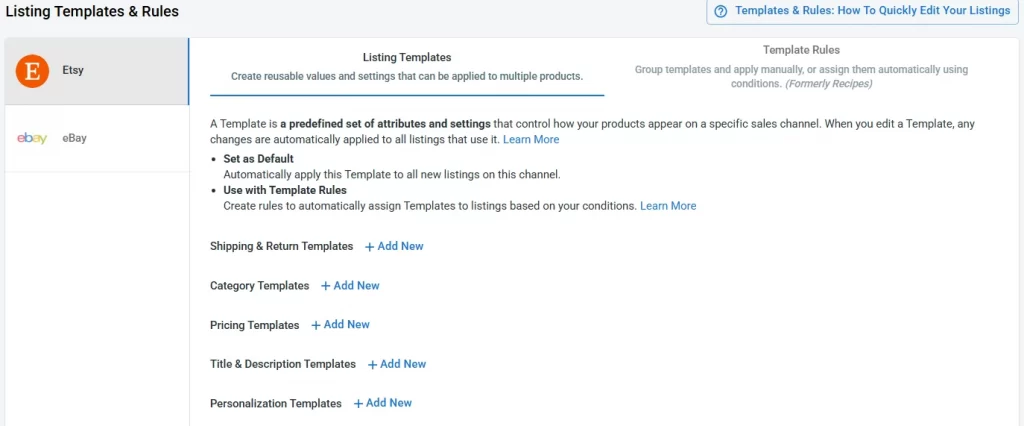
The channel-specific features impressed me most. Instead of one generic listing pushed everywhere, each marketplace gets tools built for how it actually works. For example:

  • On Amazon, you can import orders from both FBA and the Merchant Fulfilled Network, and set up Amazon discounts and promotions without leaving the app. 
  • On eBay, you get a custom HTML/CSS description template and a Business Policies template.
  • On Etsy, there’s a Personalization template made for made-to-order sellers. You set these up once per channel instead of reworking every listing by hand.
litcommerce etsy templates

The sync runs close to real time. Stock and pricing update across every connected channel on a 15-minute cycle, with min/max stock levels, multi-warehouse mapping, and oversell protection. Unlike SMC’s one-directional, Shopify-only model, LitCommerce keeps every channel in sync, not just pushing one way from a single store.

Orders land in one place. Every channel’s orders pull into a single dashboard (or back into your store), with inventory adjusting automatically on each sale and built-in shipping carrier support.

Compared to Shopify Marketplace Connect

SMC is fine if you’re a Shopify seller happy with Amazon, eBay, and Walmart. But the moment you want another platform, more marketplaces, auto-sync, or real bulk-editing, LitCommerce is the more complete tool. Pricing is also flat-plan rather than per-order, so it doesn’t penalize you for growing.

Read more: LitCommerce vs Shopify Marketplace Connect – In-Depth Comparison

Moving Off Marketplace Connect Is Easier Than You Think

You don’t have to re-platform or rebuild your catalog. LitCommerce connects your existing Shopify, WooCommerce, Wix, or BigCommerce store and pushes products to 10+ channels — keep the store you have, just sell on more.

Try LitCommerce multichannel selling tool free
Try LitCommerce for free main@150x

2. Sellbrite — Best for order & shipping management

sellbrite
  • Rating: 4.4/5 (Truspilot)
  • Pricing: Free forever (up to 30 orders/mo), then Pro 100 at $29/mo, Pro 500 at $79/mo, Pro 2K at $179/mo (billed annually); high-volume plans above 2,000 orders
  • Pros: Free plan; strong shipping and FBA fulfillment tools; unlimited SKUs, channels, and users on every tier; works beyond Shopify.
  • Cons: Order-based pricing can climb as volume grows; no resale-marketplace channels like Poshmark or Mercari.
  • Best for: Marketplace sellers who want shipping and order fulfillment handled in the same tool

Sellbrite (now a GoDaddy brand) is the Shopify Marketplace Connect alternative I’d point to if shipping and order fulfillment are where you feel the most pain. It covers the same multichannel basics as Marketplace Connect, list products and sync inventory, but it adds a shipping layer that Shopify Marketplace Connect simply doesn’t have.

Here’s what stood out to me when I looked at it.

It’s not locked to Shopify. Like LitCommerce, Sellbrite connects across multiple platforms as your hub — Shopify, BigCommerce, and WooCommerce on the cart side — and lists to Amazon, eBay, Walmart, Google, and Etsy. 

Shipping is the real differentiator. This is where it pulls ahead of SMC. You can print discounted shipping labels and ship every order from one interface, with USPS, UPS, and FedEx support, automatic tracking-number push back to the sales channel, and the option to auto-route orders to Fulfillment by Amazon (FBA). Order routing and splitting are built in too.
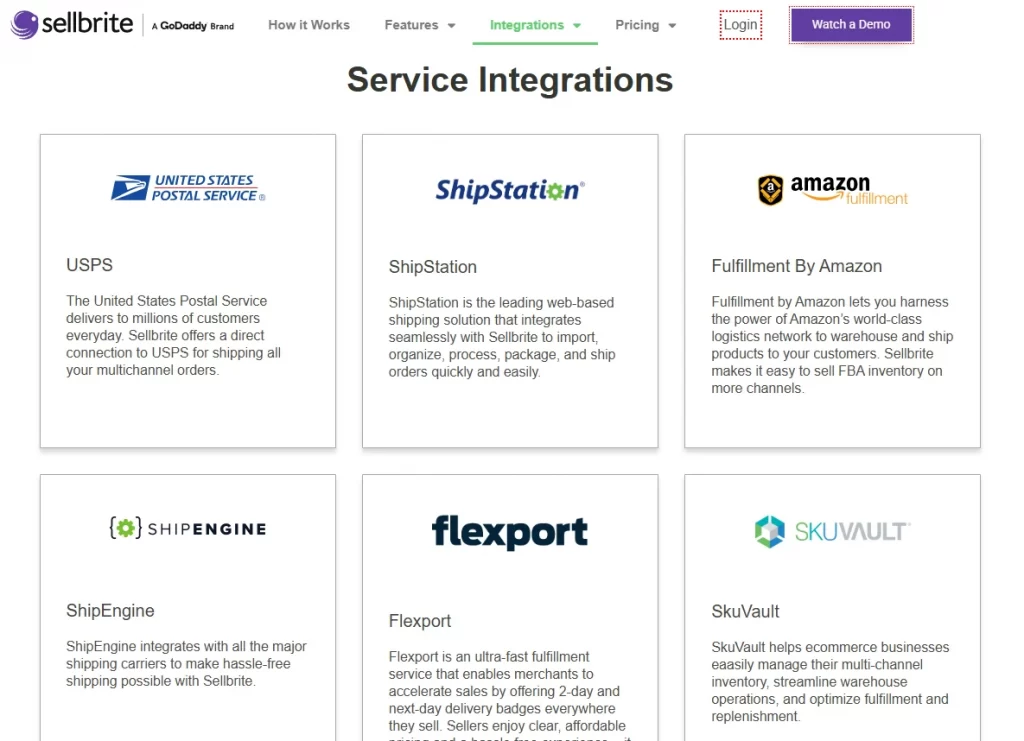
sellbrite service integrations

Listing and inventory cover the essentials. You list one by one or in bulk using channel templates, auto-import existing products, and manage variations, custom attributes, and CSV import/export. Inventory and price sync runs every 15 minutes on paid plans (every 2 hours on the free plan), with multi-warehouse tracking and selective stock push.

Pricing is order-based, with a genuinely free tier. SKUs, sales channels, and users are unlimited on every plan; you pay by monthly order volume instead. However, the FBA inventory and multi-channel fulfillment features are $19/mo add-ons, and Amazon FBA orders don’t count toward your plan limit.

Compared to Shopify Marketplace Connect

Sellbrite matches Shopify Marketplace Connect on listing and sync but wins decisively on shipping and order fulfillment, and it isn’t Shopify-only. If your bottleneck is getting orders out the door across channels, it’s the stronger pick. Shopify Marketplace Connect has no native shipping layer at all.

Read more: LitCommerce vs Sellbrite Comparison – We’ve Tested Both Tools

3. CedCommerce — Best for marketplace-specific app depth
CedCommerce 1
  • Rating: 4.3/5 on Truspilot
  • Pricing: Varies by integration; entry plugins start around $9/mo (e.g., Multichannel for WooCommerce), billed monthly or yearly by order volume; 14-day free trial on many apps 
  • Pros: Works across 6+ platforms, not just Shopify; broad marketplace coverage, including TikTok Shop, SHEIN, and Temu; dedicated per-channel integrations; managed services and human support available.
  • Cons: The per-integration model can get complex and costly if you need several at once; some users report occasional bugs and slower support response on certain packages; pricing varies widely and isn’t a single flat plan.
  • Best for: Sellers who want a dedicated, deeply built integration for a specific platform-and-marketplace pairing

I’d recommend CedCommerce when you want depth in a specific channel rather than a single generic connector. Where Marketplace Connect gives you a single Shopify-only app covering 4 marketplaces, CedCommerce offers a large library of purpose-built integrations across many platforms and marketplaces.

Here’s what stood out to me.

The integrations are dedicated, not one-size-fits-all. 

Instead of a single universal listing pushed everywhere, you install the specific integration you need (say, Walmart for Shopify or Etsy for WooCommerce), each with its own dashboard. That channel-specific depth is what sellers with complex requirements tend to want, and it’s something SMC’s single app doesn’t offer.
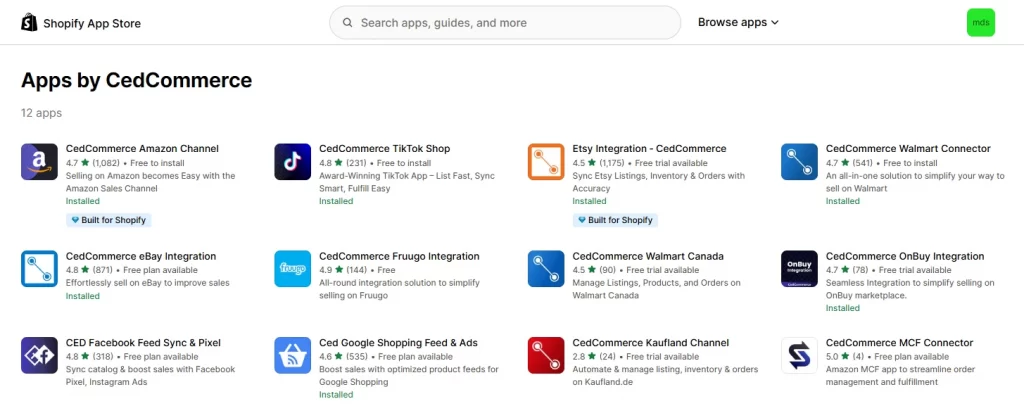
cedcommerce integrations

However, it also means you may have to pay more as you add channels. Because each integration is priced separately, your cost scales with the number of marketplaces you connect, not a single flat plan. 

For example, let’s say you sell on Shopify and want to reach Amazon, eBay, and Walmart. With CedCommerce, you’d typically install three separate integrations — one per marketplace — and pay for each. 

For a seller on just 1 or 2 channels that’s rarely an issue, but if you’re spread across 5 or 6 marketplaces, the per-integration costs can add up faster than a flat-rate tool. 

UniCon is its newer cross-listing layer. CedCommerce now leads with UniCon, an agentic tool that turns one shared catalog into marketplace-ready listings, keeps inventory and orders in sync, and manages expansion from one dashboard. It’s positioned as “build once, list everywhere” with pre-submission error checking.

Compared to Shopify Marketplace Connect

CedCommerce wins on breadth and depth — more platforms, far more marketplaces, and channel-specific tooling SMC doesn’t offer. The trade-off is complexity: SMC is one simple app, while CedCommerce is a catalog of integrations you assemble to fit your stack.

4. Linnworks — Best for large-scale, complex operations
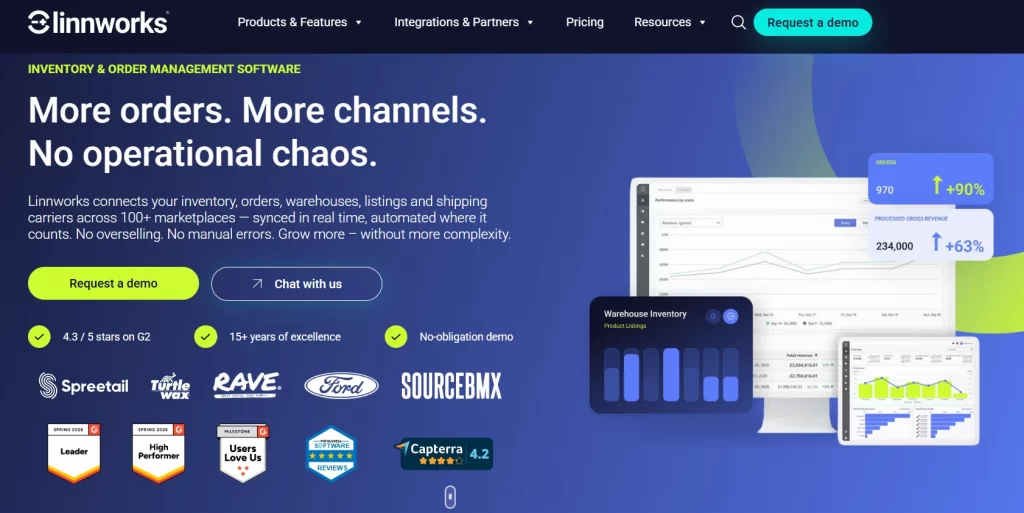
linnworks
  • Rating: 4.3/5 on Truspilot
  • Pricing: Quote-based via sales (typically enterprise-tier)
  • Pros: Enterprise-grade order and inventory management; 100+ marketplaces; powerful rules-based automation and AI; multi-warehouse and 3PL support.
  • Cons: Likely overkill and overpriced for small sellers; pricing isn’t transparent (sales-led quote); steeper learning curve than a simple connector like SMC.
  • Best for: High-volume, multi-warehouse retailers who need deep automation and order management

Linnworks is the Shopify Marketplace Connect alternative I’d point larger operations to. Marketplace Connect handles basic Shopify-to-marketplace sync; Linnworks is a full inventory and order management system built for retailers running serious volume across many channels and warehouses.

Here’s what stood out to me.

It’s built for scale, not just listing. This is the core difference from SMC. Linnworks positions itself as an all-in-one IMS that connects inventory, orders, warehouses, listings, and shipping on a single platform, so a sale on any channel instantly updates stock everywhere and triggers the right fulfillment workflow. 
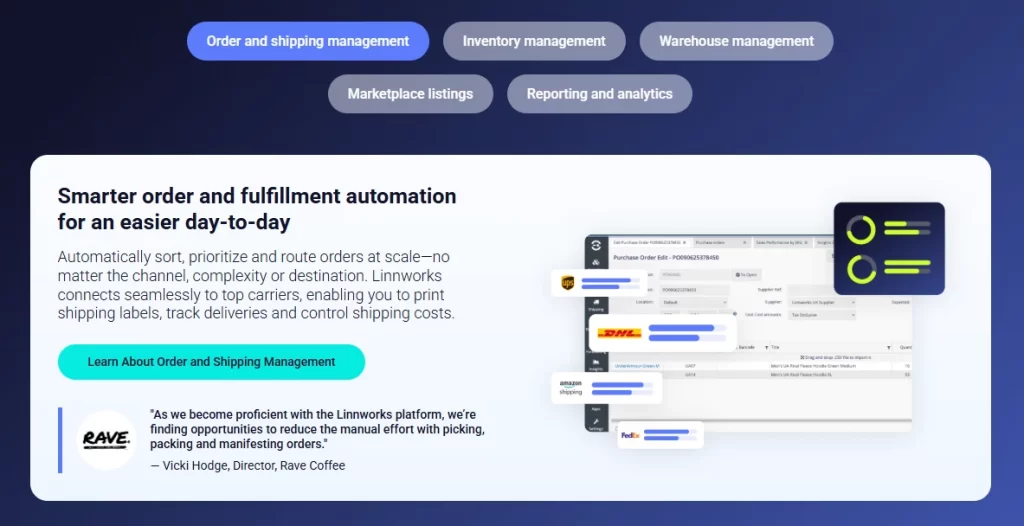
linnworks products

Marketplace coverage is huge. Linnworks connects to 100+ marketplaces, including Amazon, eBay, Shopify, Walmart, and newer channels like TikTok Shop and Temu, with two-way connections and real-time inventory sync. That’s a different league from SMC’s 4 marketplaces, and again, it isn’t Shopify-only.

Automation is the standout feature. Where SMC has none of this, Linnworks has a rules-based automation engine: custom order routing (for example, route eBay orders to a 3PL only if they’re in the western US, or prioritize Amazon Prime orders over Etsy), automatic order merging, and bulk shipping..

Warehouse and fulfillment depth. Multiple warehouses, custom routing rules, carrier integrations (UPS, USPS, FedEx), and 3PL connections, plus stock forecasting and SKU-level reporting. It’s designed to replace a stack of disconnected tools with one hub.

Compared to Shopify Marketplace Connect

Linnworks is a full operations platform for retailers who’ve outgrown that — more channels, deep automation, multi-warehouse control, and no Shopify lock-in. So, if you’re a high-volume seller hitting the ceiling of what SMC can do, Linnworks is the upgrade. If you’re a small Shopify store, it’s more than you need.

You might also like: Multichannel Inventory Management: What It Is & How to Manage Stock Effectively

5. Multiorders — Best budget-friendly pick

multiorders
  • Rating: 2.6/5 on Truspilot
  • Pricing: PRO 500 at $64/mo (up to 500 orders), PRO 1K at $129/mo, PRO 2K at $195/mo, PRO 5K at $299/mo; custom pricing above 5,000 orders 
  • Pros: All features on every plan; not Shopify-only; strong shipping and bundle handling; unlimited users and channels; transparent flat pricing; genuinely affordable entry point.
  • Cons: Entry price ($64/mo) is higher than SMC’s free start for very low-volume sellers; order caps mean costs step up as you grow; some third-party sources note no public API and English-only support.
  • Best for: Small to mid-sized sellers who want order, inventory, and shipping in one affordable tool

Multiorders is the Shopify Marketplace Connect alternative I’d suggest for smaller sellers watching their budget. It bills itself as a multichannel order, inventory, and shipping tool, and the appeal is that every plan includes all features, you only pay more as your order volume grows, not to unlock capabilities.

Here’s what stood out to me.

Every plan is full-featured. This is the part I like for smaller sellers. Unlike tools that gate features behind higher tiers, Multiorders gives you unlimited products, unlimited sales channel integrations, unlimited shipping integrations, and unlimited users on every plan. 

You’re only paying for order volume. SMC’s per-order percentage model can feel similar at low volume, but here you get far more functionality for the money.

It’s not Shopify-only. Multiorders connects to Shopify, Wix, BigCommerce, WooCommerce, Amazon, eBay, and Etsy, so it covers sellers SMC locks out. Inventory and pricing sync across all connected channels automatically when a sale happens.

Shipping and inventory are genuinely deep for the price. You get bulk shipping with discounted USPS Commercial Plus rates (regardless of volume), unlimited carrier integrations, automatic tracking-number push, product bundles that deduct component stock, multi-warehouse and FBA inventory tracking, and document generation (invoices, pick lists, delivery notes). That’s a lot more than SMC’s listing-and-sync scope.

Order automation is included. You can filter, tag, and auto-assign orders to team members, merge orders, and set rules to pick the right shipping service.

Compared to Shopify Marketplace Connect

Multiorders outpaces SMC with comprehensive order, inventory, and shipping tools across multiple platforms, moving beyond simple Shopify syncing. While SMC is free for small, Shopify-only sellers, Multiorders offers superior value through multi-warehouse support, bundling, and non-Shopify channel integration for a flat fee.

Read more: LitCommerce vs Multiorders Comparison: We’ve Tested Both Tools

6. Rithum — Best enterprise-grade option

Rithum
  • Rating: 4.0/5 on G2
  • Pricing: Not published; quote-based, enterprise-tier (sales-led demo)
  • Pros: Massive channel network (190+); end-to-end commerce, advertising, and fulfillment suite; deep data-feed and reporting capabilities; trusted by major global brands; not Shopify-only.
  • Cons: Among the most expensive options; pricing isn’t transparent; steep learning curve; overkill for small and mid-sized sellers; some reviewers note no mobile app.
  • Best for: Large brands and retailers running complex, high-volume commerce across many global channels

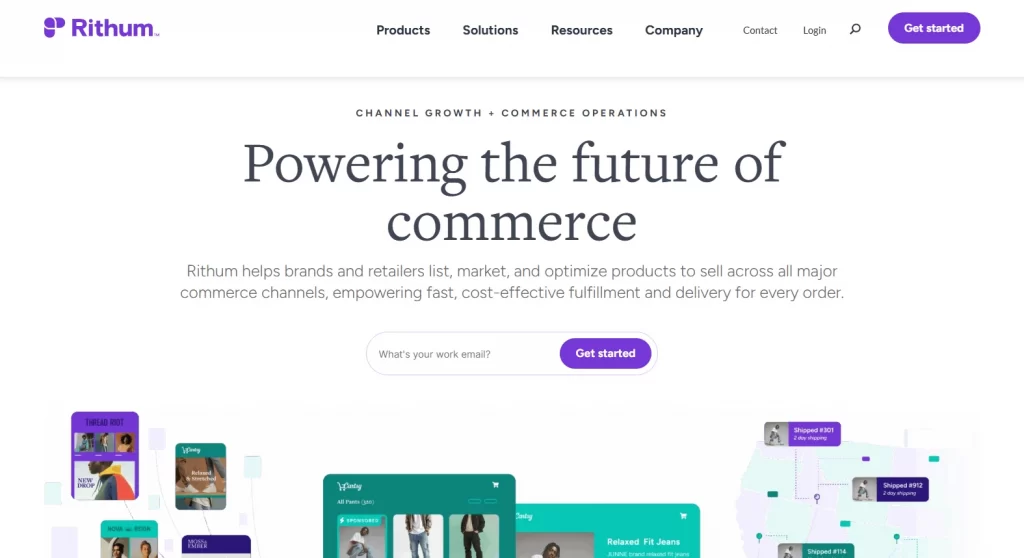
Rithum (previously ChannelAdvisor) is the Shopify Marketplace Connect alternative I’d flag for enterprise sellers, but with an important update. The product you may know as ChannelAdvisor is now Rithum, the brand formed when ChannelAdvisor and CommerceHub merged. If you’re researching “ChannelAdvisor,” this is where it lives today.

Here’s what stood out to me.

It operates at a completely different scale than SMC. Where Marketplace Connect is a lightweight Shopify app, Rithum is a full enterprise commerce platform. On its own site it cites support for 190+ channels (marketplaces, retail sites, search, and social). This is built for brands and retailers managing serious global complexity.

The product suite goes far beyond listing. For brands, it covers marketplace listings, inventory management, order management, and commerce insights, plus a full marketing side like retail media advertising, paid search and shopping ads, and AI-powered product feeds. 
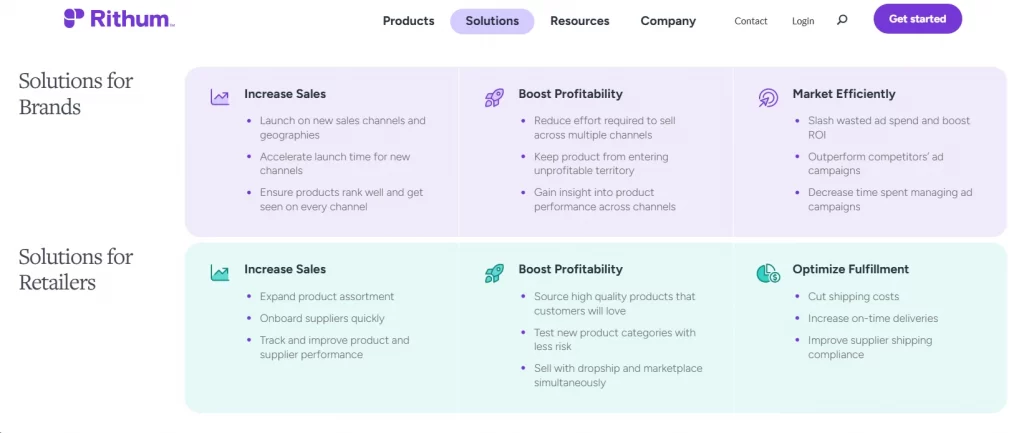
For retailers, it adds dropship, private marketplaces, and shipping/delivery optimization. SMC does none of this; it syncs Shopify listings to 4 marketplaces and stops there.

rithum products

It connects your store and channels into one hub. You can feed in data from a webstore (Shopify, Magento, and others) and manage listings, pricing, inventory, and orders across all channels from one dashboard, with strong data-feed mapping and reporting. It isn’t tied to Shopify the way SMC is.

It’s enterprise-priced and enterprise-complex. This is the honest trade-off. Reviewers on third-party sites consistently call the cost high and the platform powerful but complex, with a learning curve and sales-led onboarding. There’s no free tier or self-serve signup like SMC’s.

Compared to Shopify Marketplace Connect

Rithum is an enterprise platform for large brands and retailers who need 190+ channels, retail media, dropship, and advanced data control. If you’re an enterprise seller, SMC was never going to be enough and Rithum is the serious upgrade. If you’re a small or mid-sized seller, it’s far more than you need, and far more than you’ll want to pay.

7. M2E — Best for retailers & wholesalers

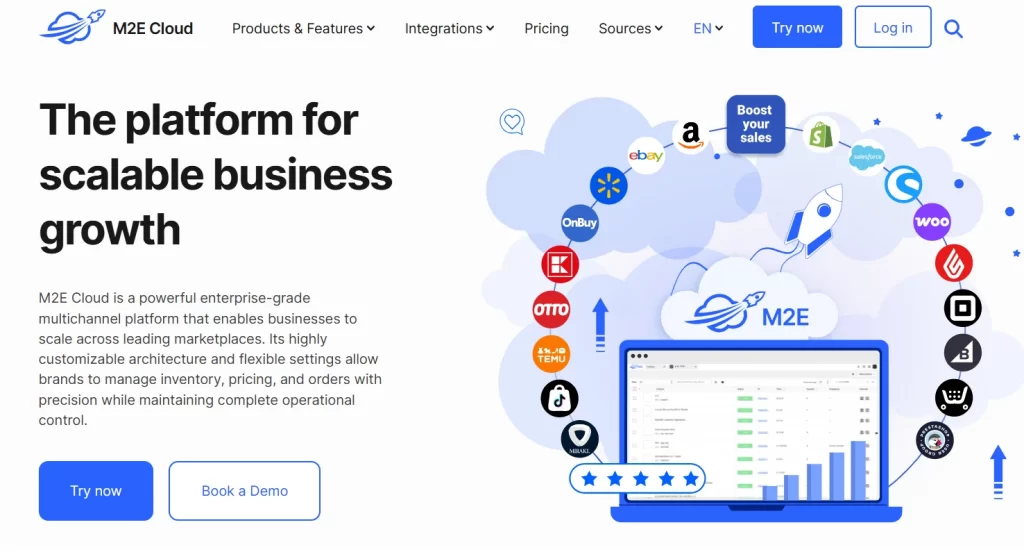
m2e cloud
  • Rating: 4.8/5 on Shopify app store
  • Pricing: Starter plan free ($1,000 GMV/mo); paid plans scale by total monthly/annual marketplace GMV (Amazon, eBay, Walmart, etc.); 30-day free trial, no credit card
  • Pros: Works across seven+ store platforms plus POS, not just Shopify; 450+ marketplace reach claimed; free Starter tier; Amazon repricer and MCF fulfillment; deep per-channel pricing control; long marketplace pedigree via M2E Pro.
  • Cons: GMV-based pricing means costs rise with marketplace sales volume; Etsy isn’t supported yet; interface and policy setup can feel technical for beginners; support is ticket-based.
  • Best for: retailers and wholesalers with eBay and Amazon-focused

M2E Cloud comes from M2E Pro, one of the oldest marketplace-integration tools in the space, so the marketplace expertise runs deep.

Here’s what stood out to me.

It connects far more platforms than SMC. This is the headline difference. M2E Cloud links Shopify, BigCommerce, WooCommerce, Ecwid, PrestaShop, Shopware, Salesforce, plus Lightspeed and Square POS, to marketplaces like eBay, Amazon, Walmart, TikTok Shop, Temu, Kaufland, OTTO, OnBuy, Shein, and Mirakl-based channels. 

You don’t even need a store to use it. Even without a website, its Catalog feature lets you create products and list them across marketplaces, useful if marketplaces are your whole business. When you do connect a store, M2E imports existing listings and auto-links them so you keep your sales history and rankings.

Marketplace-specific control is a strength. You can set unique prices per marketplace without changing your store price (via Selling Policies), make bulk changes, and sync inventory in real time to prevent overselling. 

Fulfillment and automation are built in. Orders and shipment statuses sync automatically across channels from one interface, and it supports Amazon Multi-Channel Fulfillment (MCF) to fulfill orders from eBay, TikTok Shop, Walmart, Temu, and more using your Amazon inventory.

Compared to Shopify Marketplace Connect

M2E Cloud does more than SMC on nearly every axis — more store platforms, far more marketplaces, per-channel pricing, repricing, and the option to sell with no store at all. The trade-offs are a GMV-based pricing model and a more technical setup than SMC’s plug-and-play simplicity. If eBay and Amazon are your focus and you want room to expand beyond Shopify, it’s a strong, marketplace-savvy pick.

8. Vendoo — Best for resellers

vendoo 1
  • Rating: 4.3/5 on Truspilot
  • Pricing: Free plan available; paid plans from $14.99/mo — Starter, Growth ($29.99/mo yearly), and Pro ($59.99/mo yearly); Enterprise for high-volume; 14-day free trial
  • Pros: Built specifically for resale marketplaces SMC ignores; sale detection to prevent double-selling; free plan and low entry price; native mobile app; strong reseller community and support.
  • Cons: Not a fit for brand/catalog sellers syncing from a webstore (the opposite of SMC’s use case); no traditional inventory-quantity sync model.
  • Best for: Resellers cross-listing pre-owned or one-of-a-kind items across resale marketplaces

I’m including Vendoo because it solves a different problem than everything else on this list, and that distinction matters. The Shopify Marketplace Connect alternatives here are built for brand and catalog sellers syncing inventory from a store to marketplaces. 

Vendoo is built for resellers, who flip pre-owned clothing, sneakers, and one-of-a-kind finds across resale platforms. If you landed here as a reseller rather than a Shopify store owner, this is the tool I’d point you to.

Here’s what stood out to me.

It’s purpose-built for resale marketplaces. This is the whole point. Vendoo crossposts to 10+ resale platforms — eBay, Poshmark, Mercari, Etsy, Depop, Grailed, Facebook Marketplace, Shopify, Vinted, Vestiaire Collective, and Whatnot. These are the channels resellers actually use, and they’re mostly ones Shopify Marketplace Connect doesn’t touch at all.

Sale detection prevents double-selling. Because resellers list one-of-a-kind items, selling the same piece twice is a real risk. Vendoo’s Sale Detection automatically spots a sale on one marketplace (eBay, Poshmark, Mercari, Depop, Whatnot, Vinted, Etsy) and delists it from the others. SMC’s model, built around catalog quantities, isn’t designed for single-quantity resale this way.

Pricing is per new item, not per order. You’re charged based on how many new items you add each month, not your total inventory — and once an item is in Vendoo, you can crosspost it unlimited times. There’s a genuine free plan to start, plus a native iOS and Android mobile app, which matters for resellers listing items from their phone as they source.

Reseller-specific tools throughout. Bulk delist and relist to refresh stale listings, AI listing enhancement, marketplace sharing (Poshmark sharing, Depop refreshing, Grailed bumping), profit tracking.

Compared to Shopify Marketplace Connect

Vendoo helps a reseller list a thrifted jacket across Poshmark, Depop, Mercari, and eBay, then auto-removes it everywhere once it sells. If you’re a brand selling catalog products, Vendoo isn’t your tool.

But if you’re a reseller, and a chunk of people searching for marketplace tools are, it’s far more useful than SMC could ever be.

Read more: Vendoo vs LitCommerce: Full Comparison for Multichannel Sellers


How to Choose the Right Shopify Marketplace Connect Alternative

After testing these tools, I’ve found that the “best” one really depends on how you sell. Here are the questions I’d ask myself before committing to any of them.

Do you sell outside Shopify? 

This is the first thing I’d settle, because it eliminates options fast. If you run a WooCommerce, BigCommerce, Wix, or Squarespace store, Marketplace Connect was never an option, and you need a tool that supports your platform. 

LitCommerce, Sellbrite, CedCommerce, Linnworks, Multiorders, and M2E Cloud all work beyond Shopify, so any of them fits. If you’re happy on Shopify and only want more marketplaces, your choice opens up further.

How many marketplaces do you need, and which ones? 

SMC’s 4-marketplace limit is what sends most people looking. If you want Etsy, TikTok Shop, Temu, or SHEIN, check each tool’s channel list carefully, since coverage varies a lot. 

For reaching the widest set of marketplaces from one dashboard, LitCommerce connects 20+ sales channels across any major platform, which is the gap I most wanted to close when I moved off SMC.

What’s your order volume? 

This drives cost more than anything. Tools like Sellbrite and Multiorders price by monthly orders, so your bill scales as you grow. M2E Cloud prices by marketplace GMV. Flat-plan tools can be more predictable at higher volume. Map your current and expected order count against each pricing model before you decide.

How complex are your operations? 

Be honest about your scale. A small seller doesn’t need Linnworks or Rithum as they’re enterprise platforms with the price and learning curve to match. But if you run multiple warehouses, high daily volume, or need advanced order-routing automation, that depth is exactly the point. Match the tool to your complexity, not to its feature list.

Do you need shipping and fulfillment built in? 

SMC has no shipping layer at all. If getting orders out the door is your bottleneck, prioritize tools with strong fulfillment — Sellbrite, Multiorders, and Linnworks all handle labels, carriers, and routing. If you only need listing and inventory sync, you can skip that and save money.

Are you a brand seller or a reseller?

This is the cleanest dividing line. If you sell catalog products from a store, stick with the multichannel tools above. If you flip pre-owned or one-of-a-kind items across Poshmark, Depop, and Mercari, a reseller tool like Vendoo will serve you far better than anything built for catalog sync.

My honest take: most sellers leaving SMC do so for one of two reasons — they’re not on Shopify, or they’ve hit the 4-marketplace ceiling. If that’s you, start by shortlisting the tools that fix your specific limit, then narrow by volume and budget. Don’t pay for enterprise complexity you won’t use.

Not Sure Which One Fits? Start Here.

If you’re leaving Marketplace Connect because it’s Shopify-only or capped at four marketplaces, LitCommerce solves both — connect any major platform to 20+ channels, with a free trial to test it against your own setup first.

Start LitCommercce multichannel selling free trial
Try LitCommerce for free main@150x

How I Tested These Shopify Marketplace Connect Alternatives

Before recommending anything, I set a consistent process for evaluating every option against the specific reasons sellers leave Marketplace Connect. Here’s how I approached it.

What I evaluated each tool on. I scored every alternative against the same six criteria, weighted toward the limitations that push people away from SMC in the first place:

  • Platform support: does it work beyond Shopify (WooCommerce, BigCommerce, Wix, and others), since that’s the #1 reason sellers look elsewhere?
  • Marketplace coverage: how many channels it reaches, and whether it includes the ones SMC drops, like Etsy, TikTok Shop, and Temu.
  • Sync and inventory control: sync frequency, two-way vs. one-way, multi-warehouse support, and overselling protection.
  • Listing and fulfillment depth: bulk editing, channel-specific templates, and whether shipping and order management are built in.
  • Pricing model and value: flat-rate vs. per-order vs. GMV-based, and how cost scales as you grow.
  • Support and ease of use: onboarding, support channels and hours, and how steep the learning curve is.

How I gathered the information. 

For each Shopify Marketplace Connect alternative, I worked from primary sources first: the company’s own product pages, pricing pages, and documentation, so the features and prices here reflect what each vendor currently states rather than secondhand summaries.

Where I had hands-on time with a tool, I noted what I actually observed (for example, how LitCommerce’s bulk editor and channel templates behaved in practice). I cross-checked claims against third-party review platforms like Shopify app store, Trustpilot, G2, and Capterra to surface real seller sentiment, and I’ve flagged anywhere a claim came from reviews rather than the vendor.

How I chose which tools to include.

I didn’t just list the most popular names. I prioritized tools that directly answer SMC’s biggest gaps — cross-platform support and wider marketplace reach — and deliberately included a range of fits: all-rounders (LitCommerce), shipping-focused tools (Sellbrite, Multiorders), enterprise platforms (Linnworks, Rithum), marketplace-depth specialists (CedCommerce, M2E Cloud), and one reseller tool (Vendoo) for a different audience entirely.

I left out tools that aren’t real alternatives, for instance, helpdesk software that gets grouped into these lists but doesn’t actually replace SMC.

What I’d remind you before trusting any single number. 

SaaS pricing, ratings, and platform support change often. I’ve verified everything here against current official sources at the time of writing, but I’d still recommend confirming the specific price and marketplace support that matter to you directly with the vendor before you commit, especially for tools that price by order volume or GMV, where your real cost depends on your numbers.

You might also like: 10 Best Multichannel Listing Tool for eCommerce Sellers: Detailed Comparison


FAQs about Shopify Marketplace Connect Alternatives

Does Shopify Marketplace Connect work with WooCommerce or BigCommerce?

No. Marketplace Connect is a native Shopify app and only works inside the Shopify admin. If you sell on WooCommerce, BigCommerce, Wix, or Squarespace, you’ll need a cross-platform tool like LitCommerce, Sellbrite, CedCommerce, or Multiorders instead.

Is Shopify Marketplace Connect free?

It’s free to start, then charges based on synced order volume — the first batch of synced orders each month is free, after which it charges a percentage per additional synced order up to a monthly cap. Verify the current rate on Shopify’s pricing page, as it changes periodically.

Which marketplaces does Shopify Marketplace Connect support?

It connects Shopify to Amazon, Walmart, Target Plus, and eBay, with Walmart and Target Plus limited to the US. Notably, it no longer supports Etsy — so sellers who need Etsy, TikTok Shop, Temu, or other channels will need an alternative.

Are there free Shopify Marketplace Connect alternatives?

Yes. Sellbrite has a free plan for up to 30 orders a month, M2E Cloud offers a free Starter tier (up to $1,000 GMV/month), and Multiorders and LitCommerce both offer free trials so you can test before paying. Vendoo also has a free plan for resellers.


Conclusion

At the end of the day, here is my final recommendation:

  • If you sell on more than just Shopify, or you want to reach beyond SMC’s 4 marketplaces, LitCommerce multichannel listing tool is where I’d start — it closes both of those gaps in one tool.
  • If your bottleneck is shipping and fulfillment, look at Sellbrite or Multiorders. If you’re operating at enterprise scale, Linnworks and ChannelAdvisor (Rithum) are built for that complexity. 
  • If you’re a reseller flipping pre-owned items rather than a brand syncing a catalog, Vendoo is the right kind of tool entirely.

Whichever way you lean, shortlist two or three from the comparison table, take advantage of the free trials, and confirm the current pricing and marketplace support for your situation before you commit. The right alternative is the one that fits the way you actually sell, not the one with the longest feature list. 

And if you want to refine your selling strategy, explore more insights on multichannel selling on our blog.


Kevin Nguyen

Kevin Nguyen

Kevin Nguyen is the CEO and Co-founder of LitCommerce. He brings over a decade of unparalleled dedication to eCommerce businesses, marking more than 12 years of an illustrious journey in eCommerce and technology.

Related Posts

LitCommerce vs Sellbrite

LitCommerce vs Sellbrite Comparison – We’ve Tested Both Tools

2026/06
Nembol vs LitCommerce: Which is Better?

Nembol vs LitCommerce: Which Multichannel Tool Wins in 2026?

2026/06
LitCommerce vs Shopify Marketplace Connect

LitCommerce vs Shopify Marketplace Connect – In-Depth Comparison

2026/06
vendoo alternatives

9 Best Vendoo Alternatives in 2026 (I’ve Tested & Ranked)

2026/06
LitCommerce vs vendoo

Vendoo vs LitCommerce: Full Comparison for Multichannel Sellers

2026/06
litcommerce best inkfrog alternative

InkFrog Is Shutting Down. Why LitCommerce Is the Best inkFrog Alternative for eBay Sellers

2026/05

Table of Contents

  1. Why Sellers Look for Shopify Marketplace Connect Alternatives
  2. Shopify Marketplace Connect Alternatives Compared at a Glance
  3. The 8 Best Shopify Marketplace Connect Alternatives 
    1. 1. LitCommerce — Best for sellers expanding into webstores & marketplaces
    2. 2. Sellbrite — Best for order & shipping management
    3. 3. CedCommerce — Best for marketplace-specific app depth
    4. 4. Linnworks — Best for large-scale, complex operations
    5. 5. Multiorders — Best budget-friendly pick
    6. 6. Rithum — Best enterprise-grade option
    7. 7. M2E — Best for retailers & wholesalers
    8. 8. Vendoo — Best for resellers
  4. How to Choose the Right Shopify Marketplace Connect Alternative
  5. How I Tested These Shopify Marketplace Connect Alternatives
  6. FAQs about Shopify Marketplace Connect Alternatives
    1. Does Shopify Marketplace Connect work with WooCommerce or BigCommerce?
    2. Is Shopify Marketplace Connect free?
    3. Which marketplaces does Shopify Marketplace Connect support?
    4. Are there free Shopify Marketplace Connect alternatives?
  7. Conclusion

COMPANY

  • About Us
  • Contact Us
  • Customer Reviews
  • Partner Program
  • Seller Spotlight Series

SELL ON
MARKETPLACE

  • TikTok Shop
  • Etsy
  • eBay
  • Walmart
  • See All Marketplaces

POLICIES

  • Privacy Policy
  • Terms and Conditions
  • Refund Policy
  • GDPR Compliance
  • Data Security Policy
  • Cookie Policy

TOOL COMPARISON

  • Multichannel Selling Tool Comparison
  • Product Feed Tool Comparison

HELP & RESOURCES

  • Ecommerce Blog
  • Sitemap
  • Our Methodology

© 2011 - 2025 LitCommerce.com - All Rights Reserved - Powered by LitGroup. DMCA.com Protection Status

Unlock new opportunities beyond a single marketplace. Go LitCommerce multichannel today!
Sell Smart, Not Hard. Manage Your Multichannel Sales with LitCommerce Now!
Get 7-Day Free Trial
Join LitCommerce Multichannel Selling FOR FREE!
Enhance Your Visit with Us!

🍪 Ready to add some flavor to your browsing? Our site uses cookies for a sprinkle of personalization, ads with a dash of fun, and to keep our traffic flowing smoothly. By clicking "Accept All", you consent to our use of cookies.

Functional Always active
The technical storage or access is strictly necessary for the legitimate purpose of enabling the use of a specific service explicitly requested by the subscriber or user, or for the sole purpose of carrying out the transmission of a communication over an electronic communications network.
Preferences
The technical storage or access is necessary for the legitimate purpose of storing preferences that are not requested by the subscriber or user.
Statistics
The technical storage or access that is used exclusively for statistical purposes. The technical storage or access that is used exclusively for anonymous statistical purposes. Without a subpoena, voluntary compliance on the part of your Internet Service Provider, or additional records from a third party, information stored or retrieved for this purpose alone cannot usually be used to identify you.
Marketing
The technical storage or access is required to create user profiles to send advertising, or to track the user on a website or across several websites for similar marketing purposes.
Manage options Manage services Manage {vendor_count} vendors Read more about these purposes
View preferences
{title} {title} {title}
No Result
View All Result
  • Online Marketplaces
    • Amazon
    • eBay
    • Walmart
    • Google
  • eCommerce Platforms
    • Wix
    • Shopify
    • BigCommerce
  • Multichannel Selling
  • Growth Strategies
Login

© 2011 - 2025 LitCommerce.com All Rights Reserved - Powered by LitGroup. DMCA.com Protection Status