


TikTok and Instagram are two of the most powerful channels for sellers looking to grow traffic and increase sales. Both platforms offer strong tools to showcase products, reach new buyers, and drive conversions. So when comparing TikTok vs Instagram, the key is choosing the platform that best fits your products, target customers, and selling strategy.
This guide breaks down how each platform performs for sellers, from audience demographics and content formats to advertising and sales potential, so you can decide where to invest your time and budget.
Let’s delve into it right now!
Key takeaways:
Sell on TikTok Shop and More
Unlike Instagram, TikTok Shop lets you create product listings and close sales right on the platform. LitCommerce helps you list products on TikTok Shop, Amazon, Etsy, eBay, and more, all managed from one place.
TikTok vs Instagram: Which Platform Is Better for Your Business?
When it comes to the question “What’s the difference between TikTok and Instagram?”, each has its own distinctive features and functionalities tailored to different needs. Instagram focuses more on visual storytelling and community, while TikTok emphasizes entertaining viral videos.
1. Demographics

TikTok attracts younger, trend-driven audiences, while Instagram reaches a broader and slightly older user base.
Factor | TikTok | |
Core age group | 18–24 (Gen Z dominant) | 25–34 (Millennials dominant) |
Audience behavior | Trend-driven, fast consumption | Brand-aware, research-driven |
Purchasing style | Impulse buying | Considered purchases |
Global strength | Emerging markets (SEA, LATAM) | Strong in US, Europe, global |
Growth potential | Rapid, viral-driven | Stable, long-term |
Income levels | Popular among middle-income individuals: the middle class | Used across all social strata, regardless of income level |
TikTok has experienced explosive growth in popularity over the past few years, particularly among younger users. The platform boasts over 1.99 billion users worldwide, with about 36.2% aged 18–24 and another 35% aged 25–34, showing its strong appeal among both Gen Z and millennials. Regionally, TikTok is highly popular in multiple regions, including the US, accounting for the largest share of visits (24.19%), followed by Brazil, Indonesia, Vietnam, and Mexico.
These figures highlight TikTok’s broad reach among young adults, its mobile-first nature, and its strong presence not only in the US but also in rapidly growing emerging markets.
Instagram has been around for much longer and has a more diverse user base. According to Statista, the platform has over 1.63 billion active users worldwide across various age groups. Its largest segment falls within the 25–34 range (31.6%), though it also remains highly popular with younger users, with 29.5% of its audience aged 18–24.
Like TikTok, Instagram is also popular worldwide, with the United States being the largest market. However, the platform is also popular in Europe, Latin America, and Asia.
Key takeaways
TikTok skews younger (18-34) and trend-driven, with global growth in emerging markets, while Instagram offers a broader, slightly older (24-35) demographic reach with strong global adoption.
2. Algorithm and content discovery

The second difference in the Instagram vs TikTok comparison is their algorithms and reach. TikTok prioritizes content discovery based on interests. Instagram instead balances recommendations with existing relationships and follower signals.
TikTok’s algorithm is designed to push content to new audiences regardless of follower size. Its For You Page algorithm analyzes user behavior such as watch time, interactions, and content signals to deliver highly personalized feeds.
For sellers, this creates a major advantage: even new accounts can achieve strong visibility if the content performs well. This makes TikTok ideal for testing products, entering new markets, and gaining traction quickly without needing an established audience. The algorithm rewards engaging content over brand size.
Instagram’s algorithm, however, still places stronger emphasis on relationships and past engagement. It has evolved from a chronological to a personalized feed. Its algorithm highlights posts from accounts you interact with most, like friends, family, or favorite creators, putting more weight on close relationships.
On Instagram, growth is typically slower but more stable. You need to build an audience over time, but once established, it can deliver consistent traffic and conversions. In the TikTok vs Instagram debate, Instagram is better suited for sellers who prioritize long-term audience building and predictable performance rather than rapid spikes in reach.
Key takeaways
TikTok’s algorithm is very effective at predicting what content users will engage with based on their interests. Instagram also has a strong algorithm, but reach depends more on follower count.
3. Content formats and creative styles
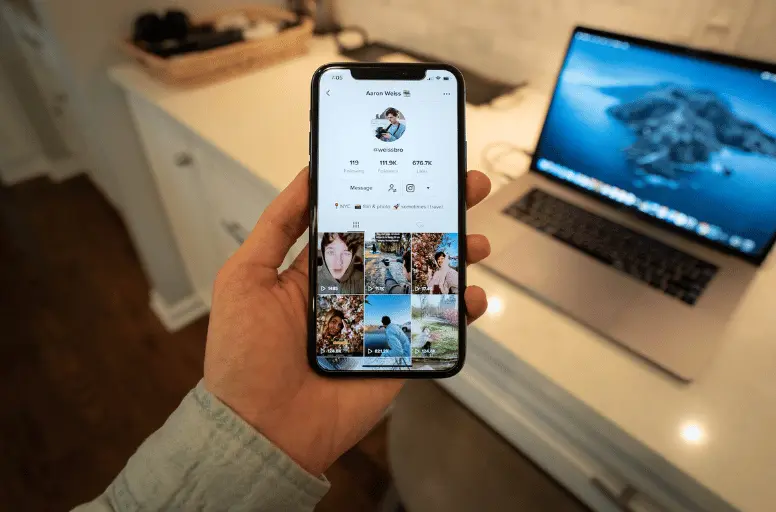
TikTok focuses on short, fast, and trend-driven video content, while Instagram supports a mix of formats and more polished visual storytelling.
When comparing TikTok vs Instagram, understanding the difference between Instagram and TikTok is key, as they offer unique content formats and styles that cater to different audiences and purposes.
Factor | TikTok | |
Core format | Short-form vertical video | Multi-format (Reels, Stories, posts, carousels) |
Content style | Raw, authentic, trend-driven | Polished, aesthetic, brand-focused |
Editing tools | Strong in-app editing (music, effects, trends) | Limited in-app, often requires external tools |
Content lifespan | Short-lived, trend-based | Longer lifespan, evergreen potential |
Virality potential | Very high (algorithm-driven discovery) | Moderate (depends on audience + content) |
Brand building | Weaker for consistency | Strong for visual identity |
Best content types | Trends, UGC, product demos, challenges | Lifestyle visuals, storytelling, product showcases |
Best for sellers | Testing products, scaling fast, going viral | Building brand, trust, and long-term positioning |
TikTok is built around short-form vertical videos that are quick to produce and easy to consume. Its in-app editing tools, sounds, and effects allow sellers to create content rapidly without needing advanced production skills.
TikTok rewards authenticity over perfection, so even simple product demos, behind-the-scenes clips, or user-generated content can perform well. In the TikTok vs Instagram comparison, TikTok clearly lowers the barrier to entry for content creation and allows sellers to move faster in competitive markets.
Instagram, on the other hand, supports a wider range of formats, including Reels, Stories, posts, and carousels. Content tends to be more curated and visually consistent, requiring more planning and editing.
This makes Instagram stand out as the better platform for brands that rely on aesthetics, storytelling, and long-term positioning rather than rapid trend adoption.
By understanding the unique features of TikTok and Instagram content, you can create more effective and engaging content on both platforms. It also helps you decide if it is better to use TikTok or Instagram for business. For a deeper breakdown, check out our guide on Instagram Reels vs TikTok for sellers.
Key takeaways:
4. Engagement and community behaviour
TikTok vs Instagram both offer unique opportunities for engagement and interaction with their respective communities. TikTok drives high viral engagement through interactive content. Instagram focuses on deeper relationships and community building.
Factor | TikTok | |
Engagement type | Viral, content-driven | Relationship-driven |
Key actions | Likes, shares, duets, stitches | Comments, saves, DMs |
Engagement speed | Fast, spikes quickly | Slower, more consistent |
Content lifespan | Short-lived but explosive | Longer-lasting |
Community strength | Broad reach, less personal | Smaller, more loyal |
Best for sellers | Awareness and reach | Retention and loyalty |
TikTok maintains its position as the most engaging major social platform, with engagement rates ranging from 2.88% to 7.50% depending on follower count. Instagram follows with engagement rates between 1.77-3.65%.
TikTok thrives on interaction through comments, duets, and stitches, and in creative ways, users engage. Sellers can foster this by prompting challenges/UGC or collaborating with influencers. Responding to comments under strategic hashtags boosts visibility in the engaged community.
Instagram, in contrast, offers many engagement avenues like comments, likes, DMs, polls, and questions. Meaningful interactions – answering messages, showcasing fans, hosting Q&As – cultivate loyalty. As the algorithm elevates highly engaging material, sellers should craft conversation-inspiring content.
Key takeaways
In TikTok vs Instagram, TikTok is better for generating fast, viral engagement and reaching new audiences, while Instagram is stronger for building a loyal community and maintaining long-term customer relationships.
5. Social commerce features
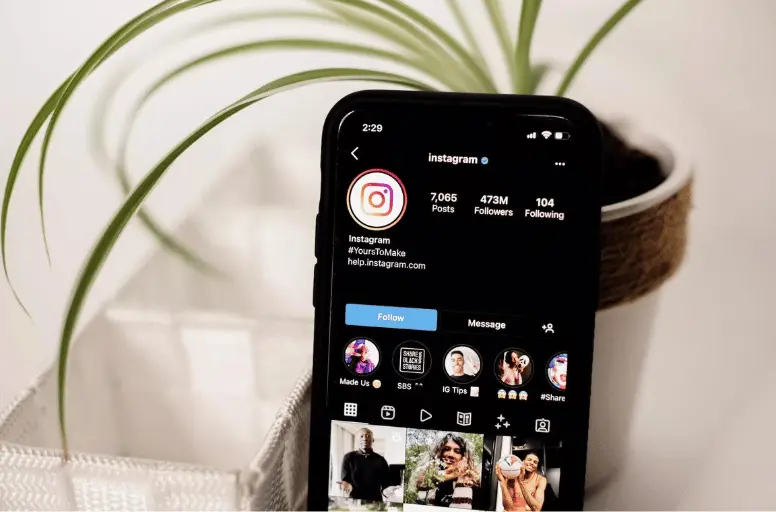
Both TikTok and Instagram offer powerful features for businesses to engage customers and drive sales online through their shopping features like TikTok Shop and Instagram Shop.
TikTok focuses on fast, content-driven purchasing, whereas Instagram supports more structured shopping through product tags and curated feeds.
In the TikTok vs Instagram comparison, TikTok integrates shopping directly into entertainment through TikTok Shop and livestream selling. TikTok Shop has grown rapidly, with reports showing 66 billion in GMV generated globally in 2025, driven largely by live commerce and creator-led sales.
Here are some powerful features that TikTok’s eCommerce capabilities include:
- TikTok Shop: By setting up a TikTok Shop, you will be able to tag products and link to your online stores for shopping directly on TikTok videos and livestreams.
- TikTok Business Center: Serves as a centralized hub where businesses can manage multiple ad accounts, collaborate with team members by assigning specific roles and permissions, and oversee campaigns in one dashboard.
- TikTok Ads Manager: Provides advanced features for creating and managing ad campaigns, including options for A/B testing, budget control, and scheduling to maximize reach and ROI.
- Live streaming: Businesses can go live to interact with customers and promote new products/services in real time.
- Metrics: TikTok provides metrics like views, likes, and comments to help businesses analyze engagement and return on ad spend.
If you want to explore how to fully leverage these tools, you can also read our guide on how to use TikTok for business.
Instagram, however, provides a more established and structured eCommerce ecosystem. It enables businesses to create and promote various types of branded content through Reels and Instagram insights.
- Reels: Similar to TikTok, reels allow businesses to create short-form entertaining videos to engage customers. As mentioned on Instagram, different parts of Instagram, like Feed, Explore, and Reels, each have their own algorithms.
- Instagram Shopping: Enables tagging and selling products directly within posts, Stories, and Reels, allowing customers to browse and purchase without leaving the app.
- Branded content tool: Allow creators and brands to disclose partnerships transparently and access performance data for sponsored posts. The platform’s advertising options, managed via Meta Ads Manager, support targeted campaigns with flexible budgeting and multiple ad formats.
- Analytics: Instagram Insights provides metrics on reach, engagement, and followers to help businesses optimize performance.
Key takeaways
TikTok is designed for impulse purchases through short videos and livestreams, while Instagram supports more structured shopping through product tags and curated feeds.
Grow Your Sales Across Platforms with LitCommerce
LitCommerce helps you seamlessly connect your TikTok Shop with platforms like Shopify, WooCommerce, and more. You can sync products, manage inventory and handle ordersordersm in 1 dashboard.
6. Influencer marketing
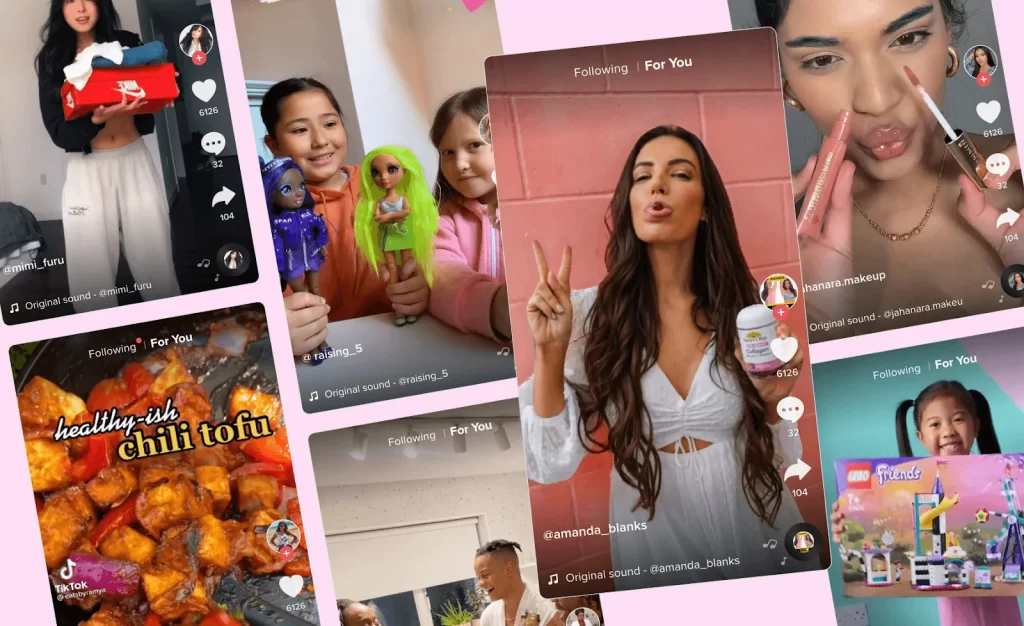
TikTok prioritizes authentic, viral creator content. In contrast, Instagram focuses on polished and brand-safe influencer collaborations.
TikTok influencers tend to create more organic and entertainment-driven content. According to influencer marketing studies, TikTok campaigns often achieve higher engagement and reach compared to Instagram, especially when aligned with trends or storytelling formats.
Influencer partnerships on TikTok can drive rapid awareness and product discovery at scale. TikTok is highly effective for generating viral campaigns and encouraging user-generated content.
TikTok offers several unique opportunities for influencer marketing:
- Hashtags: Leverage trending TikTok hashtags to find relevant influencers and audiences. Brands can use tools such as the Creator Fund, which connects brands with relevant creators, or influencer marketing platforms like AspireIQ and Upfluence.
- Live streams: Influencers can live stream product demos or Q&As to deepen engagement. Businesses can sponsor streams.
- Branded effects: Partner with top creators to develop viral effects and challenges that spread organically.
- Short videos: Influencers can seamlessly integrate products into entertaining videos in their style. Videos are shareable.
- Review channels: TikTok’s growing “Keep it 100” and review communities present marketing opportunities. Creators can honestly review products, building trust with audiences.
- Shopping cart: The cart allows influencers to earn affiliate commissions. Businesses benefit from influencers advertising products right on the app, through to purchase.
TikTok’s features provide influencers with new ways to authentically partner with brands while businesses gain innovative advertising and potential sales channels.
Instagram influencers, on the other hand, typically produce more curated and visually polished content. This makes them well-suited for brand collaborations that require consistency and aesthetics.
At the same time, Instagram supports a wider range of collaboration formats, allowing brands to work with influencers through:
- Sponsored posts: Influencers can be paid to create traditional sponsored posts promoting brands to their engaged followers.
- Stories: Products can be featured in influencer Stories through links, mentions, or visuals. Stories drive high engagement.
- IGTV videos: Influencers make longer branded videos for IGTV, giving more space to review products or services in-depth.
- Polls and questions: Brand collaborations using these features foster higher follower participation and interaction.
- Live videos: Similar to Instagram Stories, live videos allow real-time product demonstrations and Q&As with followers.
- Collabs: Influencers working together amplify reach by creating joint Reels for higher follower counts.
In short, Instagram influencers are more effective for building trust and driving purchase decisions rather than just visibility.
Key takeaways
In the TikTok vs Instagram influencers comparison, TikTok is best for viral, authentic, and interactive influencer content that boosts engagement and sales, while Instagram offers versatile formats and affiliate tools to drive polished, branded campaigns and conversions.
7. Advertising options
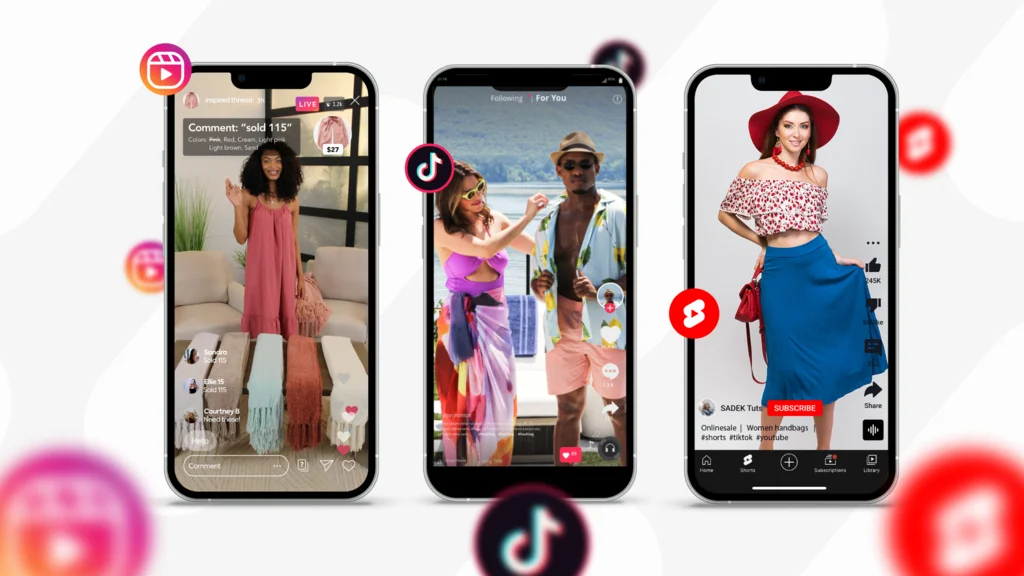
When evaluating TikTok vs Instagram, many businesses wonder: Is TikTok better than Instagram for advertising? Both platforms allow advertising and organic posting.
TikTok advertising focuses on native, content-driven ads that blend into users’ feeds. Instagram advertising, on the other hand, is more structured and conversion-focused.
Aspect | TikTok Ads | Instagram Ads |
Primary Formats | In-Feed Videos, Spark Ads, TopView, Branded Effects, TikTok Shop | Photos, Carousels, Reels, Stories, Shopping, Explore |
Cost (CPM) | $3–$10 (1,000 ad impressions) | $6–$25 (Stories $6–$9) |
Cost (CPC) | $0.17–$1.00 | $0.4–$2.50 |
Creative Lifespan | 4–7 days (faster fatigue) | 10–14 days |
Best For | Viral discovery, UGC, younger buyers, social commerce (e.g., vintage resale) | Ecommerce conversions, polished content |
Pros | Lower cost, high virality, authentic feel | Stable ROI, shopping integration, precise targeting |
Cons | Volatile CPA, younger skew, quick burnout | Higher costs, less organic reach |
TikTok’s advertising platform, TikTok Ads Manager, offers a range of ad formats, including Branded Effects, In-Feed Ads, and Hashtag Challenges.
- In-feed ads appear in users’ feeds, while Branded Effects allow brands to create custom filters and effects for users to apply to their videos.
- Hashtag challenges encourage user-generated content and can be a highly effective way to increase engagement.
Besides, TikTok offers a wide range of targeting options, including age, gender, location, interests, and devices. Budgeting strategies include options for daily or lifetime budgets, with bidding options for cost-per-click or cost-per-impression. For a step-by-step setup, check out our TikTok ads guide.
Compared to TikTok, Instagram’s advertising platform through Facebook Ad Manager offers various ad formats, including Video Ads, Carousel Ads, Photo Ads, Stories Ads, and Explore Ads.
- Photo Ads and Video Ads appear in users’ feeds, while Carousel Ads allow users to swipe through multiple images or videos.
- Stories Ads appear in users’ Stories, while Explore Ads are shown to users browsing the Explore page.
Instagram’s targeting options include demographics, interests, behaviors, and custom audiences based on data from a business’s website or app. Budgeting strategies include options for daily budgets or lifetime budgets, with bidding options for cost-per-click or cost-per-impression. spiring content.
Key takeaways
Both TikTok and Instagram support paid advertising and organic posting, with flexible budgeting and bidding options. Instagram ads are more videos, Stories ads, and Shopping ads, while TikTok focuses more on in-feed and TopView ads.
8. Analytics
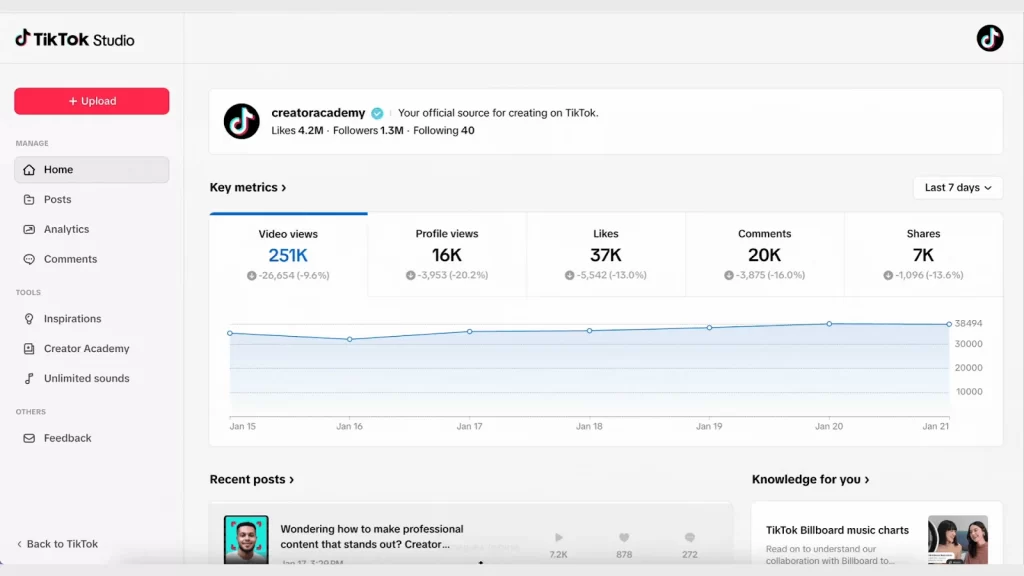
The last factor in the TikTok vs Instagram comparison is analytics.
TikTok focuses on content performance insights, whereas Instagram provides deeper audience and conversion analytics.
Metrics to monitor TikTok include views, likes, shares, comments, and engagement rates. Tracking key metrics provides insights into what content resonates most with an audience, allowing businesses to refine their strategies accordingly.
Platforms like TikTok’s analytics dashboard and third-party tools like HypeAuditor, FastMoss, etc, to help track TikTok’s performance.
Turning to Instagram, some key metrics to track on Instagram for insight are reach, impressions, engagement rate, and click-through rate. Monitoring these provides a well-rounded view of audience interaction and content performance.
Besides, Instagram Insights, the platform’s built-in analytics tool, provides businesses with valuable metrics to understand audience engagement and identify ways to improve. Key metrics shed light on demographics’ top-performing content and help businesses better understand their audience.
Key takeaways
TikTok’s metrics may be more geared toward video performance, while Instagram focuses more on followers and engagement.
TikTok vs Instagram for Different Product Categories
When comparing TikTok vs Instagram, many sellers ask the same question: Which platform is better for my product? The answer depends on how your product is discovered, consumed, and purchased.
Before diving into categories, it’s important to understand how these platforms differ:
- TikTok is discovery-driven. Its algorithm pushes content to new audiences quickly, making it ideal for virality and rapid growth.
- Instagram is relationship-driven. It focuses on building brand identity, trust, and long-term engagement.
Business Category | Primary Platform | Why Primary | Secondary Use |
Fashion/Apparel | Shoppable carousels, 25-34 demo | TikTok trend hauls | |
Beauty/Cosmetics | Both | TikTok viral + IG tutorials | N/A - run 50/50 budget |
Food/Beverages | TikTok | FYP recipe hacks explode | IG aesthetic Stories |
Tech/Gadgets | Detailed features + retargeting | TikTok unboxings | |
Vintage/Resale | TikTok | Gen Z thrift flips | IG curated collections |
Services/Coaching | Lives build professional trust | TikTok tip clips | |
Dropshipping | TikTok | TikTok Shop impulse sales | IG Meta retargeting |
TikTok works best for businesses that benefit from trends, virality, and quick decision-making. This includes categories like fashion, beauty, gadgets, and viral products. These products perform well because they can be demonstrated quickly through short videos, and buyers are more likely to make impulse purchases.
Instagram, on the other hand, is more suitable for businesses that rely on aesthetics, branding, and trust. Categories like home decor, lifestyle, fitness, food, and handmade products tend to perform better on Instagram.
Should Sellers Use TikTok and Instagram Together?
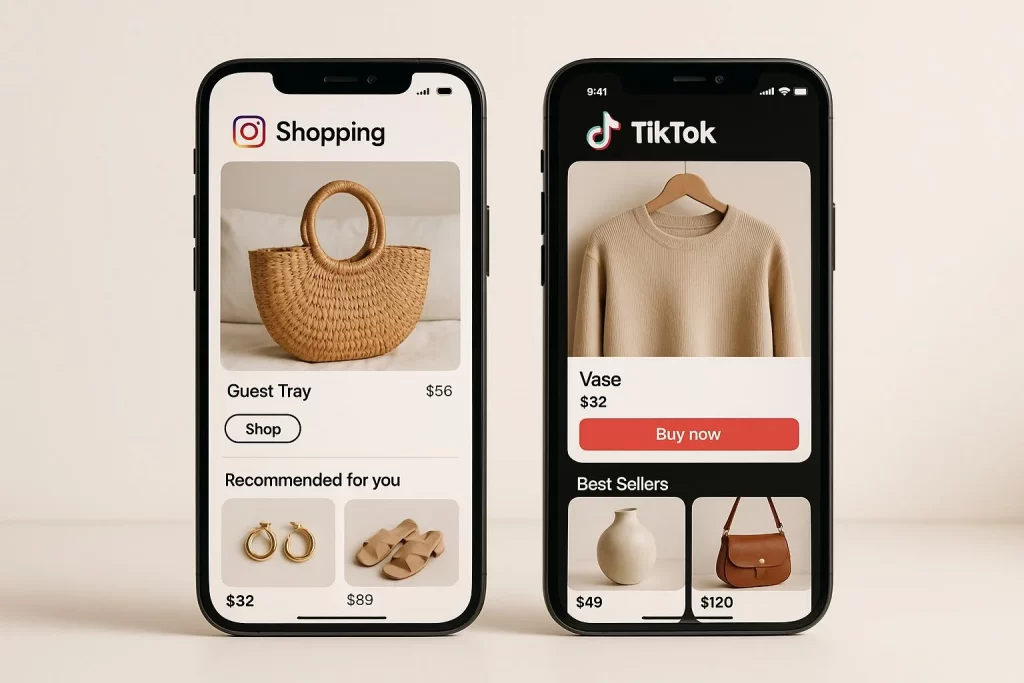
Yes, sellers should generally use TikTok and Instagram together, as they offer complementary strengths for building a full-funnel commerce strategy.
It’s because TikTok is best for reaching new audiences quickly. Its algorithm pushes content to people who have never seen your brand before, making it a powerful tool for discovery.
On the other hand, Instagram helps you build trust and maintain relationships. It gives you a space to showcase your brand identity, organize content, and create a more consistent shopping experience.
In addition, content can be repurposed across both platforms. A TikTok video can be reused as an Instagram Reel, while Instagram posts can reinforce messages introduced on TikTok.
However, success with both platforms requires understanding their differences. TikTok content should feel authentic, fast-paced, and trend-driven, while Instagram content should be more polished and aligned with your brand image. Simply posting the same content without adapting it may limit your performance.
Sell on TiSell on Both. Manage from One Place.
LitCommerce connects your store to TikTok Shop, Amazon, Etsy, eBay, and more. List products, sync inventory, and manage orders from one dashboard.
TikTok vs Instagram – FAQs
Is TikTok better than Instagram?
Both TikTok and Instagram have their own unique features and audiences. TikTok is suitable for businesses targeting a younger audience and can create engaging short-form videos. On the other hand, Instagram is ideal for showcasing products or services visually and engaging with the audience through influencer marketing and user-generated content.
Is it easier to go viral on Instagram or TikTok?
Both Instagram and TikTok have the potential for content to go viral, but the factors contributing to virality may differ between the two platforms. Instagram has a wider audience range, while TikTok’s algorithm promotes content based on user interests and engagement, making it easier for accounts with a smaller following to potentially go viral.
How is TikTok different from Instagram?
TikTok focuses on short-form video discovery via an addictive For You Page algorithm, targeting Gen Z with viral trends. Instagram emphasizes polished photos, Stories, and shopping for broader 25+ audiences seeking curated lifestyle content.
Why do people use TikTok over Instagram?
According to Social Media Today, TikTok is preferred over Instagram as it allows users to express themselves more authentically, with an average of 53% of TikTok users trusting others to be their real selves on the platform.
In contrast, TikTok’s emphasis on short, entertaining videos and its algorithms have made the platform appealing by allowing users to freely express themselves without pressure to project perfection. Instagram can sometimes have the opposite effect on self-perception with its focus on polished images.
TikTok vs Instagram for Business: Which One Suits You Most
In conclusion, choosing between Instagram vs TikTok for business depends on various factors, including target audience, marketing goals, and content type. If you decide to scale sales across both platforms simultaneously, adopting an efficient multichannel listing tool will streamline product catalog creation and keep inventory synced in real time.
If you would like additional details or recommendations on this topic, please feel free to contact us. We also encourage you to check out our Retailer Blog, where LitCommerce regularly shares informative perspectives on the constantly changing landscape of eCommerce.