



If you are comparing List Perfectly vs LitCommerce, here is the short answer: choose List Perfectly if you are a reseller who mainly needs fast crosslisting, and choose LitCommerce if you are a growing seller who needs full multichannel control.
In this article, we’ll compare List Perfectly vs LitCommerce based on supported channels, listing workflow, bulk tools, AI features, pricing, and more. By the end, you’ll know which tool better matches your selling model.
Key takeaways:
Let’s dive in!
List Perfectly vs LitCommerce: Quick Comparison
Before going deeper into each tool, here are the main takeaways from this List Perfectly vs LitCommerce comparison:
Criteria | LitCommerce | List Perfectly |
Best for | SMB sellers, eCommerce brands, and sellers expanding from a main store to multiple marketplaces | Resellers who sell one-of-a-kind items across resale marketplaces |
Main strength | Listing, inventory, pricing, order, and sales control in one system | Fast crosslisting, LP Catalog organization, and sold-item control |
Supported channels | Shopify, WooCommerce, Wix, BigCommerce, Squarespace, Amazon, eBay, Etsy, Walmart, TikTok Shop, Google Shopping, Facebook Shops, and more | eBay, Poshmark, Mercari, Depop, Grailed, Vestiaire Collective, Etsy, Facebook Marketplace, Instagram, Shopify, Whatnot, Listing Party, and Vinted |
Listing workflow | Create listings from a store, file, or existing marketplace catalog, then publish to channels. | Import listings into the LP Catalog, organize them, then crosslist to resale marketplaces |
Bulk tools | Bulk listing, Quick/Auto List to Channel, Templates, and Template Rules | Bulk Action Toolbar for crosslisting, editing, delisting, relisting, updating, and marking sold |
AI features | AI Listing Generator and AI Description Optimization for product content and marketplace-ready descriptions | Listing Assistant AI, keyword tools, Google Lens support, and barcode lookup |
Inventory control | Inventory Sync and Inventory Rules help update stock and control the displayed quantity by channel | LP Catalog, Mark Sold, Auto Sales Detection, and Auto Delist help manage one-of-a-kind inventory |
Pricing control | Price Sync and Pricing Rules help adjust prices by marketplace | Mainly listing-level pricing management; less focused on channel-based pricing rules |
Order management | Supports Order Sync to centralize marketplace orders | Not mainly built for order sync or fulfillment workflows |
Reports | Sales Reports help sellers compare channel performance | Sales analytics help resellers review sales, costs, fees, and profit |
Pricing | Starts from $29/month with a 7-day free trial | Starts from $29/month; no standard free trial, but offers a money-back guarantee |
Final verdict | Choose LitCommerce if you need a complete multichannel selling system | Choose List Perfectly if you need a reseller-first crosslisting tool |
If you are still exploring options, we also reviewed the 10 best multichannel listing tools for different seller types.
LitCommerce Breakdown: Features & Pricing
LitCommerce is a multichannel selling tool that helps sellers list products, sync inventory and pricing, manage orders, and monitor sales across 10+ sales channels.
Instead of treating each marketplace as a separate task, LitCommerce gives sellers one central dashboard to control their products and sales data. You can connect your main store, import existing products, create marketplace listings, apply templates and rules, and keep key information synced across channels.
Pros | Cons |
- Supports an end-to-end multichannel selling workflow - Connects online stores to 10+ main marketplaces. - Tailor features built for each channel, not generic listings - Provides bulk listing tools with templates and rules - AI-powered listing creation and optimization - Offers centralized product, inventory, price, and order management - Excellent customer support | - Not focused on resale-only features like Poshmark sharing - May offer more features than a casual reseller needs. |
Supported channels
LitCommerce supports a wide range of eCommerce platforms, marketplaces, and shopping channels.
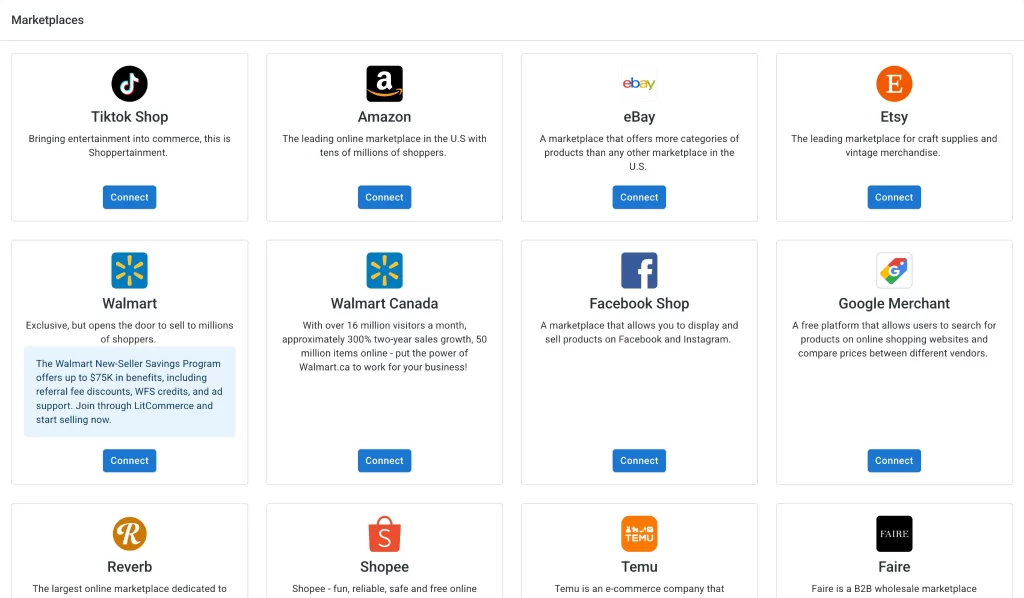
For eCommerce platforms, sellers can connect stores such as Shopify, WooCommerce, Wix, BigCommerce, and Squarespace. These platforms can serve as the primary catalog source, allowing sellers to use their existing store products to create listings on marketplaces.
For marketplaces, LitCommerce supports major channels such as Amazon, eBay, Etsy, Walmart, TikTok Shop, Reverb, Faire, Temu, Shopee, and more. It also supports shopping and social commerce channels like Google Shopping and Facebook Shops.
This broad channel coverage matters because many growing sellers do not want to limit themselves to a single marketplace. They may start with Etsy, then expand to eBay, Amazon, Walmart, or TikTok Shop later. LitCommerce gives them a setup that can grow with that plan.
That is why, in the List Perfectly vs LitCommerce comparison, LitCommerce is better suited for sellers who treat multichannel selling as a long-term growth strategy, not just a faster way to copy listings.
Key features
LitCommerce includes several features that help sellers save time, reduce manual work, and manage multichannel growth with greater confidence.
Here are the key features worth highlighting.
Centralized multichannel dashboard
The LitCommerce Dashboard acts as the seller’s control center for multichannel operations. Instead of managing every product, listing, order, and update inside separate marketplace accounts, sellers can use one dashboard to monitor connected channels and manage key activities.
With the LitCommerce Dashboard, sellers can organize product data, prepare and fill in missing product information, manage connected channels, and track multichannel activity in one place. This does not remove marketplace rules, but it makes the workflow easier to control.
Flexible ways to import listings
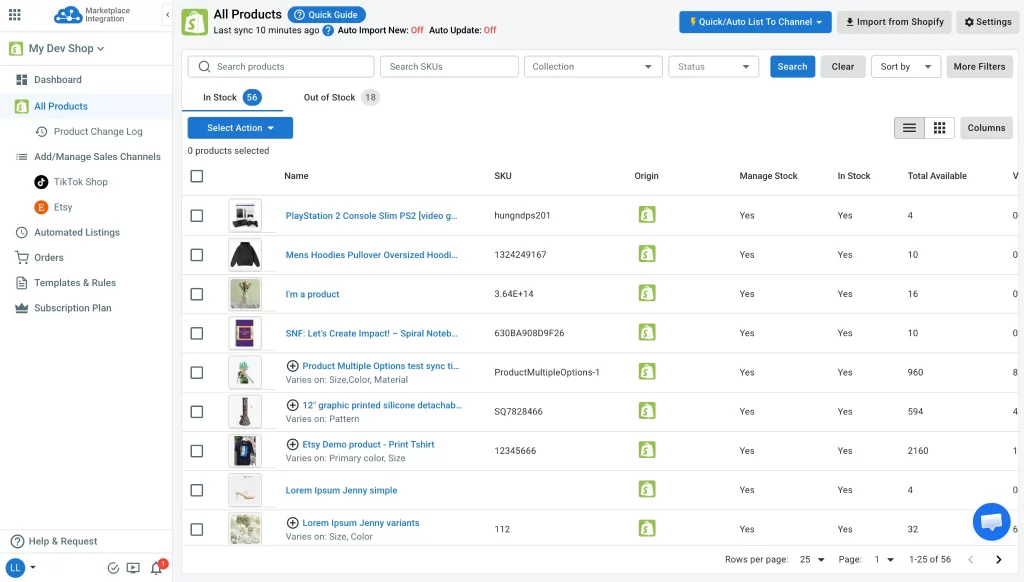
When I tested the import workflow, I found this especially useful. A seller does not have to follow one fixed path. You can start from your online store, an existing marketplace catalog, or a product file. That makes LitCommerce more flexible for different business stages. There are 3 ways to run your catalog using LitCommerce:
- Your eCommerce store is the main catalog. If you already sell on Shopify, WooCommerce, Wix, BigCommerce, or Squarespace, you can import products from your store into LitCommerce
- A single file as a central hub. It’s when you manage products through CSV, Excel, or Google Sheets import. This option is helpful if you do not have a webstore yet, or if your product data comes from suppliers, internal spreadsheets, or wholesale catalogs.
- The LitCommerce app is the central hub. If you already have active listings on eBay, Etsy, or Amazon, you can import those listings into LitCommerce and use them to expand to other channels.
Bulk listing with Template & Rules
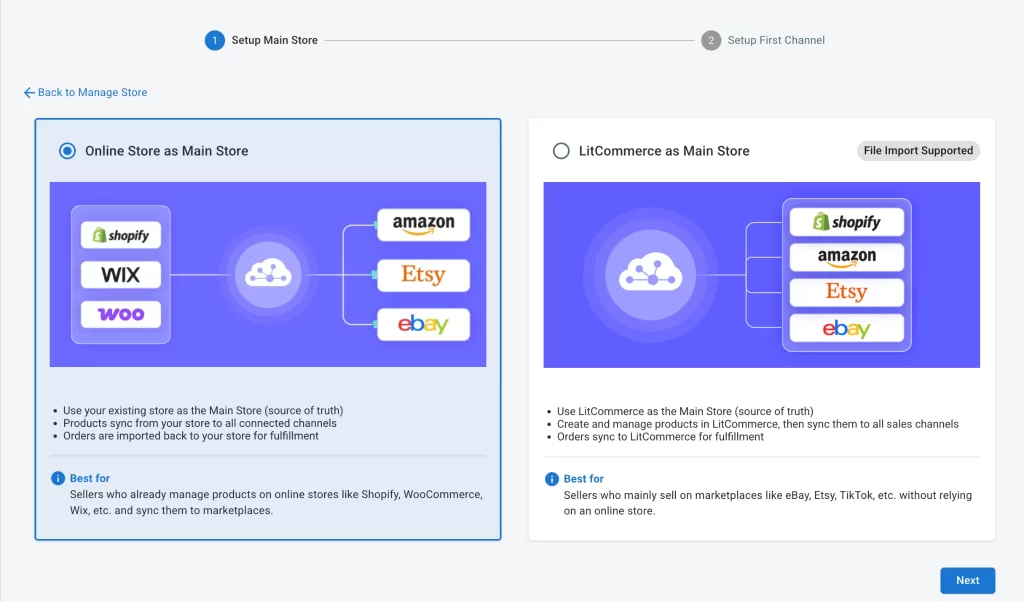
Using LitCommerce, sellers can use the Template & Rules or Quick publish feature to publish multiple products to different channels without editing each listing individually.
LitCommerce provides all the marketplace-specific fields already customized for each sales channel, so you can map your product data correctly without worrying about incompatible or missing information.
Instead of manually adjusting listings for every marketplace, you can prepare them once with reusable templates and publish confidently, knowing they meet each channel’s requirements.
A Listing Template is a saved set of attributes and settings used to create or update listings on a specific sales channel. You can create templates for title and description, pricing, shipping, category, return policy, item specifics, or other channel-based listing details.
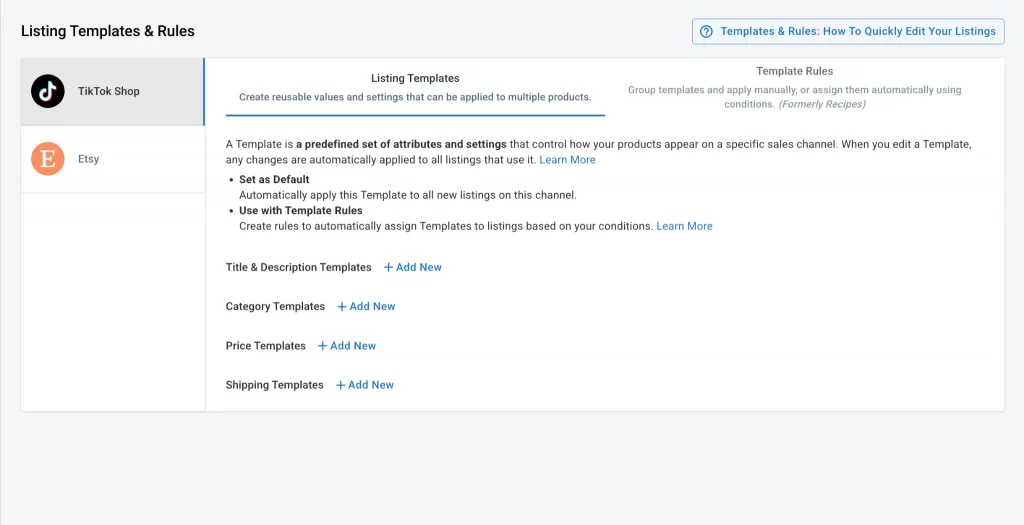
Template Rules take this a step further. Instead of manually choosing templates for every listing, you can set rules so LitCommerce applies templates based on product conditions.
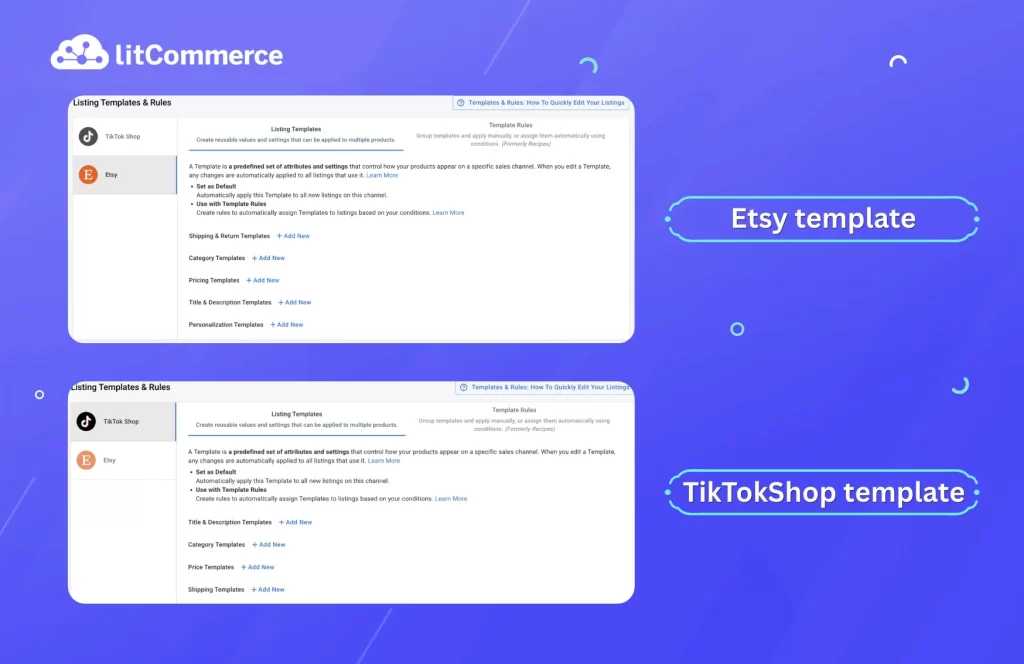
What impressed me more was the channel-specific templates. Depending on where you expand, LitCommerce provides templates tailored to that channel’s exact requirements.
I test this by creating a listing template on Etsy. I saw it was customized for this channel by having personalization-related fields.
AI-generated and optimized listing
Instead of starting with a blank title and description, you can upload an image and let the AI suggest listing content based on what it recognizes from the product.
For sellers, this removes one of the most time-consuming parts of multichannel selling: turning raw product images into usable listings. You still need to review the details, but AI gives you a stronger starting point. It can help draft this information:
- Description
- Category
- Condition
- Tags
- Custom attributes
Furthermore, for Etsy and eBay sellers, the AI Description Optimization feature can help improve existing descriptions, making them more engaging, clearer, and better suited to each marketplace’s style.
For example, Etsy descriptions may need a more descriptive and shopper-friendly tone, while eBay listings often benefit from clearer product details, condition notes, and trust-building information.
In the List Perfectly vs LitCommerce comparison, this feature gives LitCommerce a stronger advantage in content creation.
Schedule and automated listing
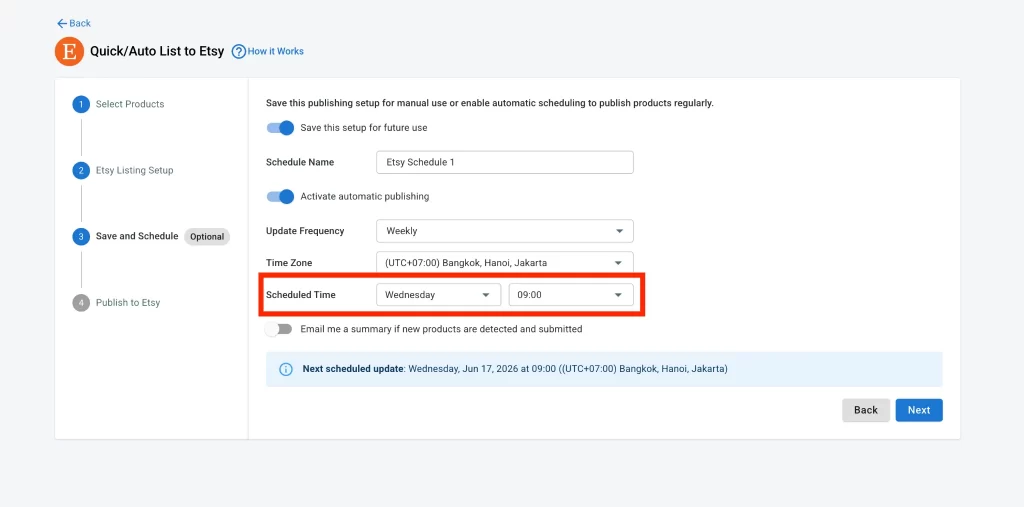
LitCommerce offers the Quick/Auto List to Channel feature, which helps you schedule listing updates and publish products to marketplaces in a more controlled way.
When I tested this workflow, I found it useful because it reduced the back-and-forth between different tabs. Instead of opening each product, editing listing details one by one, and publishing manually, you can choose products from your main catalog, set up ready-to-use listing template, and decide when those listings should go live or publish them for a specific sales channel from one place.
Near-instant inventory & price sync
Inventory Sync and Price Sync help you keep stock and prices updated across connected channels without manually editing each marketplace.
In addition to basic sync, Inventory Rules let you control how much stock appears on each marketplace. For example, if you have 100 units in your main store, you can show only 10 units on eBay, 20 units on Etsy, and keep the rest hidden. This helps you manage channel risk, create urgency, and reserve stock for other platforms.
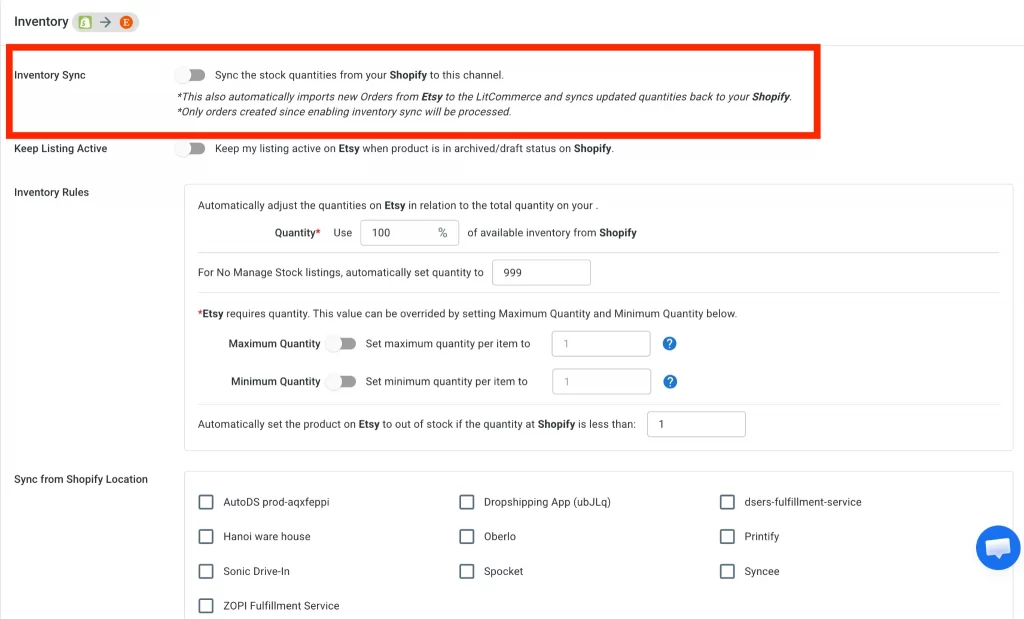
Price Sync keeps product prices updated across channels. When you change the price in your main catalog, LitCommerce can push that update to connected marketplaces.
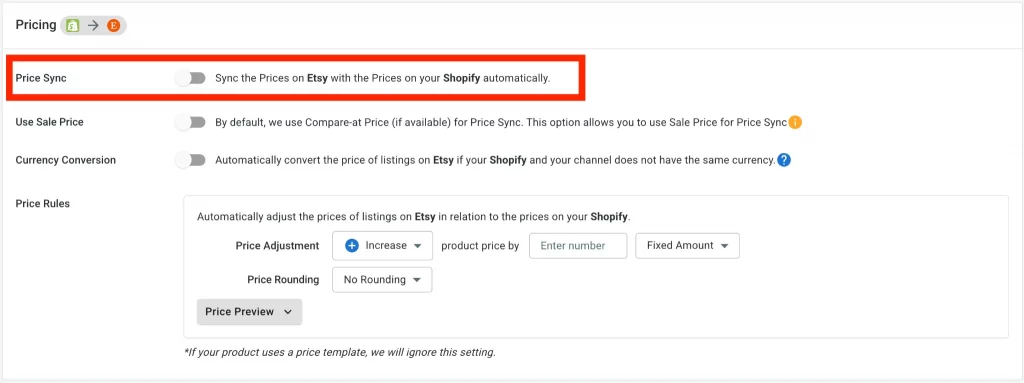
With Pricing Rules, you can adjust prices by channel instead of using the same price everywhere. For example, you can add a 10% markup on eBay to cover fees, set a different price for Etsy, or adjust TikTok Shop prices for campaigns.
In the List Perfectly vs LitCommerce comparison, this is a major difference. List Perfectly is mainly useful for crosslisting and reseller workflows. LitCommerce gives sellers stronger control over inventory, pricing, and channel-specific rules after listings go live.
Order management and sales report for sellers
The Order Sync feature helps you bring marketplace orders into a centralized workflow. Order Sync helps you manage incoming orders from connected marketplaces in one place. This makes fulfillment easier, especially when order volume grows or when you work with a small team.
If you use LitCommerce as your main store to cross-sell on multiple marketplaces, LitCommerce not only syncs orders but also supports your fulfillment workflow. You can connect your existing fulfillment service to automatically send orders for shipping and have tracking information synced back to your sales channels.
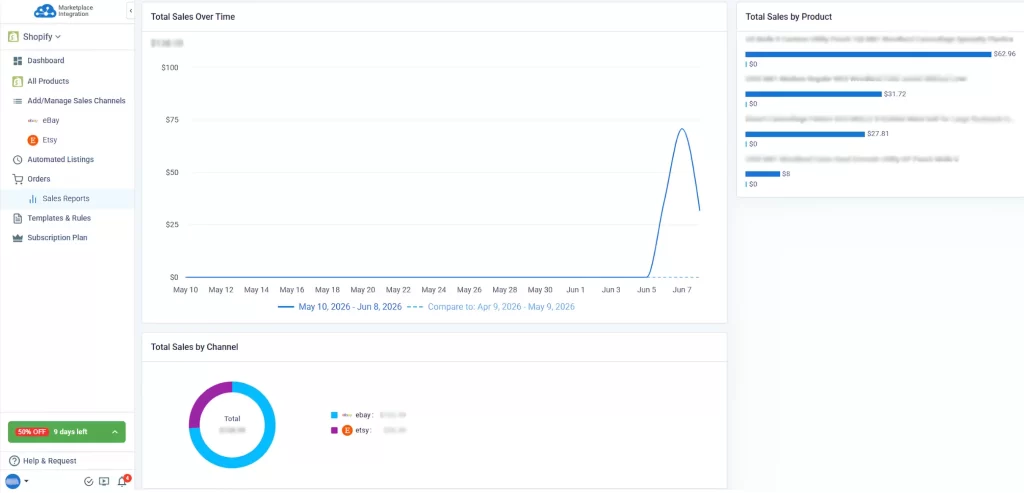
LitCommerce also includes Sales Reports, which help you understand how your channels are performing. You can review sales activity, compare marketplace results, and identify which products or channels deserve more attention.
Pricing
LitCommerce pricing is based on your selling needs, including listing volume, connected channels, and sync requirements.
You can start with a 7-day free trial, then move to a paid plan starting from $29/month as your catalog and channel needs grow. The entry plan includes 1,000 listings, 3 connected channels, unlimited monthly orders, and a 15-minute sync frequency for both inventory updates and order import.
What I like about LitCommerce pricing is that the core features are already included in the plan. You do not have to pay extra just to unlock the main tools that make multichannel selling work, such as listing management, inventory sync, order import, templates, and rules.
If you choose annual billing, LitCommerce also offers a 20% discount, making it more cost-effective for sellers planning to use the tool long-term.
Best for
LitCommerce is best for SMB sellers and brands that want to expand from one main store to multiple marketplaces while keeping listings, inventory, pricing, orders, and sales data connected. It fits sellers who need more than cross-listing.
If you are comparing eCommerce-focused marketplace integration tools, our LitCommerce vs CedCommerce guide or LitCommerce vs Sellbrite comparison is another helpful read!
List Perfectly Breakdown: Features & Pricing
List Perfectly is an AI-powered cross-listing and inventory management tool designed primarily for resellers. The platform helps sellers list products across multiple marketplaces from a single dashboard and manage inventory centrally.
The biggest strength of this platform is its reseller-first workflow. It is clearly built around sellers who move inventory across platforms like eBay, Poshmark, Mercari, Etsy, Facebook Marketplace, and more.
In the List Perfectly vs LitCommerce comparison, List Perfectly is stronger for resale-style cross-listing.
Pros | Cons |
- Built specifically for resellers and resale marketplace workflows. - Supports 13 platforms, including major resale channels. - LP Catalog helps sellers centralize and back up listings - Unlimited listings and crosslisting are included in all plans - Bulk actions support importing, crosslisting, delisting, relisting, marking sold, and updating - Auto Sales Detection and Auto Delist included | - No free plan available - Less suitable for SMBs that need full order sync and fulfillment workflows - Auto Delist is only available on Pro Plus - Not mainly built for Amazon, Walmart, TikTok Shop, or B2B marketplace expansion |
Supported channels
List perfectly supports 13 platforms, with a strong focus on resale and social-selling marketplaces. The supported platforms include: eBay, Poshmark, Mercari, Depop, Grailed, Vestiaire Collective, Etsy, Facebook Marketplace, Instagram, Shopify, Whatnot, Listing Party, and Vinted.
This channel mix shows List Perfectly’s main strength. It is not trying to be a broad channel integration tool for every marketplace type. Instead, it focuses heavily on where resellers already sell: fashion, vintage, secondhand goods, collectibles, local selling, social commerce, and live shopping.
cSince List Perfectly is often compared with other reseller tools, you may also want to read our Vendoo vs LitCommerce comparison
Key features
Before delving into the details, it is important to understand that List Perfectly is built mainly for resale workflows. Let’s look at the features that matter most.
Reseller-first crosslisting workspace
Unlike LitCommerce, List Perfectly’s workspace centers around the LP Catalog, providing tools for listing management, inventory organization, bulk editing, imports, drafts, templates, and AI-assisted listing creation, making it particularly suitable for resellers managing listings across multiple marketplaces.
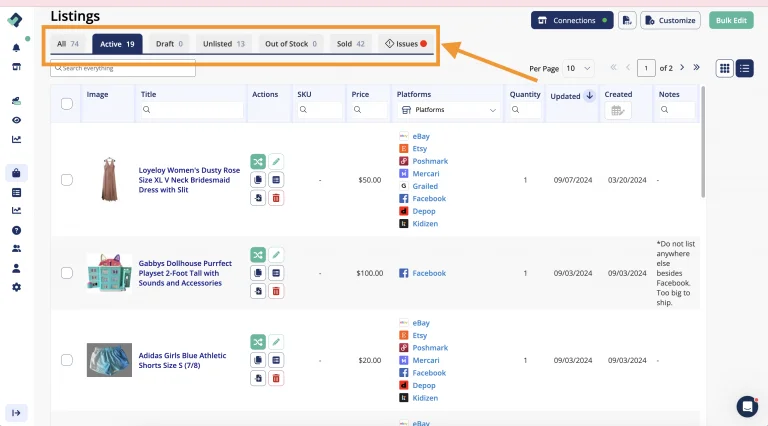
When I worked with the LP Catalog, I liked how customizable the workspace felt. You can adjust the view based on how you prefer to manage inventory.
For a quick visual scan, I could switch to Grid View and review listings by image. When I needed more listing details, List View made more sense because it showed information in a more structured table. I could also adjust how many listings appeared per page, which helped when reviewing a larger batch of products.
Importing and cross-listing to resale marketplaces
List Perfectly supports both importing and cross-listing. If you already have active listings on marketplaces, you can import them into your LP Catalog. This helps you create a centralized backup of your listings and organize your inventory in one place.
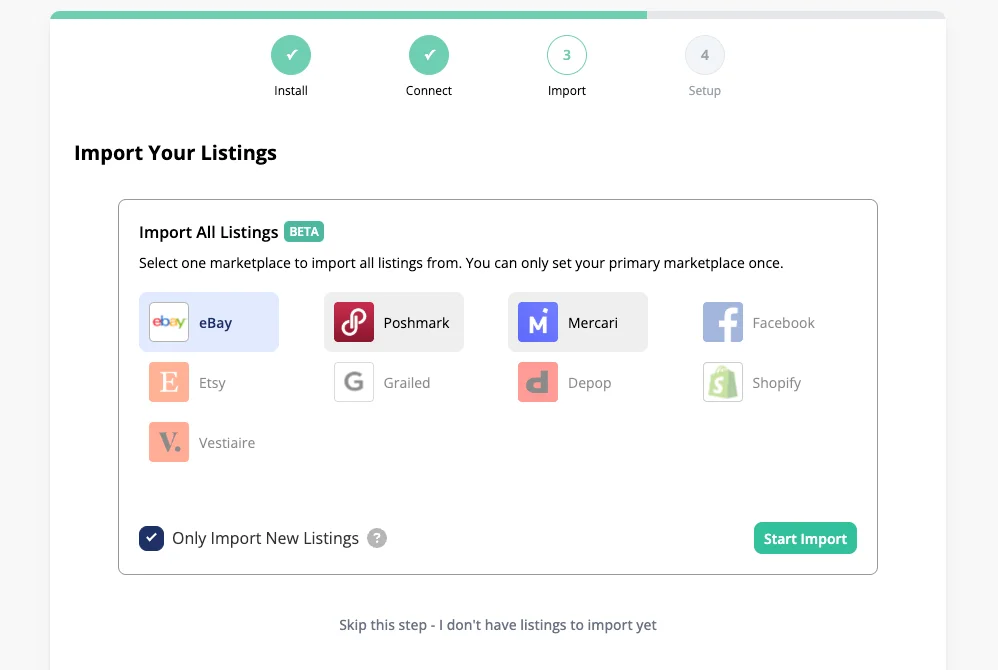
After your products are in the LP Catalog, you can cross-list them to other marketplaces. You can also cross-list the marketplace to the marketplace when you do not want to import first.
One thing I noticed when testing this tool is that new customers get unlimited imports on every plan, with no extra importing fees. That is a strong advantage for resellers who already have hundreds or thousands of active listings and want to consolidate them into a single workspace.
Bulk editing and listing
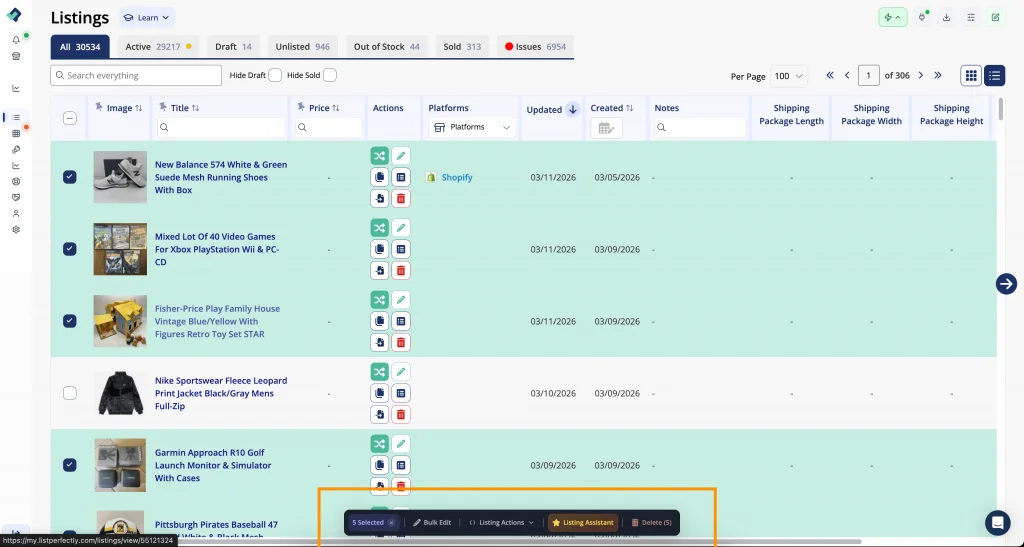
This tool supports bulk actions via its Bulk Action Toolbar, which is especially useful as your resale catalog grows.
With the Bulk Action Toolbar, you can:
- Select multiple listings at once
- Edit listing details across several listings
- Run listing actions such as crosslisting or ending listings
- Generate listing details using Listing Assistant
On higher plans, List Perfectly also integrates this bulk workflow with more advanced automation. Auto Delist, available on Pro Plus, can automatically remove sold items from other connected marketplaces after a sale is detected.
AI-generated listings and keyword tools
To help resellers create listing content faster from photos or existing listing information, List Perfectly provides the Listing Assistant AI feature.
Listing Assistant AI helps reduce that work. It can analyze listing images or existing listing titles and generate listing details such as titles, descriptions, item specifics, and keywords or tags. However, you still need to review the details carefully.
Besides, List Perfectly also supports keyword and research tools such as Google Lens and barcode lookup. These tools can help sellers research product information, find better listing terms, and identify products faster.
Sales detection and auto-delist
When testing this platform, I saw that it gives resellers several ways to manage sold items across marketplaces.
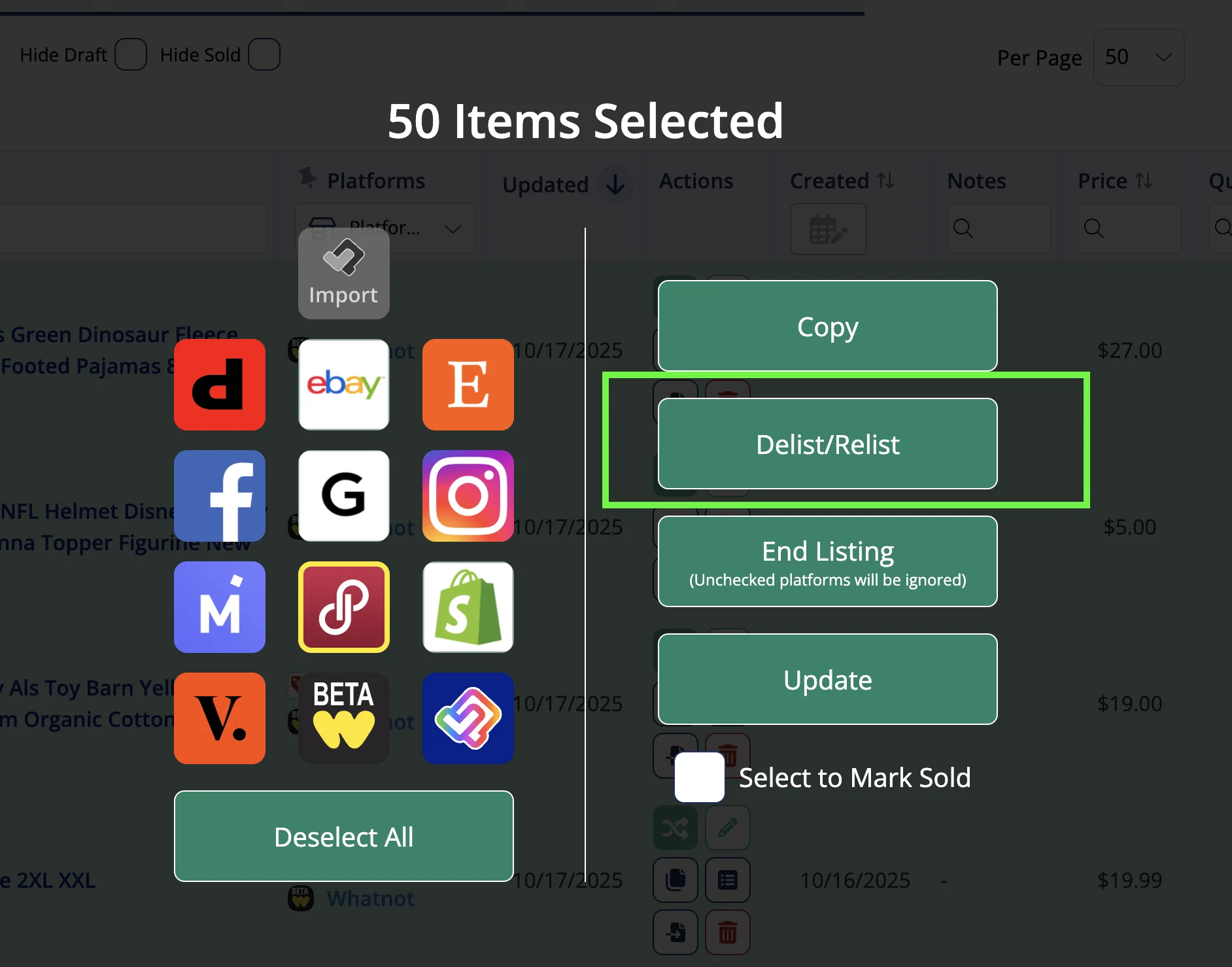
The first option is Mark Sold, which is included across plans. When an item sells, you can mark it as sold and remove it from other supported platforms with seller action.
The second option is Auto Sales Detection, available on Pro. This feature helps detect sales from connected marketplaces, so your LP Catalog stays more up to date. Once a sale is detected, you can use Mark Sold and End Listings to remove that item from other platforms.
The third option is Auto Delist, available on Pro Plus. This is the most automated option because it can remove sold listings from other connected marketplaces after the sale is detected.
These features are important because resellers often list the same one-of-a-kind item on several marketplaces. From my experience, this is where List Perfectly has a clear reseller advantage.
Sales analytics for resellers
List Perfectly’s sales analytics help sellers understand what is working in their resale business.
You can use analytics to review sales by platform and track important numbers such as sales, cost of goods, shipping costs, fees or other expenses, and profit. You can also filter reports by details like title, SKU, marketplace, date sold, or date added.
Pricing
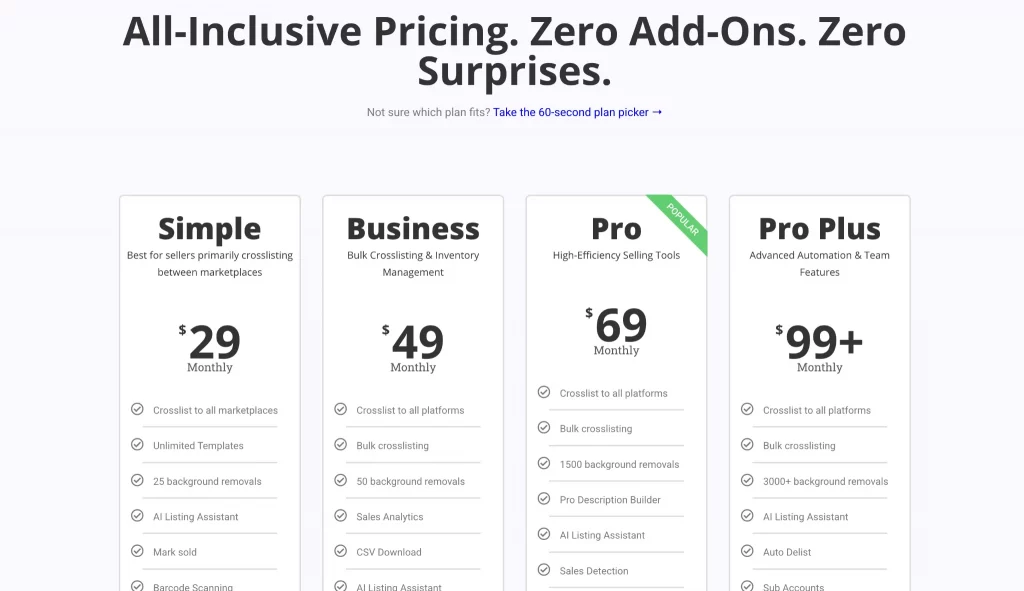
List Perfectly pricing starts at $29/month with the Simple plan. It also offers Business at $49/month, Pro at $69/month, and Pro Plus from $99/month. Pro Plus has higher tiers for larger sellers or teams that need more AI generations, barcode scans, background removals, and sub-accounts.
One thing I noticed about List Perfectly pricing is that all plans include the basics resellers need to start crosslisting: unlimited listings, unlimited imports for new customers, unlimited crosslisting, access to supported marketplaces, templates, image hosting, delist/relist, Mark Sold, and mobile or desktop listing creation.
The main difference is how much automation and advanced functionality you get as you move up.
Best for
List Perfectly is best for resellers who need to list the same one-of-a-kind items across multiple resale marketplaces quickly. It fits sellers who mainly sell clothing, vintage items, collectibles, books, accessories, or secondhand products on platforms like eBay, Poshmark, Mercari, Depop, Etsy, Facebook Marketplace, Whatnot, or Vinted.
List Perfectly vs LitCommerce: Final Verdict
When it comes to List Perfectly vs LitCommerce, the better choice depends on how you sell and what kind of workflow you need.
Both tools help sellers work across multiple channels, but they solve different problems. List Perfectly is built for resellers who need fast crosslisting and sold-item control, while LitCommerce is built for sellers who need a complete multichannel selling system.
Case 1: You’re a seller expanding a real store across channels
If you already run a store on Shopify, WooCommerce, Wix, BigCommerce, or Squarespace and want to expand to marketplaces like Amazon, eBay, Etsy, Walmart, TikTok Shop, or Google Shopping, LitCommerce is the better choice.
In this case, your biggest challenge is not just creating listings. You need to keep product data, inventory, pricing, and orders connected across channels. LitCommerce fits this workflow better because it supports store-based catalog import, marketplace-specific templates, inventory sync, price sync, pricing rules, inventory rules, order sync, and sales reports.
List Perfectly can help you move listings, but it is not built for full store-to-marketplace operations. So if you are expanding a real eCommerce store, LitCommerce gives you a stronger foundation.
Case 2: You’re a reseller focused on fast cross-listing to marketplaces
If you sell secondhand, vintage, thrifted, or one-of-a-kind products across resale marketplaces, List Perfectly is the better choice.
This is where List Perfectly has the clearer advantage. Resellers usually need to create listings fast, reuse listing data, manage one central catalog, and remove sold items from other marketplaces. List Perfectly is built exactly for that workflow with the LP Catalog, unlimited cross-listing, bulk actions, AI listing drafts, Mark Sold, Auto Sales Detection, and Auto Delist on higher plans.
LitCommerce may offer more advanced sync and order tools, but many resellers may not need them.
Case 3: You manage a larger catalog and need stronger operational control
If your catalog is growing and you need better control over stock, prices, orders, and channel performance, LitCommerce is the better long-term choice.
This is especially true if you sell repeatable products in multiple quantities. As your catalog grows, manual updates become risky. You may oversell products, miss price changes, forget marketplace orders, or lose track of which channel performs best. LitCommerce handles these problems better with Inventory Sync, Price Sync, Inventory Rules, Pricing Rules, Order Sync, and Sales Reports.
List Perfectly can still work well for a large resale catalog, especially if your products are mostly one-of-a-kind. But for larger eCommerce catalogs with SKUs, quantities, pricing strategies, and fulfillment needs, LitCommerce offers stronger operational control.
How We Compared List Perfectly vs LitCommerce
To compare List Perfectly vs LitCommerce, I looked at both platforms from the way sellers actually use them, not just from the number of features each tool lists on its website.
For LitCommerce, I focused on how well it supports a store-based selling workflow. I connected my Shopify store and tested the product import flows, listed products on eBay, Etsy, and TikTok Shop, used AI listing tools, synced inventory and prices, reviewed sales reports, and more.
For List Perfectly, I focused on the reseller workflow. I looked at how sellers can use the LP Catalog to organize listings, import existing marketplace listings, crosslist to resale platforms, customize catalog views, and use bulk actions.
I compared both tools across these key criteria:
- Supported channels: whether the platform focuses on major eCommerce marketplaces or resale marketplaces.
- Import workflow: how sellers bring products or existing listings into the system;
- Listing workflow: how easy it is to create, edit, optimize, and publish listings;
- Bulk tools: how each platform handles multiple products or listings at once;
- AI support: how AI helps create or improve listing content;
- Inventory & price sync: whether the tool helps manage inventory and price;
- Pricing: what each plan includes and which features require higher tiers;
After testing both workflows, the main difference became clear. List Perfectly is built around reseller speed and sold-item control, while LitCommerce is built around multichannel operations. That is why this comparison focuses on seller fit, not just feature count.
List Perfectly vs LitCommerce: FAQs
What is the best crosslisting app for resellers?
The best crosslisting app for resellers depends on what and where you sell. For resale-focused sellers, List Perfectly is a strong option because it supports unlimited crosslisting, the LP Catalog, bulk actions, and more.
However, if you are not only crosslisting but also managing inventory, pricing, orders, and reports across channels, LitCommerce may be the better fit for a more complete multichannel workflow.
How much does List Perfectly cost?
List Perfectly pricing starts at $29/month for the Simple plan. The Business plan costs $49/month, the Pro plan costs $69/month, and Pro Plus starts at $99/month. According to List Perfectly, all plans include core features such as unlimited listings, import and crosslist, delist/relist and update, Mark Sold, marketplace access, AI Listing Assistant, mobile and desktop listing creation, and templates.
Which is better, LitCommerce or List Perfectly?
LitCommerce is better for eCommerce sellers and SMBs that need a full multichannel selling system, including listing management, inventory sync, price sync, pricing rules, order sync, and sales reports.
List Perfectly is better for resellers who mainly need fast crosslisting, LP Catalog organization, bulk actions, AI listing drafts, and sold-item control across resale marketplaces. So, the better choice depends on your workflow: choose LitCommerce for multichannel operations, and choose List Perfectly for resale crosslisting.
Which reselling platform has the most users?
eBay has one of the largest buyer bases, with 136 million active buyers reported for Q1 2026. That gives eBay a major advantage for sellers who want a broad reach across categories like collectibles, electronics, fashion, auto parts, home goods, and secondhand items.
However, the “best” platform still depends on your niche. Poshmark may work better for fashion, Depop for Gen Z-focused clothing, Mercari for casual resale, and Facebook Marketplace for local or bulky items.
Final Thoughts
When comparing List Perfectly vs LitCommerce, the right choice comes down to your selling model. Choose List Perfectly if your priority is resale cross-listing. Choose LitCommerce if your goal is long-term multichannel growth with less manual work and better control across your sales channels.
If you are planning to expand across more marketplaces, you can also explore our guide on our Blog to build a stronger growth plan. Or, Contact us to see how LitCommerce can support your multichannel selling workflow.