


Selling Parter
Automated Amazon eCommerce Integration to Sync Products & Inventory



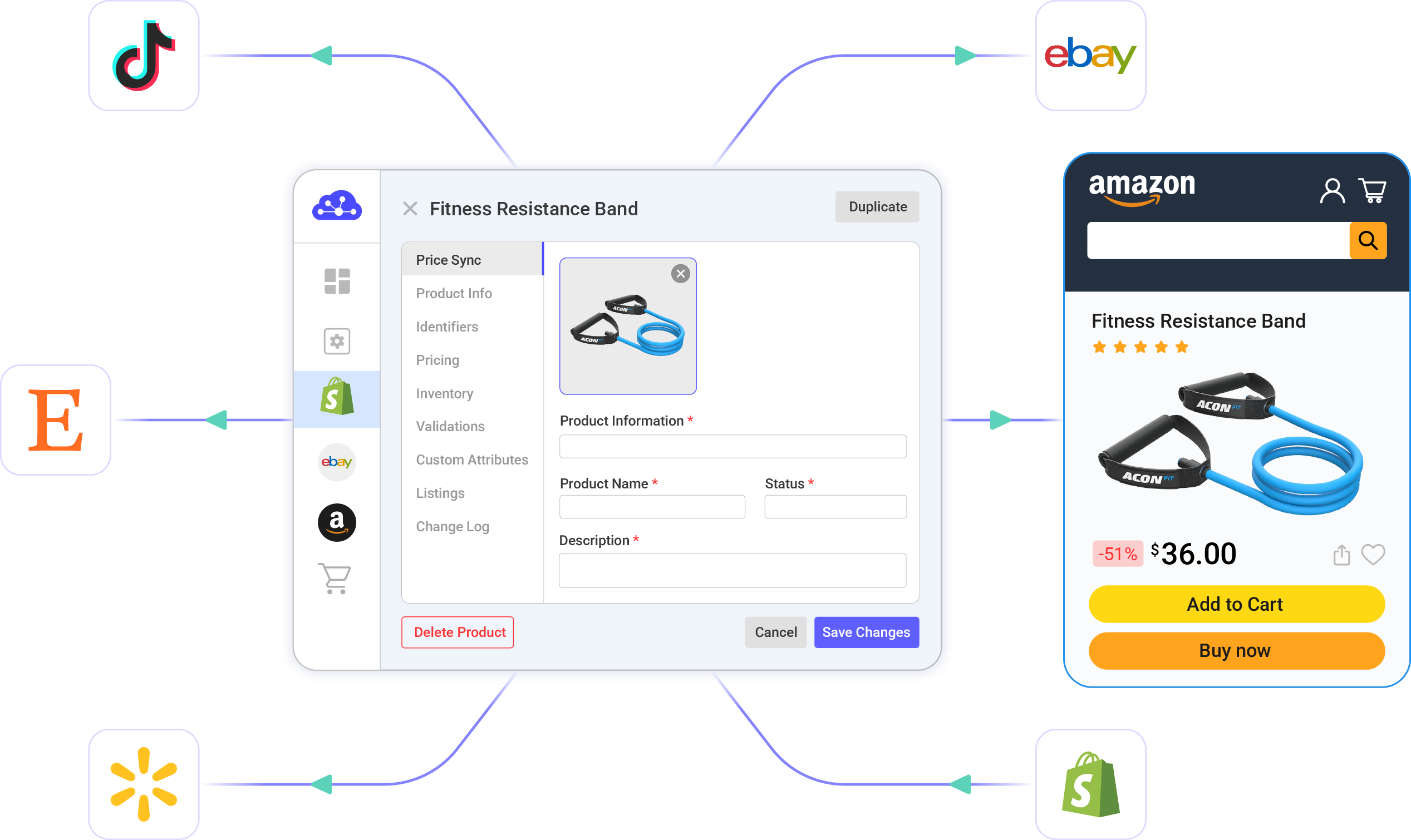
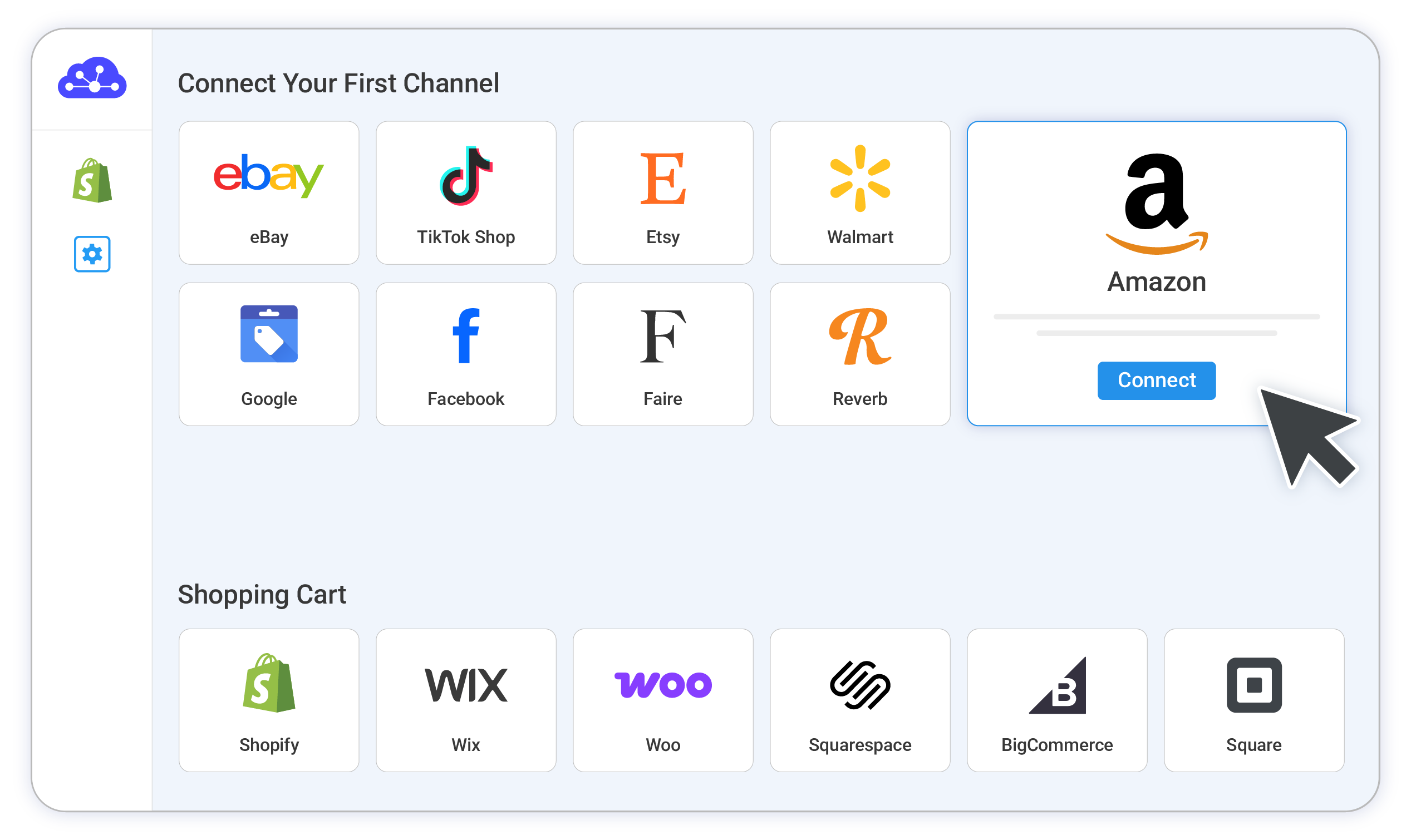
First, connect your Shopify, WooCommerce, BigCommerce, Wix, Squarespace, or Square store as your Main Store. If you don’t have one, use LitCommerce as your Main Store.
Then connect your Amazon Seller Central account. From the same account, you can also connect 10+ other top marketplaces like eBay, Etsy, and TikTok Shop.
LitCommerce supports three major listing cases, depending on where your products already live:
- Case 1: List products from your online store or another marketplace on Amazon.
- Case 2: Import your Amazon listings into your online store or another marketplace.
- Case 3: Link products that already exist on Amazon and another channel.
Products you add to the LitCommerce Amazon channel are saved in the Draft tab first, so you can review and edit them before publishing on Amazon.
Note: Amazon is one of the marketplaces with many prerequisites. Listing products for the first time may require filling in additional fields and gathering information from Amazon Seller Central. However, the process becomes easier after the first listing.
Once enabled, LitCommerce keeps your product details – inventory, pricing, and orders – synced across your Amazon store, online store, and other marketplaces on a 15-minute cycle, so data stays accurate across every connected channel and you avoid overselling.
Note: LitCommerce doesn’t support Amazon FBA inventory sync.
Turn on order import in your Amazon settings, and new Amazon orders flow into your Main Store automatically, whether that’s Shopify, WooCommerce, or LitCommerce itself.
However, due to Amazon API limitations, we only import order product details; no customer information is included. Also, if you fulfill an order in your Main Store, its status and tracking information can’t be updated on Amazon.
Detailed Guide on Amazon Integration
Already selling on Shopify, WooCommerce, eBay, or Etsy and want to reach Amazon shoppers too? LitCommerce’s Amazon integration lets you connect your existing store to Amazon, so you can list products without starting from scratch and keep inventory and orders in sync across all your channels.
Whether you’re a small business aiming to expand sales or a larger enterprise seeking operational optimization, integrating with Amazon through LitCommerce follows 4 primary steps:
- Connect your store with Amazon
- List & import products on Amazon
- Enable Amazon sync
- Manage orders
#Step 1: Connect your store with Amazon
First, set up your Main Store, the source of the products you’ll list and sync with Amazon. Pick the option that matches how you sell today:
- Running your own online store? If you’re on Shopify, WooCommerce, BigCommerce, Wix, Squarespace, or Square, choose your platform and click Connect.
- Selling only on marketplaces? Click Skip – Connect a marketplace, and LitCommerce will act as your Main Store.
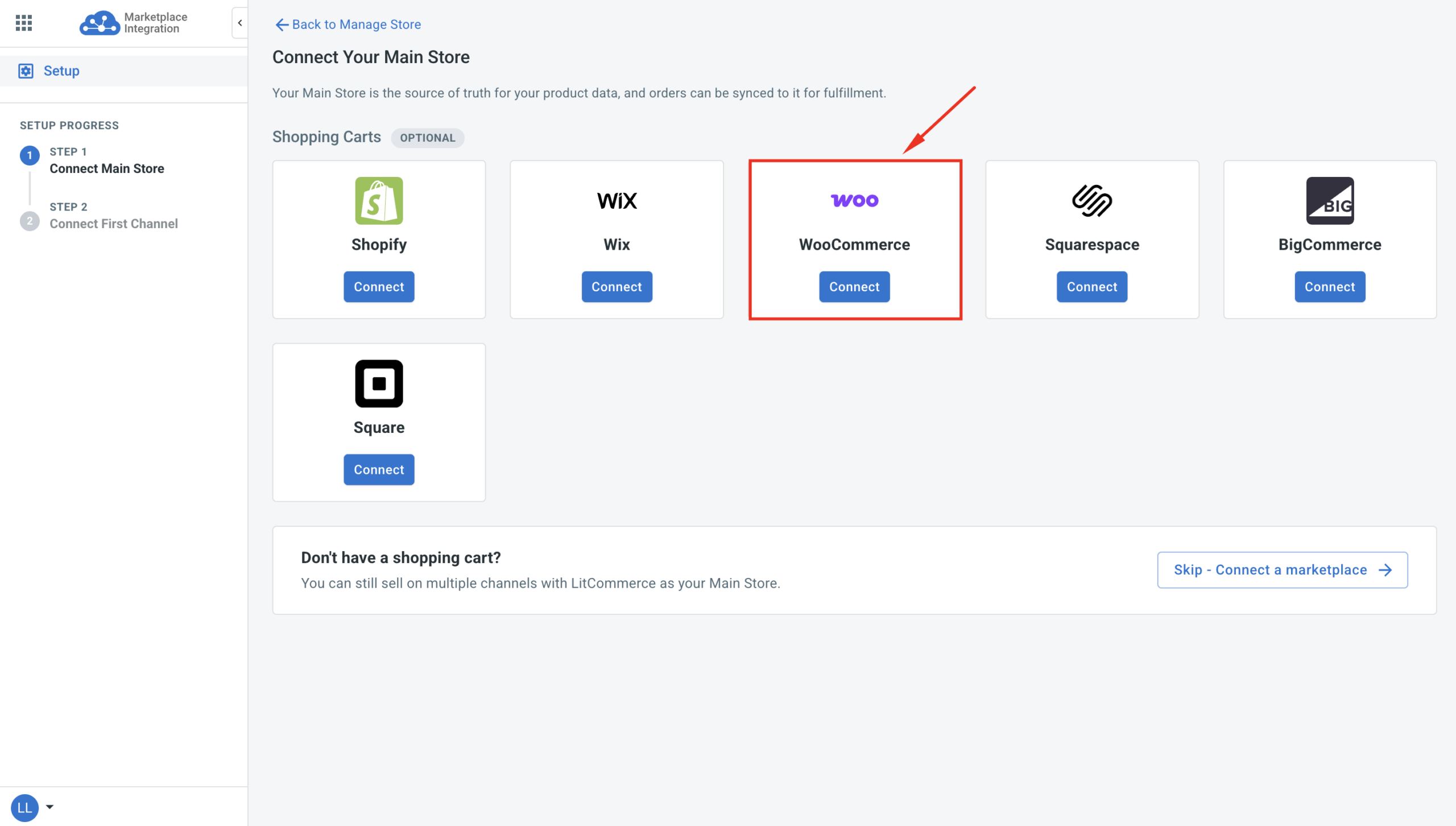
Once your Main Store is ready, it’s time to add Amazon. Find Amazon in the list of supported platforms and click Connect. Give it a name, choose your Amazon marketplace, then click Connect Your Account and follow the prompts to sign in to Seller Central and approve access.
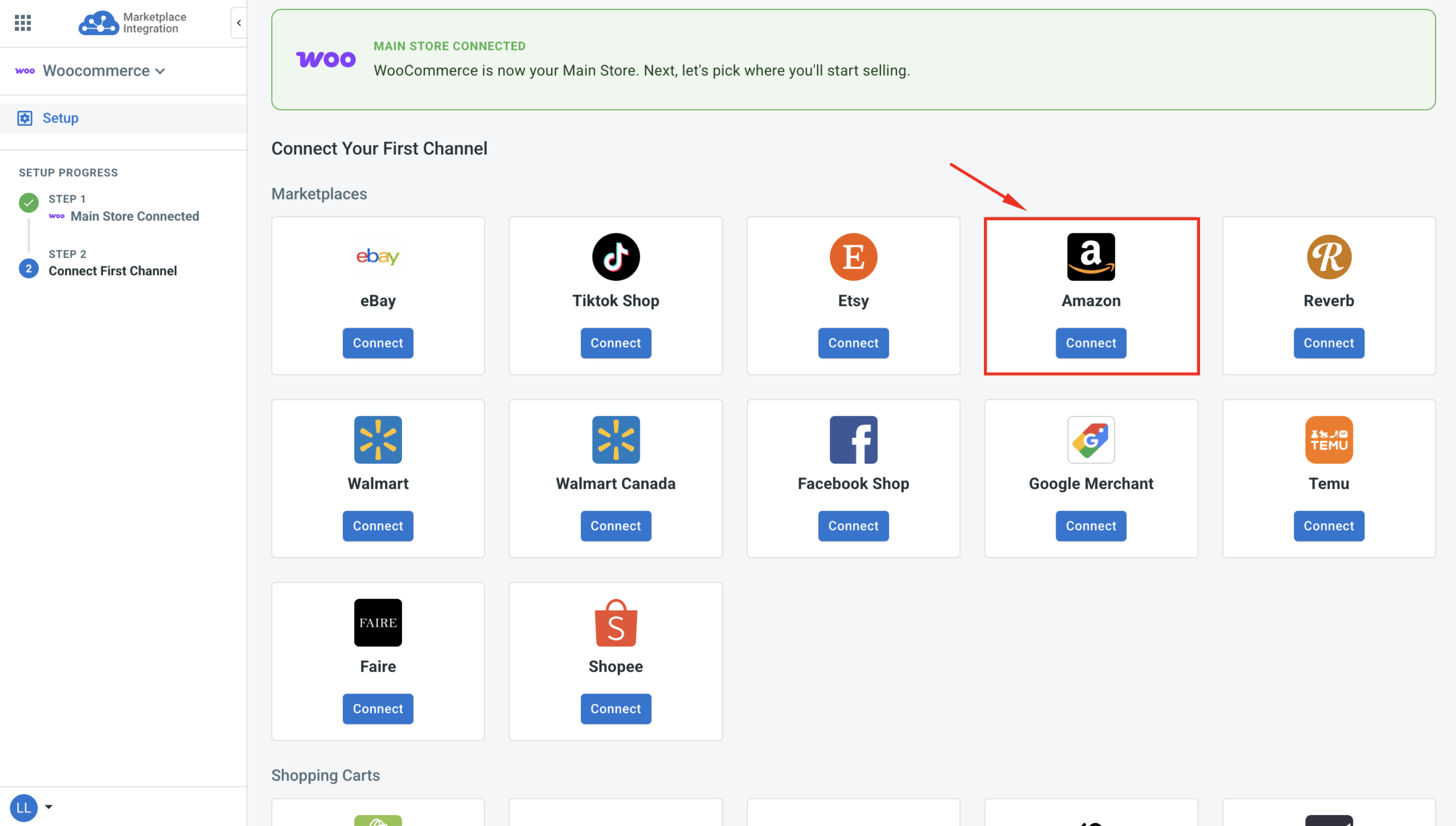
Selling on other marketplaces too? Go to Add/Manage Sales Channels to connect them the same way. Alongside Amazon, LitCommerce supports 10+ top marketplaces such as eBay, Etsy, Walmart, and TikTok Shop. See the full list of available integrations.
#Step 2: List & import products on Amazon
With Amazon connected, the next move depends on where your products live today. Pick the case that fits:
- List your products on Amazon for the first time.
- Bring your Amazon listings into another store or marketplace.
- Link products that are already on Amazon and another channel.
Case 1: List your products on Amazon
Use this case if your products are selling somewhere else but aren’t on Amazon yet.
If your Main Store is Shopify, WooCommerce, or another eCommerce platform, LitCommerce has already pulled your products into the All Products tab automatically.
If your products live on a marketplace, import them first. For example, to bring products over from eBay, click Import from eBay, choose which items to include, and click Begin Import.
Once your products are in All Products, follow these steps to list them on Amazon:
- Open All Products and tick the items you want to sell on Amazon.
- Click Select Action > Add To Channel Drafts, select your Amazon channel, then click Add As Draft Now. Your products are now saved as drafts in the Amazon channel – where you can edit and optimize your listings before publishing.
- Go to your Amazon channel and open a product listing. Here, match the product to Amazon’s catalog:
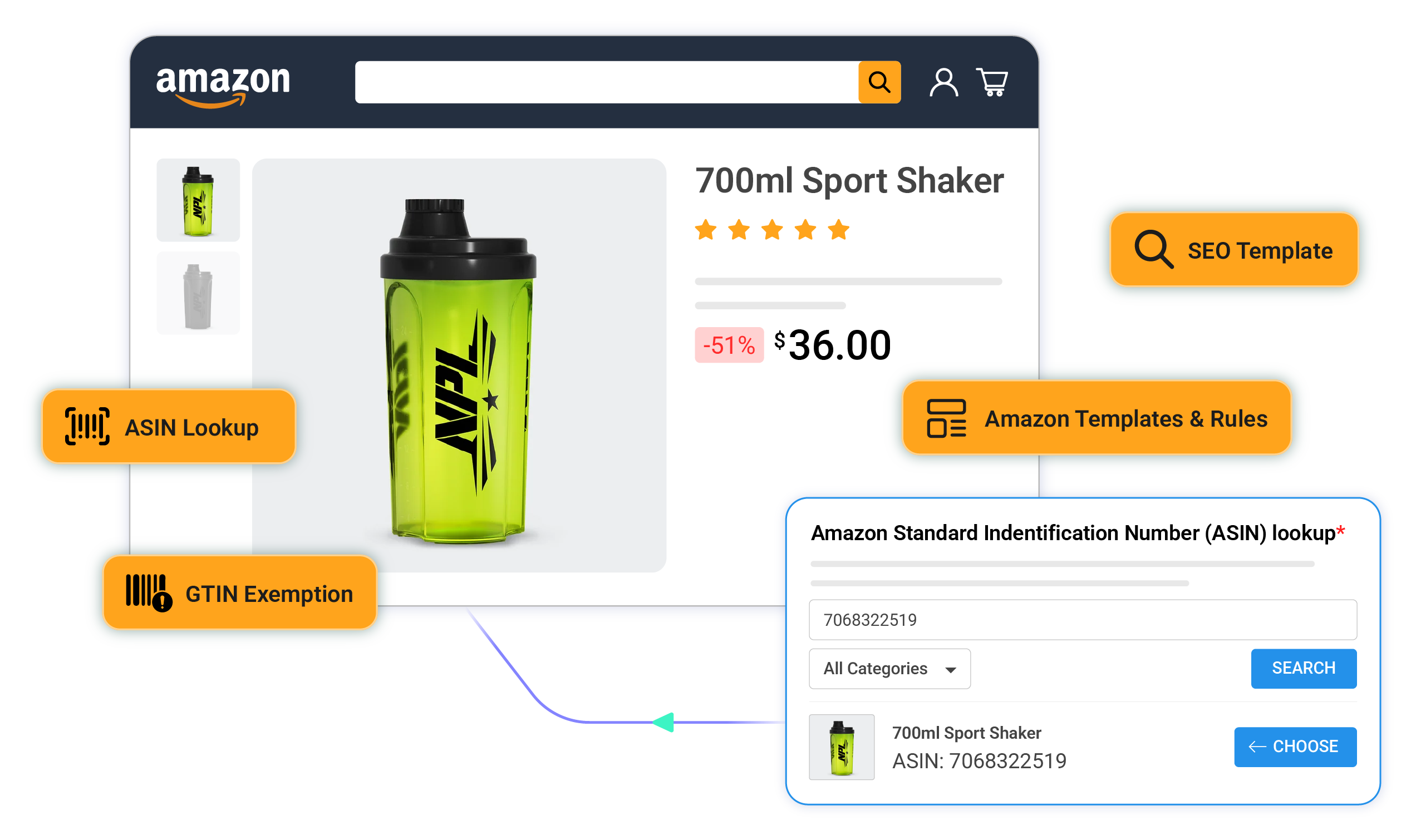
- Your product is already sold on Amazon? Use ASIN Lookup to find the matching ASIN by GTIN, UPC, EAN, SKU, or keyword.
- Your product is new to Amazon? You can apply for a GTIN Exemption. Once it’s approved, send it to our team, and we’ll set it up so you can list on Amazon.
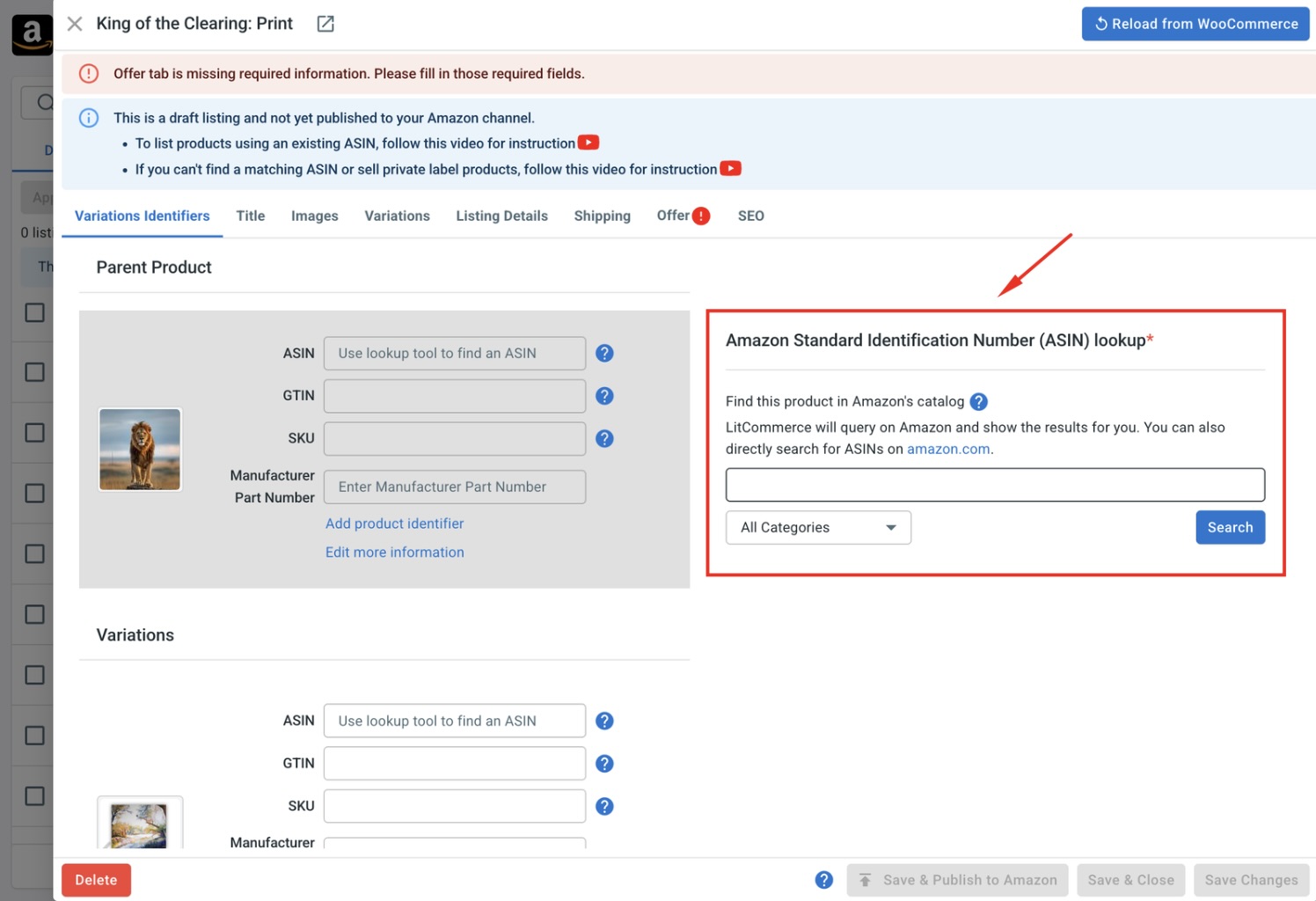
- Fill in any missing details in the Listing Details, Shipping, and Offer tabs. We also recommend the SEO tab, where you can add keywords and bullet points to help your listing show up in Amazon search.
- When everything looks right, click Save & Publish to Amazon. Your listing goes live once the Amazon system approves it.
Listing a large catalog? Instead of filling in each listing one by one, use Templates & Rules in LitCommerce. This allows you to set up your category, pricing, shipping, and SEO details once, then apply them to many Amazon drafts at a time.
When your drafts are ready, select multiple listings and choose Select Action > Publish to Amazon to publish up to 100 listings in one action.
Case 2: Bring your Amazon listings into another store or marketplace
Use this case if your products already sell on Amazon and you want to sell them somewhere else too, such as your Shopify or eBay store. Instead of recreating each product by hand, you can import your Amazon listings once and reuse them on the new channel.
Here is how to import Amazon listings to another channel.
First, pull your Amazon products into LitCommerce:
- Open your Amazon channel in LitCommerce and click Import From Amazon.
- Customize your import, such as filtering which products to import or letting LitCommerce auto-link products.
- Once you have set your settings, click Begin Import.
Next, send those products to the channel you want:
- To your online store (like Shopify or WooCommerce): Select the Amazon products that aren’t in your store yet, click Select Action, then choose Create on Main Store.
- To another marketplace (like eBay or Etsy): Go to All Products, select the imported Amazon products, click Select Action > Add To Channel Drafts, pick the marketplace, and click Add As Draft Now. Then, similar to listing products on Amazon, review and publish your listing for that marketplace.
Once finished, your Amazon listings are now imported successfully to the channel you want.
Case 3: Link products on Amazon and another channel
If your products are already on both Amazon and another channel, there’s no need to list them again. You can link them together instead.
How you link depends on the channel you want to connect to Amazon:
- Online store (like Shopify or WooCommerce): You can link each Amazon listing directly to its matching product in your store.
- Another marketplace (like eBay or Etsy): You need to link both marketplace listings to the same product in LitCommerce.
During the Amazon listing import process, LitCommerce can link matching products for you automatically. Linked items show a blue dot, and items that still need linking show a red dot.
To link products on Amazon and another platform manually, follow these steps:
- Hover over the red dot and choose Link To A Product.
- Search for the matching product by name or SKU.
- Click Link to connect them.
Once linked, your Amazon listings and their matching products are ready to sync in the next step.
#Step 3: Enable Amazon sync
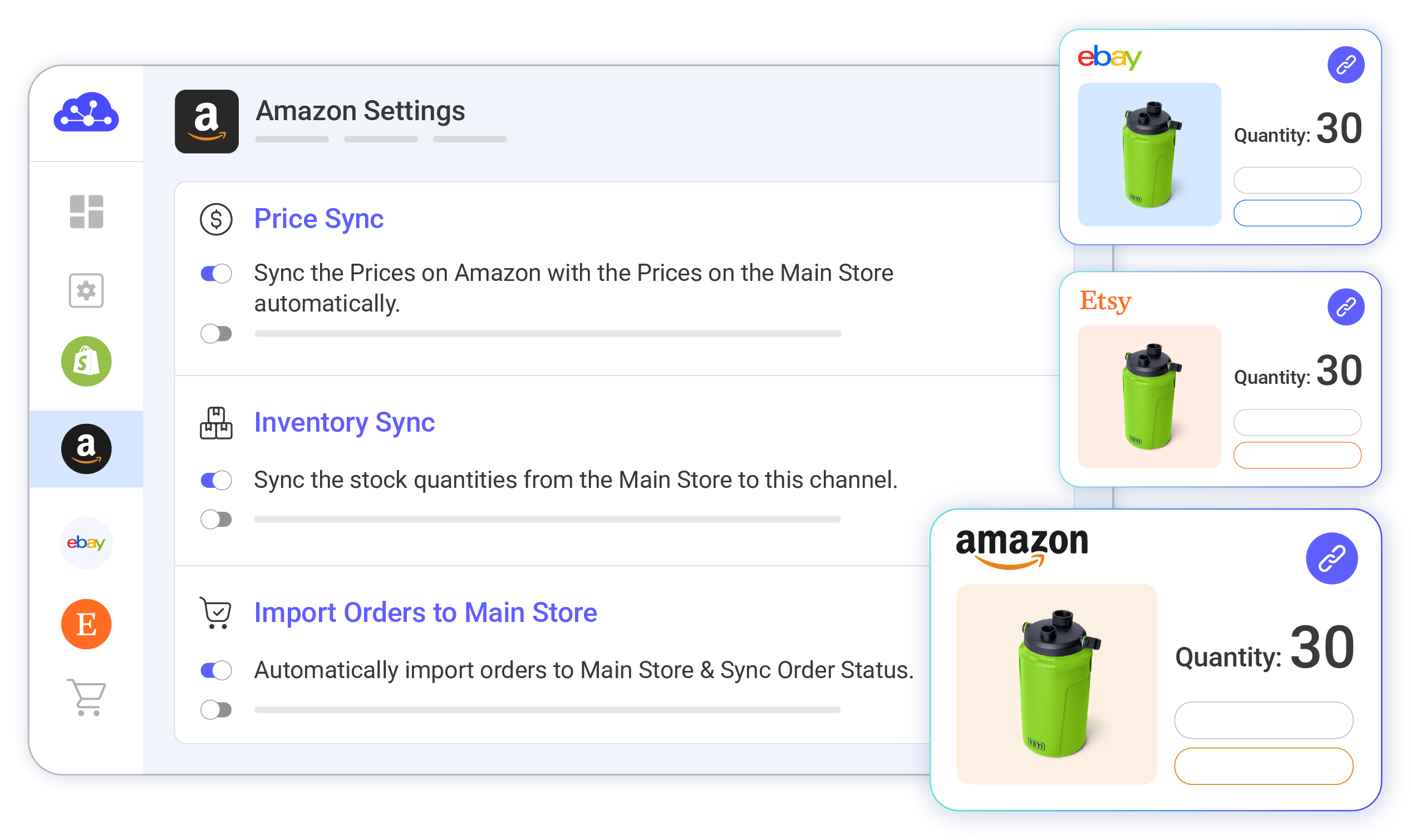
Syncing is where your Amazon eCommerce integration starts saving you time every day. Once it’s on, price and stock changes in your online store flow to Amazon automatically every 15 minutes. You no longer update the same product twice, your Amazon prices stay accurate, and every sale on any channel adjusts stock everywhere, so you can avoid overselling.
To set it up, open your Amazon channel in LitCommerce, click Channel Settings, and turn on the syncs you need:
- Price sync: When you change a price in your online store, LitCommerce updates the matching Amazon listings for you. Moreover, want Amazon prices to differ from your store? You can add price rules to raise or lower them by a percentage or a fixed amount, for example to cover Amazon’s referral fees, and round them to a clean price point.
- Inventory sync: Stock levels stay matched between your online store and Amazon, so a sale on one channel updates stock on the other. With inventory rules, you can sync only a percentage of your stock to Amazon, set a maximum quantity to show, or mark a listing out of stock when your stock drops to a set number, giving you a safety buffer.
Note: FBA listings aren’t included in inventory sync, since Amazon manages that stock on its own.
#Step 4: Manage orders
The last step is getting Amazon orders into the place you already work.
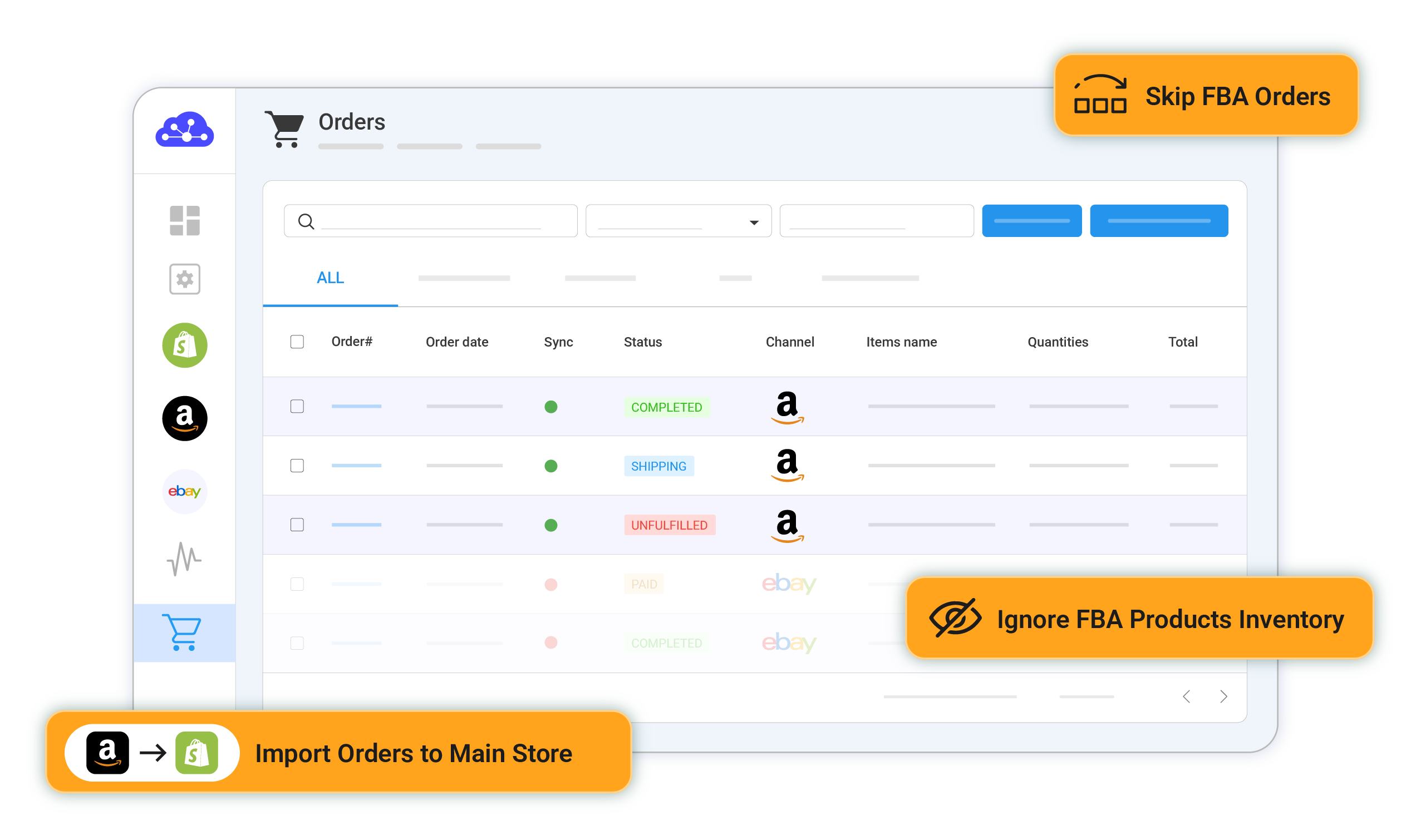
In your Amazon Channel Settings, turn on Import Orders To Main Store. LitCommerce then brings both FBA and FBM orders into your online store automatically, so you can manage all your orders in one place. Prefer to handle FBM orders only? You can turn on Skip FBA Orders. You can also manage imported orders in the Orders section of LitCommerce.
Note: Due to Amazon’s API limitations, imported Amazon orders may not include full shipping or customer details, such as buyer name and address. However, you can still see key order information, such as product title, SKU, price, and quantity.
Once you’ve set your preferences, click Save Settings, and LitCommerce handles the updates from there.
With sync and order import running, you’ll spend less time on daily Amazon updates and more time growing your catalog and reaching new buyers.
So why wait? Start integrating with Amazon using LitCommerce today and witness the growth of your business!